
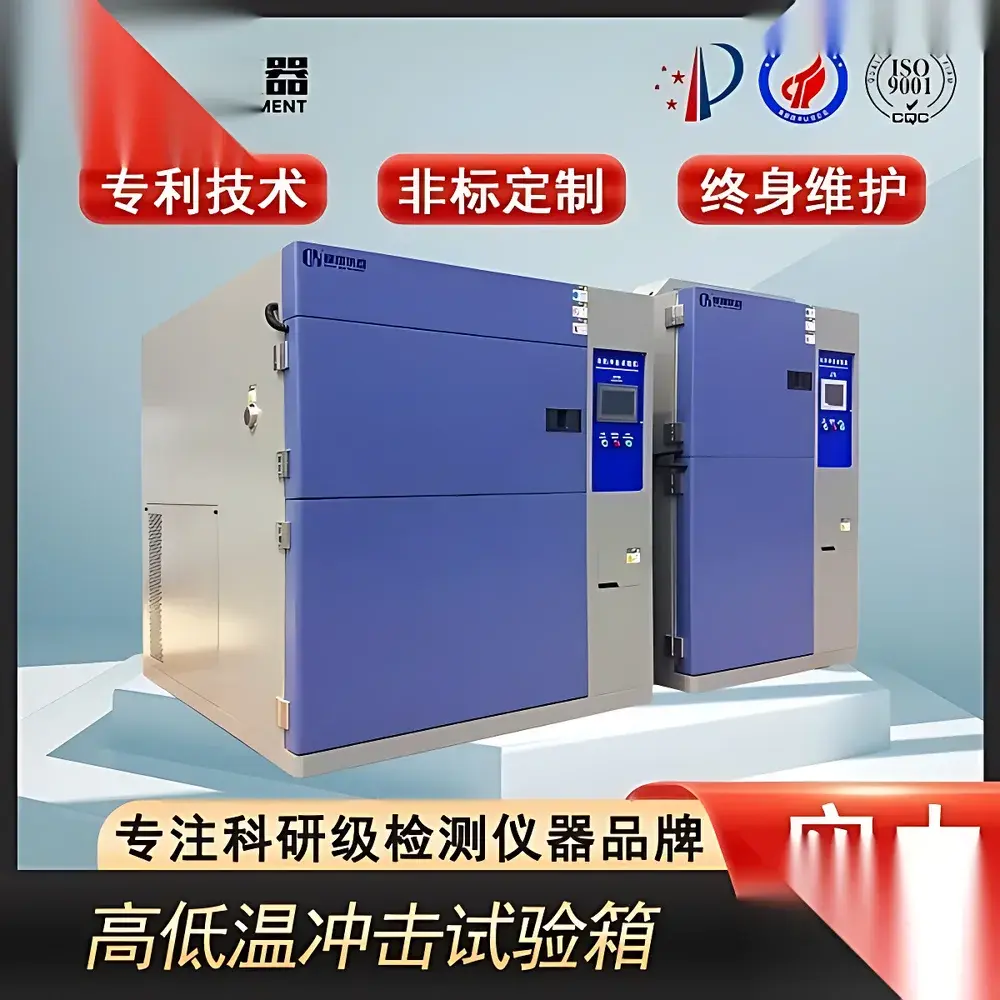
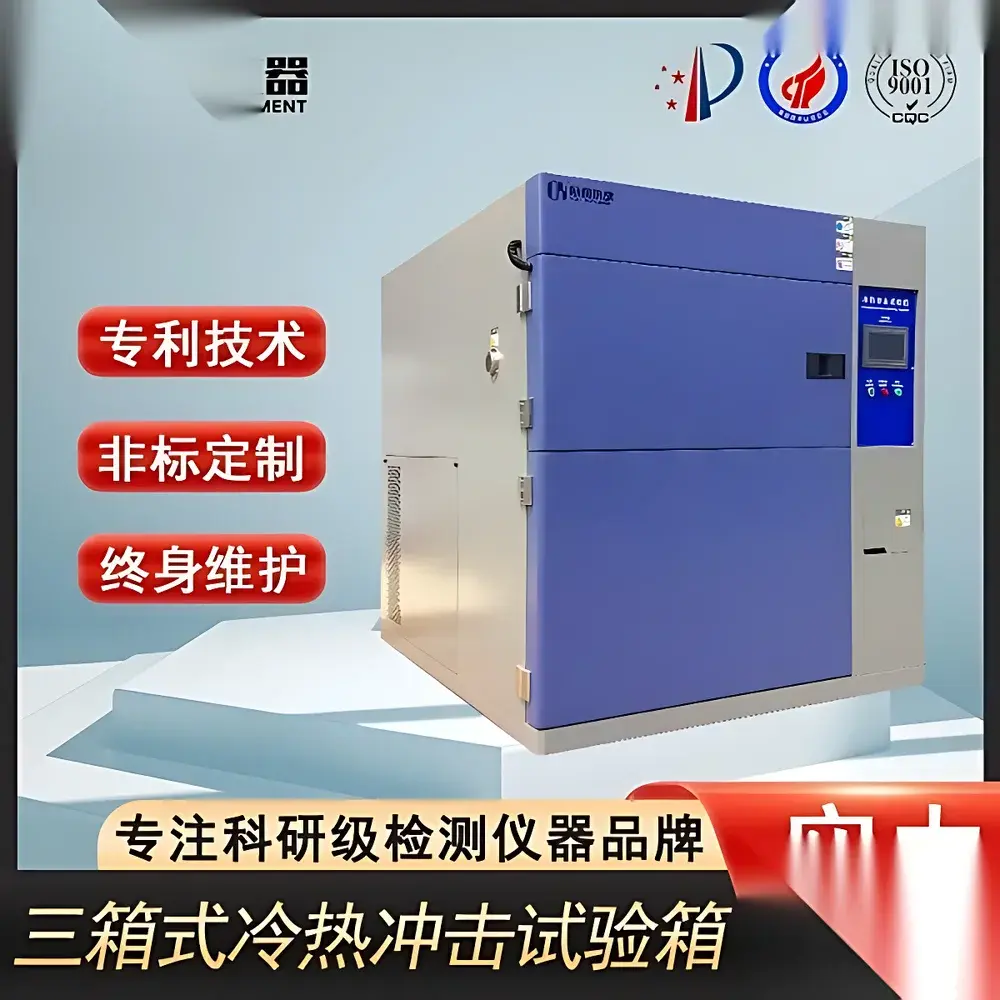
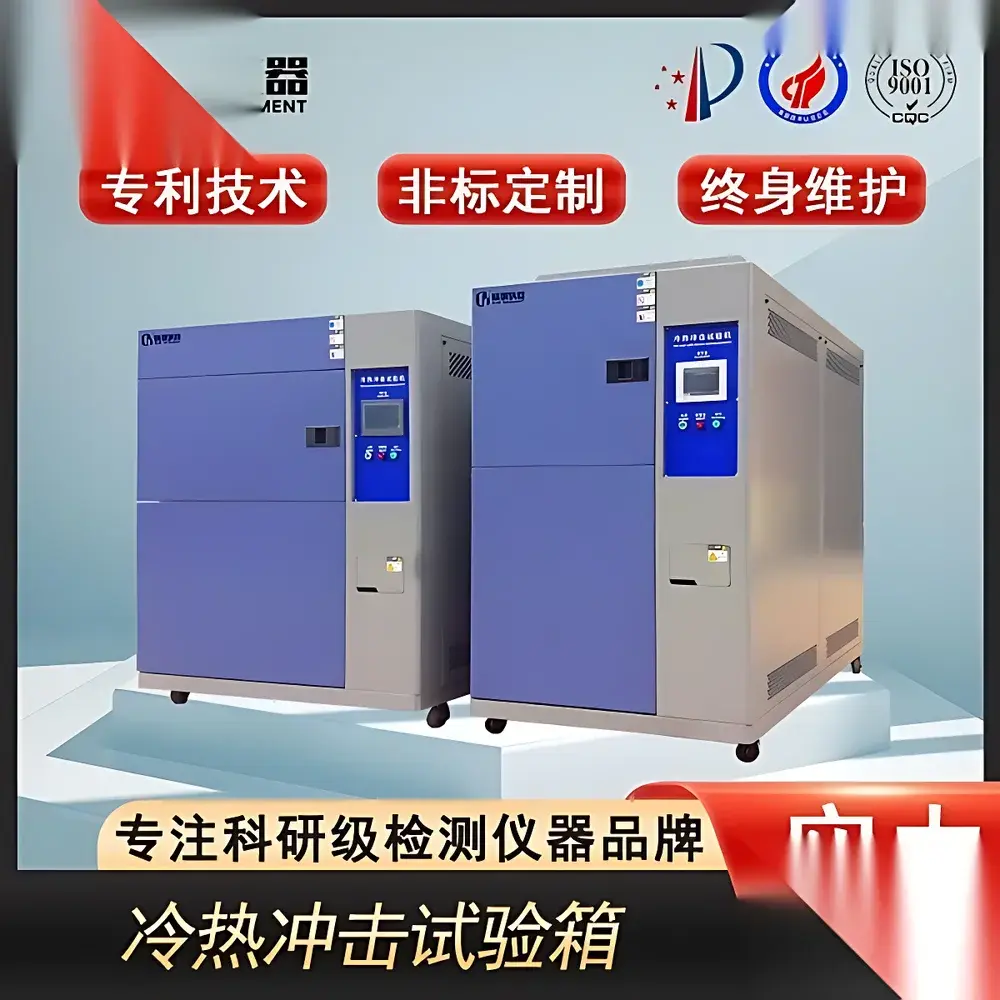
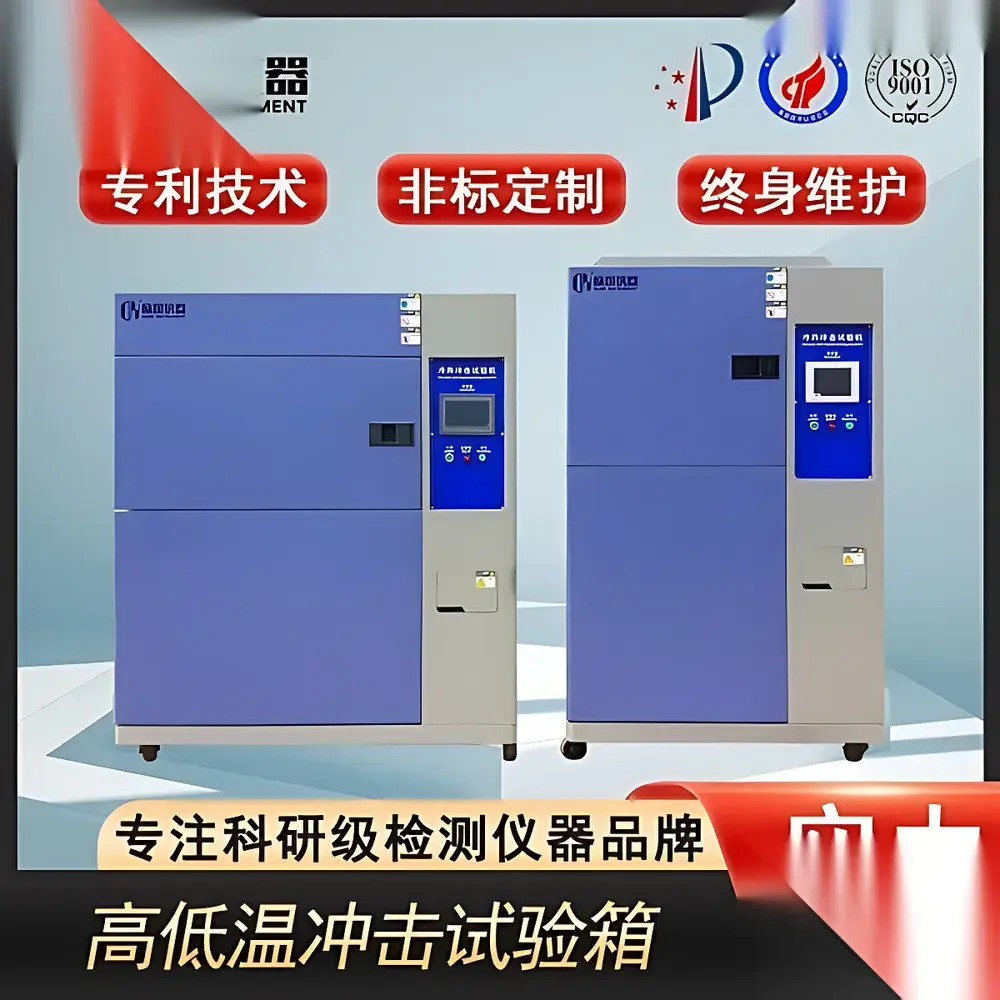
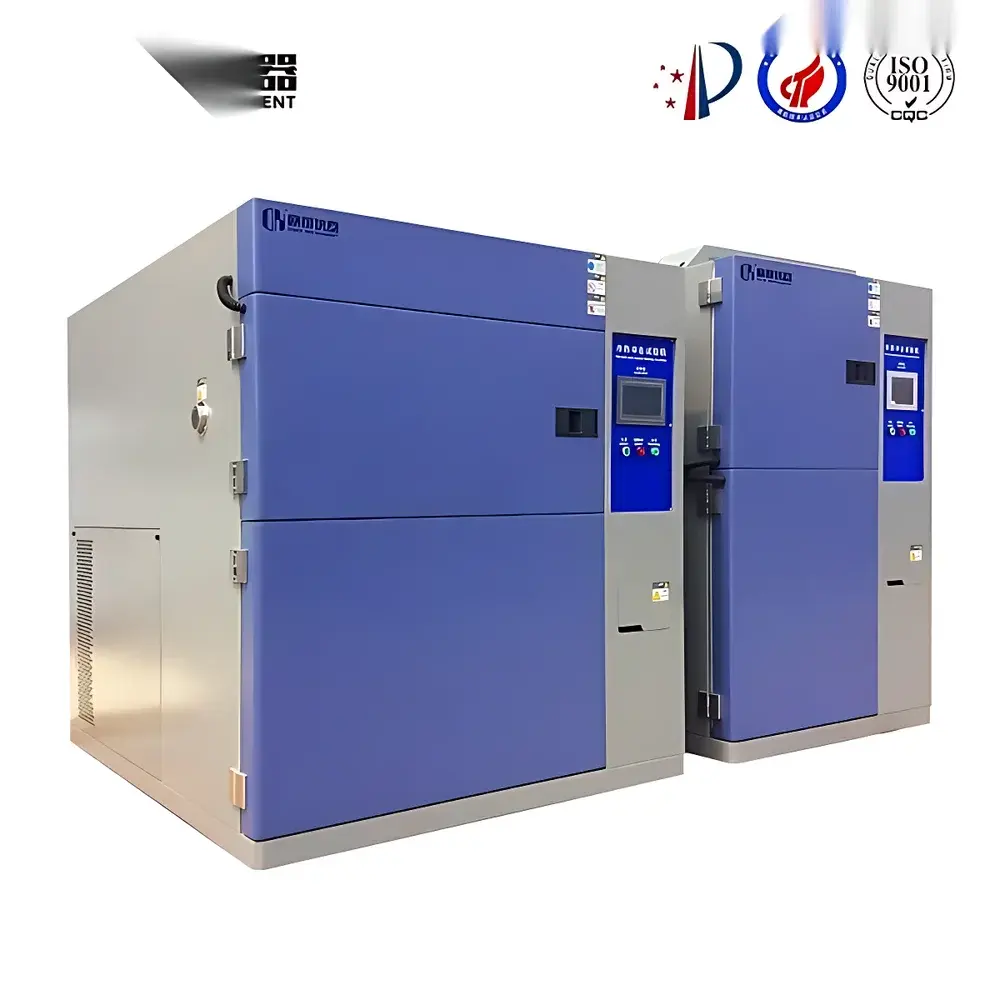
Thermal Shock Test Chamber – Low-Temperature Impact Type
| Brand | OEM |
|---|---|
| Origin | Imported |
| Manufacturer Type | Authorized Distributor |
| Cooling System | Dual-Stage Cascade Refrigeration (Water-Cooled) |
| Temperature Range | –70 °C to +180 °C |
| Thermal Transition Time (Typ.) | ≤5 min (–70 °C ↔ +180 °C) |
| Compliance | GB/T 2423.1–2023, GB/T 2423.2–2023, GB/T 10592–2008, GJB 150.3A–2009 |
| Configuration Options | Two-Zone (Lift-Basket) or Three-Zone (Separate Hot/Cold/Testing Chambers) |
| Cooling Water Requirement | 10 m³/h Circulating Flow (External Cooling Tower Required) |
Overview
The Thermal Shock Test Chamber – Low-Temperature Impact Type is an engineered environmental stress screening (ESS) system designed to evaluate material and component reliability under rapid, extreme temperature transitions. It operates on the principle of thermal shock—subjecting test specimens to abrupt shifts between predetermined low- and high-temperature extremes—to accelerate failure mechanisms such as interfacial delamination, solder joint fatigue, coating cracking, and coefficient-of-thermal-expansion (CTE) mismatch-induced stress. Unlike standard temperature cycling chambers, this unit delivers controlled, repeatable thermal transients with minimized dwell time and precise ramp rate control, making it suitable for qualification testing per military, aerospace, automotive, and electronics industry standards.
Key Features
- Dual-stage cascade refrigeration architecture employing R404A/R23 refrigerant pairs, enabling stable operation down to –70 °C while maintaining thermal uniformity ±2 °C across the working volume;
- Water-cooled condensing system requiring external 10 m³/h cooling tower circulation—optimized for continuous-duty industrial environments with ambient heat rejection constraints;
- Two configuration variants: (a) two-zone lift-basket design for dynamic specimen transfer between hot and cold zones via servo-driven basket mechanism; (b) three-zone architecture with independent hot soak, cold soak, and test chambers—eliminating thermal cross-contamination and supporting simultaneous conditioning and testing;
- Energy modulation control logic that dynamically adjusts compressor load and expansion valve opening in real time, reducing power consumption by up to 30% during partial-load operation without compromising thermal stability or transition repeatability;
- Stainless-steel insulated chamber construction with multi-layer vacuum-jacketed doors and silicone-sealed viewing windows for long-term corrosion resistance and minimal thermal leakage;
- Programmable controller with Ethernet interface, supporting user-defined profiles with up to 99 segments, 999 cycles, and conditional branching based on elapsed time, cycle count, or external I/O triggers.
Sample Compatibility & Compliance
This chamber accommodates a wide range of sample geometries—from PCB assemblies and semiconductor packages to molded plastic housings and metal enclosures—via standardized internal mounting rails and optional custom fixturing. Internal dimensions are configurable per model series (standard volumes: 150 L to 1000 L). All configurations comply with mandatory test method requirements specified in GB/T 2423.1–2023 (cold testing), GB/T 2423.2–2023 (dry heat), GB/T 10592–2008 (temperature gradient and uniformity tolerances), and GJB 150.3A–2009 (military-grade thermal shock protocols). The system supports traceable calibration per ISO/IEC 17025-accredited procedures and integrates with laboratory quality management systems for GLP/GMP audit readiness.
Software & Data Management
Built-in controller firmware supports data logging at user-selectable intervals (1 s to 60 min), with onboard storage capacity for ≥30 days of continuous 10-channel recording (chamber setpoint, actual temperature, basket position, compressor status, coolant flow, etc.). Export formats include CSV and PDF reports compliant with FDA 21 CFR Part 11 requirements—including electronic signatures, audit trails, and role-based access control when connected to enterprise LIMS or MES platforms. Optional PC-based software provides advanced profile editing, real-time remote monitoring via HTTPS, alarm escalation via SMTP/SNMP, and automated report generation aligned with internal QA templates or customer-specific deliverables.
Applications
- Qualification of avionics modules subjected to rapid altitude-induced thermal gradients;
- Reliability validation of lead-free solder joints in automotive ECUs per AEC-Q200;
- Accelerated life testing of optical sensors exposed to diurnal cycling in outdoor deployments;
- Process window definition for conformal coating adhesion under thermal stress;
- Material compatibility assessment of encapsulants, gaskets, and thermal interface materials (TIMs) used in battery pack assemblies;
- Failure analysis root cause isolation in MEMS devices exhibiting intermittent parametric drift after field exposure.
FAQ
What distinguishes two-zone from three-zone thermal shock configurations?
The two-zone system uses a mechanical lift basket to shuttle samples between adjacent hot and cold chambers, offering compact footprint and lower initial cost—but introduces thermal inertia during transfer. The three-zone variant isolates conditioning and testing functions, enabling true zero-dwell transitions and eliminating thermal memory effects, which is critical for high-reliability qualification.
Is external cooling water infrastructure mandatory?
Yes. This model employs a water-cooled dual-stage cascade condenser requiring a dedicated closed-loop cooling tower delivering 10 m³/h at ≤32 °C inlet temperature. Air-cooled alternatives are available upon request but incur reduced low-temperature performance and higher acoustic output.
Can the chamber be integrated into an automated test cell?
Absolutely. Standard RS485 Modbus RTU and optional EtherCAT or Profibus-DP interfaces enable seamless synchronization with robotic loaders, AOI stations, and centralized test orchestration software.
Does the system support validation documentation for ISO 9001 or AS9100 audits?
Yes. Factory-installed IQ/OQ documentation packages—including sensor calibration certificates, temperature mapping reports, and alarm response verification logs—are provided. PQ execution support and third-party certification services are available through authorized service partners.



