
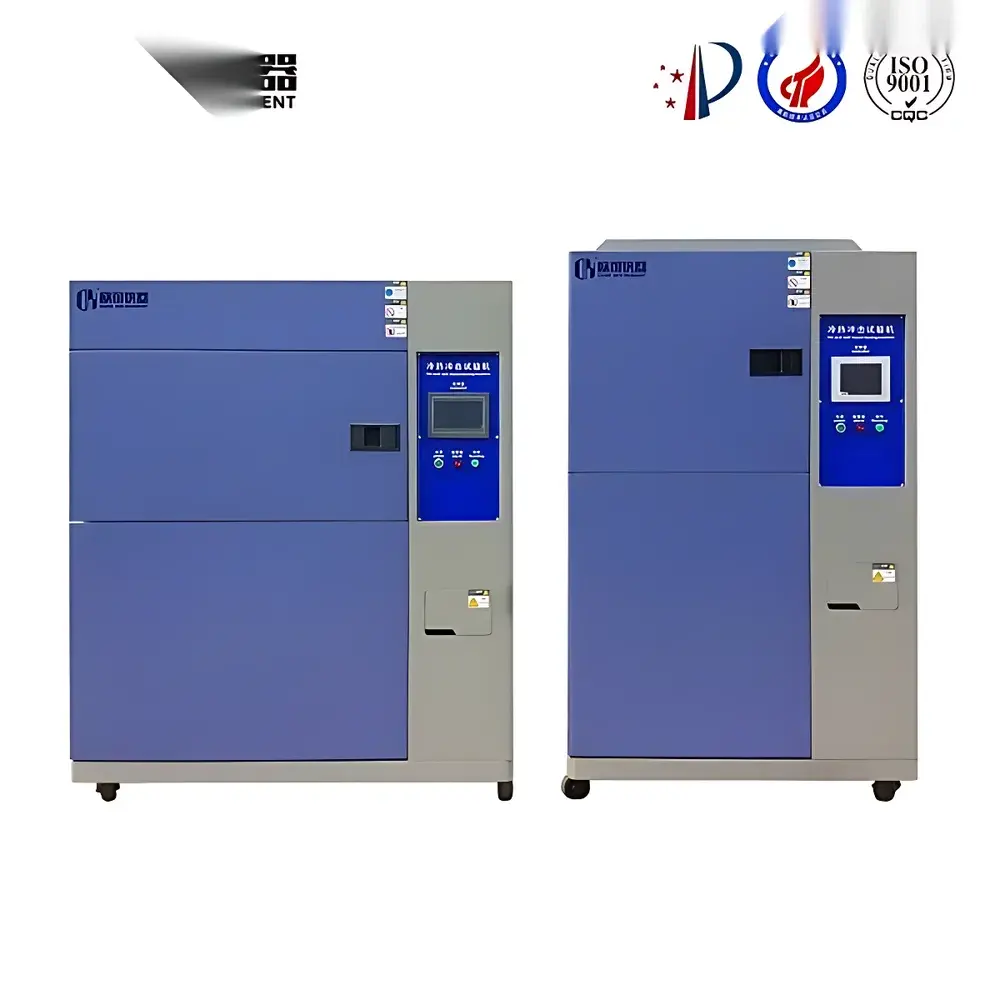
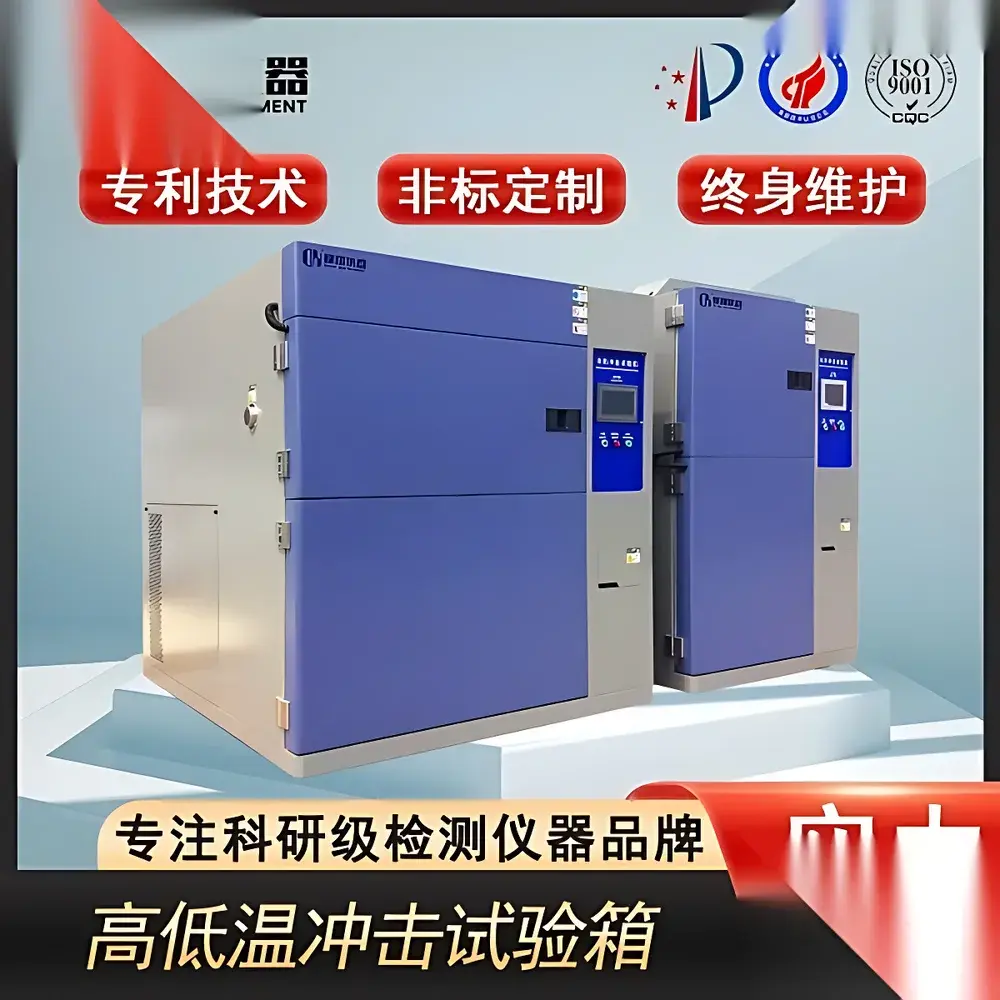
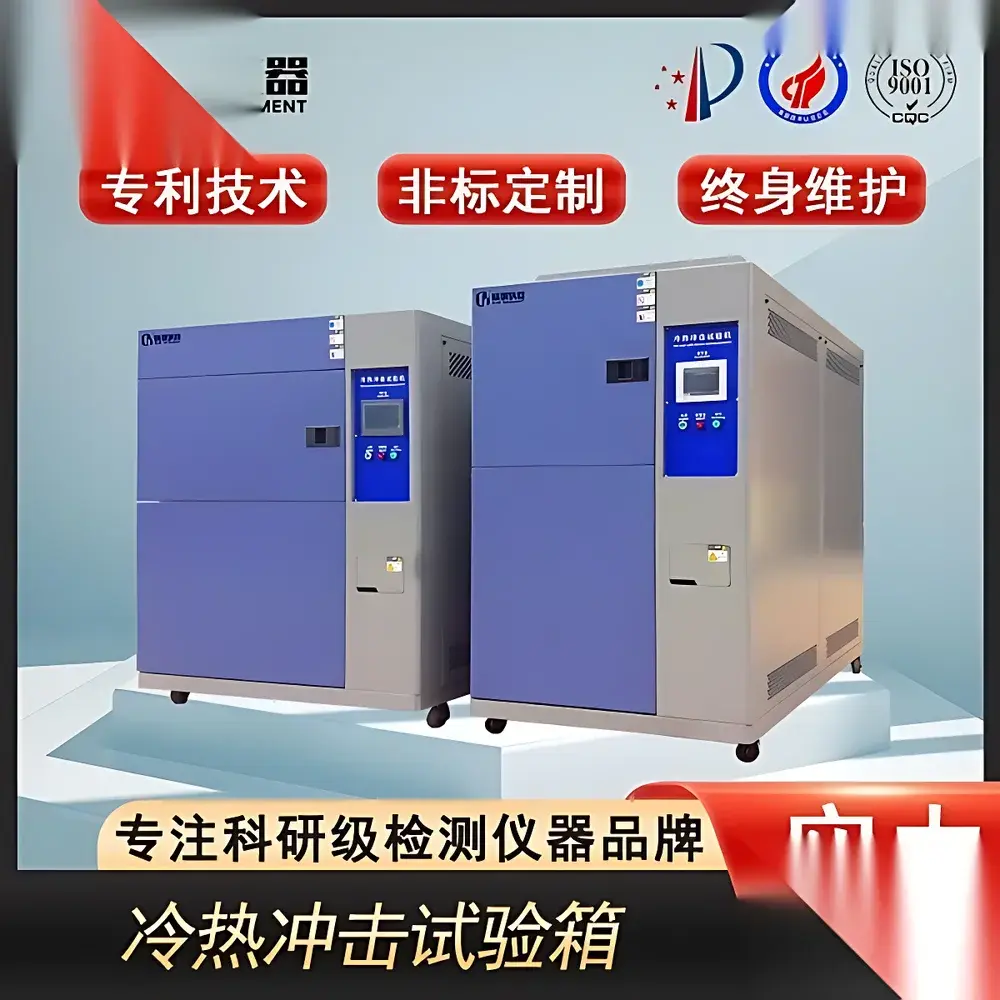
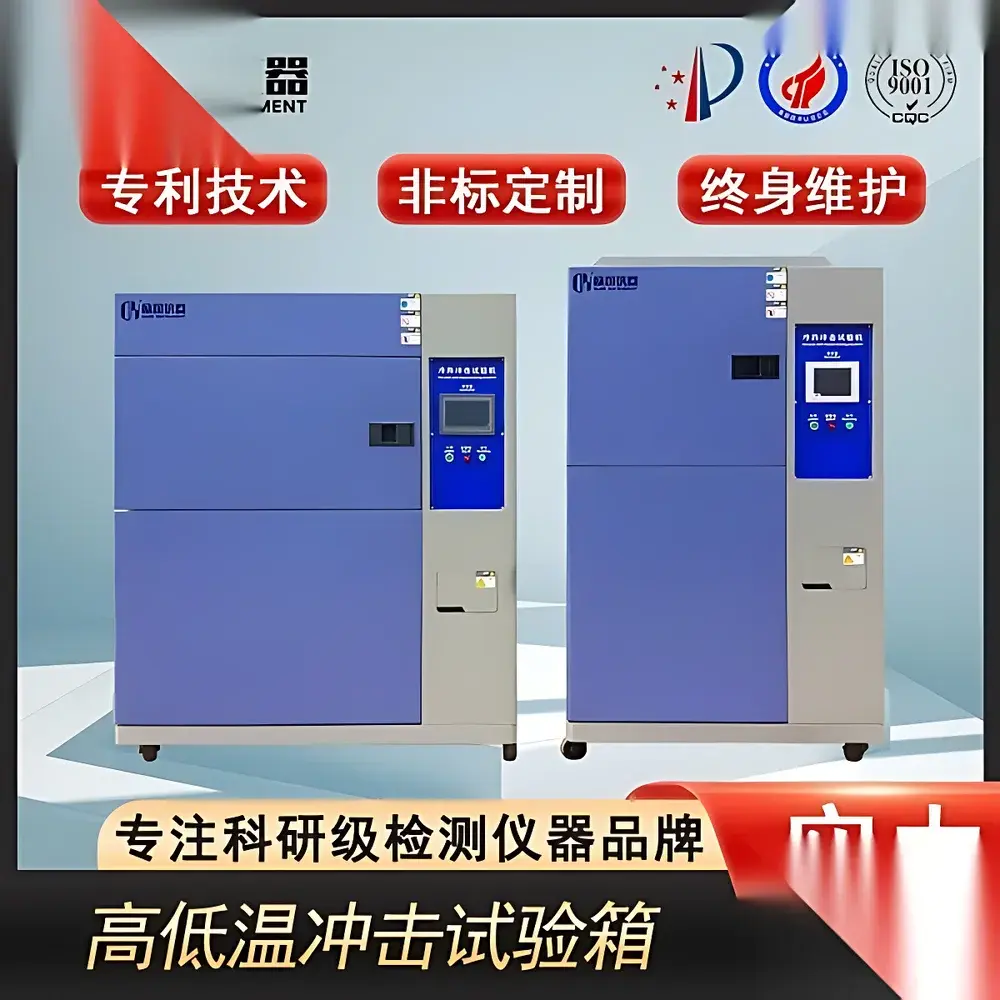
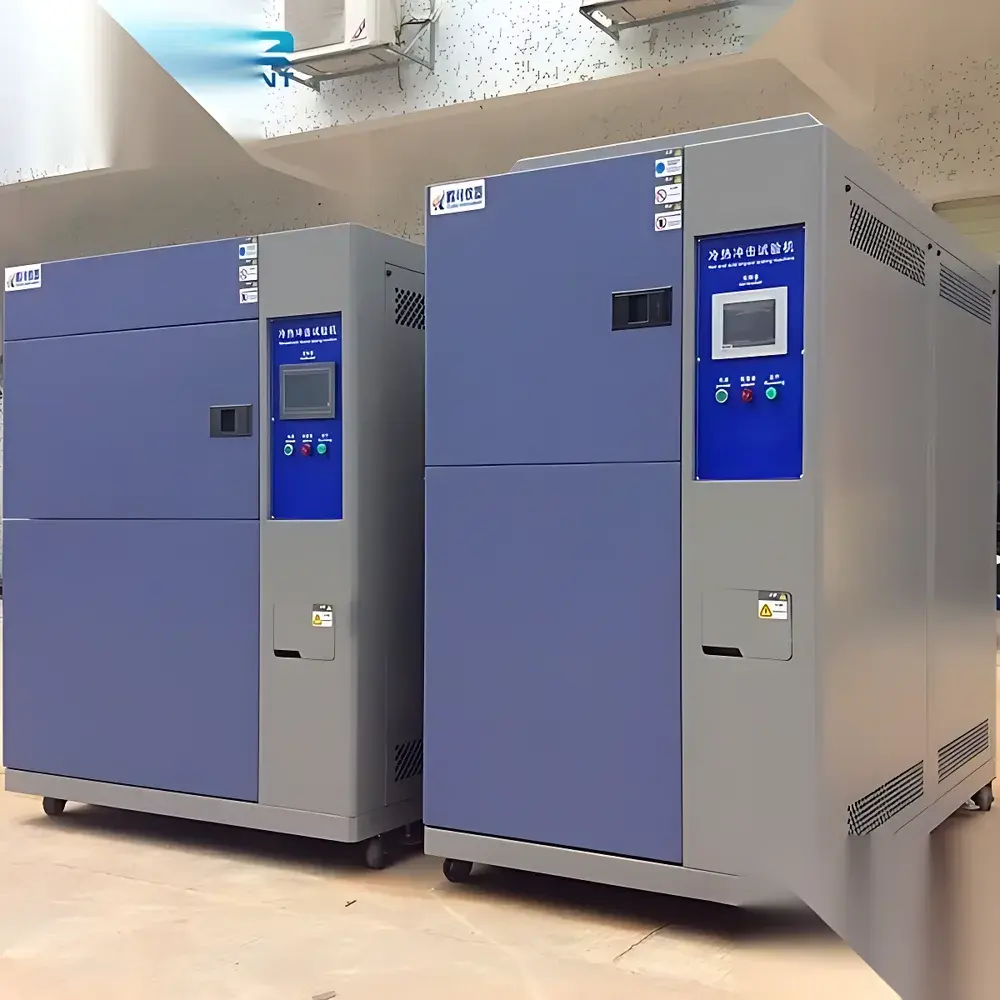
Thermal Shock Test Chamber Manufacturer
No specifications available.
Overview
The Thermal Shock Test Chamber is an engineered environmental test system designed to evaluate the structural integrity and reliability of materials—including metals, plastics, elastomers, and electronic assemblies—under rapid, repetitive transitions between extreme high and low temperature extremes. Operating on the principle of thermal shock (or temperature cycling), the chamber subjects specimens to abrupt thermal gradients that induce mechanical stress via differential expansion and contraction. This accelerates the detection of latent defects such as interfacial delamination, solder joint fatigue, microcrack propagation, and seal failure—phenomena critical to product qualification in aerospace, automotive, defense, and semiconductor manufacturing. Unlike standard temperature-humidity chambers, thermal shock systems prioritize thermal transition speed (typically ≤15 seconds for air-to-air transfer) and stability at endpoint temperatures (commonly −65 °C to +150 °C), making them indispensable for accelerated life testing and HALT/HASS protocols.
Key Features
- Two-chamber (hot/cold) and three-chamber (hot/cold/test) configurations available—optimized for test specimen size, throughput requirements, and thermal inertia constraints
- Imported semi-hermetic German compressors integrated into a dual-stage cascade refrigeration system, enabling stable operation down to −70 °C with precise temperature control (±0.5 °C uniformity, ±0.3 °C fluctuation)
- Evaporative condenser heat exchange architecture ensures efficient thermal energy transfer between high- and low-temperature circuits while minimizing refrigerant charge and compressor load
- Energy modulation control logic dynamically adjusts refrigerant flow and compressor staging to maintain setpoint accuracy without overcooling or overshoot—reducing power consumption and mechanical wear
- Water-cooled condensing unit requires external cooling tower infrastructure (10 m³/h capacity recommended); compatible with industrial chilled water supply systems
- Stainless steel 304 interior chamber with insulated double-wall construction, non-condensing air circulation design, and leak-tight door sealing compliant with IEC 60068-2-14
Sample Compatibility & Compliance
The chamber accommodates standard test specimens up to 500 mm × 500 mm × 500 mm (W×D×H) with configurable basket or static mounting options. It supports both active (motorized lift-basket) and passive (stationary test chamber) thermal transfer methodologies, ensuring compatibility with fragile PCBAs, hermetically sealed sensors, and multi-material assemblies. The system conforms to internationally recognized environmental stress screening standards including: ASTM D5229/D5229M (low-temperature impact resistance), IEC 60068-2-14 (Test N: Change of Temperature), MIL-STD-810H Method 503.6 (Temperature Shock), GJB 150.5A-2009 (Military Standard for Temperature Shock Testing), GB/T 2423.22–2012 (Environmental Testing – Part 2: Tests – Test N: Change of Temperature), and QC/T 17–1992 (Automotive Component Environmental Durability). All operational parameters are traceable to NIST-calibrated reference sensors, supporting GLP-compliant validation and audit-ready documentation.
Software & Data Management
Equipped with embedded controller firmware supporting programmable ramp-soak profiles, multi-segment cycles, and real-time monitoring of chamber temperature, basket position (for two-chamber models), and compressor status. Data logging occurs at user-selectable intervals (1–60 s) with timestamped CSV export via USB or Ethernet interface. Optional PC-based software provides graphical trend analysis, deviation alarms, and automated report generation aligned with ISO/IEC 17025 documentation requirements. Audit trail functionality records all parameter modifications, operator logins, and calibration events—fully compliant with FDA 21 CFR Part 11 for regulated industries requiring electronic record integrity.
Applications
- Qualification of printed circuit board assemblies (PCBAs) per IPC-J-STD-004 and JEDEC JESD22-A104
- Validation of adhesive bond strength and coating adhesion under thermal cycling stress
- Reliability screening of MEMS devices, optoelectronic packages, and power modules
- Accelerated aging studies for polymer encapsulants, gaskets, and thermal interface materials
- Pre-certification testing for automotive ECUs against ISO 16750-4 and AEC-Q200 stress conditions
- Failure mode analysis in R&D labs performing root cause investigation of field returns
FAQ
What distinguishes a two-chamber from a three-chamber thermal shock system?
The two-chamber design uses a motorized transfer basket moving samples between hot and cold zones—offering faster transitions but limiting maximum sample mass due to mechanical constraints. The three-chamber configuration isolates test, heating, and cooling sections, allowing continuous temperature stabilization and higher payload capacity without motion-induced vibration.
Is external cooling infrastructure mandatory?
Yes—the cascade refrigeration system requires a dedicated water-cooling loop with ≥10 m³/h flow rate and ≤32 °C inlet temperature. Air-cooled alternatives are available but compromise low-temperature performance and long-term reliability.
Can this chamber support automated test sequencing across multiple standards?
Yes—controller firmware includes preloaded templates for GB/T 2423, GJB 150, and IEC 60068 test methods, with customizable dwell times, transition rates, and cycle counts. Integration with LabVIEW or Python via Modbus TCP enables full test automation.
How is temperature uniformity validated?
Per IEC 60068-3-5, uniformity is verified using nine calibrated PT100 sensors placed in a 3×3 grid at working volume center; results are documented in the Factory Acceptance Test (FAT) report provided with each unit.
Does the system include calibration certification?
Each chamber ships with a NIST-traceable calibration certificate covering chamber temperature sensors and controller input/output channels, valid for 12 months under normal operating conditions.



