
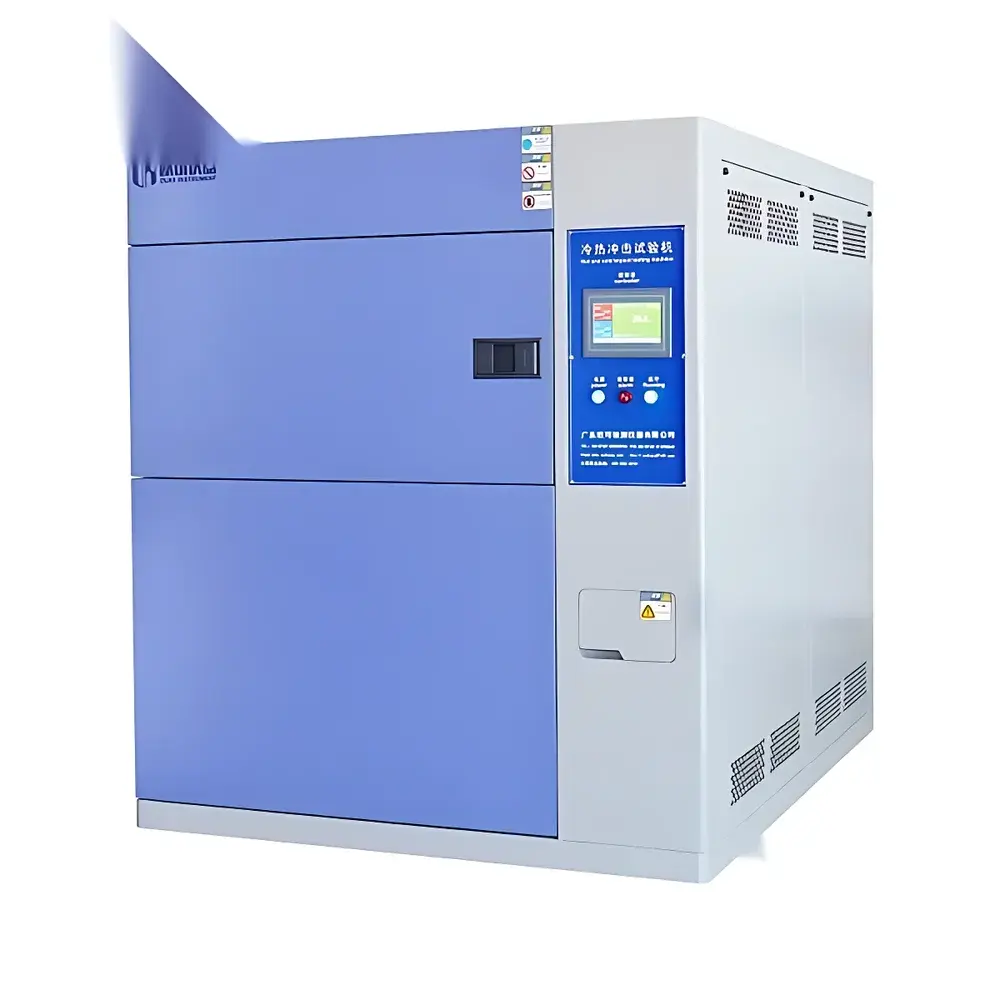
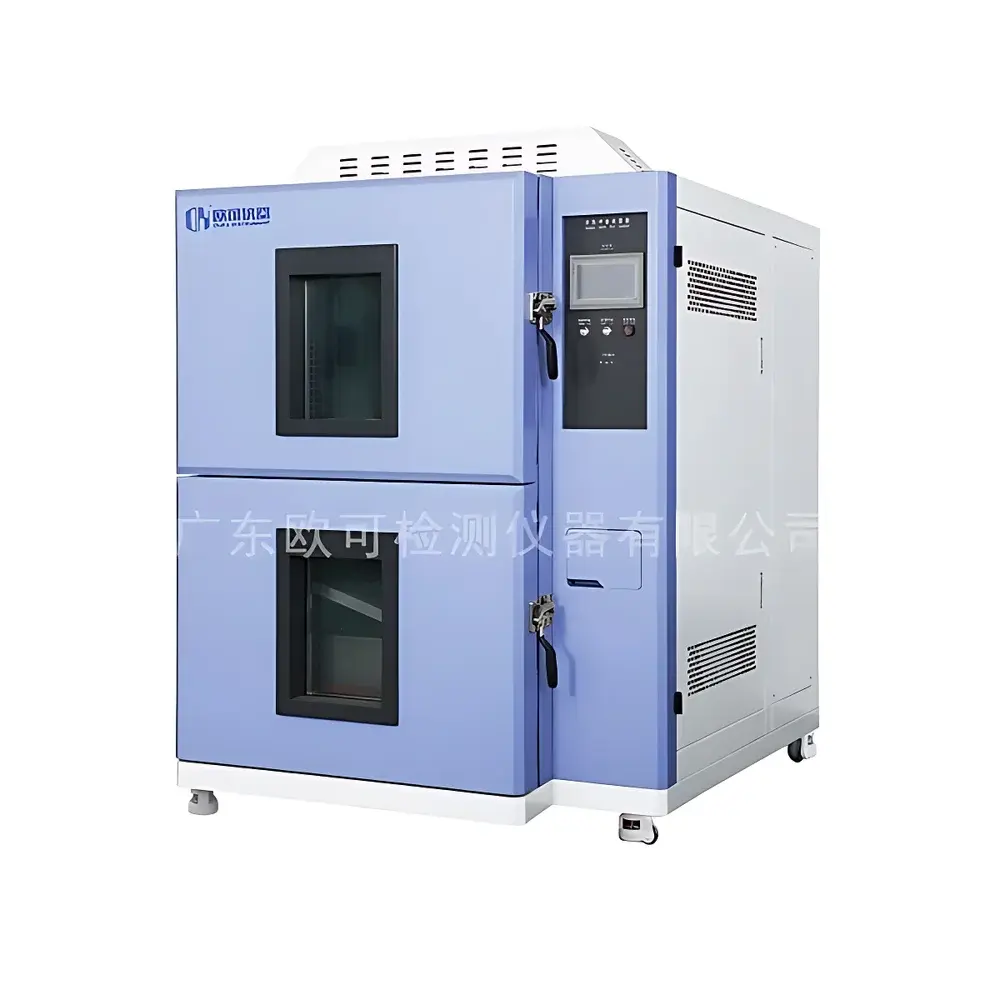
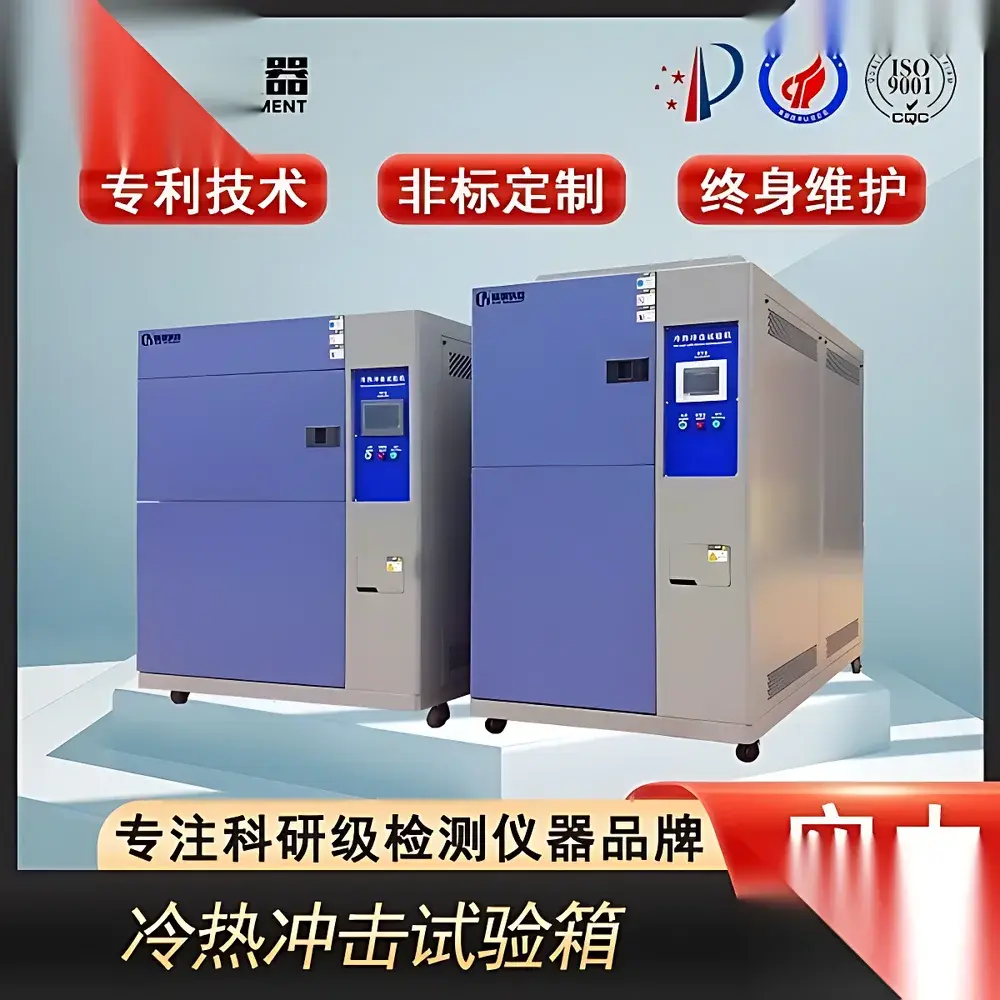
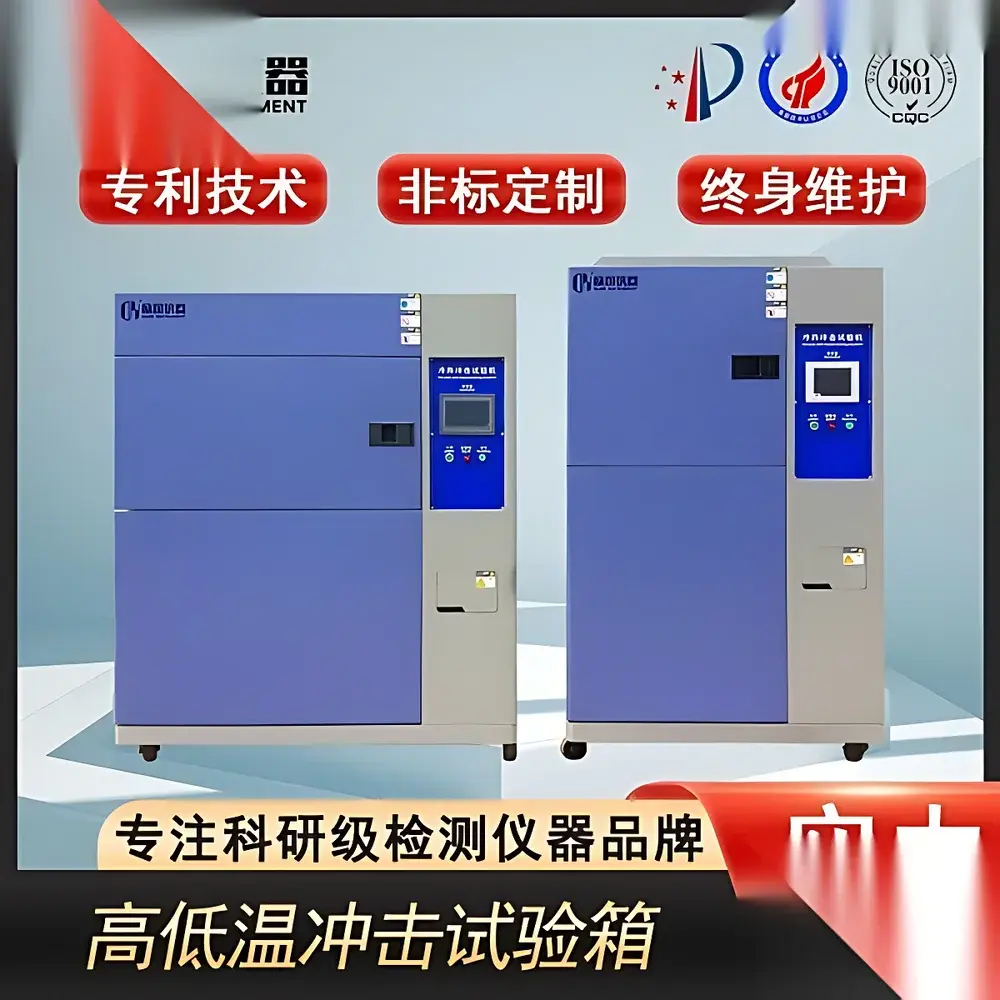
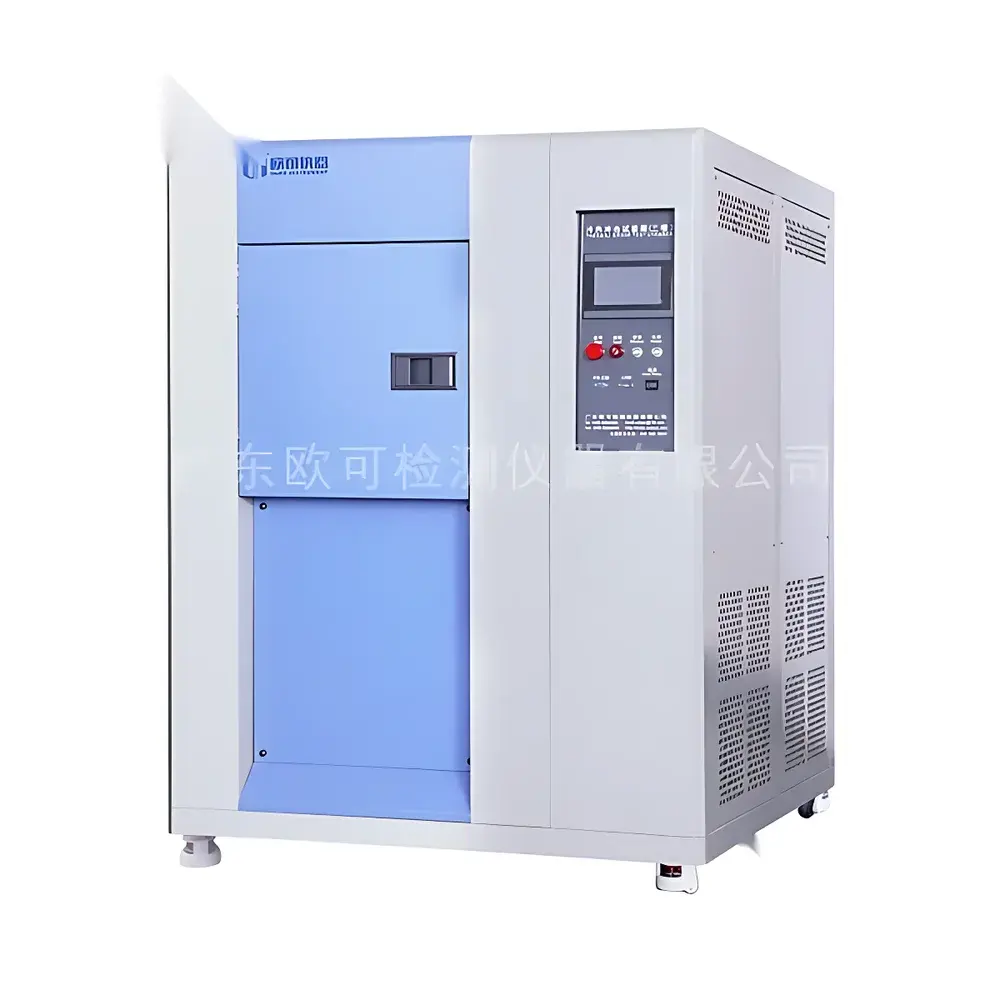
Thermal Shock Test Chamber – Model TS-40L (Generic Industrial Grade)
| Brand | Other Brands |
|---|---|
| Origin | Imported |
| Manufacturer Type | Authorized Distributor |
| Temperature Range | -20 °C to +80 °C |
| Internal Chamber Dimensions | 40 × 40 × 40 cm (D × W × H) |
| Temperature Resolution | 0.1 °C |
| Temperature Control Accuracy | ±2 °C |
| Refrigeration System | R404A refrigerant |
| Compressor | Imported high-efficiency hermetic scroll compressor |
| Cooling Method | Air-cooled condenser |
| Evaporator | Finned-tube coil type |
| Control System | PID auto-tuning with SSR output |
| Display | LED digital temperature & timer display |
| Safety Protections | Compressor overload protection, earth-leakage circuit breaker |
| Chamber Material | 304 stainless steel interior |
| Optional Features | Dual-sensor temperature control, high-temp active cooling, RS-485/USB communication interface |
Overview
The Thermal Shock Test Chamber – Model TS-40L is an industrial-grade environmental test system engineered for rapid and repeatable thermal cycling between extreme low and high temperature zones. Unlike steady-state temperature chambers, this dual-zone shock chamber facilitates accelerated thermal stress testing by enabling abrupt transitions—typically within seconds—between pre-conditioned cold and hot reservoirs. The unit operates on a two-compartment mechanical design (separate hot/cold chambers with transfer mechanism), though the TS-40L variant described here implements a single-chamber, liquid-circulated thermal shock methodology using externally regulated coolant circulation and internal air convection. It is widely deployed in reliability validation of electronic assemblies, automotive components, polymer encapsulants, PCB substrates, and aerospace materials per IEC 60068-2-14, MIL-STD-810H Method 503.5, and JESD22-A104. Its core function is to induce thermo-mechanical fatigue through repeated expansion/contraction cycles, revealing latent defects such as interfacial delamination, solder joint cracking, or sealant micro-fracturing.
Key Features
- Single-chamber architecture with high-uniformity forced-air convection and integrated liquid thermal exchange loop, achieving ±0.1 °C temperature uniformity across the 40 L working volume (40 × 40 × 40 cm).
- PID auto-tuning digital controller with SSR solid-state relay output ensures stable setpoint maintenance and minimizes overshoot during ramp transitions.
- Hermetically sealed, imported high-efficiency scroll compressor paired with R404A refrigerant—a low-GWP, ASHRAE-compliant alternative meeting EU F-Gas Regulation (EU) No 517/2014 requirements.
- Corrosion-resistant 304 stainless steel interior with seamless cylindrical tank geometry eliminates dead zones and enhances thermal homogeneity; includes bottom-mounted drain valve for easy heat transfer fluid replacement.
- Dual-protection safety architecture: dedicated compressor overheat and overcurrent monitoring plus residual-current circuit breaker (RCCB) compliant with IEC 61000-4-5 surge immunity standards.
- External circulation port enables closed-loop cooling of external process equipment (e.g., laser diodes, spectrometers, or reaction vessels), extending utility beyond chamber-based testing.
Sample Compatibility & Compliance
The TS-40L accommodates samples up to 35 cm in maximum dimension and 25 kg in mass. Its open-bay configuration supports fixtures, DUT carriers, and custom jigs without obstruction from internal coils or baffles. The chamber meets electromagnetic compatibility (EMC) requirements per EN 61326-1 for laboratory use and conforms to electrical safety standards IEC 61010-1. While not certified to UL 1249 or CSA C22.2 No. 61010-1 out-of-the-box, it is supplied with documentation supporting integration into ISO/IEC 17025-accredited laboratories. All control firmware logs timestamped temperature profiles with audit-trail capability suitable for GLP/GMP environments when paired with optional RS-485 data logging.
Software & Data Management
Standard operation requires no PC connection—full local control via front-panel LED interface with real-time temperature readout and programmable soak/timer functions. Optional USB or RS-485 interfaces enable bidirectional communication with third-party SCADA or LIMS platforms (e.g., LabVIEW, MATLAB, or Siemens Desigo CC). Logged data includes chamber setpoint, actual sensor readings (primary and optional secondary probe), compressor status, and elapsed cycle time. Export formats include CSV and XML; raw logs retain millisecond-level timestamps for failure root-cause analysis. Firmware supports user-defined alarm thresholds and configurable event-triggered data capture.
Applications
- Qualification testing of surface-mount technology (SMT) assemblies per IPC-J-STD-020 and JEDEC JESD22-A104.
- Evaluation of thermal interface material (TIM) performance under cyclic loading.
- Accelerated aging studies of lithium-ion battery modules and electrolyte stability.
- Validation of optical adhesive bonds in camera modules subjected to automotive thermal profiles.
- Material coefficient-of-thermal-expansion (CTE) mismatch screening for multi-layer ceramic packages.
- Pre-conditioning of sensors and MEMS devices prior to functional testing at operational extremes.
FAQ
What is the typical thermal transition rate achievable between -20 °C and +80 °C?
Transition times depend on sample mass and thermal mass loading but typically range from 15–25 seconds under no-load conditions, consistent with Class 2 thermal shock profiles defined in IEC 60068-2-14.
Can the chamber operate continuously at 80 °C while simultaneously cooling a separate external device?
Yes—the external circulation port supports simultaneous internal chamber temperature maintenance and auxiliary cooling at flow rates up to 12 L/min, provided the chiller capacity is appropriately derated.
Is R404A refrigerant serviceable in regions with strict fluorocarbon regulations?
R404A remains permissible for servicing existing equipment in most jurisdictions under Article 11 exemptions; however, end users are advised to consult local EPA or EEA guidelines and consider future retrofit paths to lower-GWP alternatives such as R454C.
Does the optional dual-sensor mode support independent control of internal chamber and external load temperatures?
Yes—when enabled, the system prioritizes maintaining the external load temperature as primary setpoint, dynamically modulating heater and compressor output to satisfy both chamber and loop demands.
What calibration documentation is supplied with the unit?
Each unit ships with a factory-assembled temperature uniformity report (per ASTM E742) and NIST-traceable sensor calibration certificate for the primary Pt100 RTD; field recalibration intervals are recommended annually or per ISO/IEC 17025 internal procedures.



