
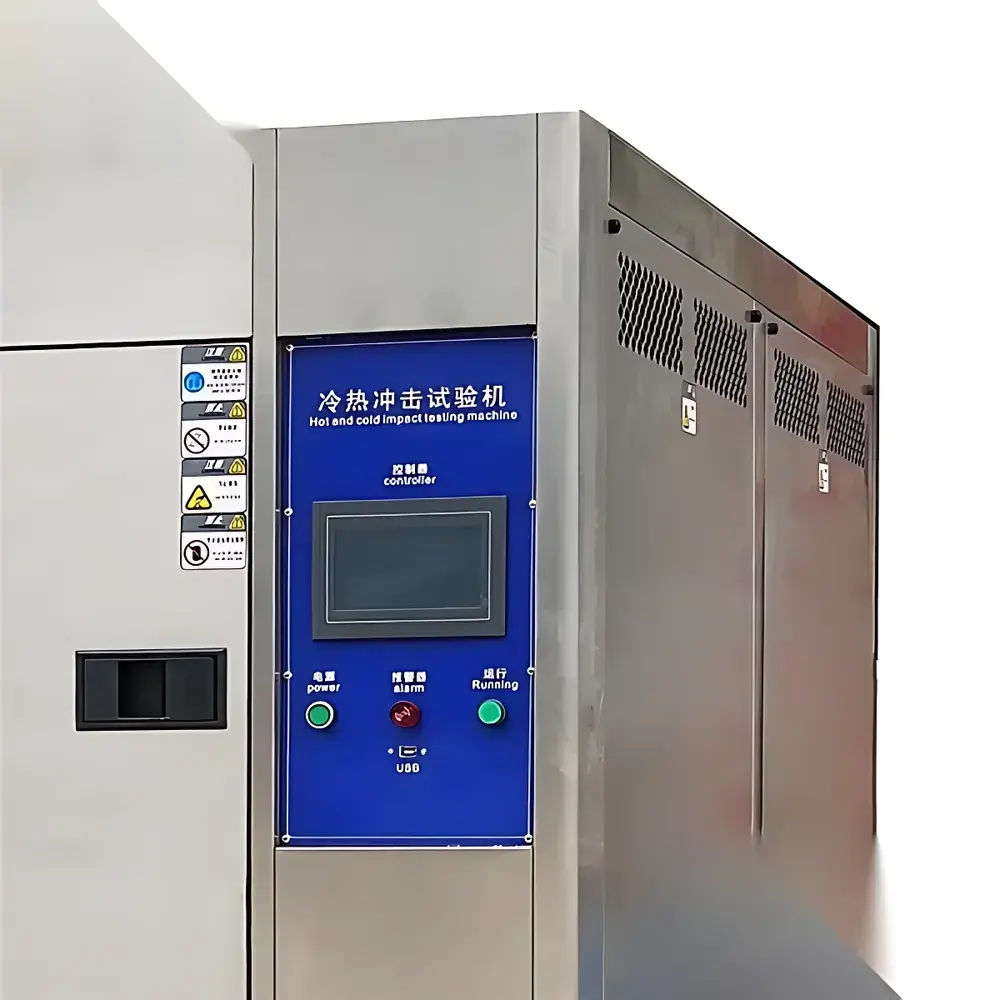
Thermal Shock Test Chamber – Rapid Temperature Transition Environmental Chamber
| Brand | OEM |
|---|---|
| Origin | Imported |
| Manufacturer Type | Authorized Distributor |
| Price | USD 14,500 (FOB) |
| Temperature Range | −70 °C to +180 °C |
| Transition Time (−40 °C ↔ +125 °C) | ≤15 s (air-to-air, standard configuration) |
| Thermal Soak Time | Adjustable from 1 min to 999 h 59 min per segment |
| Cycle Count | 1–999 cycles programmable |
| Control System | PID-based PLC with auto-tuning |
| Communication Interfaces | RS-232, RS-485, USB, Ethernet (LAN) |
| Compliance | ASTM D5229/D5229M, ISO 16750-4, MIL-STD-810H Method 503.5, IEC 60068-2-14 |
Overview
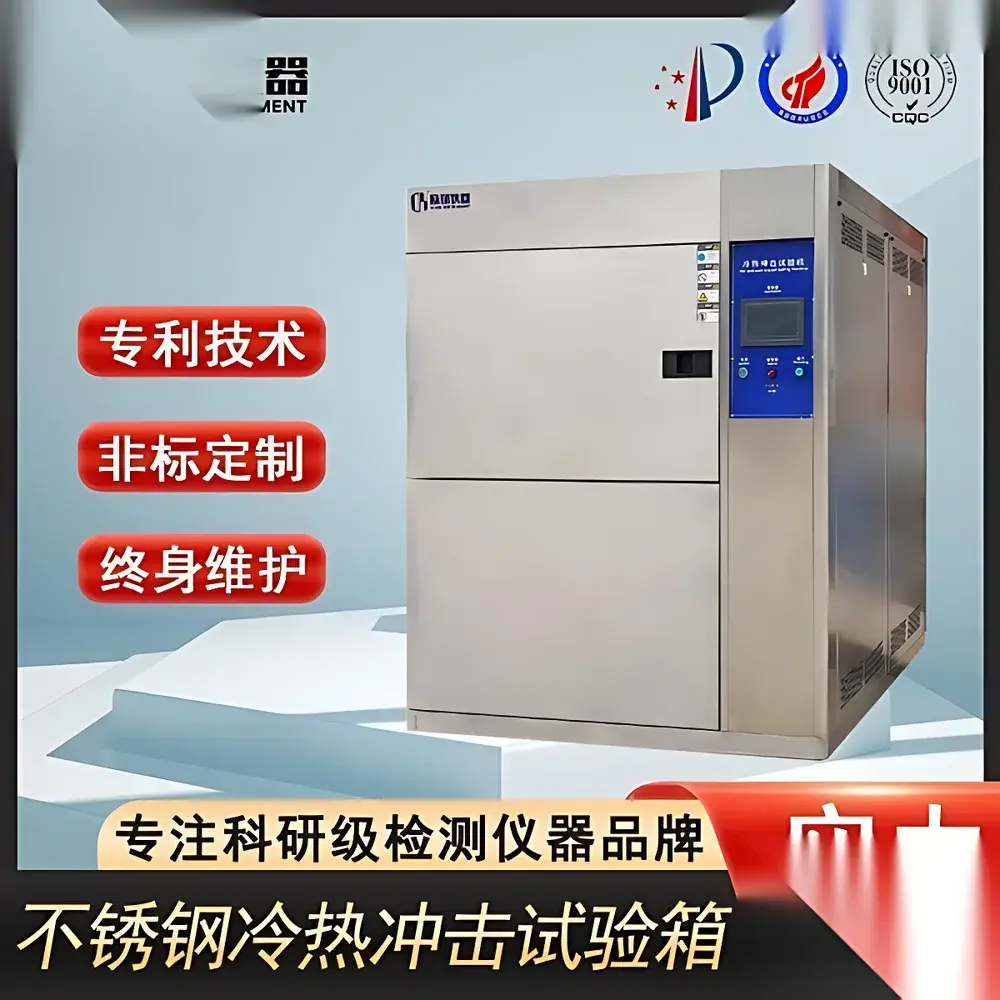
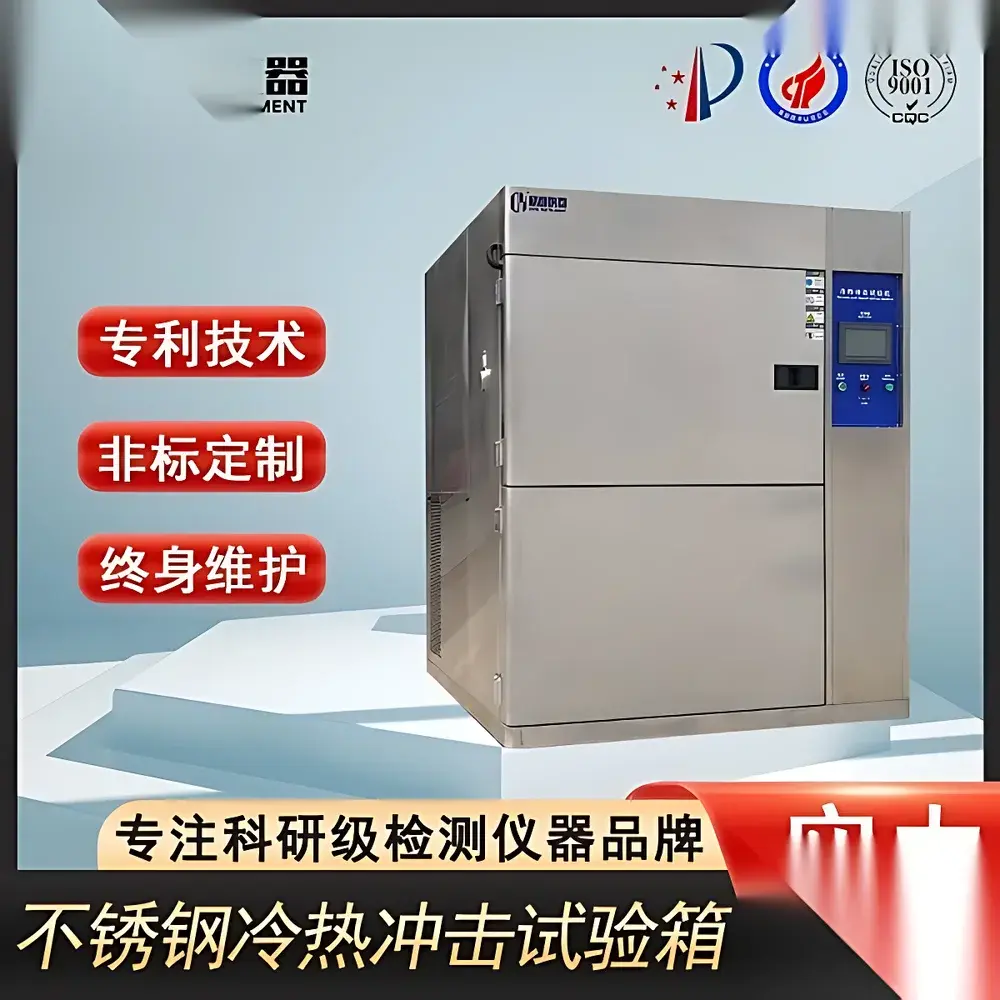
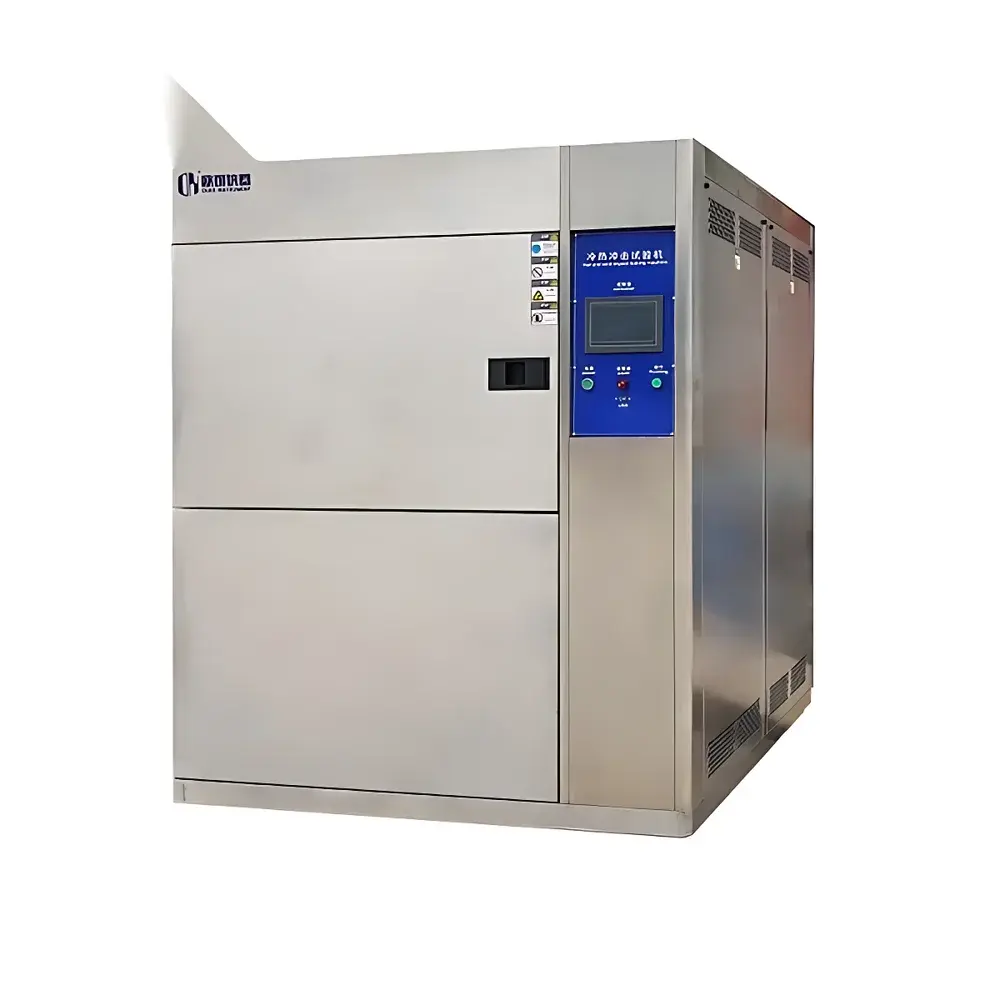
The Thermal Shock Test Chamber – Rapid Temperature Transition Environmental Chamber is an industrial-grade air-to-air thermal shock system engineered for accelerated reliability validation of electronic components, automotive ECUs, aerospace assemblies, and high-performance materials. It operates on a dual-chamber (hot/cold) or single-chamber with rapid air exchange architecture—depending on configuration—to induce controlled, repeatable thermal transients between extreme temperature extremes. Unlike conventional temperature cycling chambers, this system achieves sub-15-second transitions between −40 °C and +125 °C via high-velocity forced convection, optimized airflow dynamics, and independently regulated hot/cold reservoirs. Its core function is to expose test specimens to abrupt thermal stress gradients that simulate real-world field failures—including solder joint fatigue, delamination in multilayer PCBs, sealant cracking, and coefficient-of-thermal-expansion (CTE) mismatch-induced microfractures. The chamber complies with key international qualification standards including ASTM D5229/D5229M (low-temperature impact resistance), ISO 16750-4 (road vehicles—environmental conditions), MIL-STD-810H Method 503.5 (temperature shock), and IEC 60068-2-14 (change of temperature). All thermal profiles are executed under closed-loop PID control with real-time deviation monitoring and automatic energy modulation to maintain thermal stability without overcooling or overheating.
Key Features
- Programmable multi-segment thermal shock profiles: up to 100 independent test specifications stored in non-volatile memory
- Precision temperature control: ±0.5 °C uniformity across working volume (per IEC 60068-3-5), ±0.3 °C stability at setpoint
- Automated operational sequencing: fully programmable start/stop times, cycle counts (1–999), soak durations (1 min–999 h 59 min), and transition triggers
- Dual independent refrigeration and heating circuits: NiCr wire heaters + cascade mechanical refrigeration (R404A/R23) with variable-speed compressors and electronic expansion valves
- Robust chamber construction: exterior cold-rolled steel with epoxy powder coating; interior SUS304 stainless steel; high-density polyurethane foam + ultra-fine glass wool insulation (thermal conductivity ≤0.022 W/m·K)
- Integrated safety architecture: triple-redundant over-temperature cut-off, compressor high-pressure protection, door interlock, refrigerant leak detection, and PLC-monitored fault logging
- Energy-optimized operation: adaptive load-matching algorithm dynamically adjusts refrigeration capacity to actual thermal demand—reducing power consumption by up to 32% vs. fixed-capacity systems
Sample Compatibility & Compliance
The chamber accommodates standard test specimens up to 500 mm × 500 mm × 500 mm (W×D×H) with optional internal shelves and universal mounting fixtures. A 50 mm diameter cable/port access is provided on the left side wall (IP65-rated grommet included) for real-time signal monitoring, power feedthrough, or external sensor integration. All operational parameters—including temperature ramp rates, dwell times, and cycle history—are traceable and auditable, supporting GLP/GMP documentation requirements. Data integrity is preserved via time-stamped logs with user authentication (role-based access control), meeting FDA 21 CFR Part 11 criteria when paired with compliant software. Calibration certificates (NIST-traceable) and IQ/OQ documentation packages are available upon request.
Software & Data Management
The embedded controller supports local HMI operation and full remote supervision via Ethernet (TCP/IP), RS-485 Modbus RTU, or USB virtual COM port. Standard communication protocols enable seamless integration into LabVIEW, MATLAB, or MES platforms. Optional PC-based software provides graphical profile editing, live trend visualization, alarm event mapping, and automated PDF report generation (including pass/fail status per test segment). All data—including raw sensor readings, actuator states, and environmental deviations—is timestamped with millisecond resolution and exportable in CSV or XML format. Audit trails record operator login/logout events, parameter modifications, and emergency stops—retained for ≥18 months without manual intervention.
Applications
- Qualification testing of automotive ADAS modules, battery management systems (BMS), and power electronics under JEDEC JESD22-A104 conditions
- Reliability screening of semiconductor packages (QFN, BGA, CSP) per IPC-9701 and AEC-Q200
- Material compatibility assessment for conformal coatings, potting compounds, and thermal interface materials (TIMs)
- Failure mode analysis (FMA) of MEMS devices, optical sensors, and hermetic ceramic packages
- Pre-shipment stress screening (HASS/HALT pre-screen) in contract manufacturing facilities
- Research-level investigation of thermomechanical fatigue mechanisms in metal–polymer composites
FAQ
What is the minimum achievable temperature transition time between −70 °C and +180 °C?
Standard air-to-air configurations achieve ≤25 seconds for full-range transitions; optional high-flow ducting and pre-conditioned reservoirs reduce this to ≤18 seconds (verified per IEC 60068-2-14 Annex B).
Does the system support custom thermal shock profiles beyond the built-in 100 templates?
Yes—users may import/export .csv-defined profiles with unlimited segments, variable ramp rates, and conditional logic (e.g., “if T > 150 °C, hold for 3 min, then initiate next cycle”).
Is third-party calibration and certification available?
NIST-traceable calibration (temperature uniformity, transition rate, stability) is offered annually; full IQ/OQ/PQ validation support is provided for regulated industries.
Can the chamber operate unattended for extended durations?
Fully—equipped with watchdog timers, redundant safety cutoffs, email/SMS alerting (via optional gateway), and automatic shutdown on critical fault detection.
What refrigerants are used, and are they compliant with current environmental regulations?
Primary circuit: R404A (GWP 3922); secondary low-temp stage: R23 (GWP 14800). Both comply with EU F-Gas Regulation (No. 517/2014) Phase-down schedules through 2030; retrofit kits for lower-GWP alternatives (e.g., R450A, R454C) are available.



