
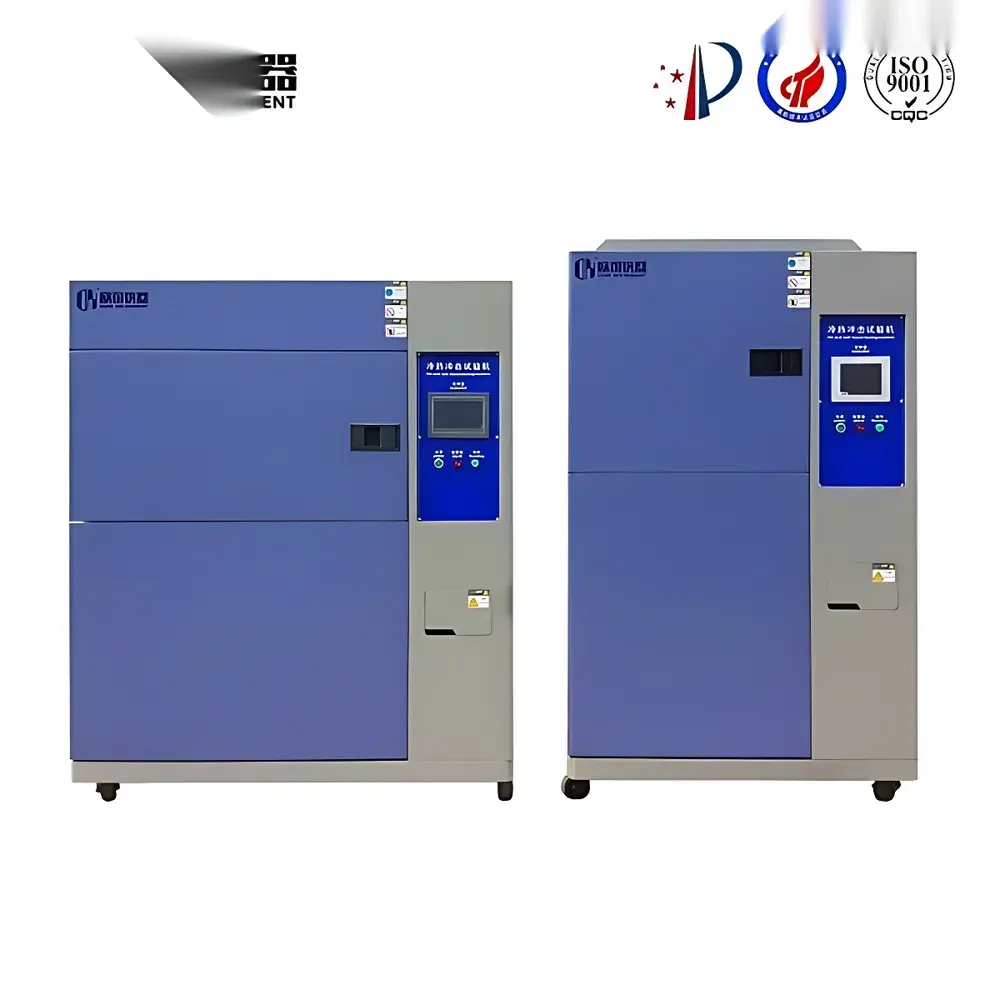
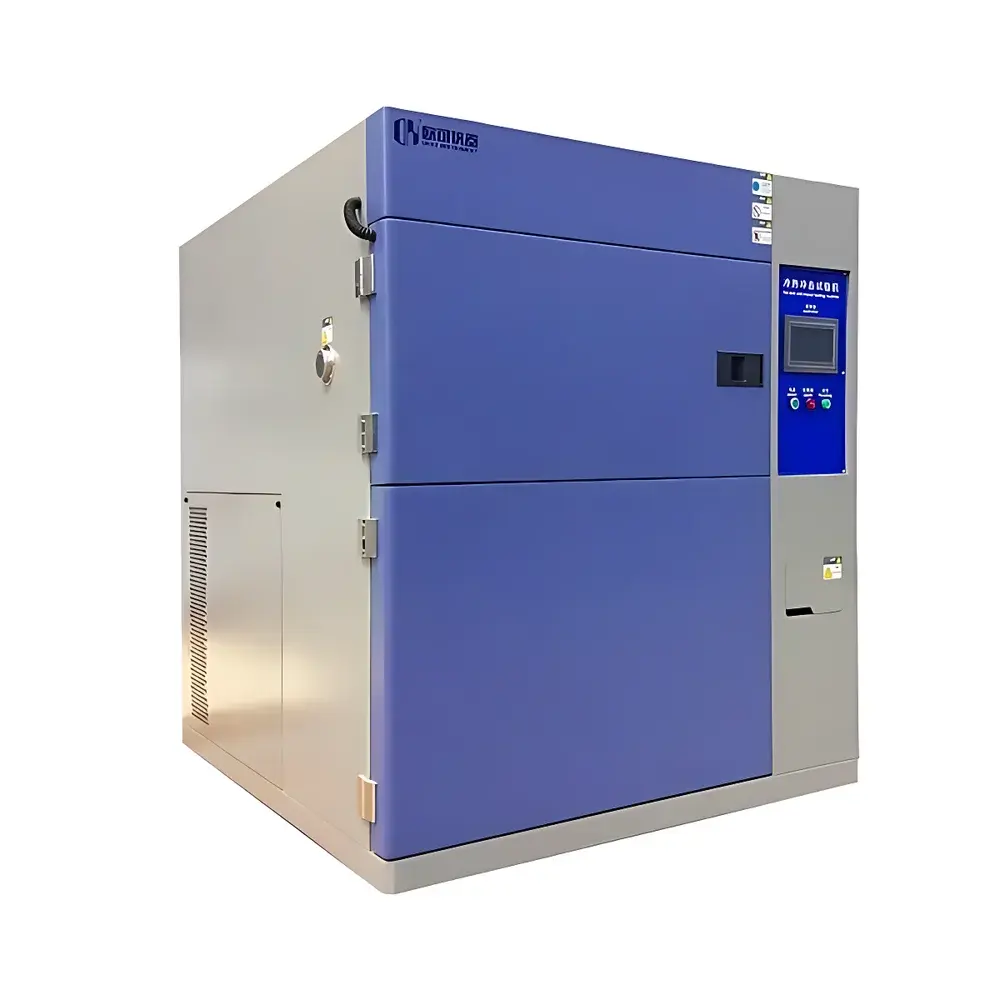
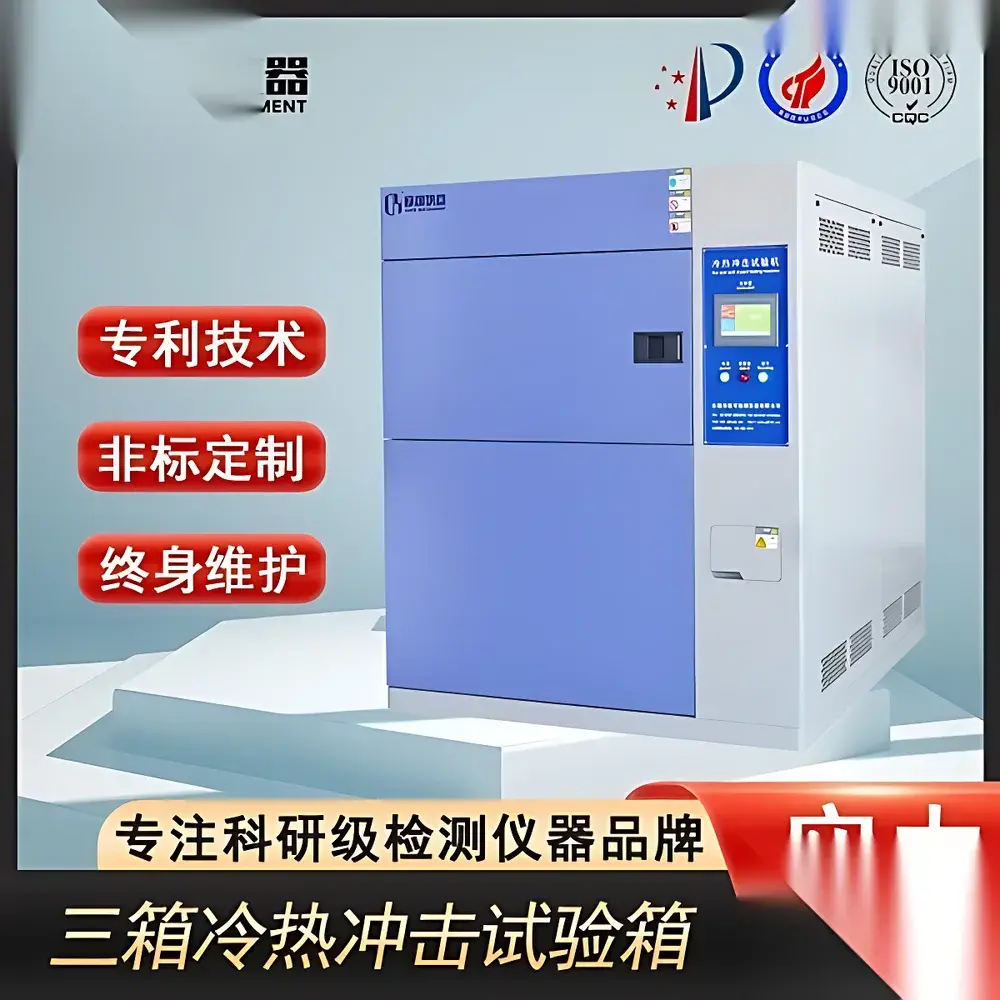
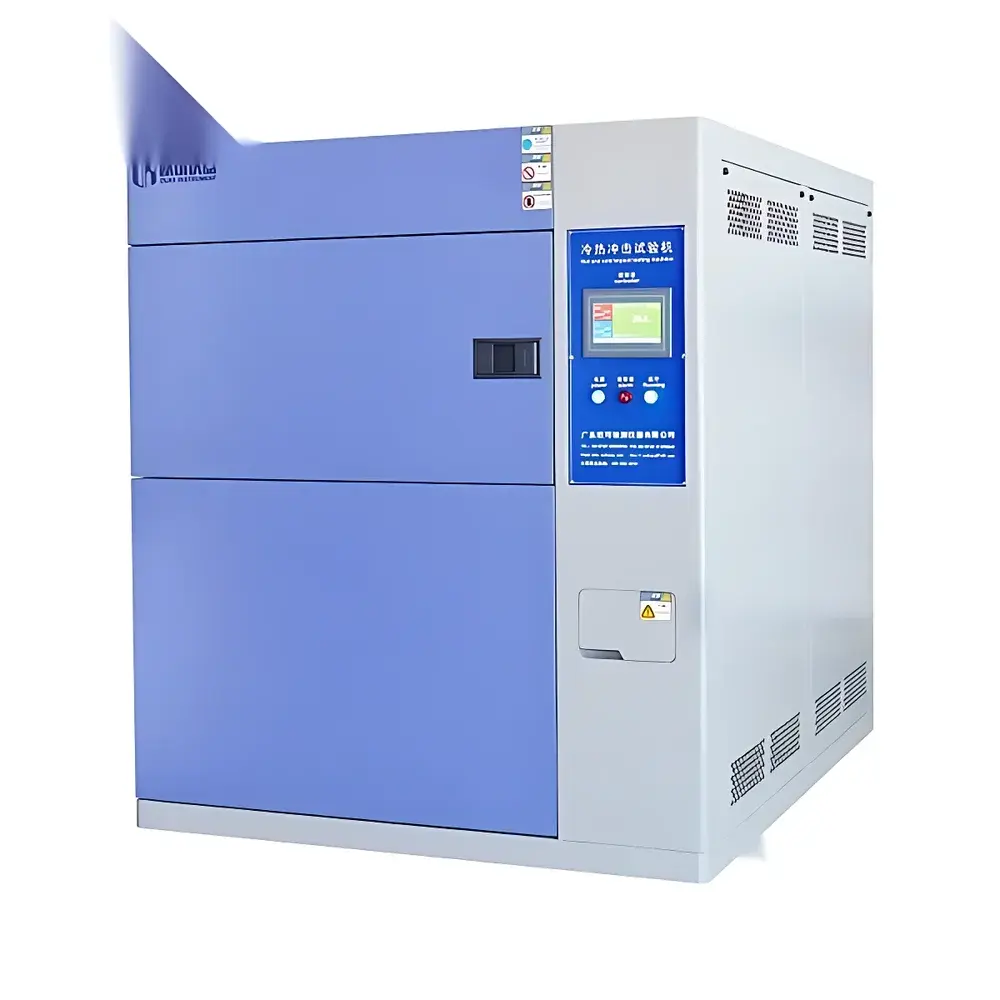
Thermal Shock Test Chamber – Standard Dual-Compartment or Three-Zone Configuration
| Brand | OEM / Custom-Built |
|---|---|
| Origin | Imported |
| Manufacturer Type | Authorized Distributor |
| Pricing | USD 11,200 (FOB) |
Overview
The Thermal Shock Test Chamber is an engineered environmental simulation system designed to evaluate the structural integrity and functional reliability of materials and components under rapid, extreme temperature transitions. Operating on the principle of controlled thermal cycling between independently regulated high-temperature and low-temperature zones, this chamber subjects test specimens to defined thermal shock profiles—typically ranging from −65 °C to +150 °C—with transition times as short as 10–15 seconds between zones (per IEC 60068-2-14, Test N). Unlike standard temperature cycling chambers, thermal shock systems eliminate intermediate ramping phases, thereby accelerating failure modes associated with coefficient-of-thermal-expansion (CTE) mismatch, interfacial delamination, solder joint fatigue, and microcrack propagation in metals, polymers, elastomers, PCBs, and semiconductor packages.
Key Features
- Dual-compartment (hot/cold) or three-zone (hot/cool/test) architecture—configurable per application requirements and compliance with GJB 150.5, MIL-STD-810H Method 503.5, and IEC 60068-2-14
- Independent dual-refrigeration circuit: primary high-temperature loop (R404A) coupled with secondary low-temperature loop (R23), integrated via a stainless-steel evaporative condenser for stable sub-zero performance down to −70 °C
- Water-cooled condensing system utilizing industrial-grade semi-hermetic compressors (imported from Germany), requiring external cooling tower capacity of ≥10 m³/h at 32 °C ambient inlet water temperature
- Energy modulation control: stepless capacity regulation of compressor output and refrigerant flow to maintain thermal stability while minimizing power consumption and mechanical wear
- Double-wall insulated chamber construction with vacuum-insulated panels (VIPs) and polyurethane foam (≥150 mm thickness) to achieve ≤0.5 K/min internal temperature drift during dwell periods
- Integrated safety interlocks including over-temperature cut-off, refrigerant pressure monitoring, door-open alarm, and emergency stop with mechanical latch release
Sample Compatibility & Compliance
This chamber accommodates test specimens up to 500 mm × 500 mm × 500 mm (W×D×H) in volume and ≤30 kg in mass. It supports both static placement (three-zone configuration) and dynamic basket transfer (dual-zone configuration), enabling evaluation of both stationary assemblies and modular subassemblies subject to mechanical displacement during thermal transients. The system complies with international and industry-specific standards including:
- IEC 60068-2-14 (Test N: Temperature Change)
- GB/T 2423.22–2002 (Temperature Change Testing)
- GJB 150.5A–2009 (Military Standard: Temperature Shock)
- MIL-STD-810H Method 503.5 (Temperature Shock)
- QC/T 17–1992 (Automotive Component Environmental Durability)
- EIA-364-32 (Thermal Shock Testing of Electrical Connectors)
- ASTM D648 (Deflection Temperature Under Load) — applicable for polymer qualification protocols
All configurations are compatible with GLP/GMP-aligned validation documentation packages, including IQ/OQ/PQ protocols, traceable calibration certificates (NIST-traceable Pt100 sensors), and uncertainty budgets per ISO/IEC 17025.
Software & Data Management
Equipped with a Windows-based control interface running proprietary firmware (v4.2+), the chamber provides real-time logging of chamber zone temperatures, specimen surface thermocouple readings (optional input), cycle count, dwell time, and transition duration. Data export is supported in CSV and Excel-compatible formats, with timestamped records compliant with FDA 21 CFR Part 11 requirements—including electronic signature capability, audit trail activation, and role-based user access control (administrator/operator/viewer). Optional integration with LIMS or MES platforms is available via Modbus TCP or OPC UA protocol support.
Applications
- Qualification testing of aerospace avionics enclosures per DO-160 Section 4.5
- Reliability screening of automotive ECUs, battery modules, and ADAS sensor housings
- Failure analysis of flip-chip BGA solder joints under accelerated thermal stress
- Validation of conformal coating adhesion on printed circuit boards
- Material compatibility assessment for cryogenic-to-high-temperature sealants and gaskets
- Pre-shipment stress screening for consumer electronics before field deployment
FAQ
What is the typical temperature transition time between hot and cold zones?
Transition time is configurable between 5 and 30 seconds depending on basket design, load mass, and setpoint delta; standard dual-zone units achieve ≤15 s for 100 kg air mass with ±2 °C uniformity.
Does the system include calibration documentation for regulatory audits?
Yes—factory calibration certificate with measurement uncertainty, sensor traceability to national standards, and optional on-site IQ/OQ execution by certified engineers.
Is remote monitoring supported?
Standard Ethernet port enables SNMP-based network status reporting and optional cloud telemetry gateway (add-on module).
Can the chamber be validated to ISO 17025 requirements?
Yes—the system meets metrological prerequisites for accredited laboratory use when paired with documented uncertainty analysis and third-party verification of thermal uniformity per IEC 60068-3-5.
What maintenance intervals are recommended for the refrigeration system?
Compressor oil analysis and filter replacement every 2,000 operating hours; full refrigerant circuit leak check and pressure test annually per ASHRAE 15 guidelines.



