
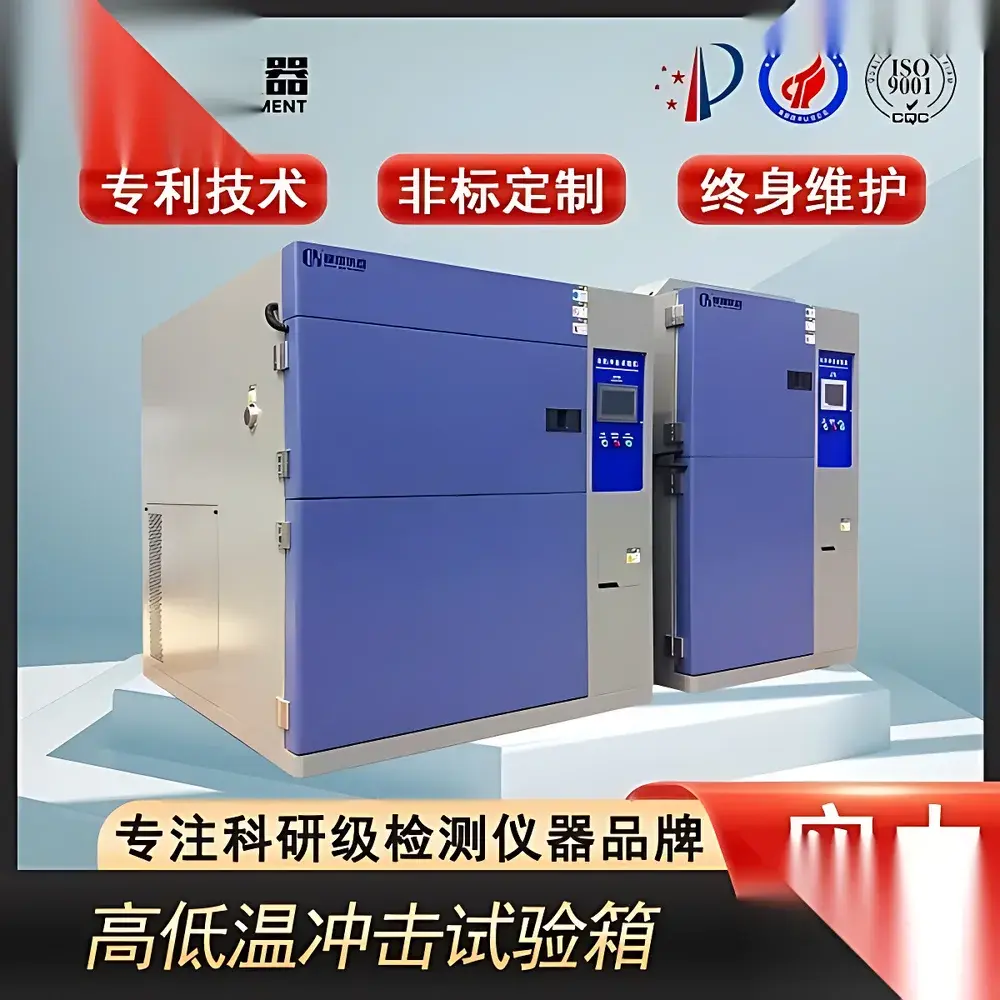
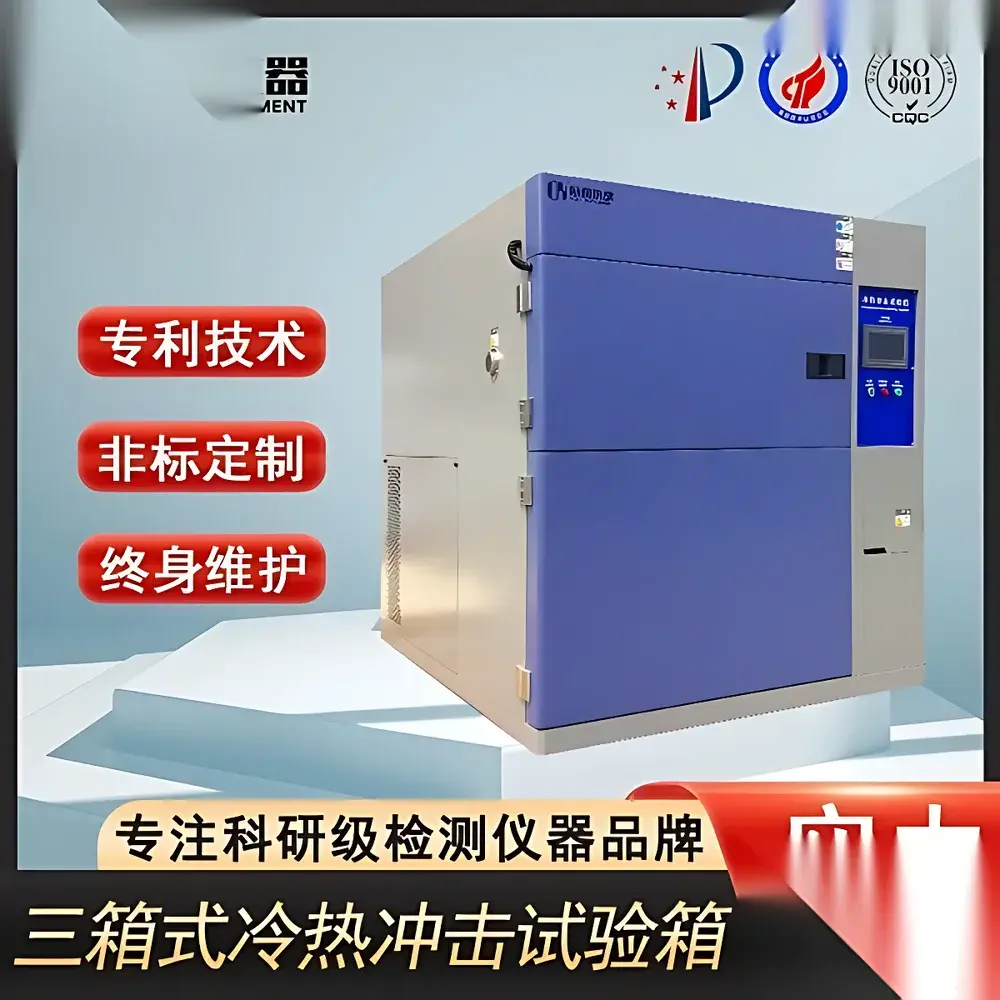
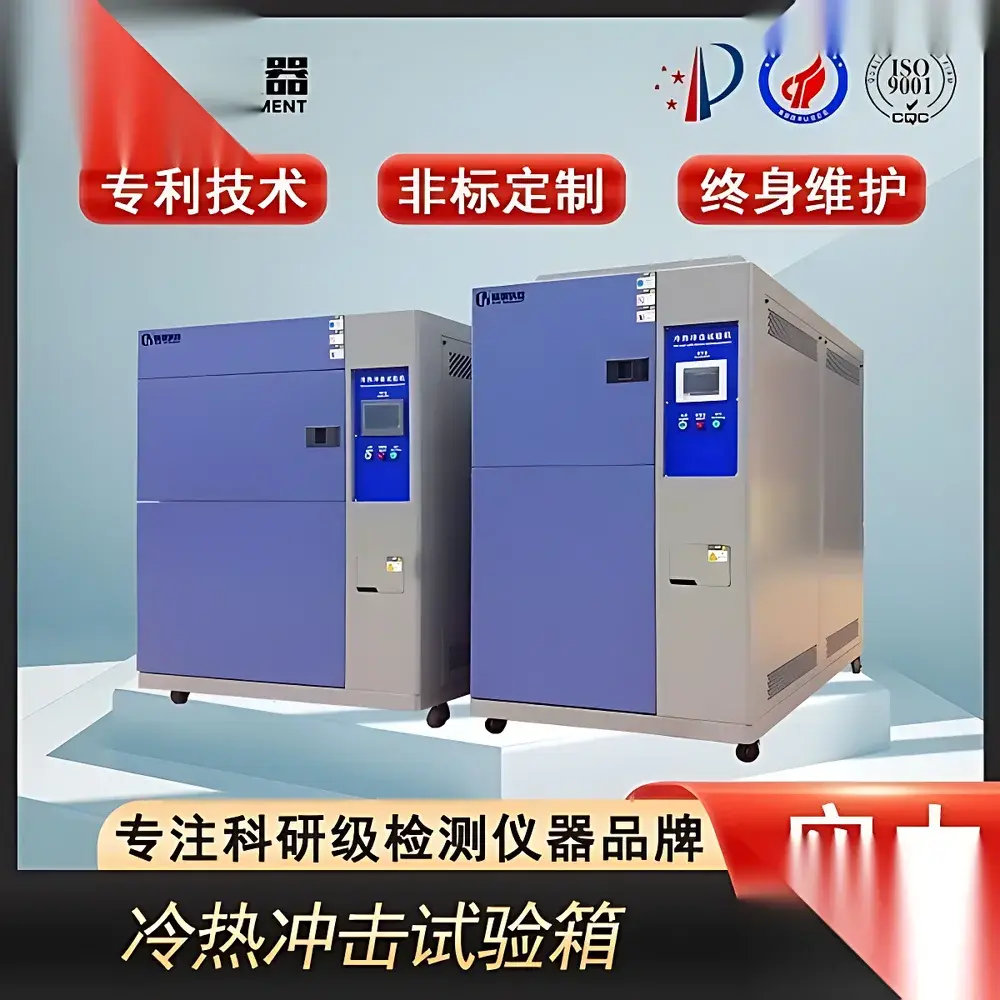
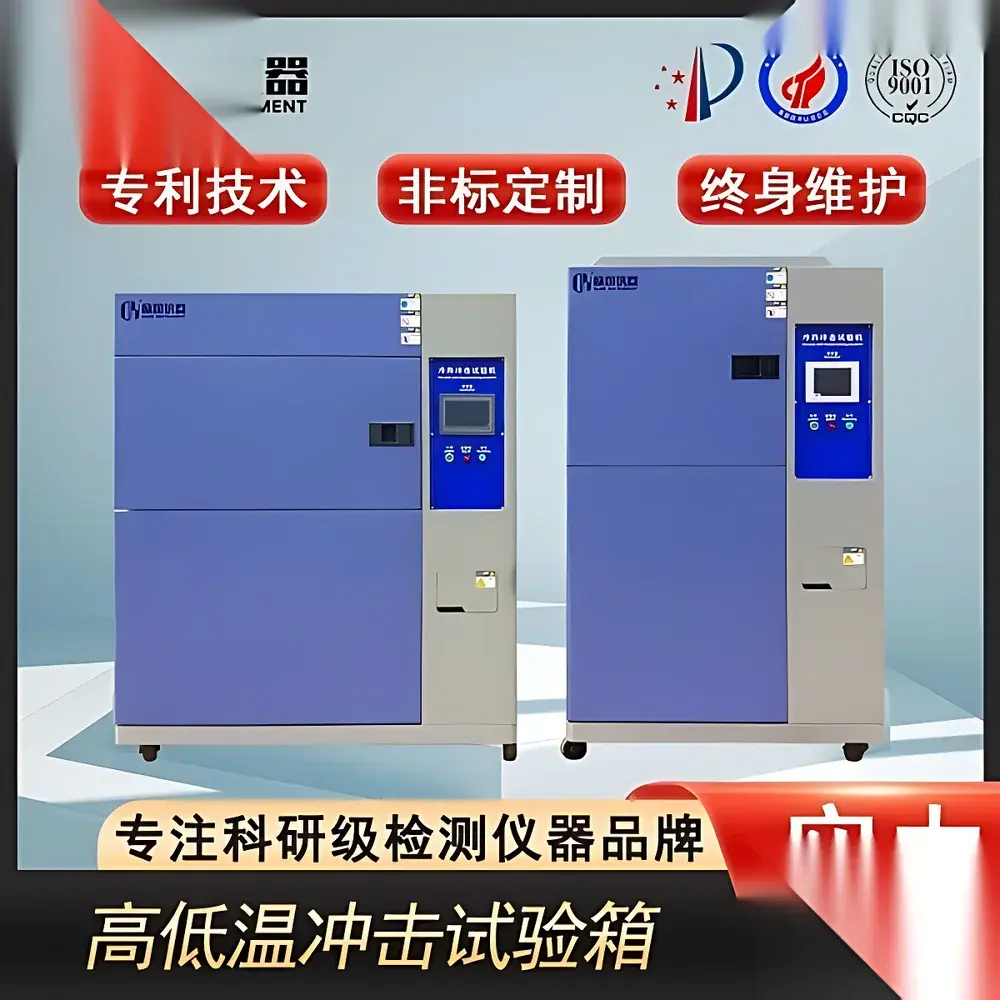
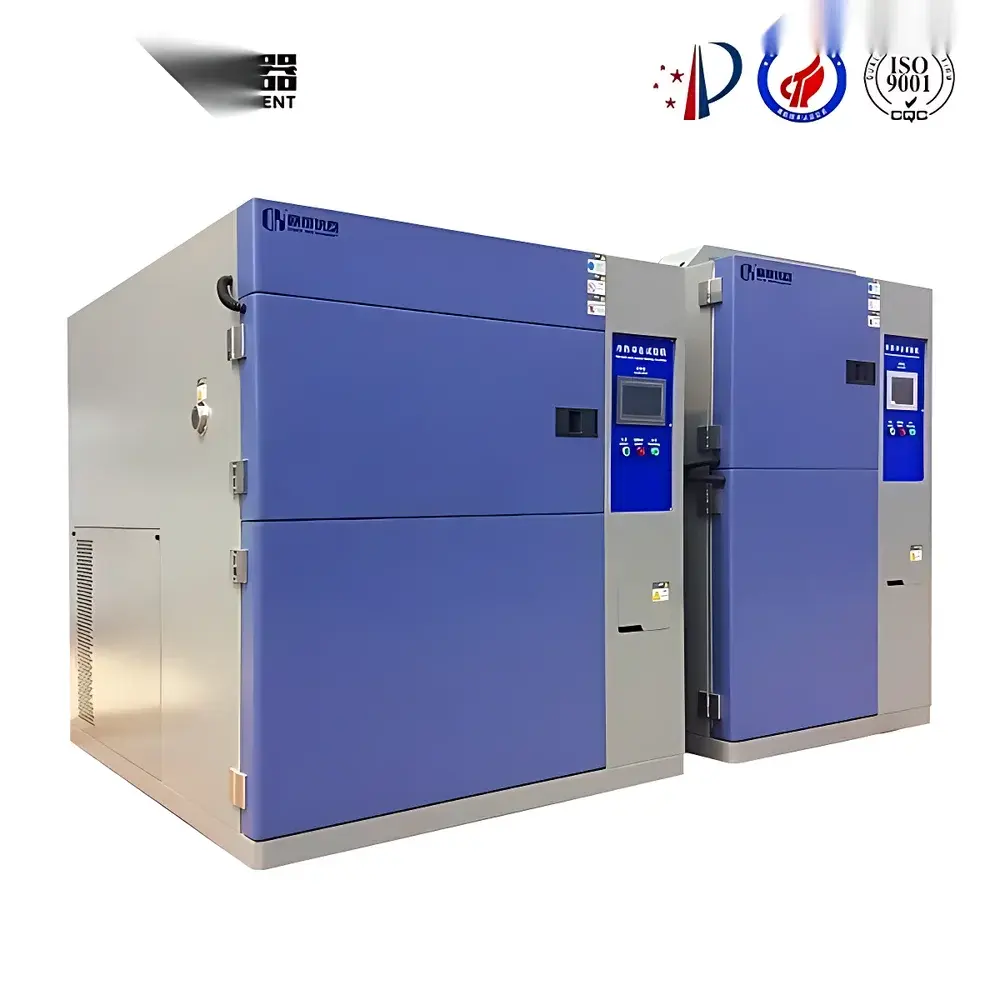
Thermal Shock Test Chamber – Standard Dual- or Tri-Zone Environmental Test System
| Brand | OEM / Custom-Built |
|---|---|
| Origin | Imported |
| Manufacturer Type | Authorized Distributor |
| Pricing | USD 11,200 (FOB) |
Overview
The Thermal Shock Test Chamber is an engineered environmental test system designed to evaluate material and component reliability under rapid, repetitive transitions between extreme high and low temperature extremes. It operates on the fundamental principle of thermal shock—inducing mechanical stress through differential expansion and contraction across heterogeneous materials, interfaces, or layered structures. This chamber supports both dual-zone (hot/cold) and tri-zone (hot/ambient/cold) configurations, enabling precise control over dwell time, transfer speed, and thermal gradient magnitude. Unlike standard temperature cycling chambers, thermal shock systems prioritize rapid transition rates (typically ≤ 15 seconds for basket-type dual-zone units; ≤ 5 seconds for pneumatic tri-zone transfer mechanisms), minimizing thermal soak effects and maximizing stress intensity per cycle. The system employs a dual-refrigeration circuit architecture based on the reverse Carnot cycle: each circuit consists of a hermetic scroll compressor, air-cooled condenser, electronic expansion valve, and high-efficiency finned-tube evaporator. Refrigerant R404A (or R507A for ultra-low applications) circulates through thermodynamically optimized loops, delivering stable temperature maintenance at −65 °C to +180 °C with ±0.5 °C uniformity across the test volume.
Key Features
- Dual-configuration flexibility: Selectable hot/cold dual-chamber or hot/ambient/cold tri-chamber layout to match test protocol requirements (e.g., MIL-STD-810H Method 503.5 vs. JEDEC JESD22-A106)
- High-speed transfer mechanism: Pneumatically actuated lift basket (dual-zone) or shuttle-driven specimen carrier (tri-zone) achieving transfer times ≤10 s, certified per IEC 60068-2-14 Annex B
- Independent dual refrigeration circuits: Each zone equipped with dedicated compressors, condensers, and evaporators—eliminating cross-contamination and enabling simultaneous stabilization at opposing setpoints
- Robust thermal insulation: 150 mm vacuum-insulated panels (VIPs) with stainless-steel cladding and argon-filled interstitial layers, reducing heat leakage to <0.8 W/m²·K
- Programmable ramp rates: Adjustable from 1 °C/min to 30 °C/min in linear or step mode; full-cycle logging of chamber wall temperatures, specimen surface thermocouples (optional), and refrigerant pressures
- Fail-safe redundancy: Dual independent overtemperature/overpressure cutouts, refrigerant leak detection via IR sensor array, and uninterruptible power monitoring for critical test interruption handling
Sample Compatibility & Compliance
The chamber accommodates specimens up to 500 mm × 500 mm × 500 mm (W×D×H) with maximum mass loading of 30 kg. Internal workspace features 304 stainless-steel construction, removable perforated shelves, and standardized 1/4″-20 threaded mounting inserts. All models comply with international environmental testing standards including IEC 60068-2-14 (Test N: Change of Temperature), MIL-STD-810H Method 503.5 (Temperature Shock), and ISO 16750-4:2010 (Road vehicles — Environmental conditions and testing for electrical and electronic equipment). Full traceability is maintained for calibration per ISO/IEC 17025-accredited procedures, with optional NIST-traceable temperature mapping reports (9-point grid, 3-layer vertical scan). The system meets electromagnetic compatibility requirements per EN 61326-1 and safety compliance per IEC 61010-1 Ed.3.
Software & Data Management
Control and data acquisition are managed via the integrated TSC-OS v4.2 platform—a deterministic real-time operating system running on an industrial-grade ARM Cortex-A9 processor. The interface supports multi-language operation (English, German, Japanese, Chinese), intuitive drag-and-drop test sequencing, and configurable alarm escalation (email/SMS via Modbus TCP or SNMP). All test logs—including chamber setpoints, actual temperatures, compressor duty cycles, valve positions, and user actions—are timestamped and stored with cryptographic hashing for integrity verification. Audit trails meet FDA 21 CFR Part 11 requirements when paired with optional PKI-based digital signature module and role-based access control (RBAC). Raw data exports as CSV or HDF5 format; trend analysis and statistical process control (SPC) charts (X̄/R, Cpk) are generated automatically post-test.
Applications
- Qualification of automotive ECUs, power modules, and ADAS sensors under thermal shock per AEC-Q200 Rev. D
- Reliability screening of PCB assemblies, solder joints, and embedded passives using JEDEC JESD22-A104E (Temperature Cycling) and JESD22-A106B (Thermal Shock)
- Accelerated life testing of aerospace composites, thermal interface materials (TIMs), and ceramic substrates per SAE AS6012
- Validation of medical device housing seals, battery enclosures, and MEMS packaging per ISO 13485 and IEC 60601-1 Clause 11.2
- Research into intermetallic growth kinetics, delamination thresholds, and coefficient-of-thermal-expansion (CTE) mismatch failure modes
FAQ
What is the difference between thermal shock and temperature cycling?
Thermal shock involves rapid transfer between extreme temperature extremes (typically <15 s), inducing high transient stress; temperature cycling uses slower ramps (≥10 min/half-cycle) and longer dwells to assess cumulative degradation.
Can this chamber perform humidity-assisted thermal shock?
No—this is a dry thermal shock system. Humidity capability requires integration with a separate vapor generator and dew-point controlled humidification subsystem (available as Model TSC-H variant).
Is third-party validation support included?
Yes—factory-installed IQ/OQ documentation packages are provided; PQ execution and site-specific mapping services are available upon request.
What refrigerant is used, and is it compliant with F-Gas Regulation (EU) No 517/2014?
R404A is supplied as standard; R507A or low-GWP alternatives (e.g., R449A) can be specified at order entry to meet regional regulatory requirements.
How often does the system require preventive maintenance?
Compressor oil and filter replacement every 3,000 operational hours; full refrigerant circuit integrity check and temperature uniformity recalibration recommended annually or after 500 shock cycles, whichever occurs first.



