
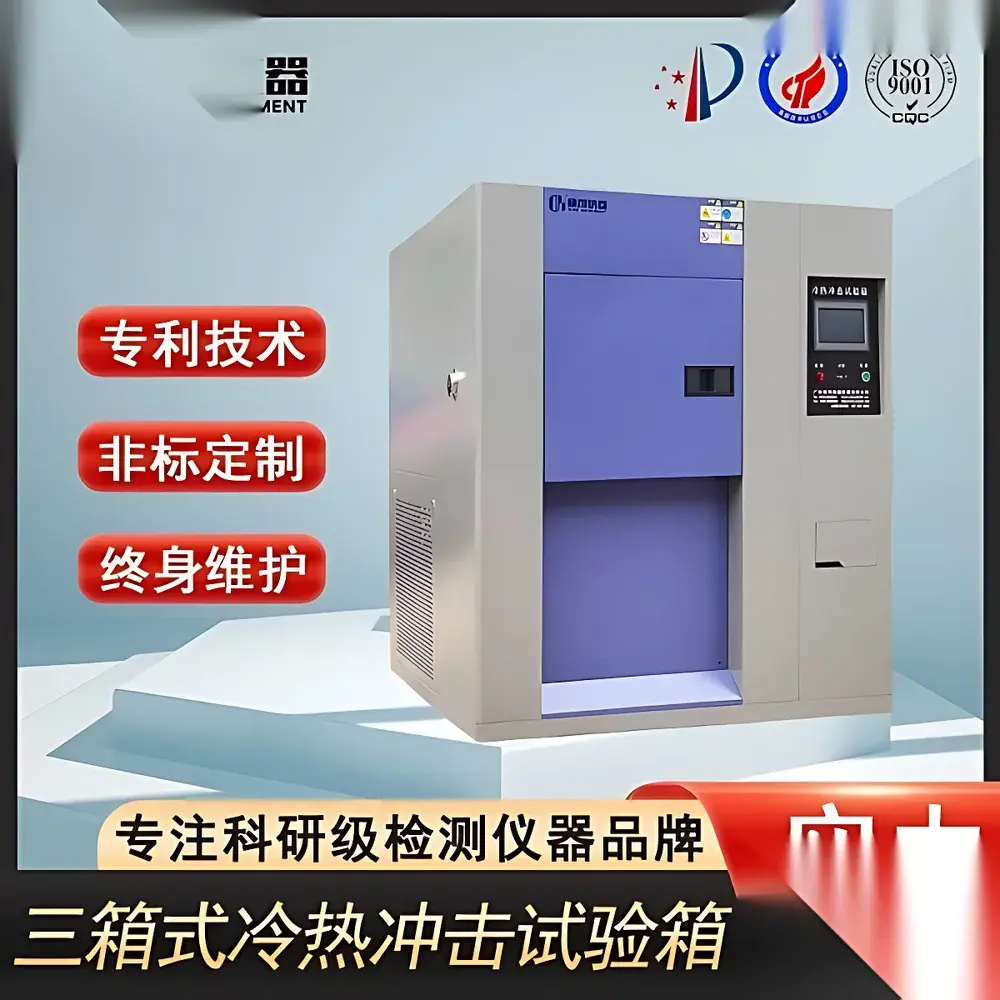
Thermal Shock Test Chamber – TEMI880/TEMI300 Programmable Environmental Test Chamber
| Brand | Other Brands |
|---|---|
| Origin | Imported |
| Manufacturer Type | Authorized Distributor |
| Price | USD 11,200 (FOB) |
| Temperature Range | -70°C to +180°C (typical standard configuration) |
| Thermal Transition Time | ≤15 s (between chambers, typical) |
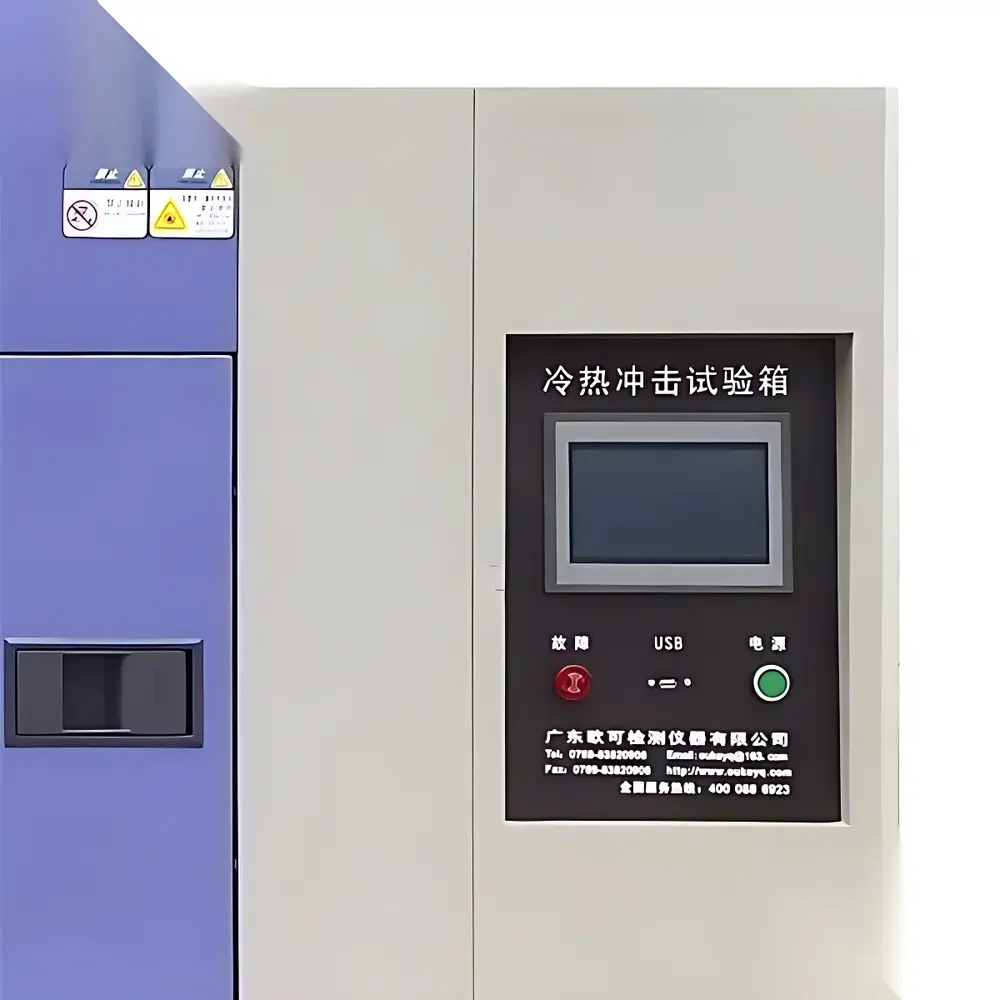
| Control System | TEMI880 Color Touchscreen (EN/CN Switchable) or TEMI300 Membrane Keypad Controller (English Only) |
| Refrigeration | Twin-Stage or Single-Stage Hermetic Compressor (Original Tecumseh or Danfoss) |
| Internal Volume | Standard 100 L / 200 L / 400 L Options |
| Compliance | Meets ASTM D5229, ISO 16750-4, MIL-STD-810H Method 503.5, IEC 60068-2-14 |
Overview
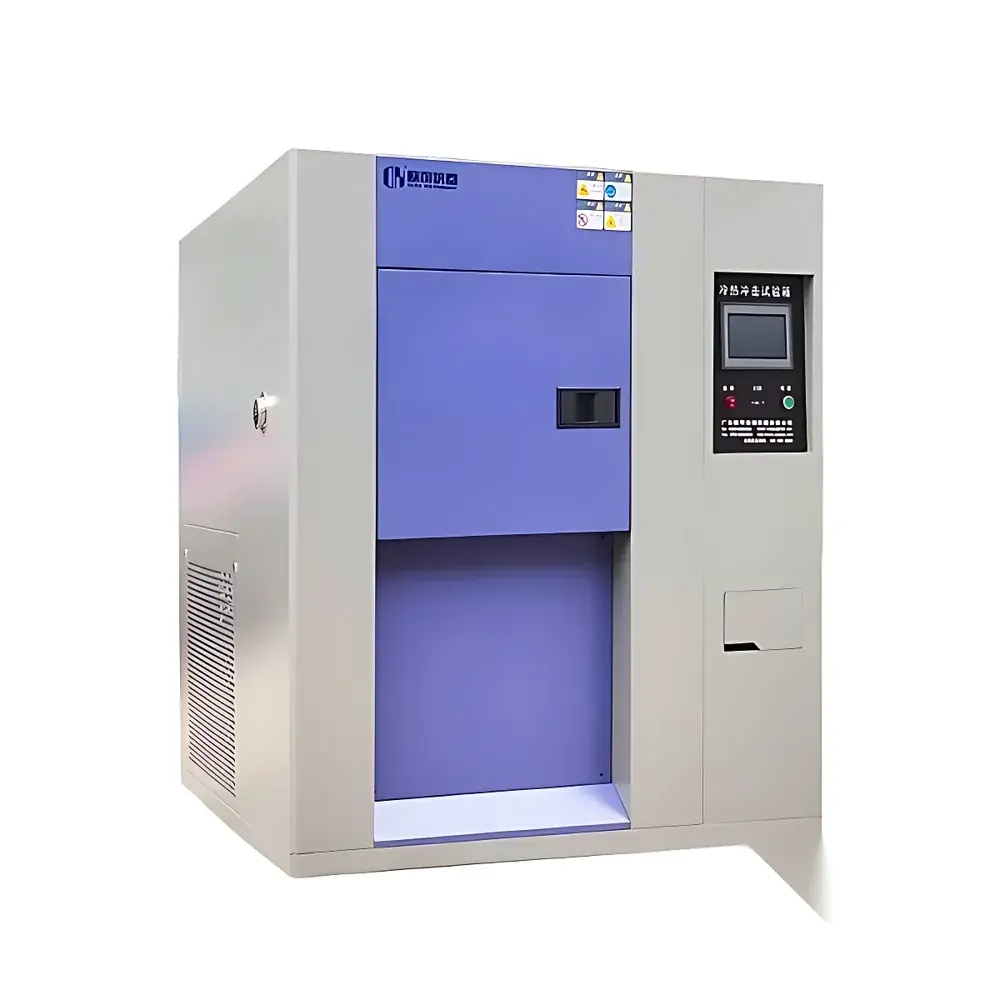
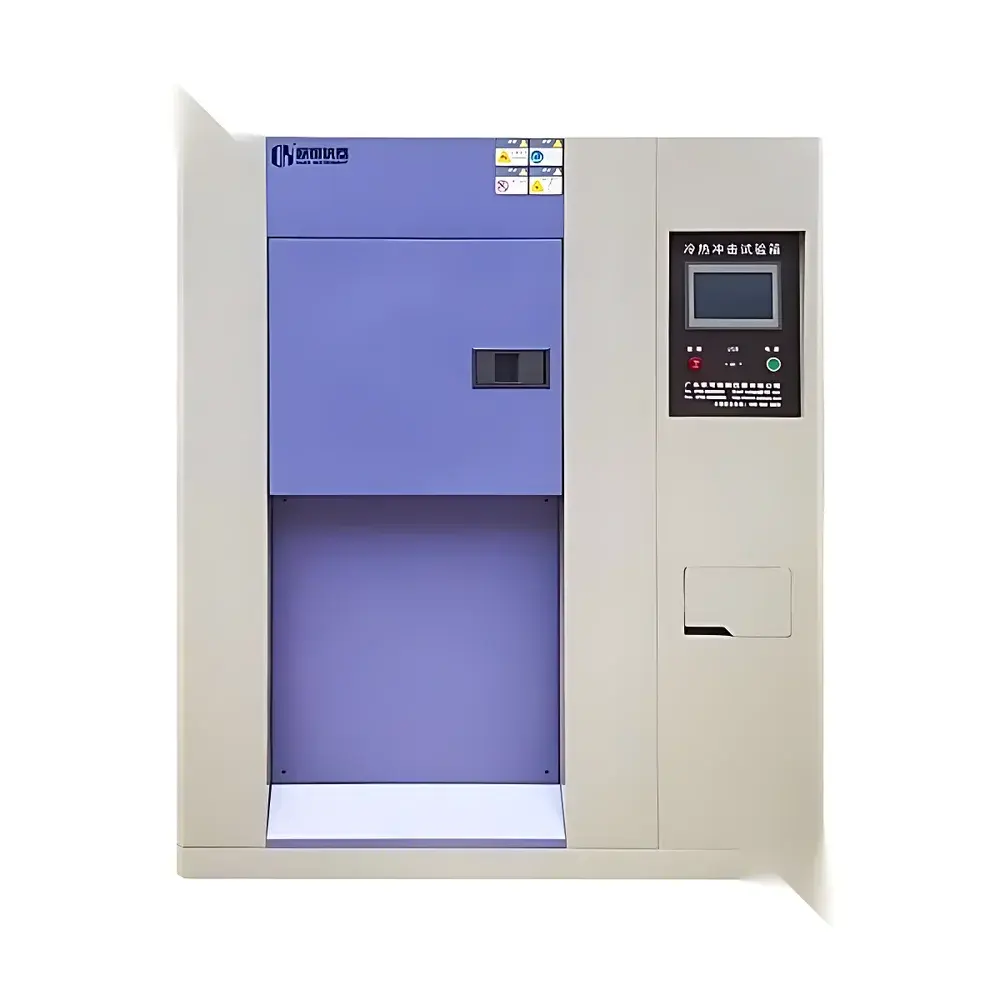
The Thermal Shock Test Chamber is an engineered environmental simulation system designed for accelerated reliability assessment of electronic components, automotive modules, aerospace assemblies, and polymer-based materials under rapid, repetitive transitions between extreme low- and high-temperature conditions. Operating on the principle of two-zone (hot/cold) or three-zone (hot/cold/transfer) thermal shock methodology, it subjects test specimens to controlled, high-rate temperature excursions—typically ranging from −70 °C to +180 °C—with transition times meeting industry-standard benchmarks (e.g., ≤15 seconds between zones per IEC 60068-2-14). Unlike conventional temperature cycling chambers, this system eliminates intermediate dwell periods and leverages direct chamber transfer or lift-type basket mechanisms to minimize thermal inertia, thereby replicating real-world field stresses such as solder joint fatigue, interfacial delamination, and coefficient-of-thermal-expansion (CTE) mismatch failure modes. Its robust architecture supports both qualification testing per MIL-STD-810H Method 503.5 and process validation in GMP-compliant electronics manufacturing environments.
Key Features
- Programmable dual-control interface options: TEMI880 full-color touchscreen controller with bilingual (English/Chinese) UI and data logging capability, or TEMI300 membrane keypad controller with English-only display and simplified parameter entry.
- Dual-zone independent refrigeration circuitry with hermetically sealed compressors (original Danfoss or Tecumseh), enabling stable operation at −70 °C cold zone and +180 °C hot zone simultaneously.
- Balanced Temperature & Humidity Control (BTSC) architecture ensures precise regulation during combined thermal-humidity shock tests where applicable (optional humidity module).
- Forced-air circulation via multi-wing centrifugal blower with broadband airflow pattern—top-out/bottom-in configuration—guarantees uniform temperature distribution (±0.5 °C tolerance across working volume per ISO 16750-4 Annex B).
- Structural integrity features include SUS304 stainless steel interior chamber, cold-rolled steel exterior with electrostatic epoxy coating or optional brushed stainless finish, and high-density polyurethane insulation (≥100 mm thickness) with vacuum-degassed cell structure.
- Integrated safety redundancies: compressor overheat/overcurrent/overpressure protection, dry-run prevention for heaters and humidifiers, real-time chamber overtemperature cutoff, low-water-level detection, and dual silicone rubber door gaskets rated for −70 °C to +200 °C service life.
Sample Compatibility & Compliance
The chamber accommodates standard industrial test specimens up to 300 mm × 300 mm × 300 mm (customizable baskets available). It supports mounting fixtures with height-adjustable rails, a 50 mm diameter pass-through port (left-side mounted, ISO-standard sealing collar), and dual-pane tempered observation window with anti-fog heating element. All electrical interfaces—including RS-485/RS-232 communication ports and Ethernet-ready firmware—are compliant with CE, UL 61010-1, and RoHS directives. Test protocols executed on this platform satisfy traceability requirements under ISO/IEC 17025-accredited laboratories and support audit readiness for FDA 21 CFR Part 11 (when paired with validated software), GLP, and IATF 16949 documentation workflows.
Software & Data Management
The included PC-based control software enables remote setup, real-time monitoring, alarm history review, and export of time-stamped CSV or Excel-formatted test logs. Data acquisition supports sampling intervals down to 1 second, with automatic generation of temperature vs. time plots, deviation histograms, and pass/fail flagging against user-defined acceptance thresholds. Firmware supports firmware versioning, digital signature verification, and secure user role management (Administrator/Operator/Viewer). Optional add-ons include PDF report auto-generation with embedded digital signatures and integration with LabVantage or TrackWise LIMS platforms via OPC UA.
Applications
This thermal shock chamber is routinely deployed in: PCB and IC package qualification per JEDEC JESD22-A104; battery cell thermal runaway propagation studies; optical lens adhesion stability testing; automotive ECU validation per ISO 16750-4; medical device sterilization cycle compatibility screening; and aerospace composite material interlaminar shear strength degradation analysis. It serves R&D labs, third-party certification bodies (e.g., SGS, TÜV Rheinland), and Tier-1 suppliers requiring repeatable, auditable thermal stress data for PPAP submissions.
FAQ
What is the typical thermal transition time between hot and cold zones?
Standard two-basket configurations achieve ≤15 seconds (−70 °C ↔ +180 °C), verified per IEC 60068-2-14 Clause 6.2.
Is humidity control integrated or optional?
Relative humidity control (10–95% RH) is available as a factory-installed option with surface-evaporation humidifier and PID-driven water level regulation.
Does the system support automated test sequencing across multiple profiles?
Yes—the TEMI880 controller supports up to 100 programmable profiles, each with 99 segments, loop nesting, and conditional branching logic.
Can the chamber be validated for IQ/OQ/PQ protocols?
Full validation documentation packages—including sensor calibration certificates (NIST-traceable Pt100 sensors), mapping reports, and FAT/SAT checklists—are available upon request.
What maintenance intervals are recommended for long-term reliability?
Compressor oil analysis every 2,000 operating hours; condenser coil cleaning quarterly; door gasket inspection biannually; and full system performance verification annually per ISO 17025 Section 6.4.



