
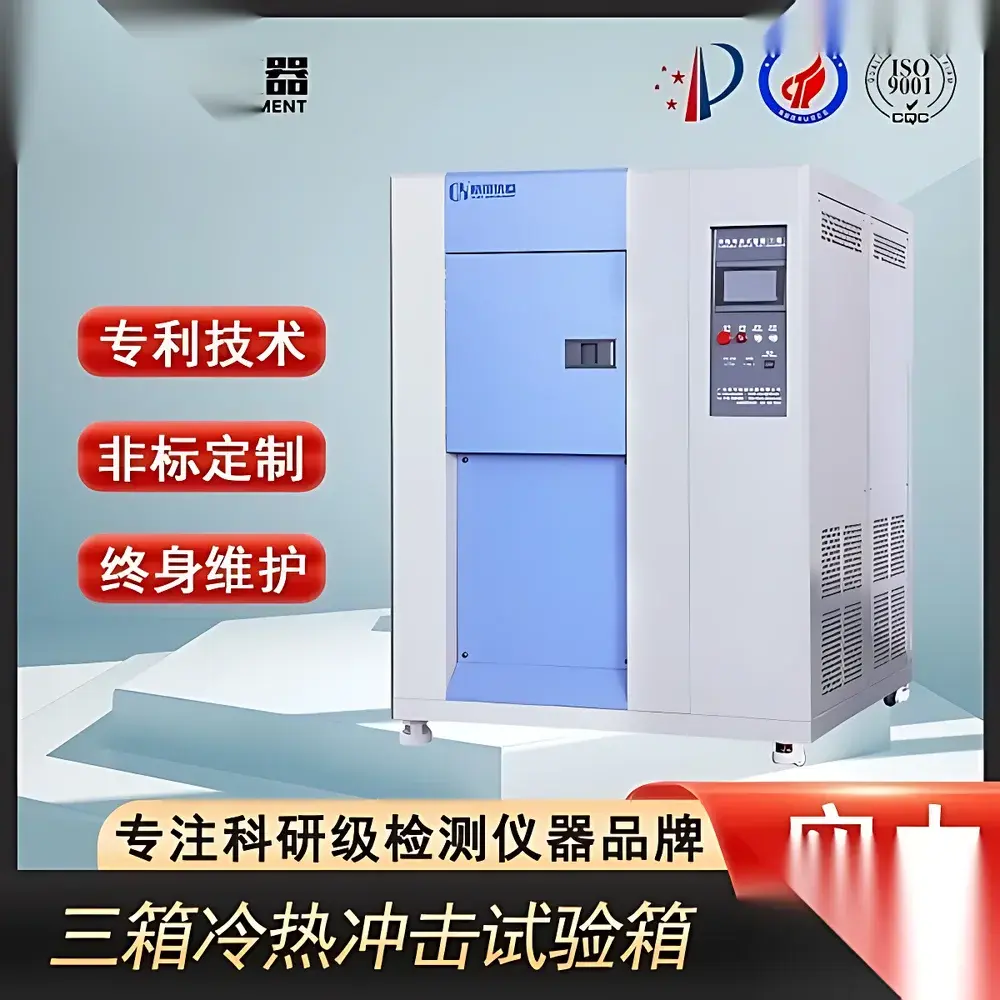
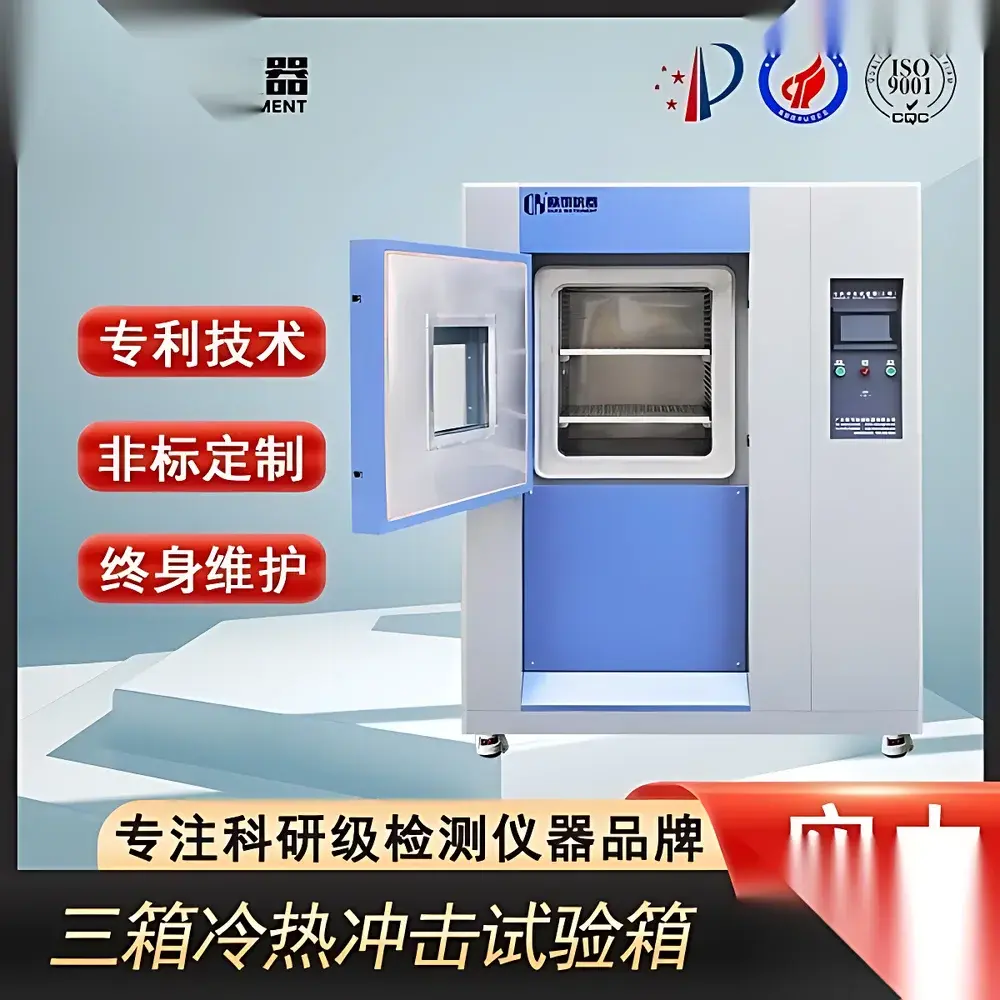
Thermal Shock Test Chamber – TEMI880/TEMI300 Programmable Environmental Test Chamber
| Brand | OEM / Generic Industrial Grade |
|---|---|
| Origin | Imported |
| Manufacturer Type | Authorized Distributor |
| Pricing | USD 11,200 (FOB) |
| Temperature Range | -70°C to +180°C (typical dual-zone configuration) |
| Control System | TEMI880 Color Touchscreen (EN/CN Switchable) or TEMI300 Membrane Keypad Controller (English Only) |
| Refrigeration | Twin-Stage or Dual-Circuit R404A/R23 Cascade System with Original Tecumseh (France) Hermetic Compressor |
| Construction | SUS304B Stainless Steel Exterior, Seamless Welded 304 Stainless Interior |
| Air Circulation | Wide-Band Forced Convection via Multi-Wing Centrifugal Blower |
| Insulation | High-Density Mineral Wool (≥100 mm thickness) |
| Compliance | Designed per IEC 60068-2-14, MIL-STD-810H Method 503.5, GB/T 2423.22 |
Overview
The Thermal Shock Test Chamber is an industrial-grade environmental stress screening (ESS) system engineered for rapid, repeatable temperature transitions between extreme high and low thermal zones. It operates on a two-chamber (hot/cold) or single-chamber (with lift-type basket) architecture, enabling precise thermal shock profiles in accordance with IEC 60068-2-14 (Change of Temperature) and MIL-STD-810H Method 503.5 (Temperature Shock). The chamber delivers controlled, programmable transitions—typically ≤15 seconds transfer time between zones—with stabilized dwell periods at user-defined setpoints ranging from –70 °C to +180 °C. Its BTSC (Balanced Temperature & Humidity Control) architecture ensures stable equilibrium during static conditioning phases, while the cascade refrigeration system—featuring original Tecumseh hermetic compressors and R404A/R23 dual-refrigerant circuits—guarantees long-term reliability and minimal maintenance intervals.
Key Features
- Programmable control interface options: TEMI880 7-inch color touchscreen controller (bilingual EN/CN firmware) or TEMI300 membrane keypad controller (English-only display)
- Dual-zone thermal architecture with independent hot/cold chambers or single-chamber basket-transfer mechanism
- High-efficiency forced-air circulation using multi-wing centrifugal blower and axial fans, ensuring ±0.5 °C temperature uniformity across test volume (per IEC 60068-3-5)
- Robust mechanical construction: exterior in SUS304B stainless steel; interior chamber fully welded 304 stainless steel with leak-tight seam integrity
- Triple-layer insulation system: 100 mm mineral wool + vacuum-sealed air gap + vapor barrier liner for thermal loss minimization
- Comprehensive safety protection suite: compressor overheat/overcurrent/overpressure cutoff, dry-heater burnout prevention, chamber overtemperature lockout, low-water level alarm, and door interlock circuit
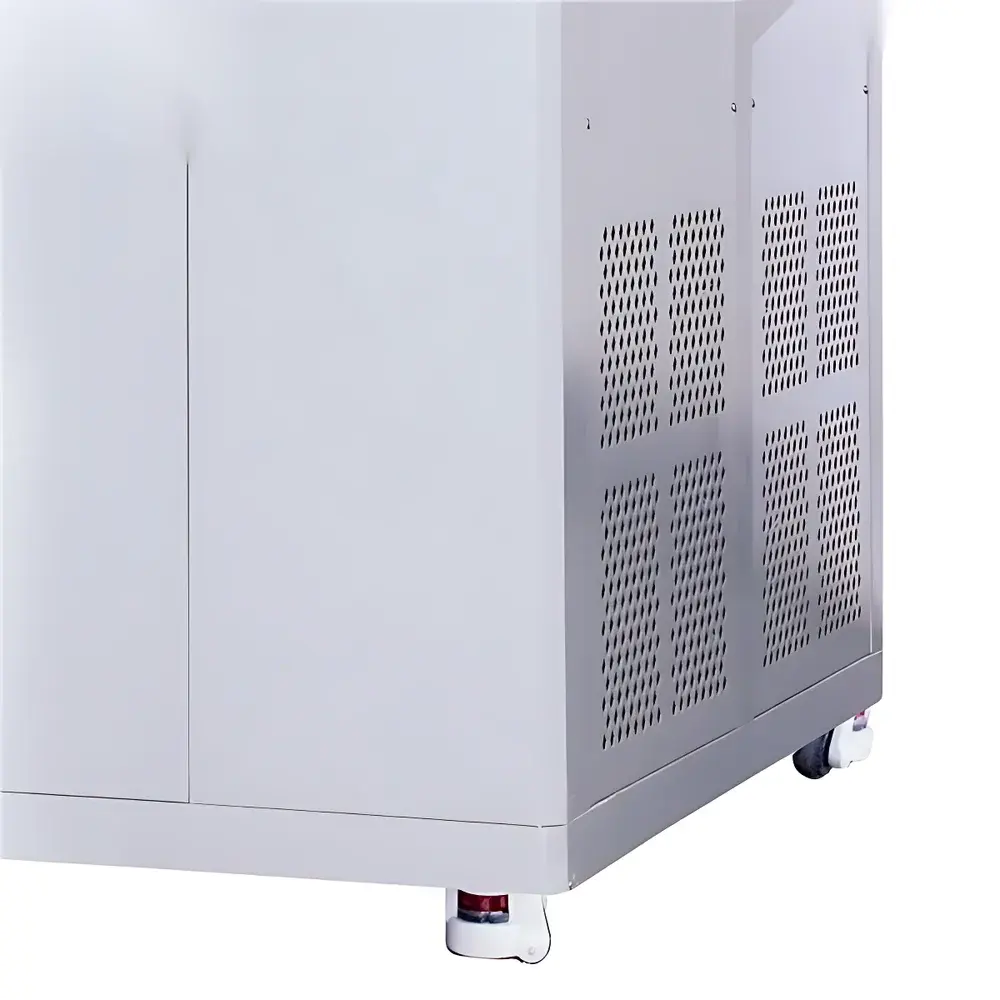
- Standard hardware: double-glazed observation window (tempered laminated glass), Ø50 mm left-side cable port with silicone gasket, adjustable sample shelves (2 sets), internal fluorescent lighting, castor wheels with brakes, and integrated RS485/RS232 communication port
Sample Compatibility & Compliance
This chamber accommodates a wide range of sample geometries and mounting configurations—including PCB assemblies, automotive ECUs, aerospace connectors, medical device housings, and polymer encapsulants—via height-adjustable stainless steel shelves and optional custom fixture interfaces. All models meet structural and operational requirements for GLP-compliant environmental qualification testing. Design documentation supports traceable calibration per ISO/IEC 17025, and firmware architecture permits audit-ready event logging compatible with FDA 21 CFR Part 11 electronic record retention protocols when paired with validated PC-based data acquisition software. Chamber validation reports (IQ/OQ/PQ) are available upon request and align with ASTM E2297 and IEC 60068-3-11 guidelines.
Software & Data Management
The included Windows-compatible control software enables remote monitoring, real-time graphing, profile programming (including ramp-soak-shock sequences), and automated report generation (PDF/CSV). Data logs include timestamped temperature/humidity values, alarm events, system status flags, and controller diagnostics. Optional upgrade paths support Ethernet/IP integration, Modbus TCP gateway compatibility, and centralized fleet management via SCADA platforms. All firmware versions undergo periodic security patching and maintain backward compatibility with legacy profile libraries.
Applications
Typical use cases include accelerated life testing of solder joint integrity under thermal cycling stress; validation of sealant and adhesive performance in automotive powertrain modules; qualification of MEMS sensor packaging against coefficient-of-thermal-expansion (CTE) mismatch; evaluation of battery cell thermal runaway propagation thresholds; and reliability screening of avionics components prior to flight certification. The chamber is routinely deployed in Tier-1 supplier labs, third-party testing service providers (e.g., SGS, TÜV Rheinland), and corporate R&D centers performing AEC-Q200, JEDEC JESD22-A104, and IPC-9701 conformance assessments.
FAQ
What is the standard temperature transition time between hot and cold zones?
Standard basket-transfer models achieve ≤15 seconds (±2 s) transfer time between chambers at nominal load; actual performance depends on test specimen mass and thermal inertia.
Is humidity control available as an option?
Yes—optional surface-evaporation humidification system (up to 95% RH at +60 °C) can be integrated into single-chamber configurations; dual-zone shock mode remains strictly dry.
Does the chamber support automated calibration verification?
Yes—built-in sensor offset adjustment function and external PT100 probe input enable field verification against NIST-traceable references.
Can test profiles be exported/imported across multiple units?
Yes—profile files (.tsf) are platform-agnostic and interoperable across TEMI880-equipped chambers regardless of manufacturing batch or firmware revision.
What is the recommended preventive maintenance interval?
Compressor oil analysis and refrigerant pressure verification every 12 months; filter replacement and door gasket inspection every 6 months under continuous operation.



