
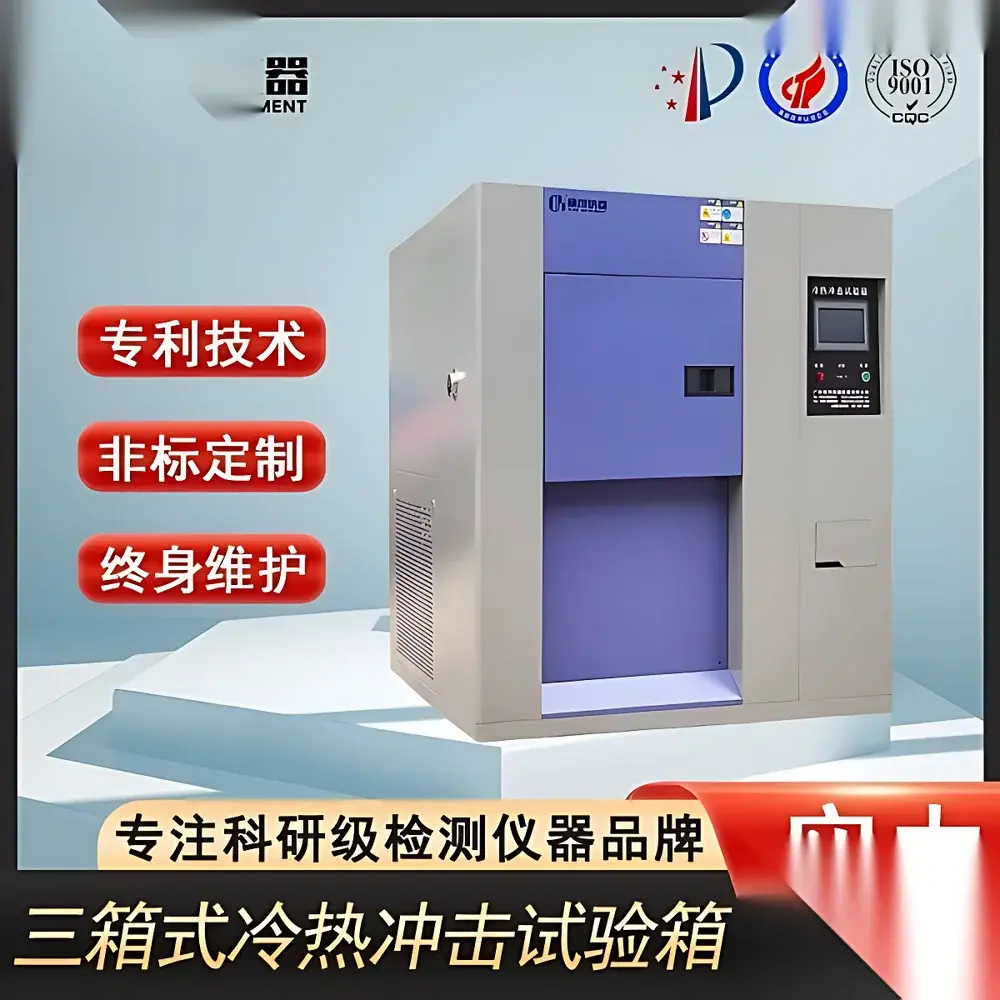
Thermal Shock Test Chamber – TEMI880/TEMI300 Programmable Environmental Test Chamber for Rapid Temperature Transition Testing
| Brand | OEM / Third-Party Manufacturer |
|---|---|
| Origin | Imported (Non-US/EU Designated Origin) |
| Supplier Type | Authorized Distributor |
| Pricing | USD 11,200 (FOB) |
| Control System | TEMI880 Color Touchscreen Controller (English/Chinese Switchable) or TEMI300 Membrane Keypad Controller (English Only) |
| Temperature Range | −70 °C to +180 °C (Standard Configuration) |
| Thermal Transition Rate | ≥10 °C/min (Typical, 5–15 °C/min Adjustable per Profile) |
| Humidity Range | 20–98% RH (Optional with Humidity Module) |
| Internal Volume | 100–1000 L (Configurable) |
| Refrigeration | Twin-Stage or Single-Stage Hermetic Compressor (Original Tecumseh/Tecumseh-derived or “Tecumseh-compatible” Compressor) |
| Insulation | Polyurethane Rigid Foam (≥100 mm Thickness) + Fiberglass Blanket Lining |
| Interior Material | SUS304 Stainless Steel |
| Exterior Material | Powder-Coated Cold-Rolled Steel or Optional SUS304 Brushed Finish |
| Air Circulation | Centrifugal Blower with Wide-Band Forced Convection (Top-Out/Bottom-In Flow Pattern) |
| Compliance | Designed per IEC 60068-2-14, MIL-STD-810H Method 503.5, JIS Z 8701-1998 |
Overview
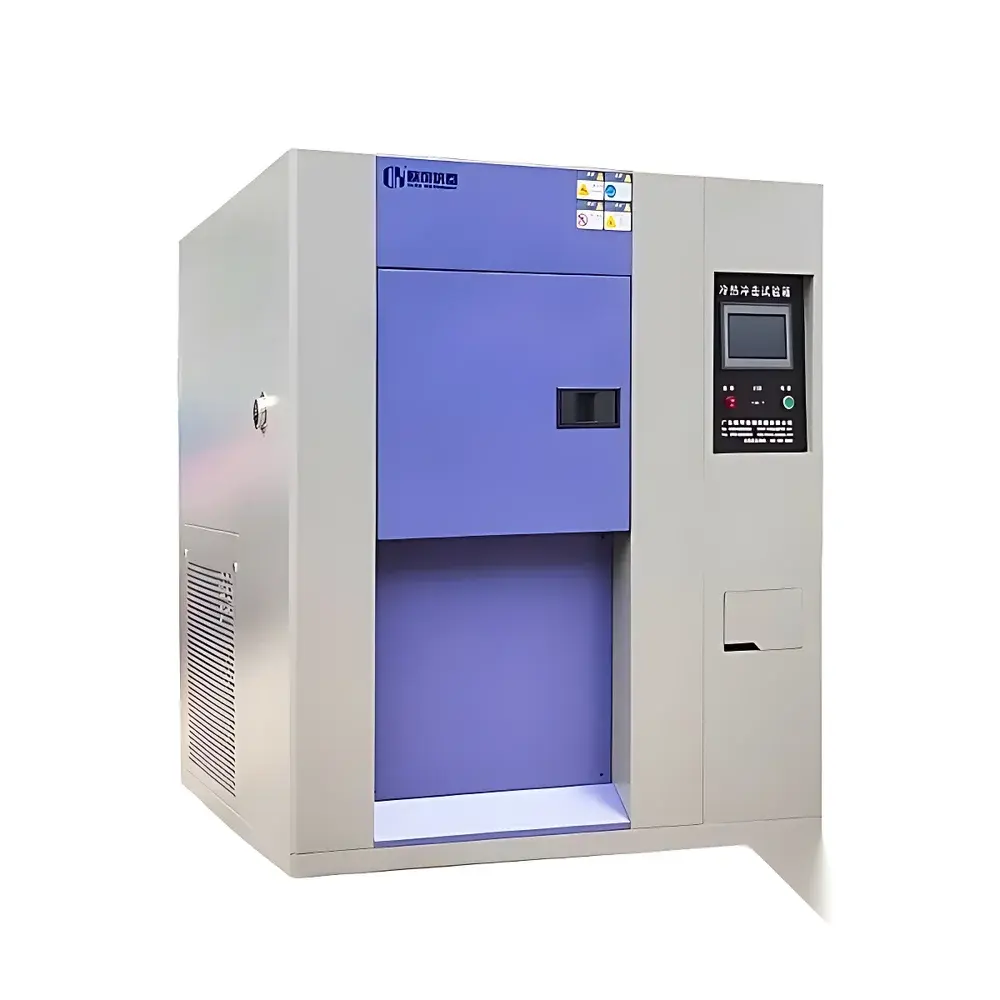
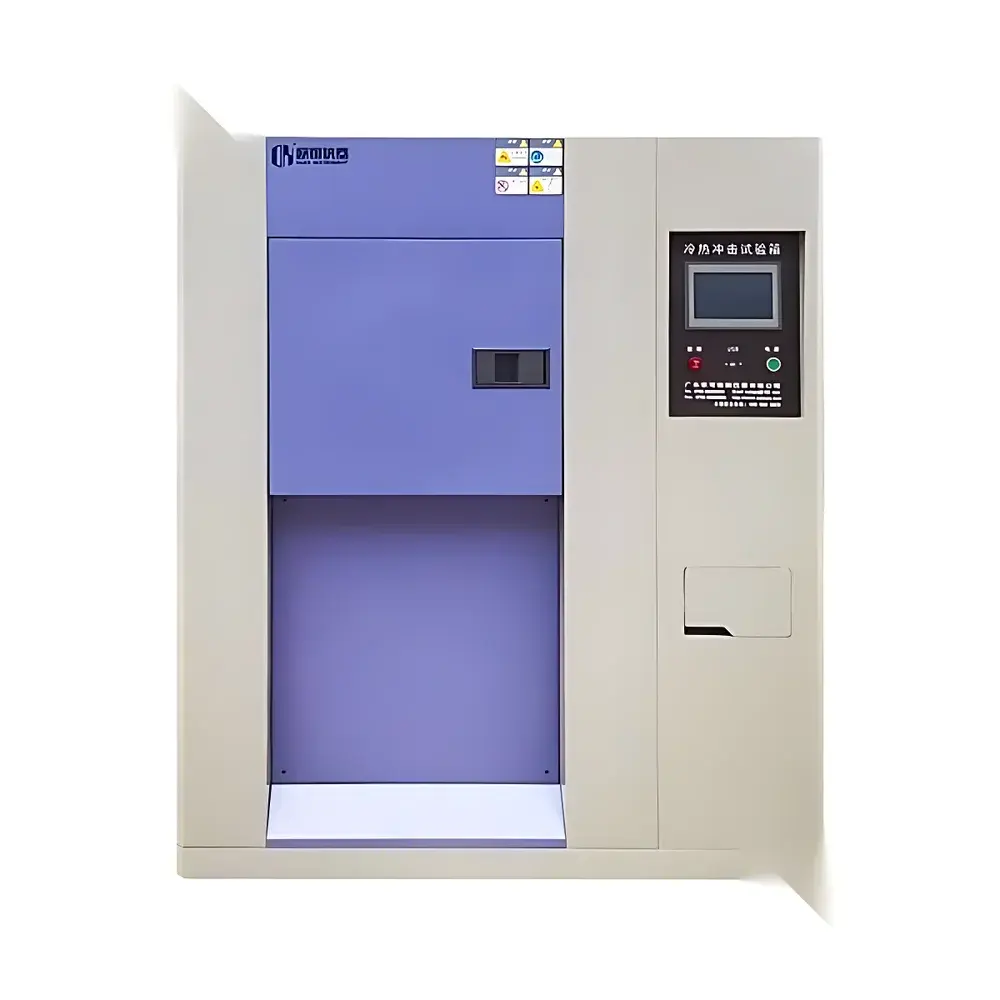
The Thermal Shock Test Chamber is an engineered environmental stress screening (ESS) system designed to evaluate material and component reliability under rapid, repetitive transitions between extreme high and low temperature extremes. Utilizing a dual-chamber or single-chamber forced-air thermal shock architecture—depending on configuration—it subjects test specimens to controlled, high-fidelity thermal cycling in accordance with international test standards including IEC 60068-2-14 (Change of Temperature), MIL-STD-810H Method 503.5 (Temperature Shock), and JIS Z 8701. The chamber operates on the principle of accelerated aging via thermal expansion/contraction mismatch at material interfaces, enabling early detection of delamination, solder joint fatigue, seal failure, and intermetallic degradation in electronics, automotive modules, aerospace composites, and medical device housings.
Key Features
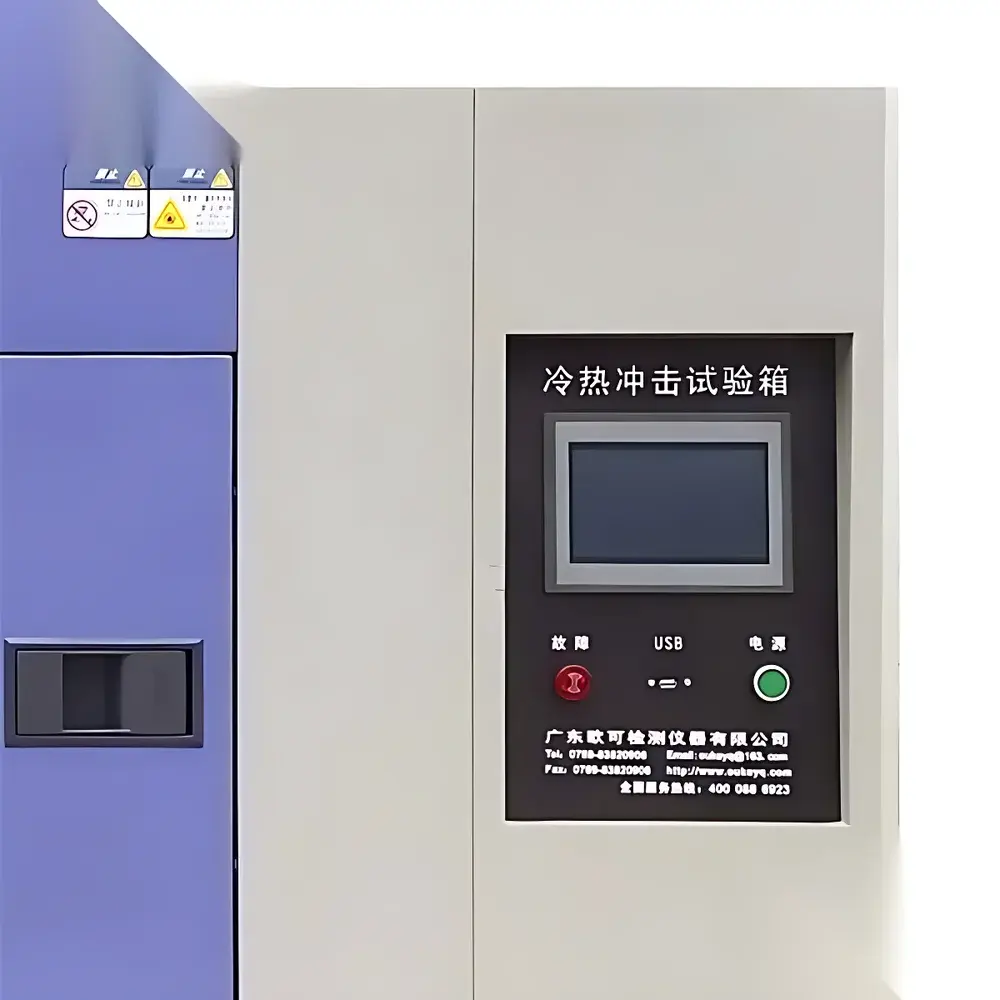
- Programmable dual-mode control: TEMI880 full-color touchscreen controller (with bilingual UI toggle) or TEMI300 membrane keypad unit (English-only display), both supporting multi-segment ramp-soak profiles, real-time data logging, and alarm event history.
- Robust refrigeration architecture: Hermetically sealed, imported reciprocating compressor (Tecumseh-equivalent design) coupled with either single-stage or two-stage cascade refrigeration circuitry—optimized for stable operation down to −70 °C and fast recovery post-door opening.
- Uniform thermal distribution: High-efficiency centrifugal blower delivers broadband forced convection airflow (top-out/bottom-in pattern) with turbulence minimization; internal air velocity maintained within ±0.3 m/s across active test zone per ISO 16750-4 requirements.
- Structural integrity & safety: Dual-layer tempered observation window (argon-filled insulating glass); SUS304 stainless steel interior; reinforced door gasket with dual-section silicone rubber sealing rated for −70 °C to +200 °C continuous service; integrated protection logic covering compressor overheat, overcurrent, high-pressure cutout, dry-run prevention, and water-level monitoring.
- Modular utility integration: Standard 50 mm diameter test port (left-side mounted, ISO flange compatible); dual adjustable sample racks (height-adjustable, load-rated up to 20 kg/rack); built-in fluorescent lighting; four swivel casters with locking brakes; external communication interface (RS-485/RS-232) for remote supervision and SCADA integration.
Sample Compatibility & Compliance
This chamber accommodates rigid and semi-rigid samples up to 450 mm × 450 mm × 450 mm (W×D×H) in standard configurations, with custom internal dimensions available upon request. It supports passive and powered DUTs—including PCBAs, MEMS sensors, battery packs, and polymer encapsulated assemblies—provided electrical isolation and thermal mass limits are observed. All operational parameters comply with GLP-aligned documentation practices; audit trails, user access logs, and parameter change records are retained locally and exportable via USB or serial link. While not pre-certified for FDA 21 CFR Part 11, the TEMI880 controller supports optional electronic signature modules and timestamped event logging suitable for GMP-compliant validation protocols when deployed with qualified software validation packages.
Software & Data Management
The included PC-based control software enables offline profile development, real-time monitoring of chamber status (temperature, humidity, compressor state, alarm flags), and CSV-exportable time-series data (sample rate: 1 Hz). Data synchronization supports timestamp alignment with external DAQ systems via NTP or hardware trigger input. Firmware updates are delivered via secure USB media; version history and calibration certificate metadata are embedded in controller memory. For enterprise deployment, optional OPC UA gateway support allows integration into MES platforms such as Siemens Opcenter or Rockwell FactoryTalk.
Applications
Primary use cases include qualification testing of automotive ECUs per ISO 16750-4, reliability screening of avionics enclosures under DO-160 Section 4.5, accelerated life testing of consumer electronics per JEDEC JESD22-A104E, and thermal cycling validation of implantable medical devices aligned with ISO 10993-12. Secondary applications span solder paste performance evaluation, adhesive bond strength assessment under thermal cycling, and packaging integrity verification for cold-chain logistics components.
FAQ
What is the typical thermal transition time between −40 °C and +125 °C in a 200 L chamber?
Measured transition times range from 18–25 seconds (air-to-air), depending on load mass and chamber loading ratio—verified using calibrated PT100 probes per ASTM E2202 guidelines.
Can this chamber operate continuously at −70 °C without humidity control?
Yes. The refrigeration system maintains stable sub-zero operation without humidification; the chamber may be configured in dry-shock mode with dehumidified air purge for moisture-sensitive applications.
Is third-party calibration traceable to NIST or equivalent national metrology institutes?
Calibration certificates issued by accredited laboratories (e.g., A2LA-accredited providers) are available upon request; factory calibration uses reference standards traceable to NIST or PTB.
What maintenance intervals are recommended for the compressor and air filtration system?
Compressor oil and filter replacement every 12 months or 2,000 operating hours; intake air filter cleaning every 3 months; annual verification of refrigerant charge and insulation integrity.
Does the system support automated pass/fail criteria based on temperature deviation thresholds?
Yes. The TEMI880 controller allows user-defined tolerance bands (±0.5 °C to ±5 °C) per segment; deviations trigger immediate alarm, data flagging, and optional relay output for external shutdown circuits.



