
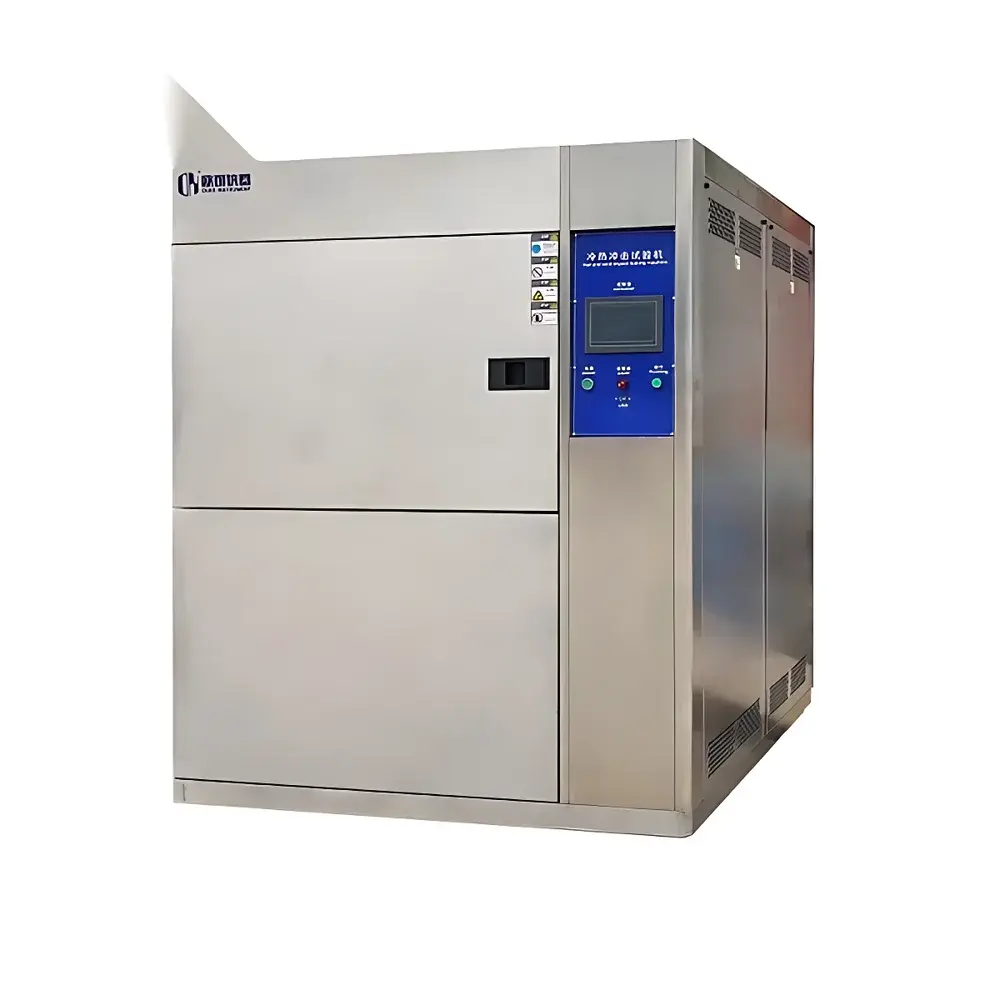
Thermal Shock Test Chamber – OK-TS Series by OEM Manufacturer
| Key | Temperature Range Options: −70°C to +150°C |
|---|---|
| Humidity Range | 30–98% RH |
| Humidity Deviation | +2 to −3% RH |
| Temperature Fluctuation | ±0.5°C |
| Temperature Uniformity | ≤±2°C |
| Avg. Ramp Rate | 0.7–1.0°C/min |
| Timer Setting Range | 0–9999 h |
| Power Supply | AC 380 V |
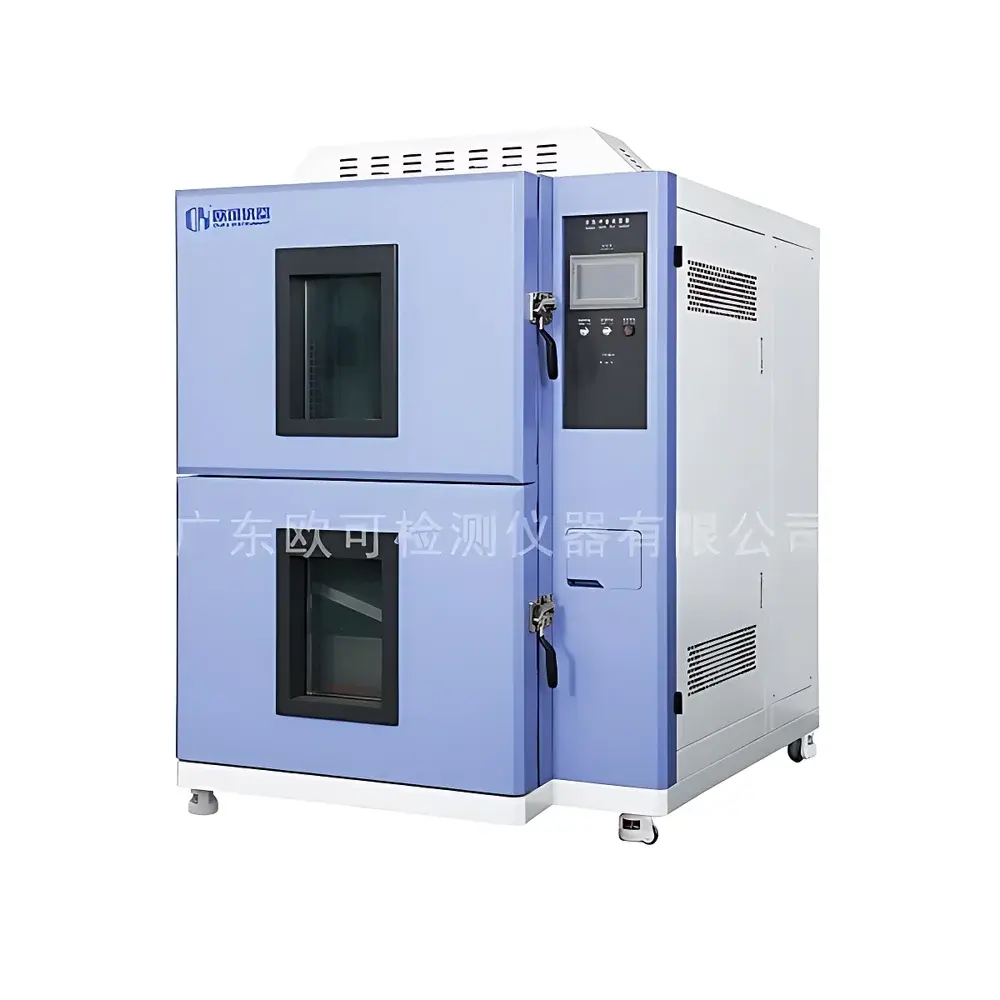
| Internal Material | SUS304 Stainless Steel Mirror Finish |
| External Material | A3 Steel with Powder Coating |
| Observation Window | Embedded Heated Tempered Glass with LED Illumination |
| Test Port | Ø50 mm |
| Compliance | Designed to Support ASTM D5229, ISO 16750-4, IEC 60068-2-14, MIL-STD-810H Thermal Shock Protocols |
Overview
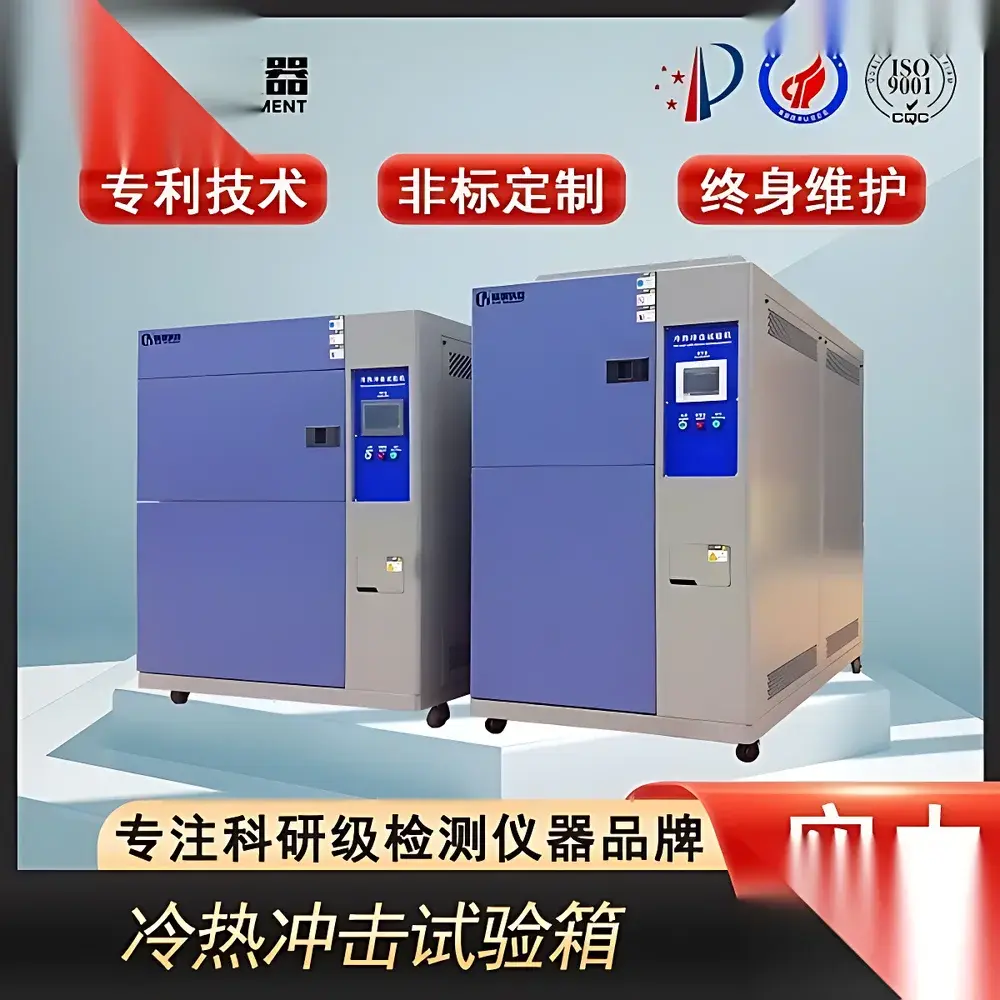
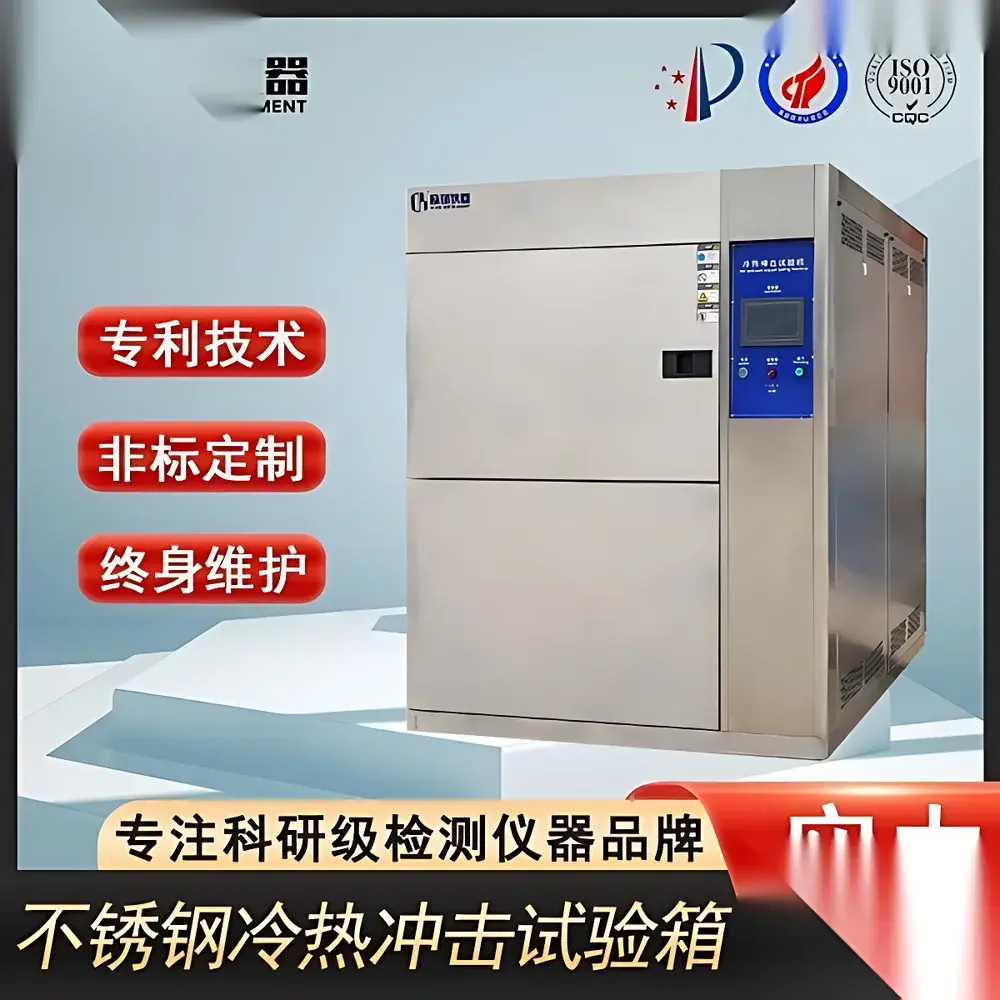
The OK-TS Series Thermal Shock Test Chamber is an engineered environmental test system designed to evaluate material and component reliability under rapid, repetitive transitions between extreme high- and low-temperature conditions. Based on the two-chamber (hot/cold) or single-chamber (air-blast) thermal shock methodology, this chamber subjects specimens to controlled, accelerated stress cycles that simulate real-world thermal fatigue encountered in aerospace, automotive electronics, semiconductor packaging, and military-grade electronics. Unlike standard temperature-humidity chambers, the OK-TS series emphasizes thermal transition fidelity—achieving reproducible ramp rates of 0.7–1.0°C/min across its full operational range (−70°C to +150°C), with optional humidity control (30–98% RH) for combined thermal-hygroscopic stress testing. Its architecture supports both qualification-level validation per industry standards and routine quality assurance screening in production environments.
Key Features
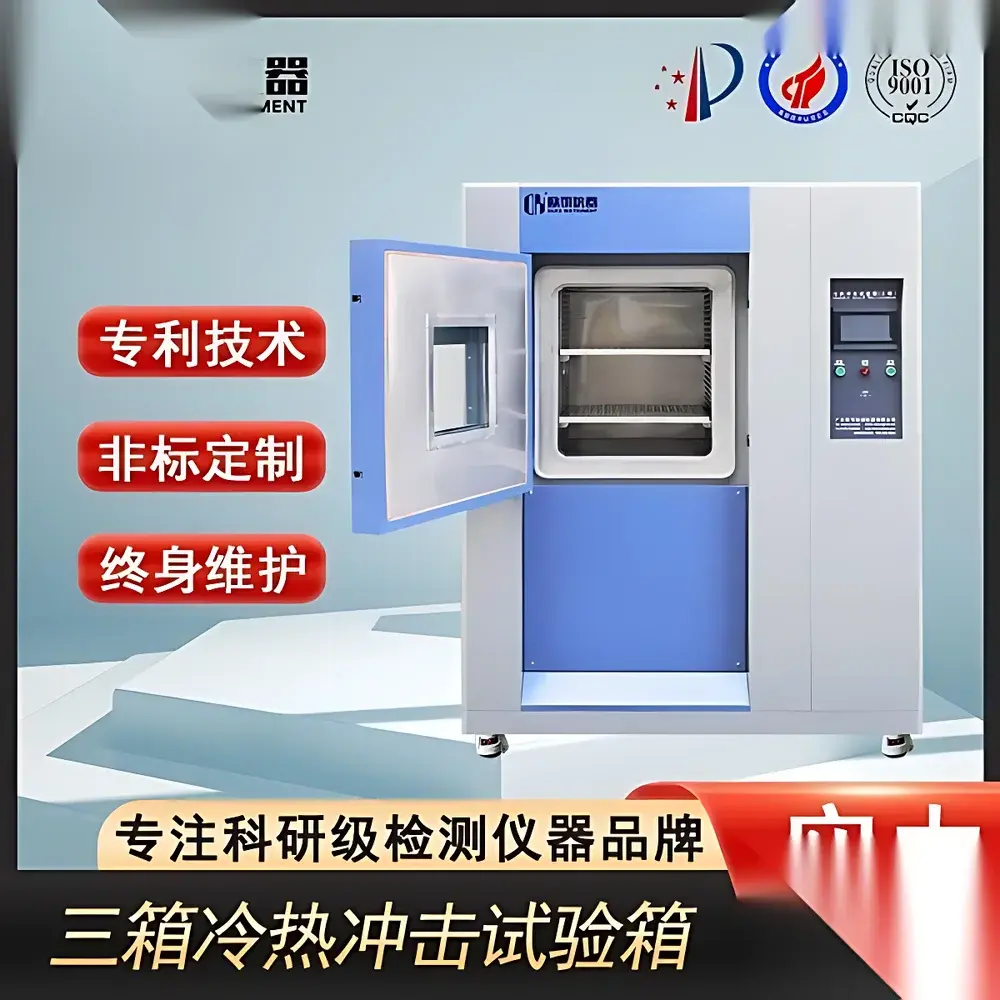
- Precision-engineered dual-zone construction (optional single-zone configuration) with independent hot and cold reservoirs, minimizing cross-contamination and ensuring stable setpoint maintenance during cycling.
- SUS304 stainless steel interior chamber with mirror finish—resistant to corrosion, easy to clean, and compliant with ISO 14644-1 Class 8 cleanroom-compatible handling protocols.
- A3 steel outer shell with electrostatic powder coating—enhancing mechanical durability, surface hardness, and long-term aesthetic integrity in industrial lab settings.
- Integrated heated, laminated tempered glass observation window with LED backlighting—enabling real-time visual monitoring without thermal leakage or condensation interference.
- Standard Ø50 mm cable/port access with silicone gasket seal—facilitating external sensor integration, power feedthrough, or data acquisition without compromising chamber integrity.
- CNC-machined structural frame and ergonomic non-reactive door handle—ensuring dimensional repeatability, operator safety, and alignment stability over thousands of thermal cycles.
Sample Compatibility & Compliance
The OK-TS series accommodates a broad spectrum of sample geometries—from PCB assemblies and molded plastic housings to battery modules and optoelectronic subassemblies—across six standard internal volumes (100 L to 1000 L). All models support customizable tray configurations, fixture mounting plates, and inert gas purging options (N₂ or dry air) upon request. The system’s thermal performance aligns with key international test standards including ASTM D5229 (composite materials), ISO 16750-4 (road vehicles), IEC 60068-2-14 (environmental testing—change of temperature), and MIL-STD-810H Method 503.7. While not certified as GLP/GMP-compliant out-of-the-box, the chamber’s stable control architecture and traceable calibration pathways enable seamless integration into FDA 21 CFR Part 11–aligned validation workflows when paired with third-party IQ/OQ documentation packages.
Software & Data Management
The OK-TS series operates via a programmable 7-inch TFT touch HMI interface supporting up to 99 programmable test profiles, each with up to 99 segments (including dwell time, ramp rate, and cycle count parameters). Real-time logging records temperature, humidity, and elapsed time at user-defined intervals (1 s to 60 min resolution), exporting data in CSV format via USB port. Optional Ethernet or RS485 interfaces allow remote monitoring and SCADA integration. Audit trail functionality—including operator ID, parameter changes, and alarm history—is available through firmware upgrade, supporting basic 21 CFR Part 11 requirements for electronic record integrity. All controllers undergo factory calibration against NIST-traceable reference standards, with calibration certificates provided upon shipment.
Applications
- Qualification testing of solder joints, conformal coatings, and underfill materials in printed circuit board assemblies.
- Validation of thermal expansion coefficient (CTE) mismatch in multi-material electronic packages (e.g., SiP, PoP, fan-out wafer-level packaging).
- Reliability screening of lithium-ion battery cells and modules under accelerated aging protocols.
- Material compatibility assessment for automotive ECUs exposed to under-hood thermal transients.
- Stress screening of optical lenses, MEMS devices, and ceramic substrates subjected to cyclic dew point shifts.
- Supporting failure analysis labs in root cause identification of interfacial delamination, wire bond lift-off, or encapsulant cracking.
FAQ
What temperature extremes can the OK-TS series achieve?
Standard configurations span −70°C to +150°C; extended-range variants support −80°C low-end or +200°C high-end operation upon custom engineering review.
Is humidity control available on all models?
Yes—humidification (30–98% RH) and dehumidification are integrated as optional modules compatible with all OK-TS base platforms.
Can the chamber be validated for GMP compliance?
While the hardware meets foundational requirements for regulated environments, formal GMP validation requires site-specific IQ/OQ/ PQ execution with documented calibration, alarm verification, and data integrity assessments.
What is the typical lead time for non-standard configurations?
Custom designs—including special dimensions, inert gas purge systems, or explosion-proof enclosures—typically require 12–16 weeks from finalized specification approval.
Does the system include remote diagnostics capability?
Standard units support basic Modbus RTU communication; advanced remote troubleshooting and predictive maintenance analytics require optional IoT gateway integration.



