
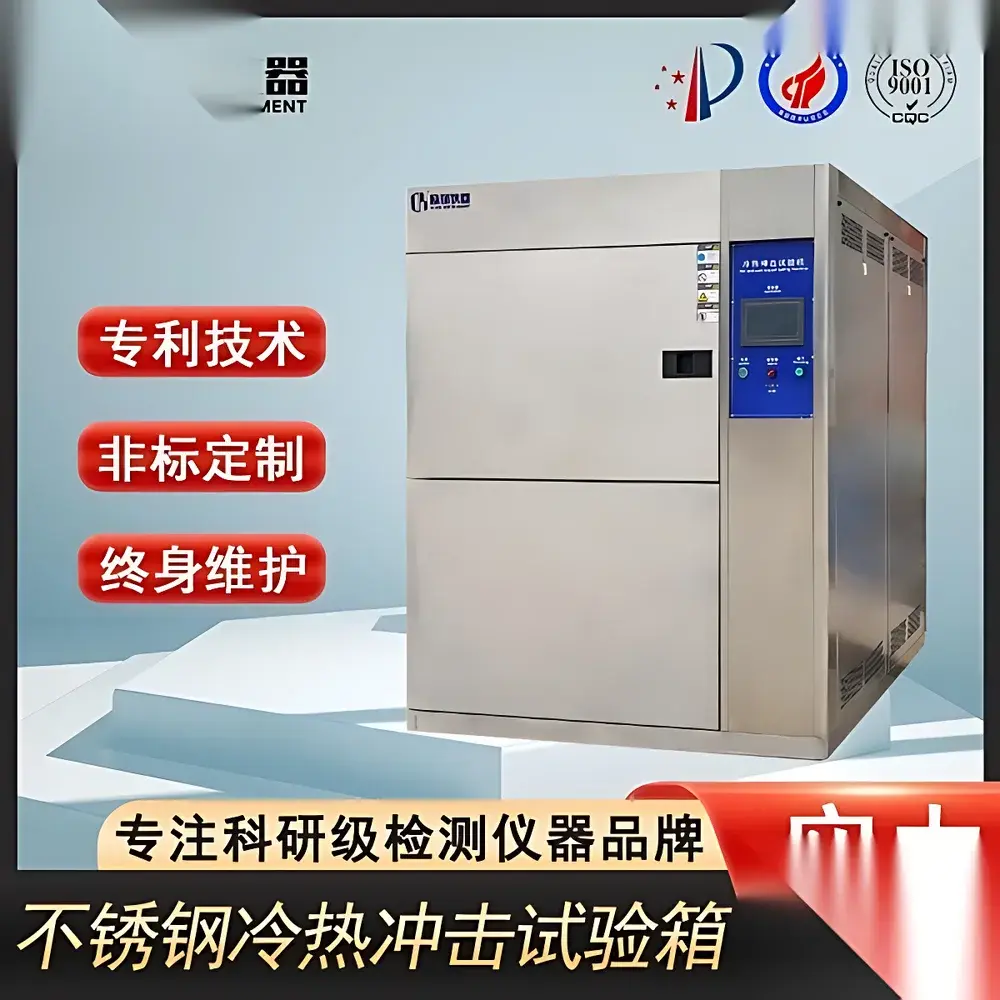
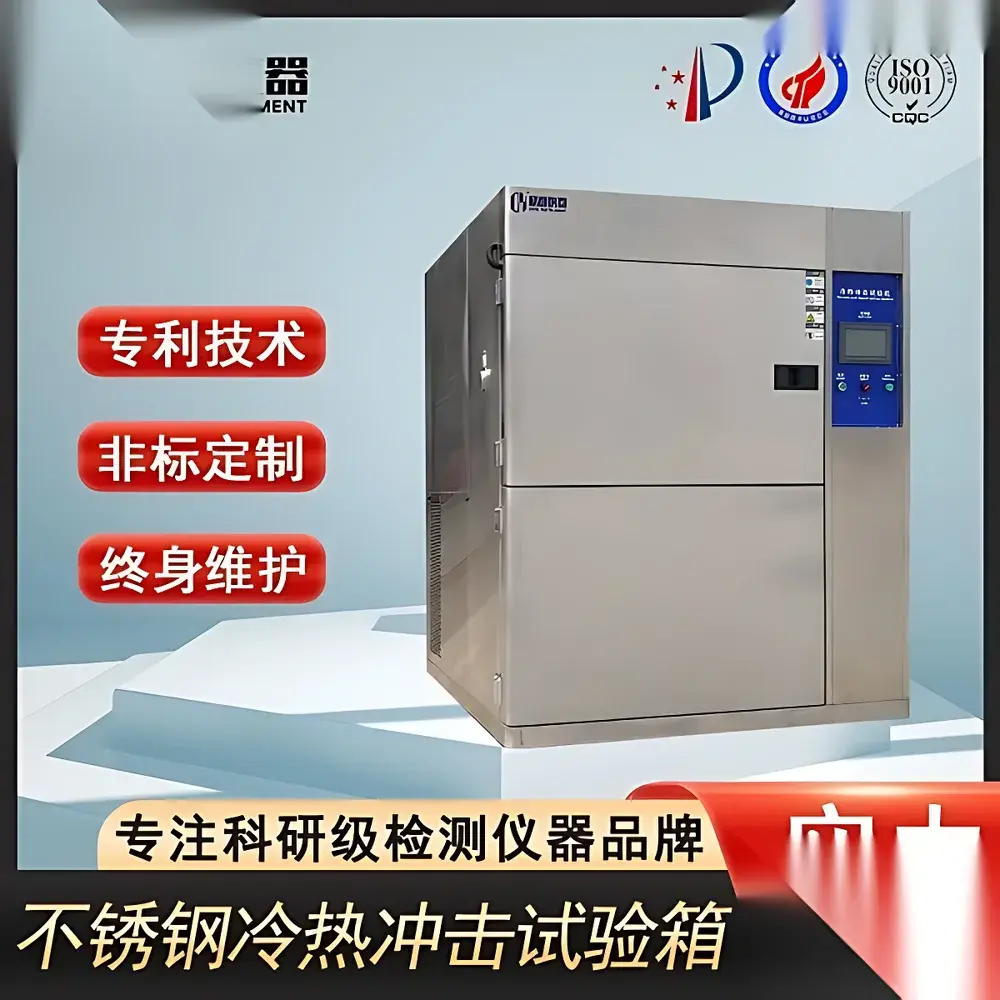
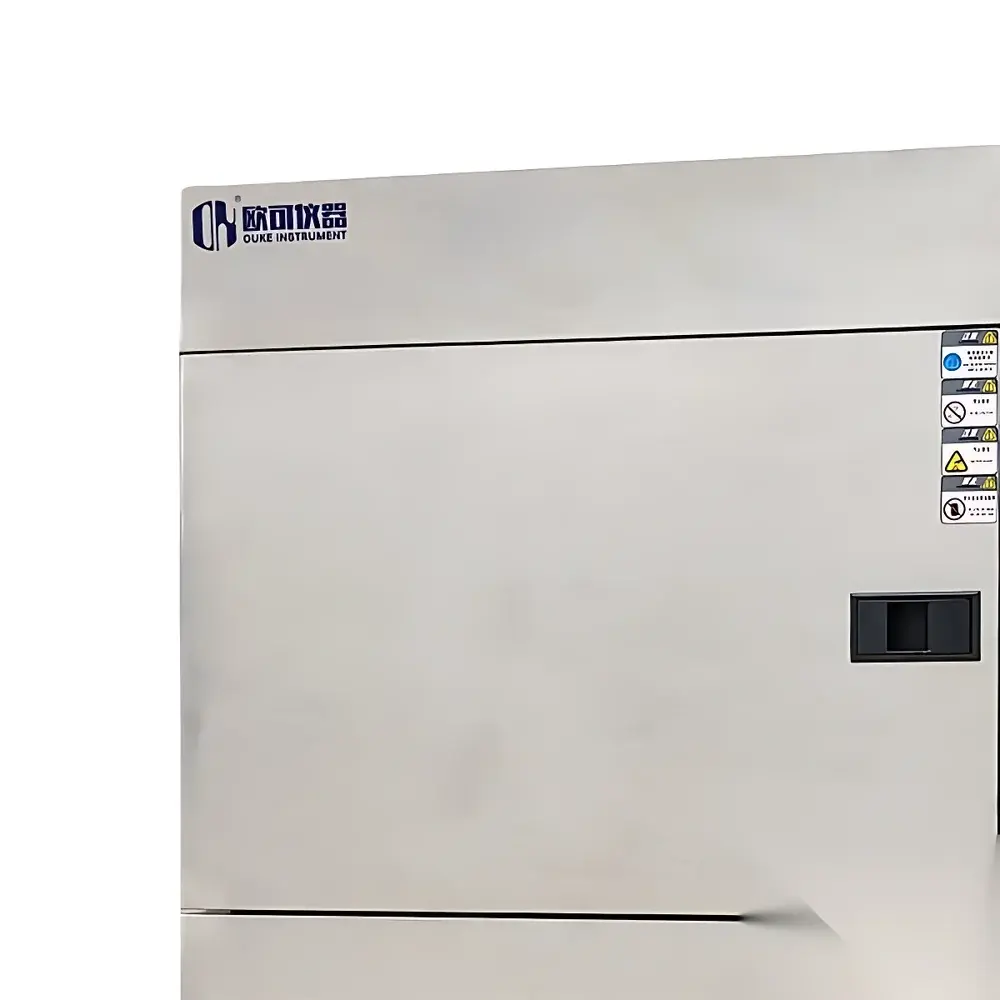
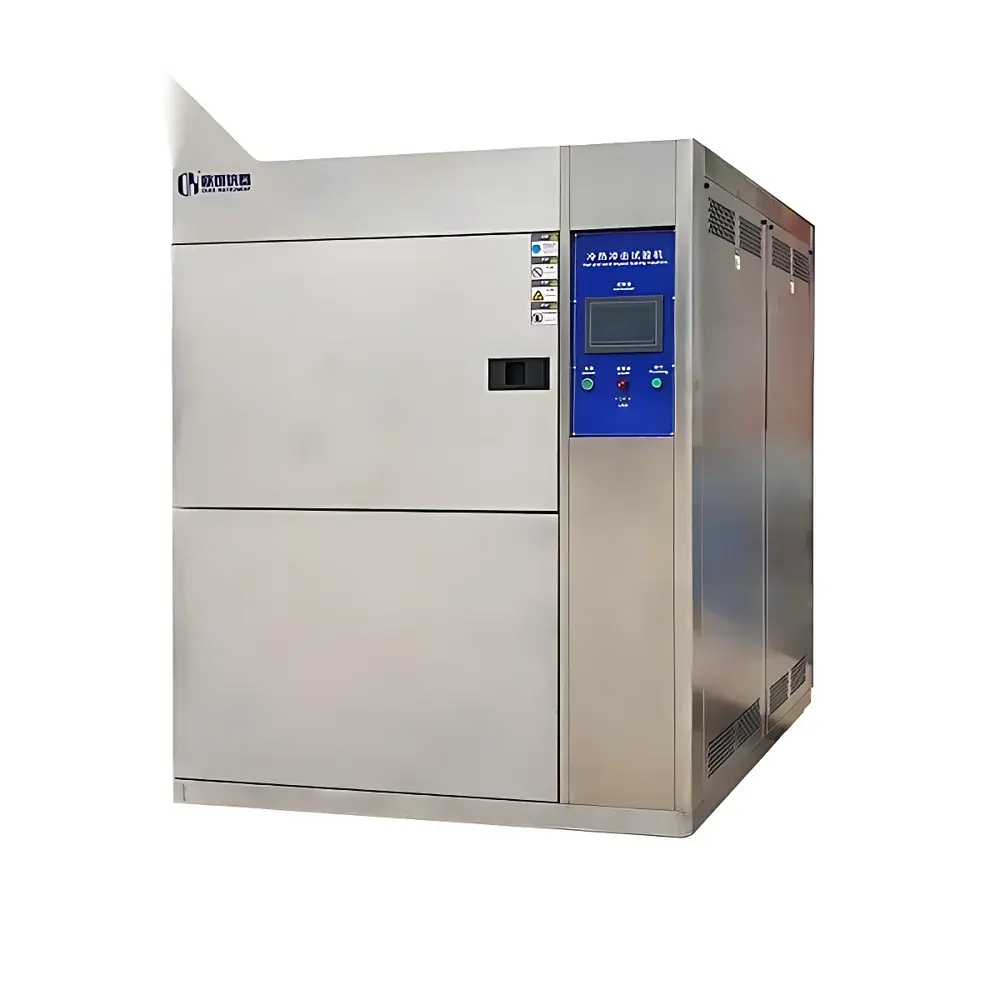
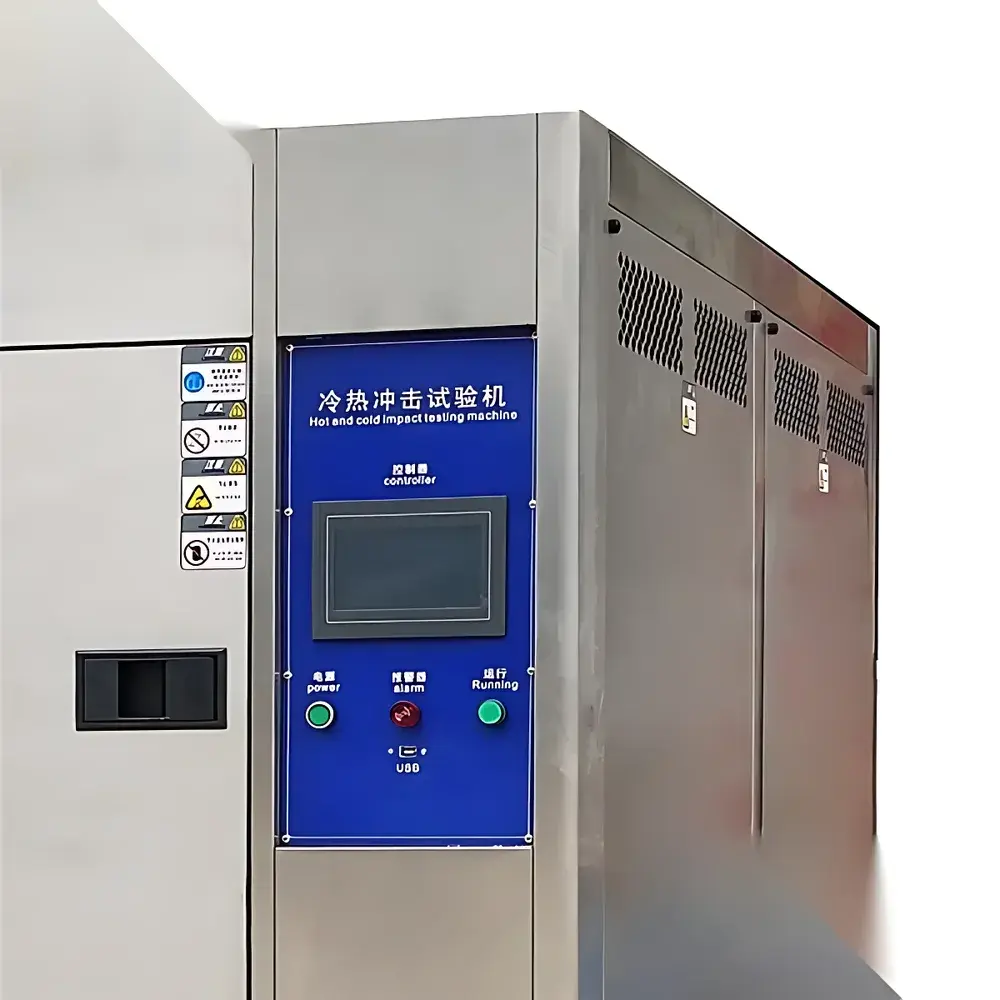
Thermal Shock Test Chamber – Three-Zone High-Low Temperature Cycling System
| Brand | OEM / Custom-Built |
|---|---|
| Origin | Imported |
| Manufacturer Type | Authorized Distributor |
| Pricing | USD 11,200 (FOB) |
Overview
The Thermal Shock Test Chamber – Three-Zone High-Low Temperature Cycling System is an engineered environmental test platform designed to evaluate material and component reliability under rapid, repetitive thermal transitions. It operates on the principle of static specimen testing via sequential exposure to extreme high- and low-temperature zones using a precisely controlled air-switching mechanism—eliminating mechanical movement of test samples during cycling. This architecture ensures high reproducibility, minimal thermal inertia deviation, and strict compliance with thermal shock acceleration physics defined in IEC 60068-2-14 (Test N: Change of Temperature) and MIL-STD-810G Method 503.5. The system comprises three thermally isolated chambers: a high-temperature zone (typically +150 °C to +200 °C), a low-temperature zone (–70 °C to –40 °C), and a central test chamber where specimens remain stationary. Temperature transition times between extremes are maintained within ≤15 seconds (typical), enabling accelerated life-cycle validation for aerospace electronics, automotive ECUs, semiconductor packaging, and medical device housings.
Key Features
- Three-zone architecture with independent PID-controlled heating and cryogenic cooling circuits, supporting both 2-zone (high/low) and 3-zone (high/test/low) operational modes.
- Japanese-made microprocessor-based LCD controller (302 × 240 dots) with bilingual (English/Chinese) interface, real-time trend display, and programmable alarm thresholds.
- Programmable logic controller (PLC)-locked safety interlock system, including over-temperature, over-pressure, phase failure, and refrigerant pressure monitoring with automatic shutdown and fault logging.
- Large-capacity program memory: up to 100 user-defined profiles; maximum cycle count: 9,999 cycles; maximum segment duration: 999 hours 59 minutes per step.
- Dual communication interfaces: RS-232C for local PC control and data logging; RS-485 for multi-chamber networked monitoring and centralized data acquisition via optional LAN-enabled software suite.
- Optional LN₂-assisted rapid cooldown module (–70 °C to –40 °C in <3 min), integrated with auto-regulated liquid nitrogen flow control and vapor-phase delivery to prevent condensation-induced specimen contamination.
- Thermal insulation using multi-layer vacuum-sealed panels and high-density polyurethane foam (λ ≤ 0.022 W/m·K), minimizing cross-zone heat leakage and ensuring stable zone temperature uniformity (±0.5 °C).
Sample Compatibility & Compliance
This chamber accommodates standard test specimens up to 500 mm × 500 mm × 500 mm (W × D × H) with non-intrusive mounting fixtures. It supports rigid and semi-flexible materials—including PCB assemblies, molded plastic enclosures, metal castings, and hermetically sealed sensors—without requiring sample repositioning. The system meets full regulatory alignment with: IEC 60068-2-14, GB/T 2423.22–2002 (Temperature Change), GB/T 2424.13–2002, SJ/T 10186–1991 & SJ/T 10187–1991, QC/T 17–1992 (Automotive Component Environmental Testing), EIA-364-32 (Connector Thermal Shock), and GJB 367.2–1987. Optional validation packages include IQ/OQ documentation per ISO/IEC 17025 and audit-ready electronic records compliant with FDA 21 CFR Part 11 when paired with validated software modules.
Software & Data Management
The standard control firmware includes built-in time-stamped event logging (power loss, door open, alarm triggers) with timestamp resolution of 1 second. Optional Windows-based software enables remote configuration, real-time multi-parameter visualization (zone temperatures, airflow velocity, cycle progress), and export of CSV/Excel-compatible datasets. For regulated environments, the optional GLP/GMP-compliant version provides user role-based access control, electronic signatures, and full audit trail functionality—including modification history of test programs and calibration parameters—satisfying traceability requirements under ISO 9001 and ISO 13485 quality management systems.
Applications
- Accelerated stress screening (ESS) of printed circuit board assemblies prior to burn-in.
- Validation of solder joint integrity in lead-free electronics under repeated thermal expansion mismatch.
- Qualification testing of automotive powertrain control units (PCUs) per ISO 16750-4.
- Reliability assessment of MEMS sensors and optical components subjected to diurnal thermal cycling.
- Material compatibility evaluation for adhesives, conformal coatings, and potting compounds used in avionics enclosures.
- Pre-certification thermal shock verification for medical devices targeting IEC 60601-1 Clause 11.3.2.
FAQ
What is the typical temperature transition time between high and low zones?
Transition time from +150 °C to –40 °C (or vice versa) at the center of the test chamber is ≤15 seconds under standard configuration; optional LN₂ assist reduces this to ≤3 minutes for sub-zero ramping.
Can the system operate in two-zone mode only?
Yes—the controller supports configurable operation in either 2-zone (bypassing the test chamber) or full 3-zone sequential cycling mode, selectable per test profile.
Is calibration certificate included with shipment?
A factory-as-built calibration report (NIST-traceable reference sensors) is provided; on-site IQ/OQ and periodic recalibration services are available upon request.
Does the system support automated data export to LIMS?
Via RS-485 and optional middleware, raw temperature/time logs can be streamed to external LIMS or MES platforms using Modbus RTU or custom TCP/IP protocols.
What maintenance intervals are recommended for long-term stability?
Compressor oil and refrigerant filter replacement every 24 months; door gasket inspection and thermal insulation integrity verification annually; PLC firmware updates applied per manufacturer release schedule.
Related Products



