
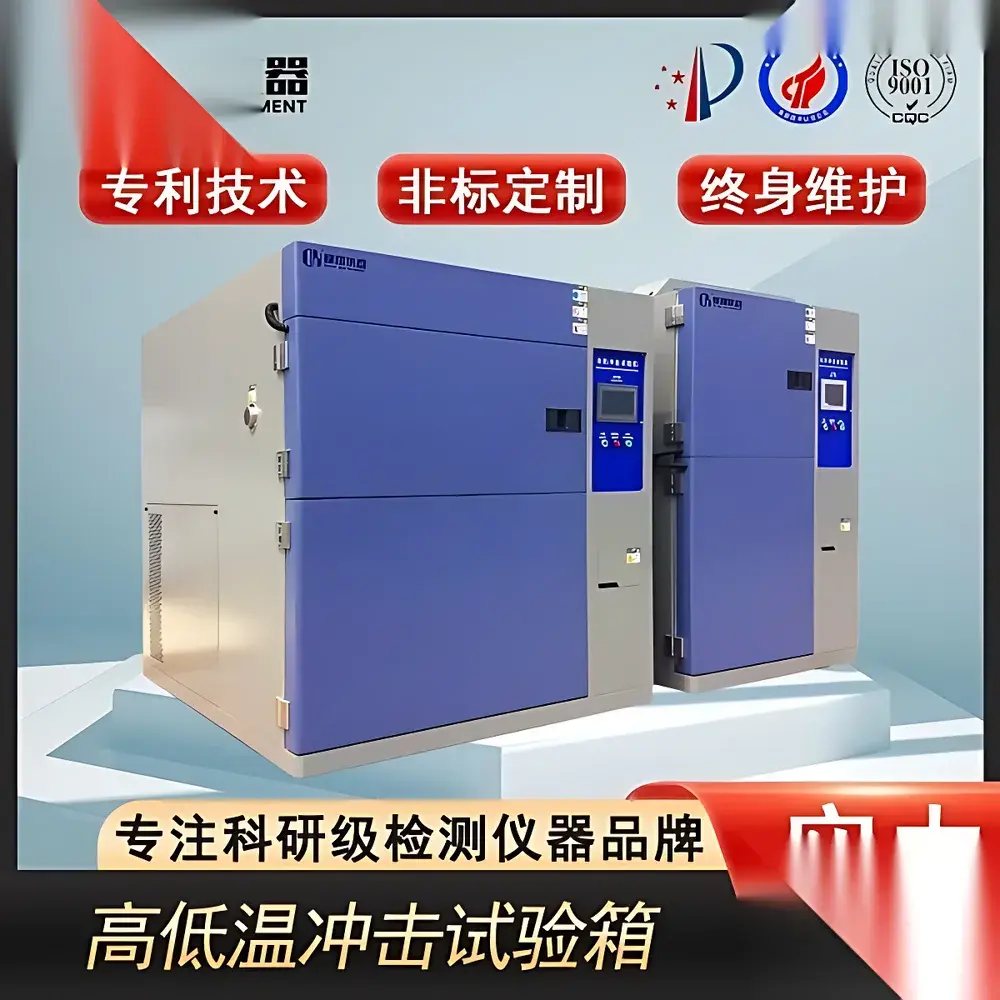
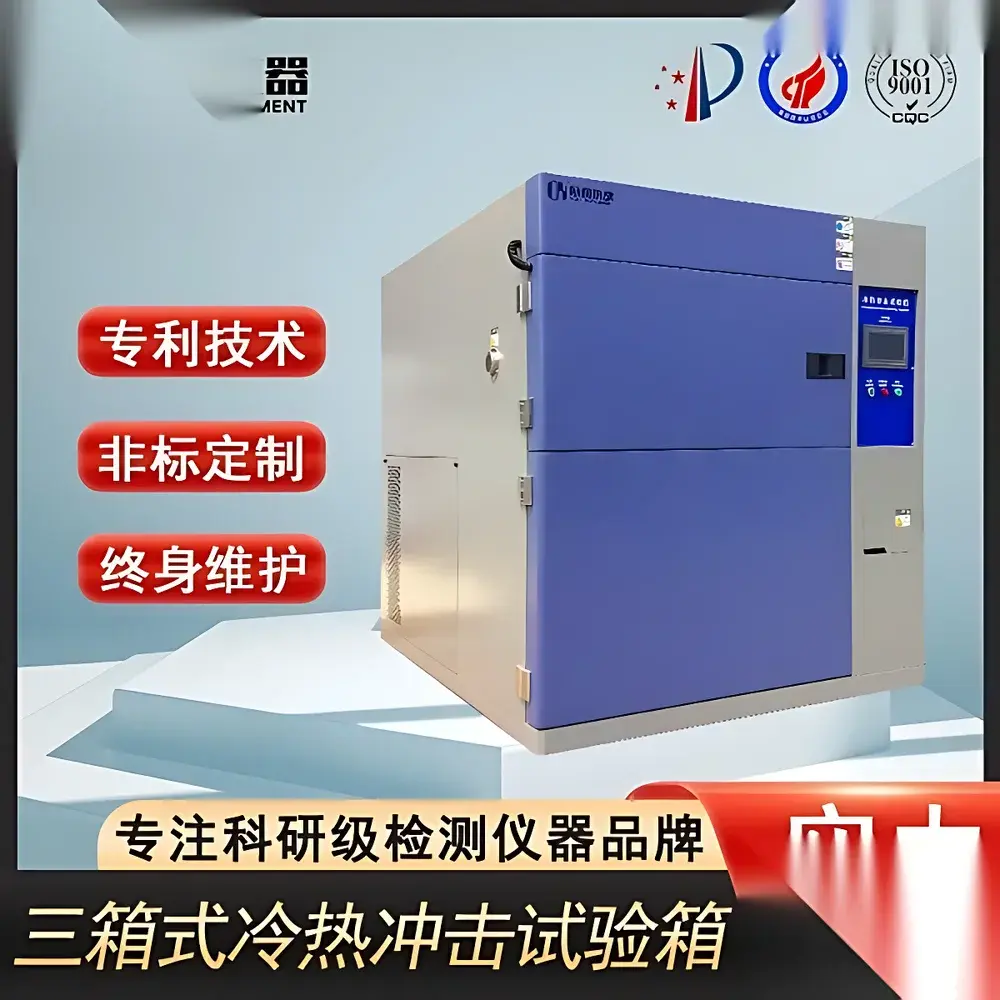
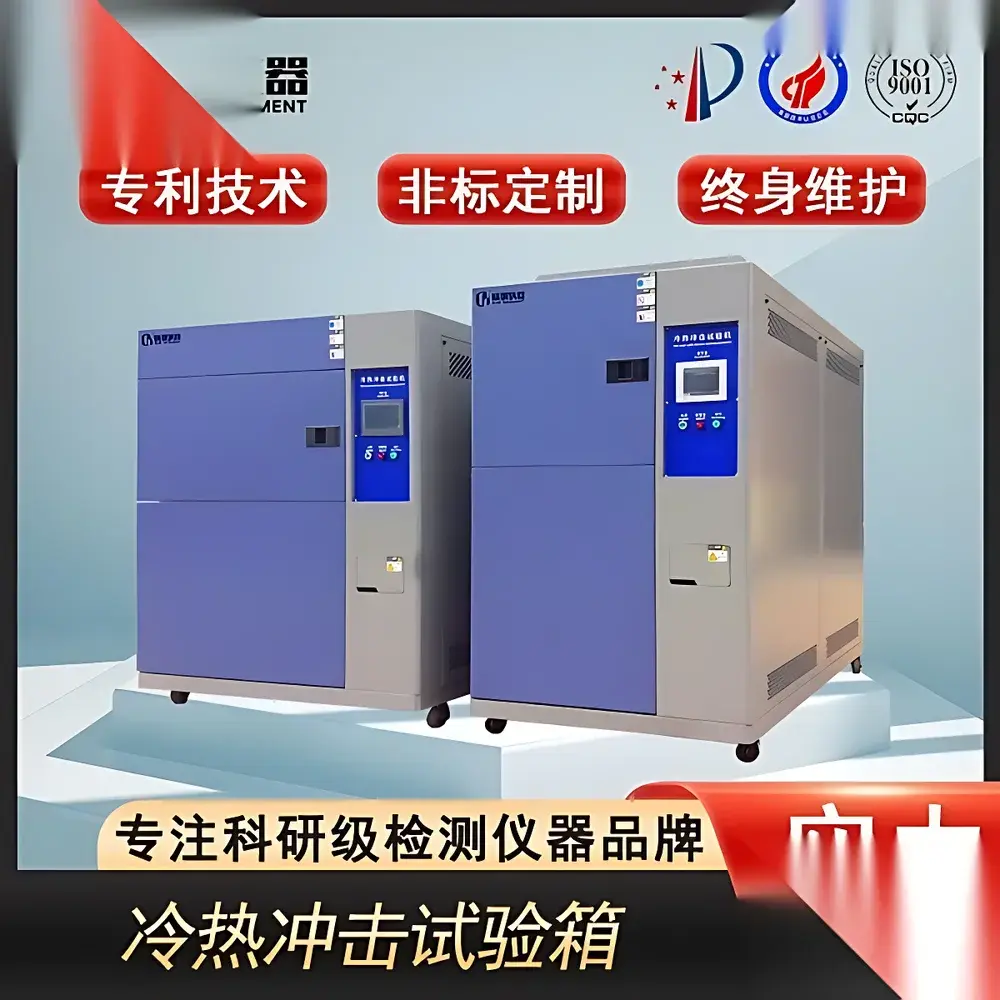
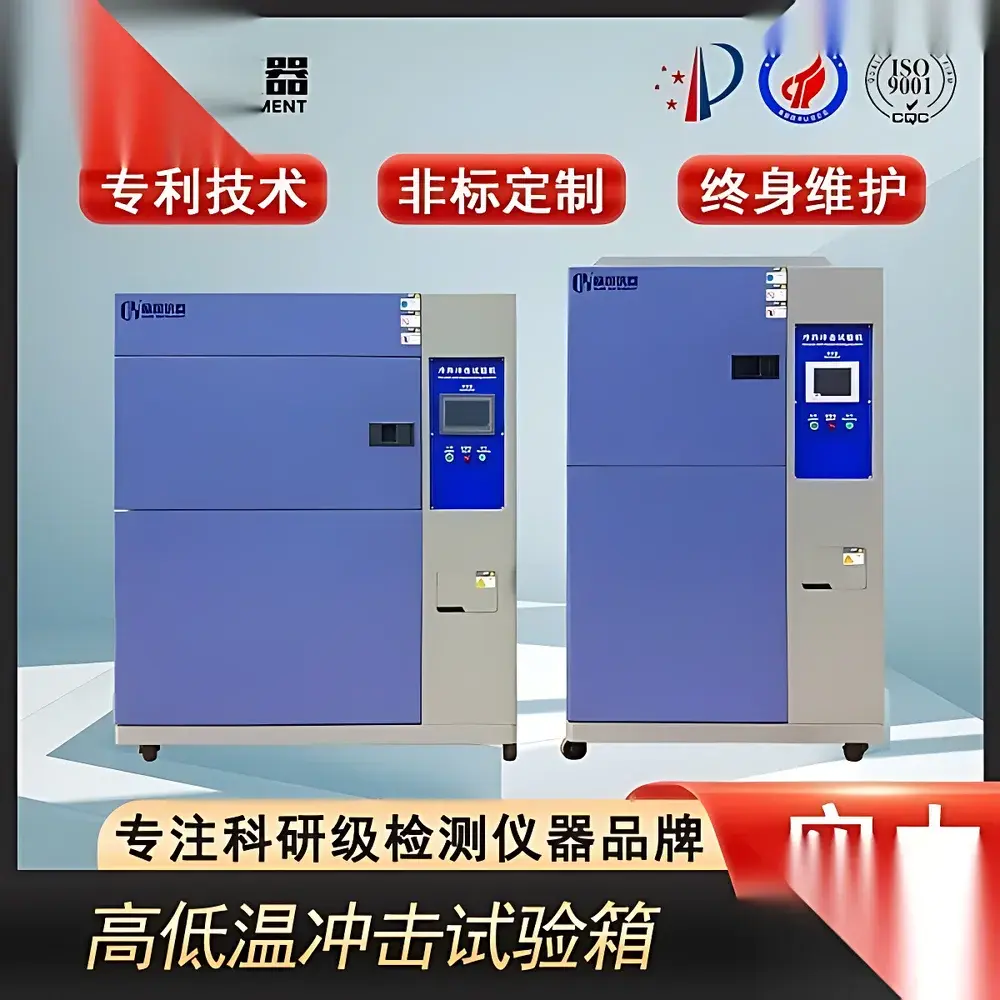
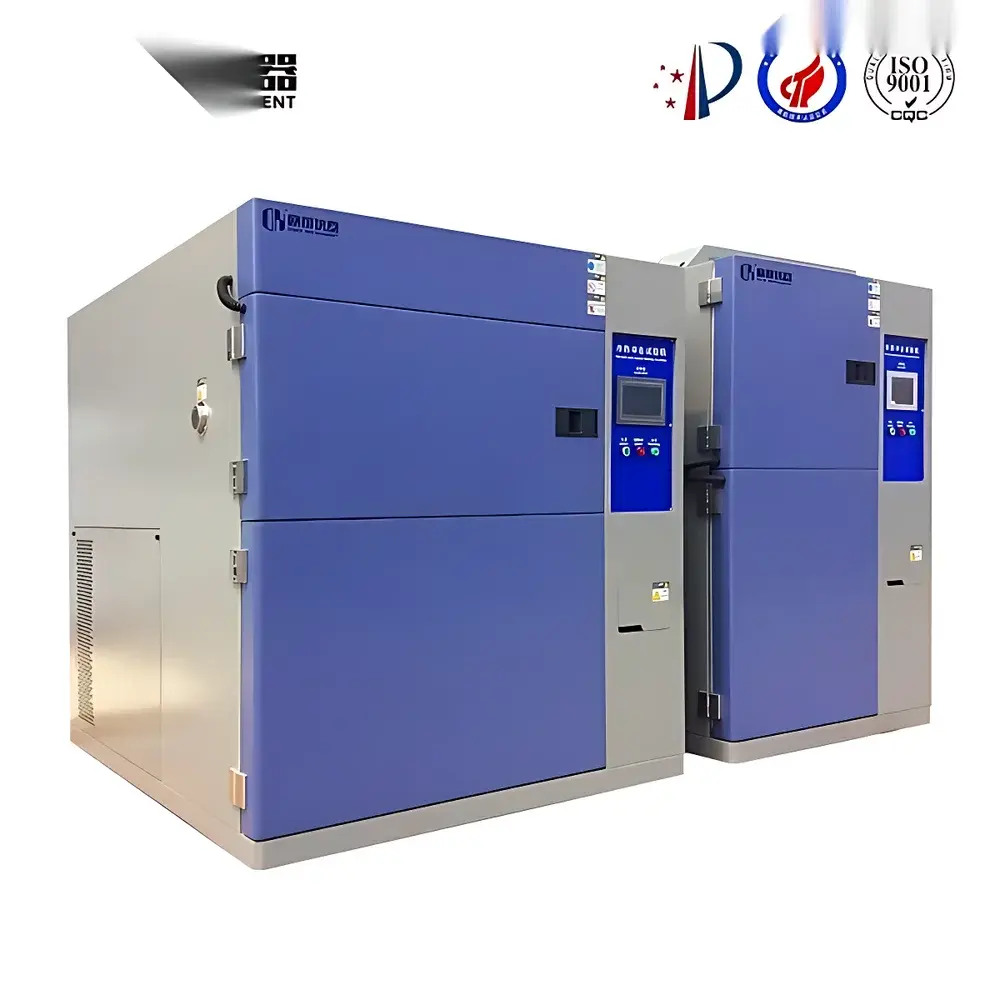
Thermal Shock Test Chamber – Three-Zone High-Low Temperature Rapid Transition Chamber
| Brand | OEM / Custom-Built |
|---|---|
| Origin | Imported |
| Manufacturer Type | Authorized Distributor |
| Price | USD 12,500 (FOB) |
| Temperature Range | −70 °C to +180 °C |
| Test Compartment Volume | Standard 100 L |
| Compliance | IEC 60068-2-14, MIL-STD-202G Method 107, JIS Z 8704, GB/T 2423.22 |
Overview
The Thermal Shock Test Chamber – Three-Zone High-Low Temperature Rapid Transition Chamber is an engineered environmental stress screening (ESS) system designed to evaluate material integrity, solder joint reliability, and packaging robustness under extreme, rapid thermal transitions. Operating on the principle of physical thermal shock—defined as the mechanical stress induced by differential thermal expansion across heterogeneous materials—the chamber implements a true three-zone architecture: separate high-temperature soak zone (up to +180 °C), low-temperature soak zone (down to −70 °C), and a thermally isolated test compartment where the specimen remains stationary. Unlike single-chamber ramp-based systems, this design eliminates thermal inertia limitations by pre-conditioning air masses in dedicated reservoirs, enabling sub-15-second transfer times and ≤5-minute temperature recovery within the test zone—critical for replicating field-relevant failure modes in aerospace electronics, automotive ECUs, and advanced semiconductor packages.
Key Features
- Three-zone segregated architecture with independent PID-controlled heating and cryogenic cooling circuits, eliminating cross-contamination of thermal mass and ensuring repeatable shock profiles.
- High-efficiency cascade refrigeration system utilizing environmentally compliant HFC-507 and HFC-23 refrigerants (ODP = 0), paired with dual-stage scroll compressors from European OEMs for long-term stability and low maintenance intervals.
- Large-format 10.4″ color LCD touchscreen controller with real-time graphical curve display, multi-language UI (English/Chinese), and built-in data logging at user-defined intervals (1–60 sec).
- 96 programmable test profiles compliant with IEC 60068-2-14 Ed. 4.0 (2021), supporting customizable dwell times (1–999 min), cycle counts (1–999), and transition modes (two-zone or three-zone shock, cold- or hot-pulse priority).
- Integrated 50 mm diameter feedthrough port (left-side, gasket-sealed) rated for Class II insulation and 300 VAC continuous load, compatible with external instrumentation signal routing and power supply integration.
- PLC-based safety interlock architecture with hardware-level monitoring of compressor discharge pressure, evaporator superheat, chamber overtemperature, phase loss, ground fault, and electrical surge events.
- Airflow optimization via symmetrical inlet/outlet ducting and vane-type directional dampers, achieving ±1.5 °C uniformity across full test volume per IEC 60068-3-5.
Sample Compatibility & Compliance
The chamber accommodates specimens up to 450 mm × 450 mm × 450 mm (W×D×H) with maximum mass loading of 30 kg. It supports standardized mounting fixtures for PCB assemblies, molded plastic housings, hermetic ceramic packages, and metal-ceramic hybrids. All operational parameters—including ramp rate verification, temperature overshoot limits, and dwell stabilization criteria—are traceable to NIST-traceable reference sensors calibrated annually per ISO/IEC 17025 requirements. The system satisfies functional compliance for qualification testing under MIL-STD-810H Method 503.5 (Temperature Shock), AEC-Q200 stress validation protocols, and IPC-9701A thermal cycling reliability benchmarks. Full audit trails—including operator ID, parameter changes, alarm history, and calibration logs—are retained for GLP/GMP environments requiring 21 CFR Part 11-compliant electronic records.
Software & Data Management
The embedded controller firmware includes native CSV export capability and optional Ethernet/IP interface for SCADA integration. Logged datasets include timestamped chamber setpoints, actual zone temperatures, compressor run-hours, valve actuation cycles, and alarm event codes with severity classification (warning, fault, emergency stop). Remote monitoring is supported via Modbus TCP or OPC UA (add-on license), enabling centralized fleet management across multiple chambers. For regulated labs, optional software validation packages (IQ/OQ documentation, protocol templates, and change control logs) are available to support FDA, ISO 13485, and IATF 16949 audits.
Applications
- Failure analysis of solder interconnects in high-density BGA and QFN packages under repeated thermal gradient stress.
- Validation of conformal coating adhesion and microcrack propagation in automotive LED modules exposed to desert-to-alpine ambient transitions.
- Qualification of MEMS sensor die attach integrity prior to automotive grade AEC-Q100 release.
- Evaluation of sealant delamination in medical device enclosures subjected to sterilization-cooling thermal shocks.
- Accelerated life testing of battery module thermal interface materials (TIMs) under dynamic charge/discharge thermal cycling.
FAQ
What is the minimum achievable transfer time between temperature extremes?
Typical transfer time from +180 °C to −70 °C (or vice versa) is ≤15 seconds, verified per IEC 60068-2-14 Annex B using Class T thermocouples mounted at geometric center of test volume.
Does the system support automated test sequencing across multiple shock profiles?
Yes—the controller supports chained execution of up to 96 independent profiles with conditional branching (e.g., “if alarm X occurs, jump to profile Y”), enabling complex HALT/HASS sequences without external scripting.
Is remote firmware update capability available?
Firmware updates are performed via USB drive with cryptographic signature verification; network-based updates are disabled by default for security compliance in classified or regulated facilities.
Can the chamber be integrated into an existing MES or LIMS environment?
Standard Modbus TCP and optional OPC UA server modules enable bidirectional data exchange with manufacturing execution systems, including real-time status reporting, cycle completion triggers, and SPC data export.
What maintenance intervals are recommended for the refrigeration system?
Compressor oil analysis and filter dryer replacement are recommended every 3,000 operating hours or biannually—whichever occurs first—using only OEM-specified HFC-compatible lubricants and desiccants.



