
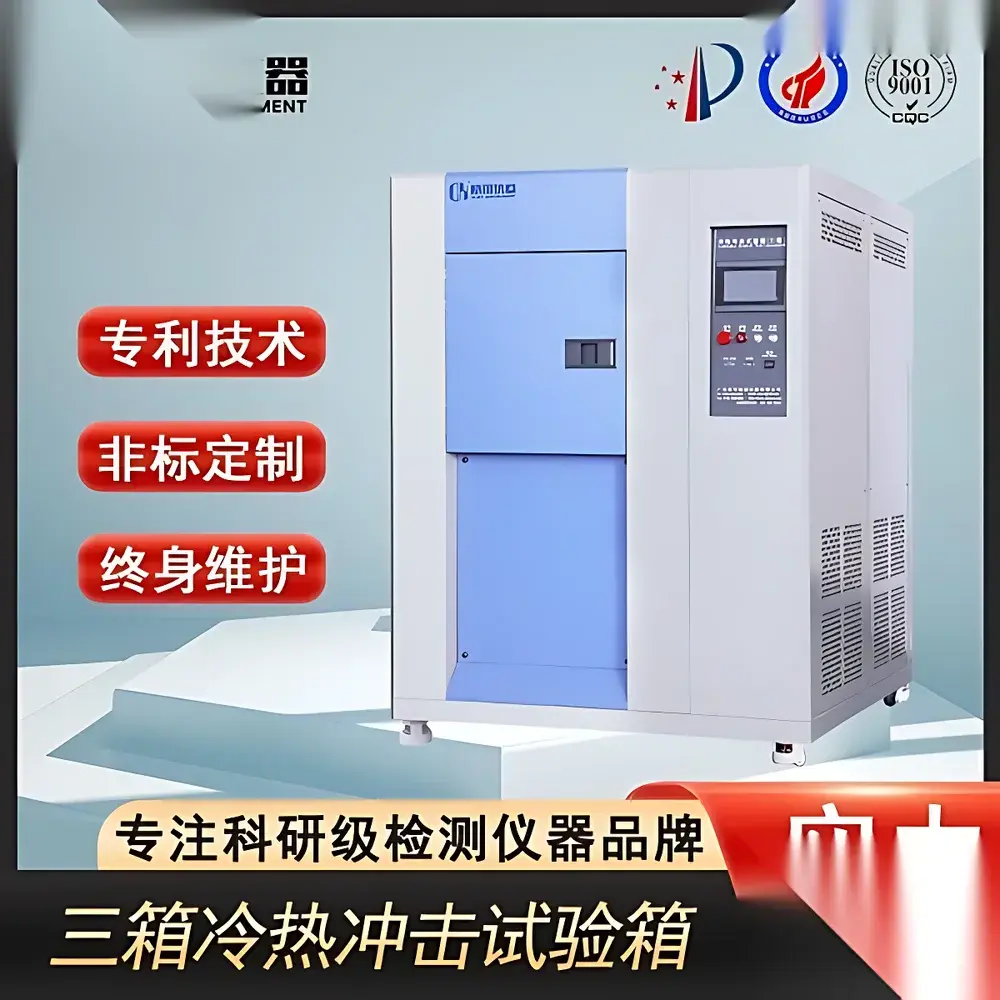
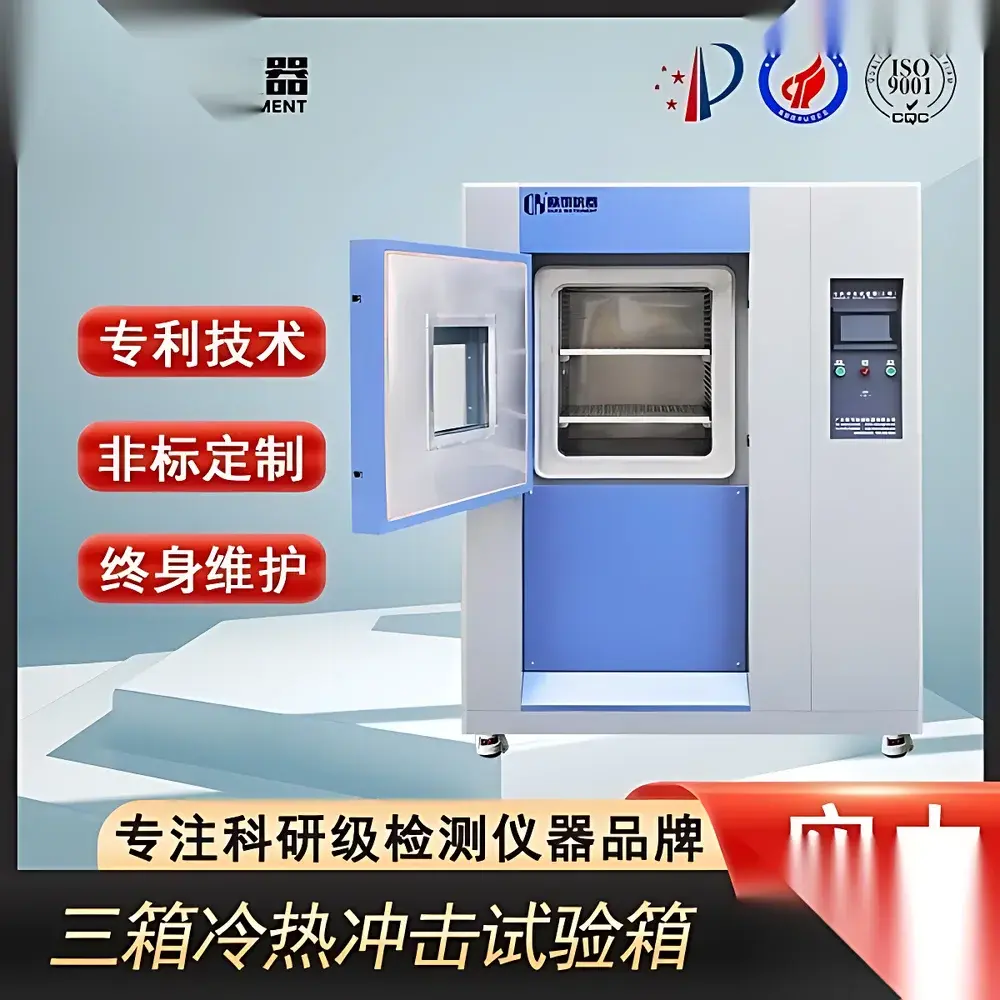
Thermal Shock Test Chamber – Three-Zone Rapid Temperature Cycling Environmental Test Chamber
| Brand | OEM / Custom-Built |
|---|---|
| Origin | Imported |
| Manufacturer Type | Authorized Distributor |
| Price | USD 11,200 (FOB) |
| Compliance | IEC 60068-2-14, MIL-STD-810G Method 503.5, GB/T 2423.22-2002, GJB 150.5A-2009, ISO 16750-4, QC/T 17-2021 |
| Control System | 10.4" Color TFT LCD Touchscreen Controller with PID Algorithm |
| Test Port | Ø50 mm Left-Side Penetration Port |
| Temperature Recovery Time | ≤5 min (per ASTM E1545-02 reference conditions) |
| Cycle Switching Time | ≤10 s (air flap actuation) |
| Programmable Cycles | 1–999 |
| Soak Time Range | 1–999 min per zone |
| Defrost Mode | Auto/Manual, Configurable Frequency |
| Refrigerant | R507A/R23 (Zero ODP, Low GWP HFC blend) |
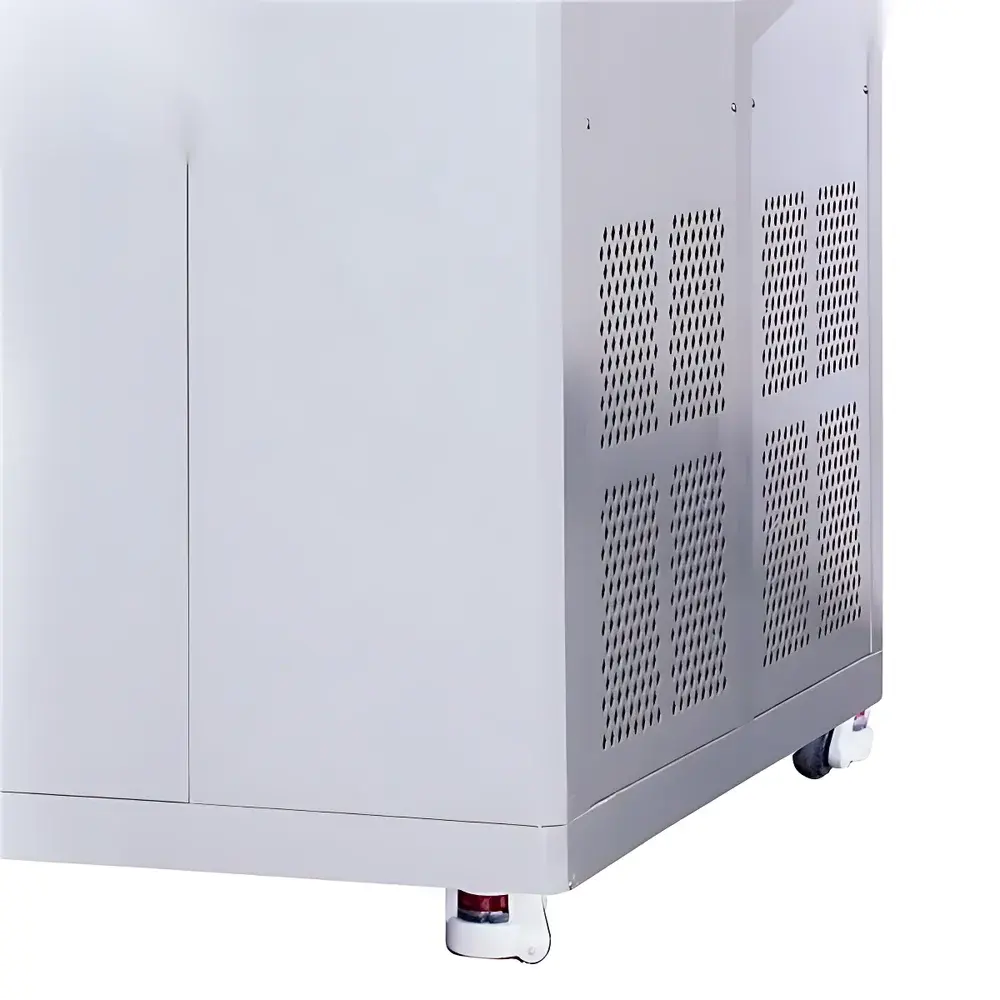
| Construction | Interior & Exterior SUS304 Stainless Steel |
| Safety Protections | Overtemperature, overcurrent, ground fault, compressor high-pressure/low-pressure, phase failure, emergency stop, door interlock |
Overview
The Thermal Shock Test Chamber – Three-Zone Rapid Temperature Cycling Environmental Test Chamber is an engineered solution for evaluating material and component reliability under extreme, rapid thermal transients. Based on the two-chamber (hot/cold) or three-chamber (hot/ambient/cold) air-blast thermal shock principle, it subjects test specimens to repeated, controlled transitions between high- and low-temperature extremes without physical movement of the sample. This eliminates mechanical stress from handling and ensures repeatability critical for qualification testing in aerospace, automotive electronics, semiconductor packaging, and medical device manufacturing. The chamber employs a dual-refrigeration cascade system with independent hot and cold reservoirs, enabling precise temperature stabilization and rapid thermal transfer via high-efficiency airflow modulation—fully compliant with IEC 60068-2-14 (Test N: Change of Temperature) and MIL-STD-810G Method 503.5.
Key Features
- Triple-zone architecture (high-temperature zone, low-temperature zone, and test chamber) with vacuum-insulated partition walls and optimized thermal mass for stable soak conditions and minimal cross-contamination.
- High-speed pneumatic air-flap switching mechanism (<10 s transition time) ensuring reproducible thermal ramp rates and minimizing dwell-time uncertainty.
- 10.4-inch industrial-grade color TFT LCD touchscreen controller with real-time graphical curve display, multi-language UI (English/Chinese), and embedded PID control algorithm for ±0.5 °C temperature uniformity (at 100 mm from chamber walls, per IEC 60068-3-5).
- Programmable test profiles: up to 999 cycles; individual soak duration per zone (1–999 min); configurable cycle sequencing (hot-to-cold, cold-to-hot, or alternating); automatic start/stop scheduling with time-of-day triggers.
- Dual-stage refrigeration system using Copeland or Bitzer semi-hermetic compressors, R507A (−70 °C stage) and R23 (−80 °C ultra-low stage), meeting EU F-Gas Regulation (EU) No 517/2014 and EPA SNAP requirements.
- Full-spectrum safety architecture: Class I insulation monitoring, triple-level overtemperature cutoff (independent sensor + controller + mechanical limiter), phase loss detection, refrigerant pressure safeties, and emergency power-off with mechanical latch.
- Structural integrity: 2.0 mm SUS304 stainless steel interior and exterior panels; optional surface finishes include brushed grain (for corrosion resistance and aesthetic maintenance) or epoxy-powder-coated carbon steel (customizable per OEM specification).
Sample Compatibility & Compliance
The chamber accommodates standard test specimens up to 500 mm × 500 mm × 500 mm (W×D×H), with a dedicated Ø50 mm feedthrough port (IP54 rated) for external power, signal, or environmental monitoring cables. It supports both powered and unpowered device-under-test (DUT) configurations, including PCB assemblies, battery modules, MEMS sensors, and hermetically sealed enclosures. All operational modes—including standalone high-temperature exposure (up to +180 °C), low-temperature storage (down to −70 °C), and full thermal shock cycling—meet traceable calibration requirements per ISO/IEC 17025 and support GLP/GMP audit documentation. Validation reports include temperature mapping (per ASTM E1545-02), recovery time verification, and alarm response log generation.
Software & Data Management
The embedded controller logs all operational parameters—including chamber setpoints, actual temperatures (hot/cold/test zones), compressor status, defrost events, and alarm timestamps—at user-defined intervals (1–60 s). Data export is supported via USB 2.0 (CSV format) or optional Ethernet interface (Modbus TCP/IP or HTTP REST API). For regulated environments, optional 21 CFR Part 11-compliant software add-ons provide electronic signatures, role-based access control, and immutable audit trails. Raw data files are timestamped, digitally signed, and compatible with common statistical process control (SPC) platforms such as Minitab and JMP.
Applications
This thermal shock chamber is routinely deployed in: accelerated life testing of solder joints per IPC-J-STD-002; validation of conformal coating adhesion under thermal fatigue; qualification of EV battery module housings per ISO 16750-4; screening of optical lens mounts for delamination; and reliability assessment of avionics connectors per EIA-364-32. Its deterministic thermal profile repeatability makes it suitable for failure analysis root-cause correlation and DOE-based robustness optimization.
FAQ
What standards does this chamber comply with for thermal shock validation?
It meets IEC 60068-2-14, MIL-STD-810G Method 503.5, GB/T 2423.22-2002, GJB 150.5A-2009, and ISO 16750-4, with full traceability to NIST-traceable temperature sensors.
Can the chamber operate as a standalone high-temperature or low-temperature chamber?
Yes—each thermal reservoir functions independently, allowing continuous operation at +180 °C or −70 °C without engaging shock cycling logic.
Is remote monitoring and control supported?
Standard USB data export is included; Ethernet-based remote supervision and control require optional firmware licensing and network configuration.
What is the typical lead time for factory acceptance testing (FAT)?
FAT includes temperature mapping, recovery time verification, and alarm response validation—and is conducted onsite prior to shipment or at customer premises upon request.
Does the system support automated defrost scheduling during extended test runs?
Yes—defrost frequency and duration are programmable per cycle count or elapsed runtime, with manual override capability.



