
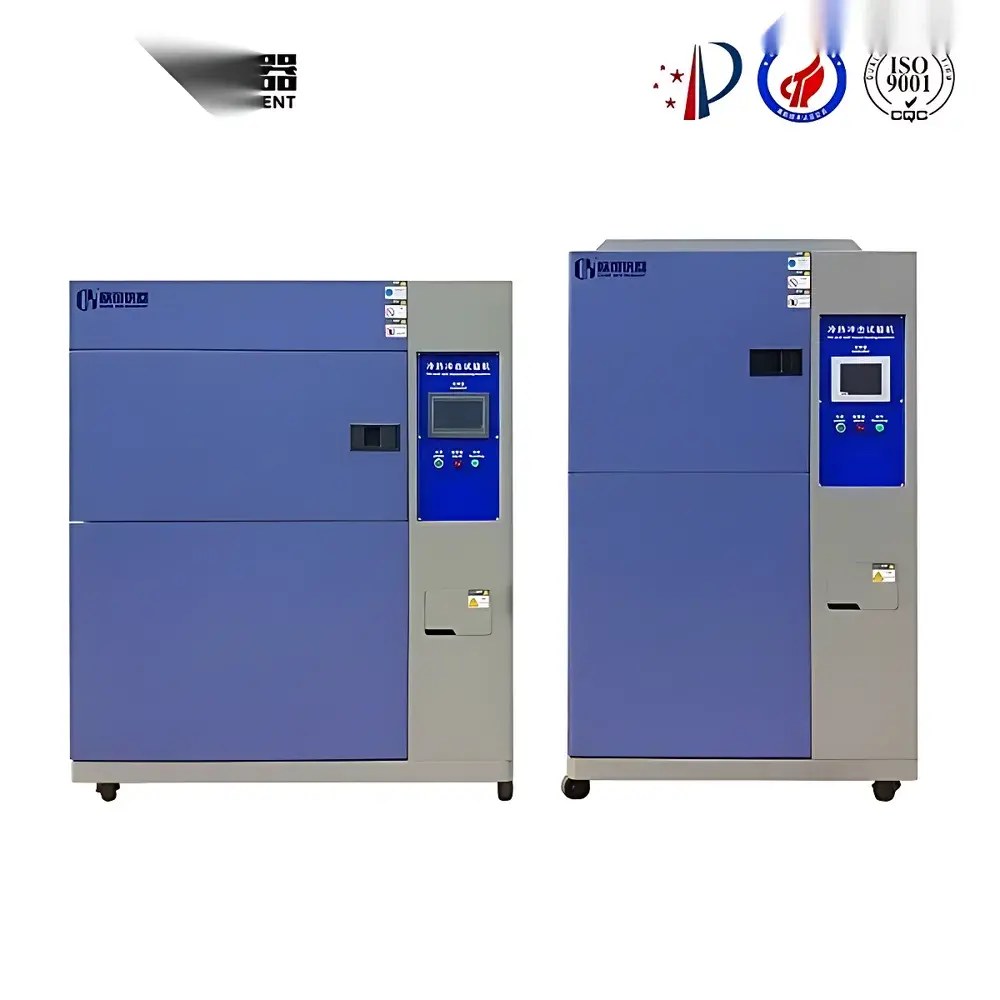
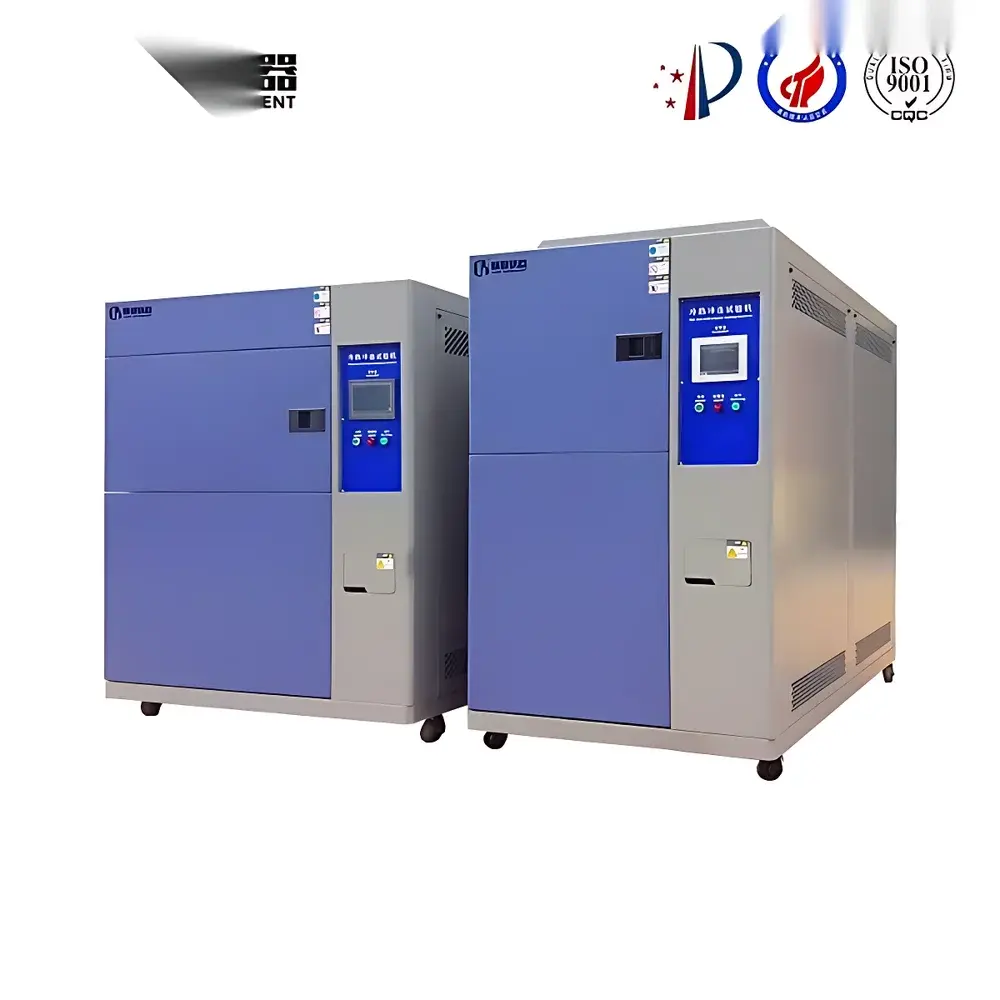
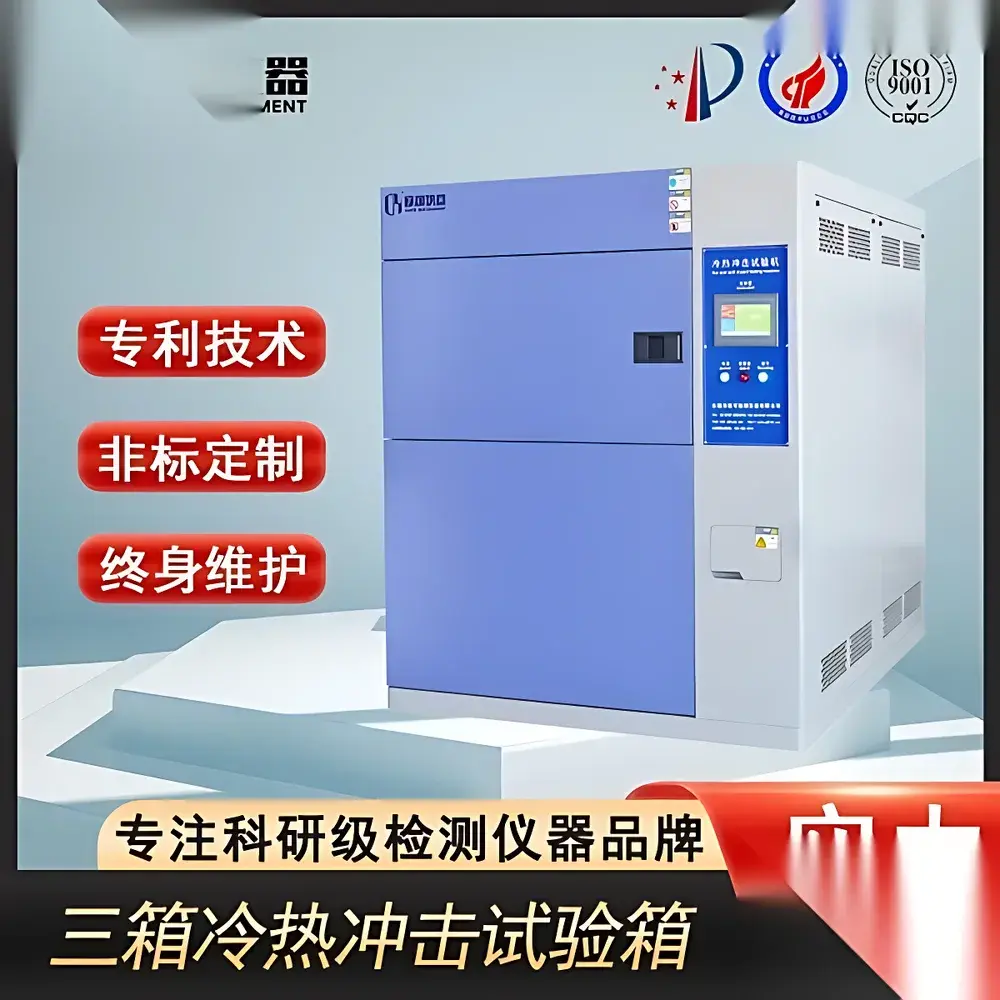
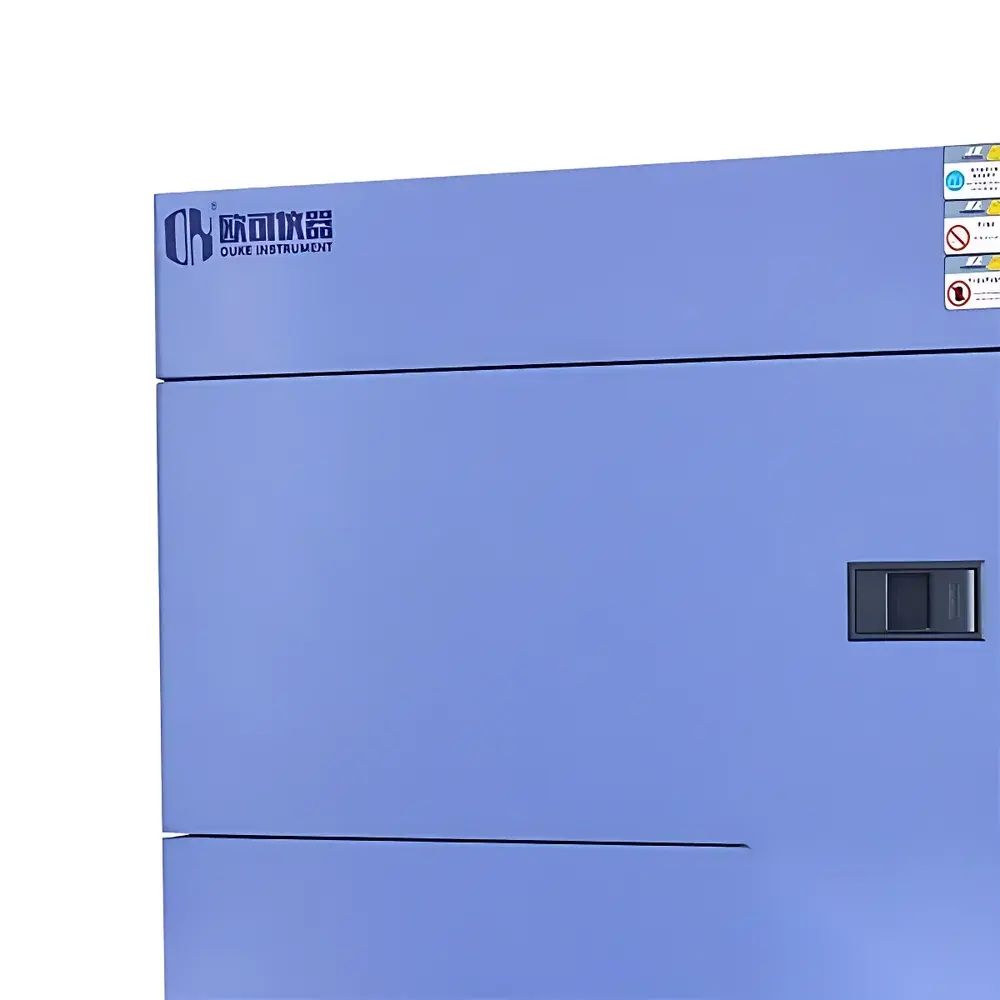
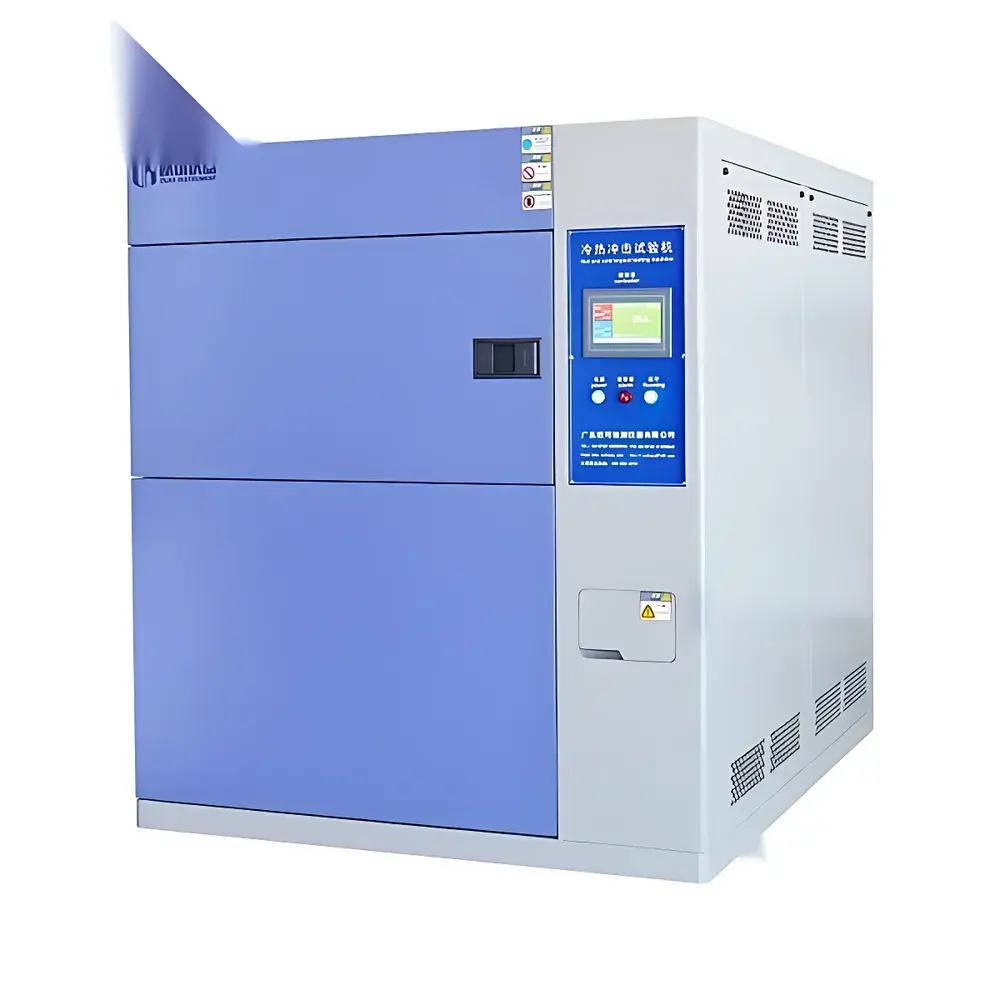
Thermal Shock Test Chamber – Three-Zone Rapid Temperature Transition Chamber
| Brand | OEM |
|---|---|
| Origin | Imported |
| Manufacturer Type | Authorized Distributor |
| Price | USD 11,200 (FOB) |
| Control System | Touchscreen PID Controller |
| Refrigeration | Dual-Stage Cascade System with Bitzer or Tecumseh Compressors |
| Temperature Range | -65°C to +180°C |
| Transition Time (Typical) | ≤30 s between chambers |
| Internal Volume | Standard 100 L / 200 L / 400 L configurations |
| Uniformity | ±0.5°C (at steady state) |
| Compliance | IEC 60068-2-14, MIL-STD-810H Method 503.5, JIS Z 8702 |
Overview
The Thermal Shock Test Chamber – Three-Zone Rapid Temperature Transition Chamber is an engineered environmental stress screening (ESS) system designed for accelerated reliability validation of electronic components, aerospace hardware, automotive ECUs, and high-performance materials under extreme thermal cycling conditions. Operating on the principle of rapid, repeatable transfer between independently controlled high-temperature, low-temperature, and ambient soak zones, this chamber enables precise simulation of thermal shock events as defined in IEC 60068-2-14 (Test N), MIL-STD-810H Method 503.5, and JIS Z 8702. Unlike single-chamber ramp-based systems, the three-zone architecture eliminates thermal inertia limitations—ensuring sub-30-second transition times between extremes (e.g., −65 °C ↔ +180 °C), critical for detecting latent interfacial failures such as solder joint cracking, delamination in multilayer PCBs, or sealant fatigue in hermetic packages.
Key Features
- Triple independent chamber design: High-temp zone (up to +180 °C), low-temp zone (down to −65 °C), and ambient transfer zone—all thermally isolated and individually PID-controlled.
- Touchscreen controller with programmable profile capability: Supports up to 99 segments per cycle, user-defined dwell times, ramp rates (0.5–10 °C/min), and automatic cycle repetition with pass/fail logic triggers.
- Dual-stage cascade refrigeration system using industrial-grade Bitzer or Tecumseh hermetic compressors, ensuring stable sub-zero operation and long-term compressor reliability.
- Multi-blade centrifugal circulation fan with adjustable vane guidance delivers uniform airflow (±0.5 °C spatial uniformity at steady state) and minimizes temperature recovery time (<60 s after door opening).
- Structural integrity: Inner chamber constructed from SUS304 stainless steel; triple-pane observation window with integrated LED lighting and anti-fog heating element; 50 mm diameter test port with silicone gasket and clamping flange for signal/power feedthrough.
- Optional data logging module compliant with FDA 21 CFR Part 11 requirements, including electronic signatures, audit trail, and password-protected parameter locking.
Sample Compatibility & Compliance
The chamber accommodates standard test specimens up to 300 mm × 300 mm × 300 mm (customizable internal volumes: 100 L, 200 L, 400 L). It supports mounting fixtures for printed circuit assemblies (PCBAs), semiconductor packages (QFP, BGA, CSP), optical sensors, battery modules, and polymer encapsulants. All thermal profiles are traceable to NIST-calibrated reference sensors (Class A Pt100). The system meets ISO/IEC 17025 requirements for calibration interval management and is pre-configured for GLP/GMP-compliant validation protocols—including IQ/OQ documentation templates aligned with ASTM E2582 and USP environmental qualification guidelines.
Software & Data Management
The embedded control firmware supports Ethernet TCP/IP communication (Modbus TCP and optional OPC UA gateway) for integration into centralized MES or LIMS platforms. Real-time monitoring includes dual-channel temperature logging (zone setpoint vs. actual), compressor runtime tracking, alarm history with timestamped event codes (e.g., “Low Refrigerant Pressure – Zone B”), and CSV export of full-cycle datasets. Optional PC-based software provides statistical process control (SPC) overlays, Weibull failure probability modeling, and automated report generation compliant with ISO 9001 clause 8.2.4.
Applications
- Qualification testing of avionics modules per DO-160 Section 4 (Temperature Variation).
- Failure mode analysis of power electronics subjected to repeated thermal cycling in EV inverters.
- Validation of conformal coating adhesion on flex-rigid PCBs under −40 °C/+85 °C shock cycles.
- Accelerated aging studies of lithium-ion battery electrolyte stability across −55 °C to +125 °C transitions.
- Reliability screening of MEMS accelerometers and pressure sensors prior to automotive AEC-Q200 certification.
FAQ
What is the typical calibration interval for this chamber’s temperature sensors?
Per ISO/IEC 17025 and internal quality protocol, Class A Pt100 sensors require annual calibration against a NIST-traceable dry-block calibrator; field verification checks are recommended before each qualification test series.
Can the chamber be validated for GMP-regulated environments?
Yes—the system supports full IQ/OQ/PQ execution with documented evidence packages, electronic audit trails, and user access level controls meeting FDA 21 CFR Part 11 and EU Annex 11 requirements.
Is remote monitoring supported via industrial networks?
Standard Ethernet interface enables Modbus TCP integration; optional OPC UA server license allows secure connection to SCADA or cloud-based predictive maintenance platforms.
What safety protections are built into the refrigeration system?
Compressor discharge temperature cutoff, high/low pressure switches, phase failure detection, and refrigerant leak sensor (optional) with automatic shutdown and visual/audible alarm activation.
How is thermal uniformity verified during installation qualification?
Using a 9-point sensor array per IEC 60068-3-5, mapped across center, corners, and mid-height planes during stabilized soak at −65 °C, +25 °C, and +180 °C—reporting maximum deviation and standard deviation per zone.



