
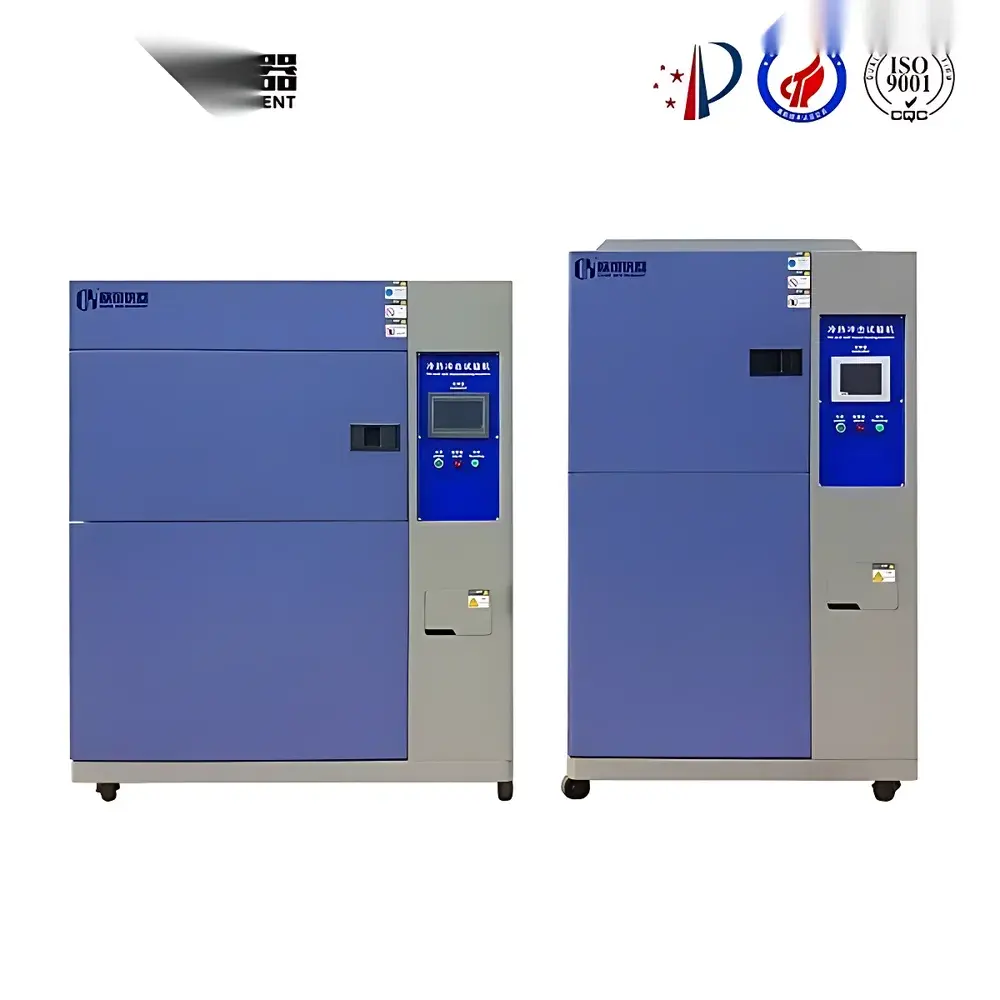
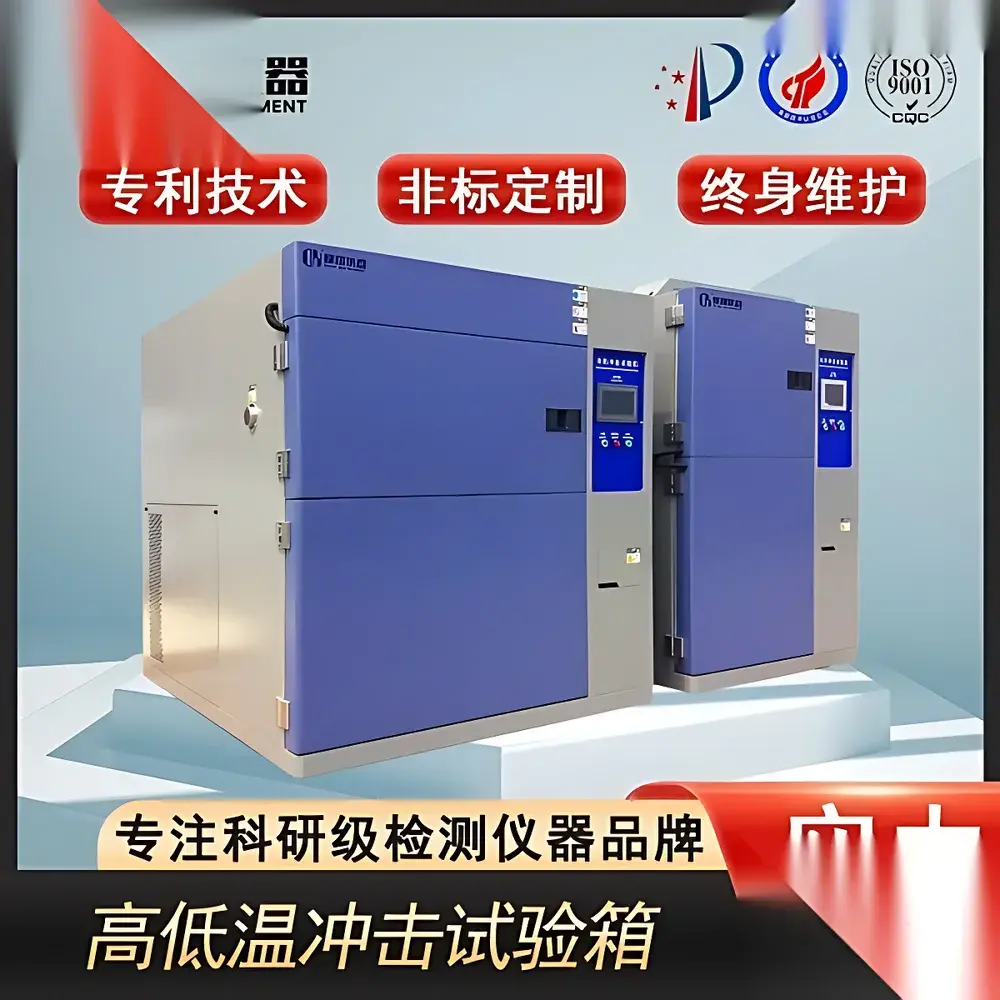
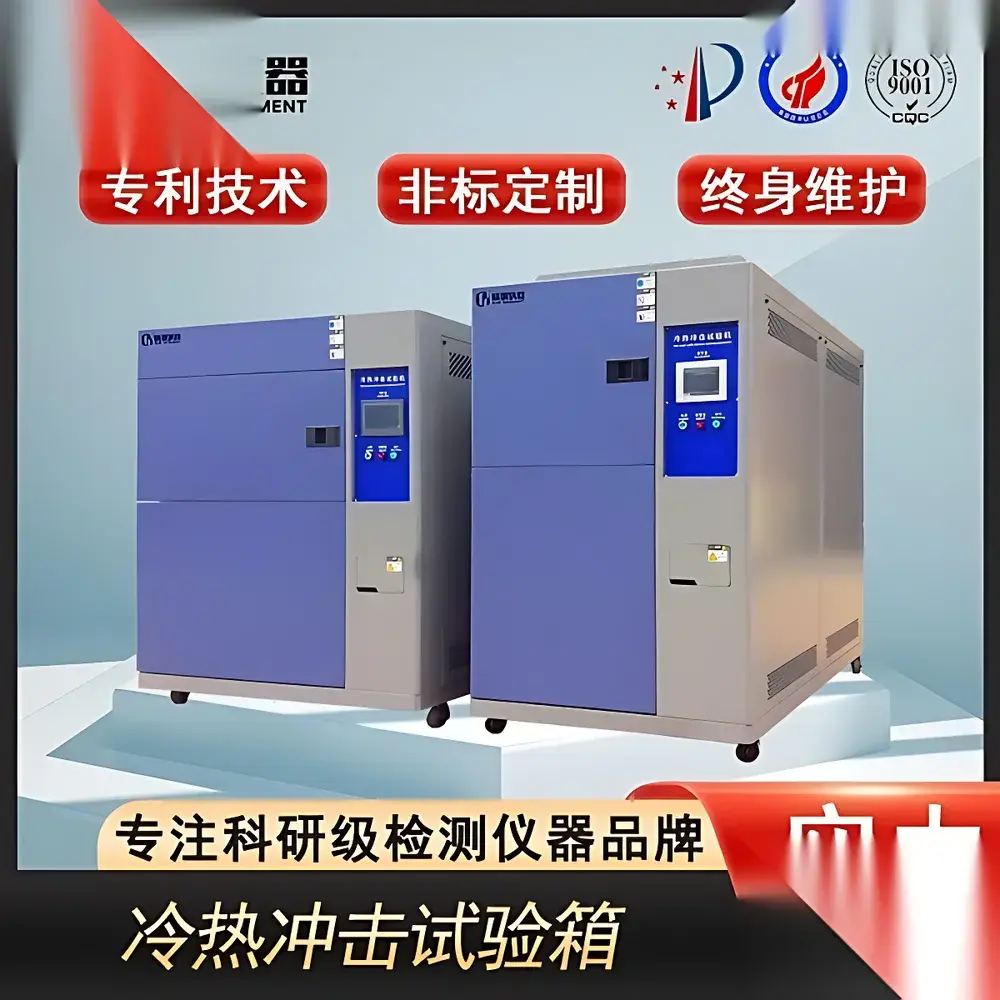
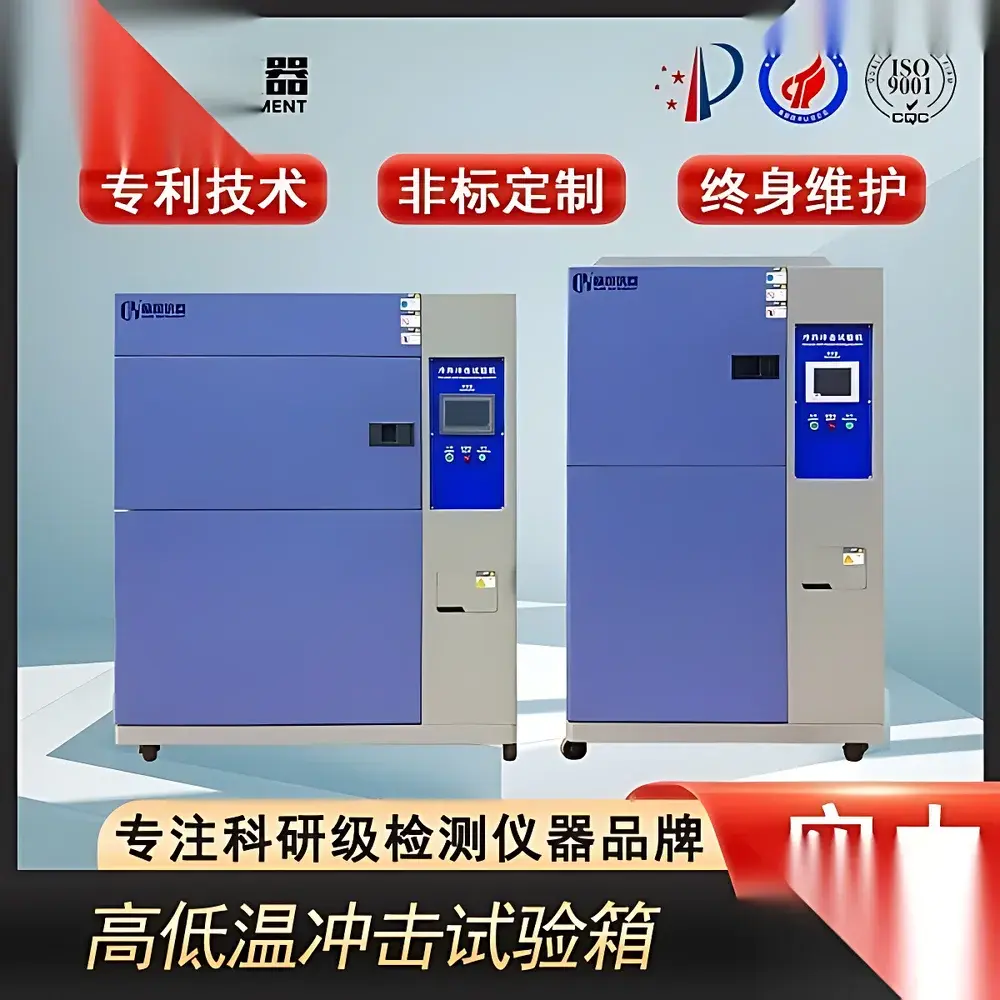
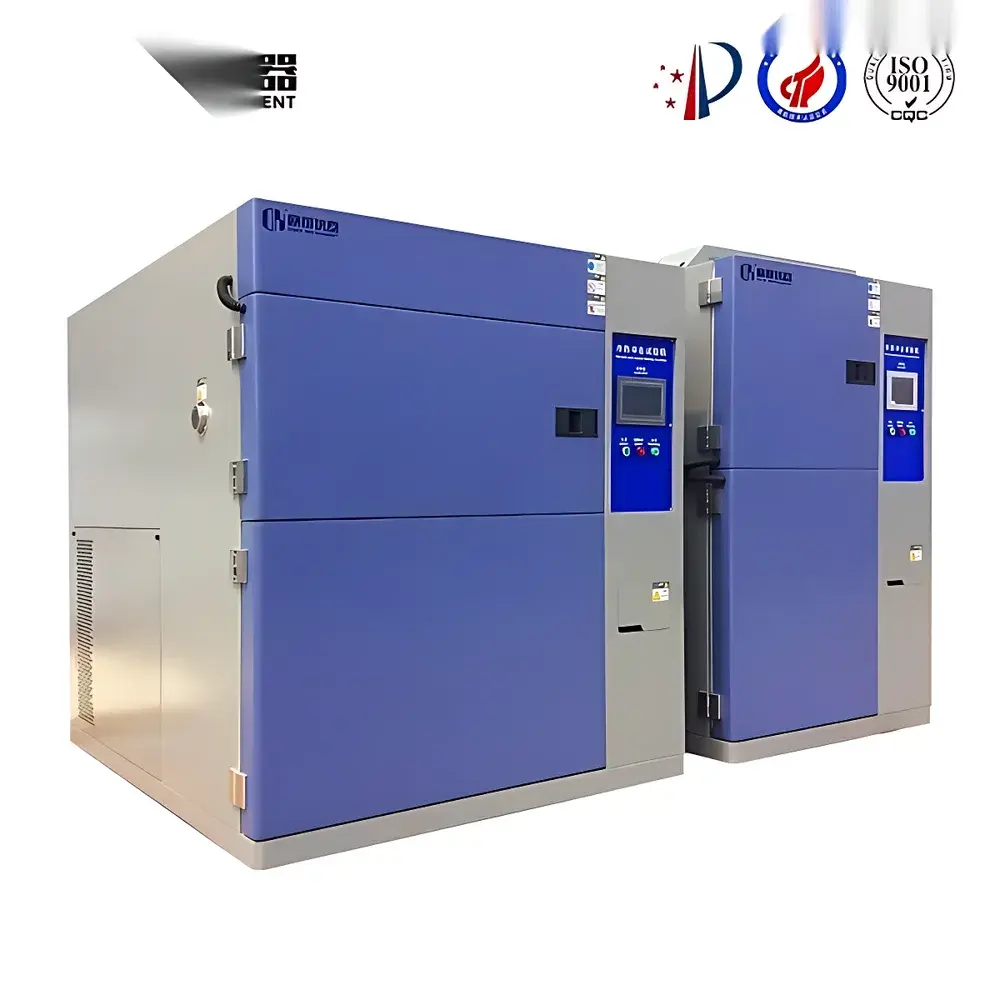
Thermal Shock Test Chamber – Three-Zone Static-Sample Configuration
| Brand | OEM / Custom-Built |
|---|---|
| Origin | Imported |
| Manufacturer Type | Authorized Distributor |
| Pricing | USD 11,200 (FOB) |
| Construction | Triple-Chamber Static-Position Design |
| Temperature Range | −65°C to +180°C |
| Transition Time (HT→LT) | ≤15 s (typical, 50 mm sample zone) |
| Internal Volume | 150 L standard |
| Control System | IPC2000 Color LCD Touchscreen with Real-Time Curve Display |
| Insulation | Rigid Polyurethane Foam + Ultra-Fine Glass Wool |
| Refrigeration | Dual-Stage Cascade System with Two Tecumseh (France) Semi-Hermetic Compressors |
| Condenser | Water-Cooled |
| Heating | Stainless Steel Finned Heaters |
| Sealing | High-Performance Silicone Rubber Gaskets |
| Compliance | Designed per IEC 60068-2-14, MIL-STD-810H Method 503.5, JIS Z 8702 |
Overview
The Thermal Shock Test Chamber – Three-Zone Static-Sample Configuration is an engineered environmental test system designed for rapid, repeatable thermal cycling of non-moving specimens under controlled, high-fidelity conditions. Unlike single- or dual-chamber configurations that rely on mechanical transfer mechanisms, this triple-zone architecture isolates the specimen in a stationary test chamber positioned between independent high-temperature and low-temperature reservoirs. Thermal shock is induced by precisely timed pneumatic door actuation—opening the upper damper to admit heated air from the hot zone (up to +180°C), or the lower damper to introduce chilled air from the cold zone (down to −65°C). This static-sample methodology eliminates mechanical stress, positional drift, and thermal lag associated with shuttle-based systems, ensuring measurement integrity during qualification of solder joints, conformal coatings, MEMS packaging, and multi-material assemblies subject to coefficient-of-thermal-expansion (CTE) mismatch.
Key Features
- Triple-chamber vertical layout: Hot zone (top), test zone (center), cold zone (bottom)—all thermally decoupled via vacuum-sealed insulation layers.
- Static specimen positioning: No robotic arms, carriers, or horizontal translation—reducing vibration artifacts and enabling direct in-situ monitoring (e.g., real-time resistance or capacitance tracking).
- Dual-stage cascade refrigeration: Two independently controlled Tecumseh semi-hermetic compressors, each optimized for distinct temperature bands, integrated with water-cooled condensers and multi-circuit energy modulation for stable sub-zero hold performance.
- High-resolution thermal management: Stainless steel finned heaters with PID-controlled power modulation; combined with ultra-low thermal mass airflow ducting for ±0.3°C uniformity across 150 L working volume.
- IPCS2000 intelligent controller: 7-inch color LCD touchscreen with embedded real-time graphing, programmable ramp/soak profiles, alarm logging, and USB data export compliant with GLP audit trails.
- Robust structural design: Exterior cold-rolled steel with epoxy-polyester powder coating; interior 304 stainless steel chamber walls; dual-lip silicone rubber gaskets meeting ISO 527-2 sealing specifications.
Sample Compatibility & Compliance
This chamber accommodates rigid and semi-rigid samples up to 400 mm × 400 mm × 300 mm (W×D×H) without modification. It supports standardized test coupons (e.g., IPC-TM-650 2.6.7.2), PCB assemblies, automotive ECUs, aerospace avionics modules, and ceramic substrates. The system is architected to meet the procedural and instrumentation requirements of IEC 60068-2-14 (Change of Temperature), MIL-STD-810H Method 503.5 (Temperature Shock), and JIS Z 8702 (Environmental Testing Methods). All temperature sensors are calibrated traceable to NIST standards; controller firmware includes configurable pass/fail thresholds and automatic deviation reporting per ISO/IEC 17025 documentation protocols.
Software & Data Management
The IPC2000 controller runs embedded Linux-based firmware supporting CSV export of time-stamped temperature logs at user-defined intervals (1–60 s). Data files include chamber setpoints, actual sensor readings (hot/cold/test zones), damper status, compressor duty cycles, and alarm event timestamps. Optional Ethernet interface enables integration into centralized lab networks for remote supervision via HTTP/HTTPS or Modbus TCP. Audit trail functionality complies with FDA 21 CFR Part 11 requirements—including electronic signature capture, user-level access control, and immutable log archiving—making it suitable for regulated quality assurance environments operating under ISO 9001, IATF 16949, or AS9100 frameworks.
Applications
- Qualification testing of lead-free solder interconnects under JEDEC J-STD-020D.1 reflow profile derivatives.
- Evaluation of delamination resistance in stacked-die packages and fan-out wafer-level chip-scale packages (FO-WLCSP).
- Validation of thermal interface material (TIM) adhesion stability across extreme ΔT gradients.
- Reliability screening of optical sensor housings exposed to diurnal desert-to-night ambient swings.
- Material science studies on phase-transition hysteresis in shape-memory alloys and polymer composites.
- Pre-compliance verification for AEC-Q200 stress tests targeting automotive Grade 0/1 components.
FAQ
Does the system support automated test sequencing per IEC 60068-2-14 Ed. 3.0?
Yes—the controller includes preloaded templates for standard thermal shock profiles, including “Step 1: Soak at +125°C for 30 min → Step 2: Transfer → Step 3: Soak at −55°C for 30 min”, with customizable dwell times, transition counts, and failure termination logic.
Can third-party DAQ systems interface with the chamber’s analog outputs?
The unit provides isolated 0–10 V DC analog outputs for hot/cold/test zone temperatures and digital I/O for damper status and alarm signals—fully compatible with National Instruments, Keysight, and Dewesoft acquisition platforms.
What maintenance intervals are recommended for the cascade refrigeration system?
Compressor oil analysis and filter dryer replacement every 18 months; full refrigerant charge verification and leak inspection annually—documented in the included maintenance logbook aligned with ISO 55001 asset management principles.



