
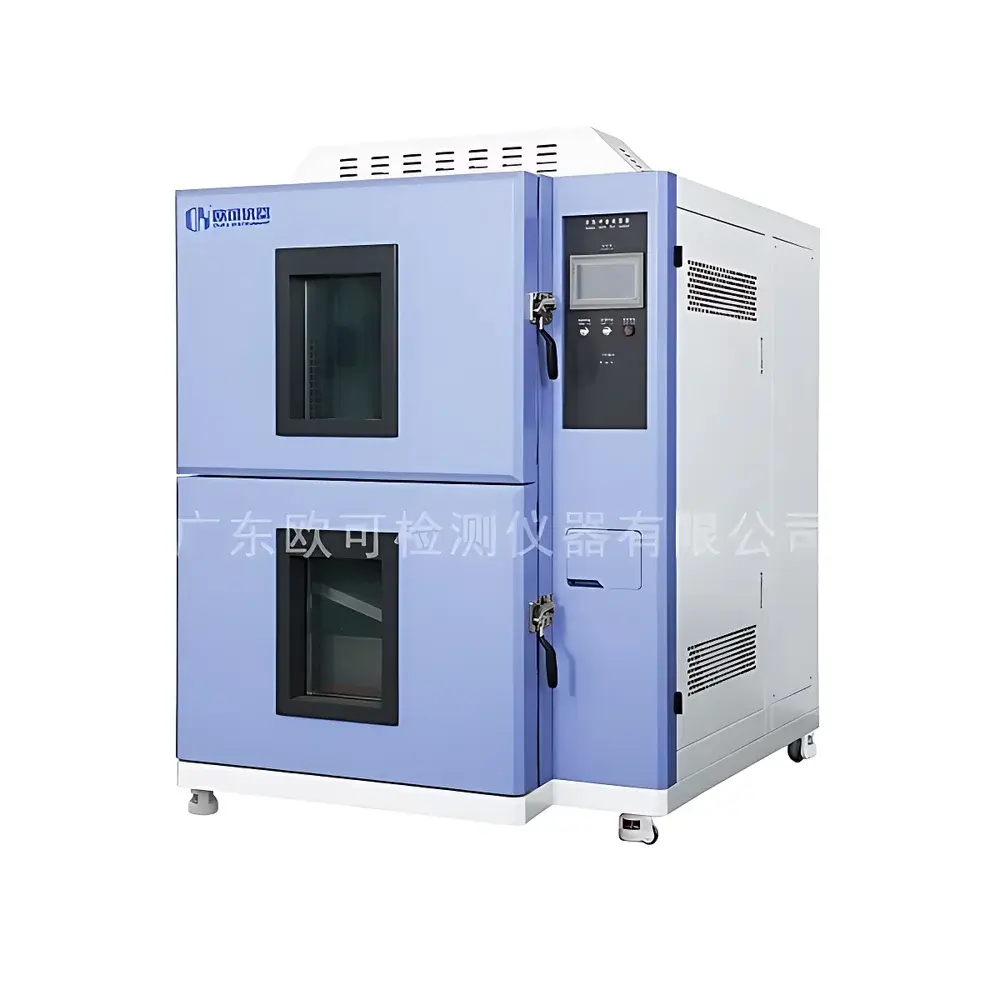
Thermal Shock Test Chamber – Three-Zone Vertical High-Performance Environmental Test System
| Brand | OEM / Custom-Built |
|---|---|
| Origin | Imported |
| Manufacturer Type | Authorized Distributor |
| Price | USD 11,200 (FOB) |
Overview
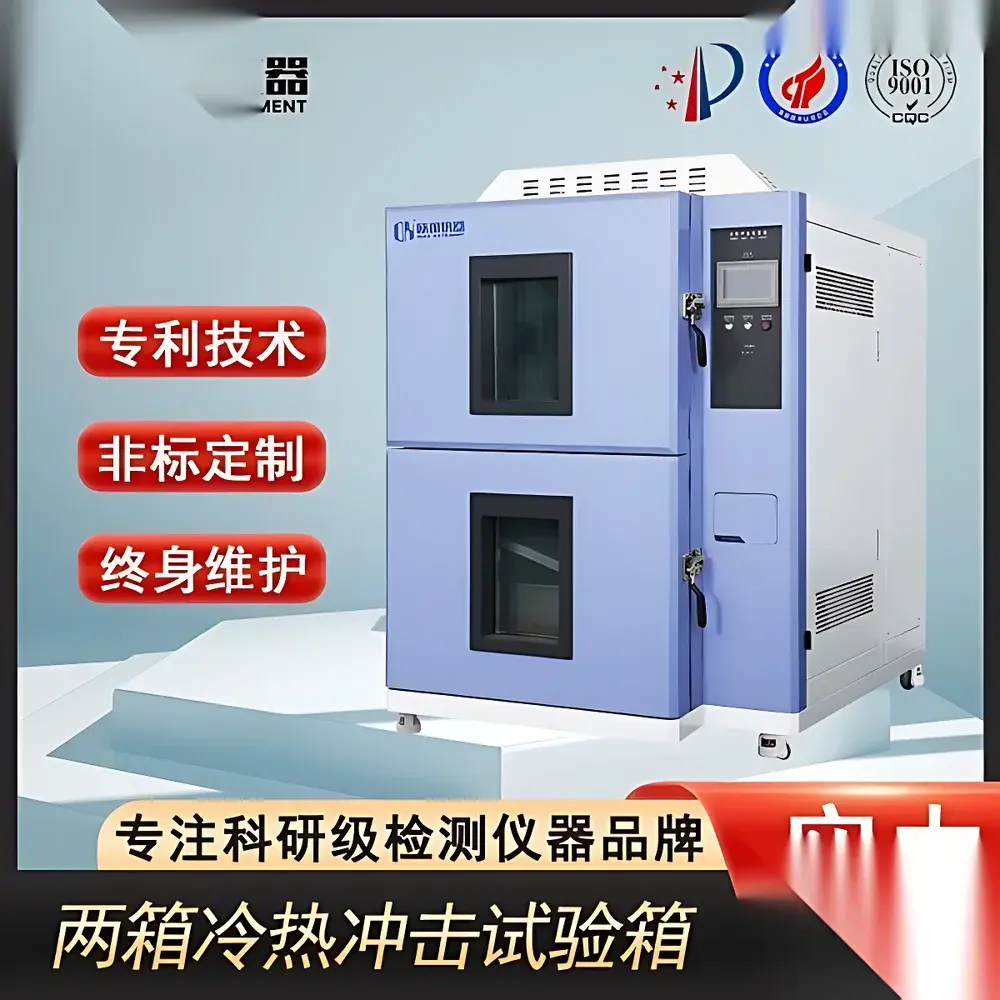
The Thermal Shock Test Chamber – Three-Zone Vertical High-Performance Environmental Test System is an engineered solution for accelerated evaluation of material and component reliability under extreme, rapid thermal transitions. Based on the principle of *two-bath, three-zone thermal shock*—comprising independent high-temperature, low-temperature, and test chambers—the system subjects specimens to abrupt, repeatable temperature shifts via pneumatic or servo-driven basket transfer. This architecture eliminates thermal mass interference from chamber walls, enabling true step-change exposure without residual heat exchange. Designed in strict accordance with IEC 60068-2-14 (Test N: Change of temperature), JIS C 0025, MIL-STD-810H Method 503.5, and GJB 150.5A, the chamber delivers controlled thermal shock profiles essential for qualifying aerospace composites, automotive ECUs, semiconductor packaging, and medical device housings against thermo-mechanical fatigue.
Key Features
- Three-zone vertical configuration: separate 150 °C high-temp chamber, −70 °C low-temp chamber, and ambient test zone—each with independent refrigeration/heating circuits and PID-controlled air circulation
- Transfer mechanism achieves specimen movement between zones in ≤10 seconds, minimizing dwell-time-induced thermal lag
- Temperature recovery time ≤5 minutes post-transfer (per IEC 60068-2-14 requirement), verified using calibrated Class A PT100 sensors traceable to NIST standards
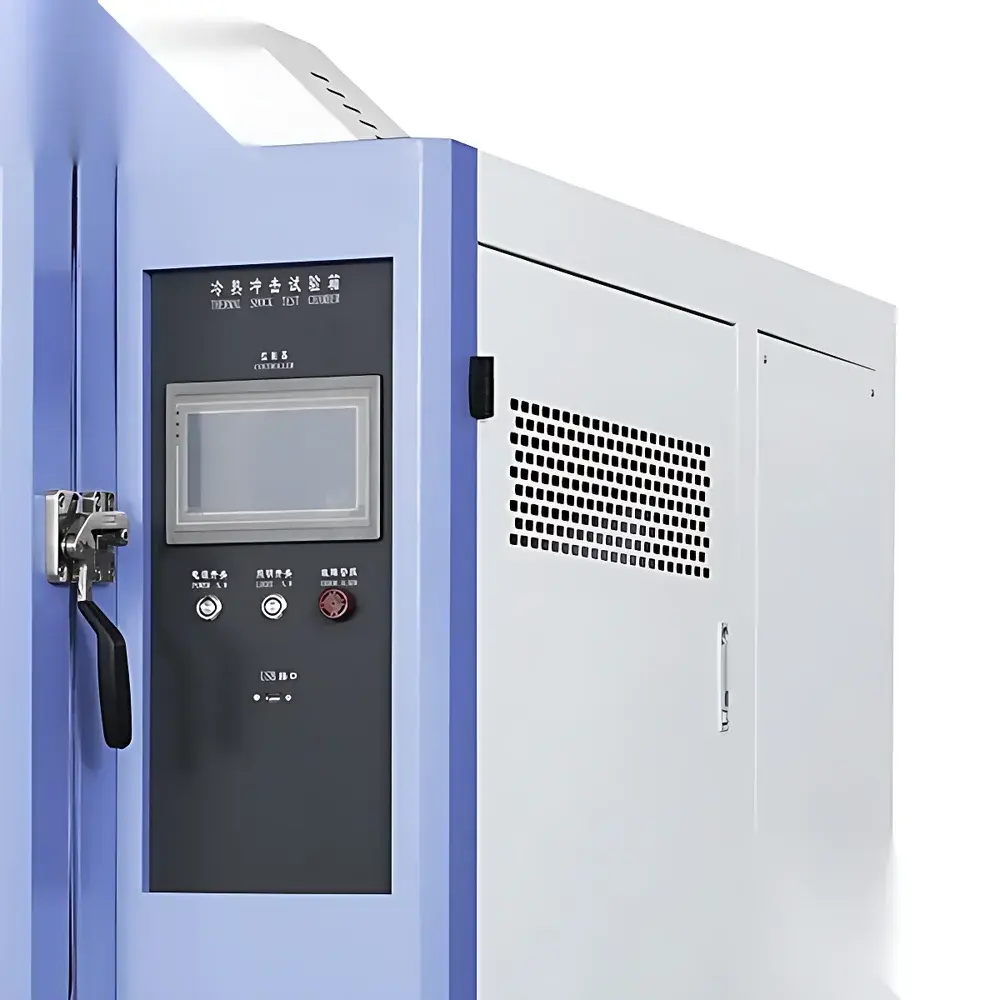
- Japanese-made 320 × 240-dot full-color LCD touchscreen controller with bilingual (English/Chinese) interface, supporting real-time curve plotting, alarm history logging, and user-level access control
- Programmable logic controller (PLC)-based architecture ensures deterministic sequencing; supports up to 100 stored test profiles, 9999 cycles per profile, and individual segment duration up to 999 h 59 min
- Comprehensive safety suite: dual-stage overtemperature protection (mechanical + electronic), compressor high-pressure cutout, phase failure detection, coolant flow monitoring, and emergency power-off triggered by input voltage deviation >±10%
Sample Compatibility & Compliance
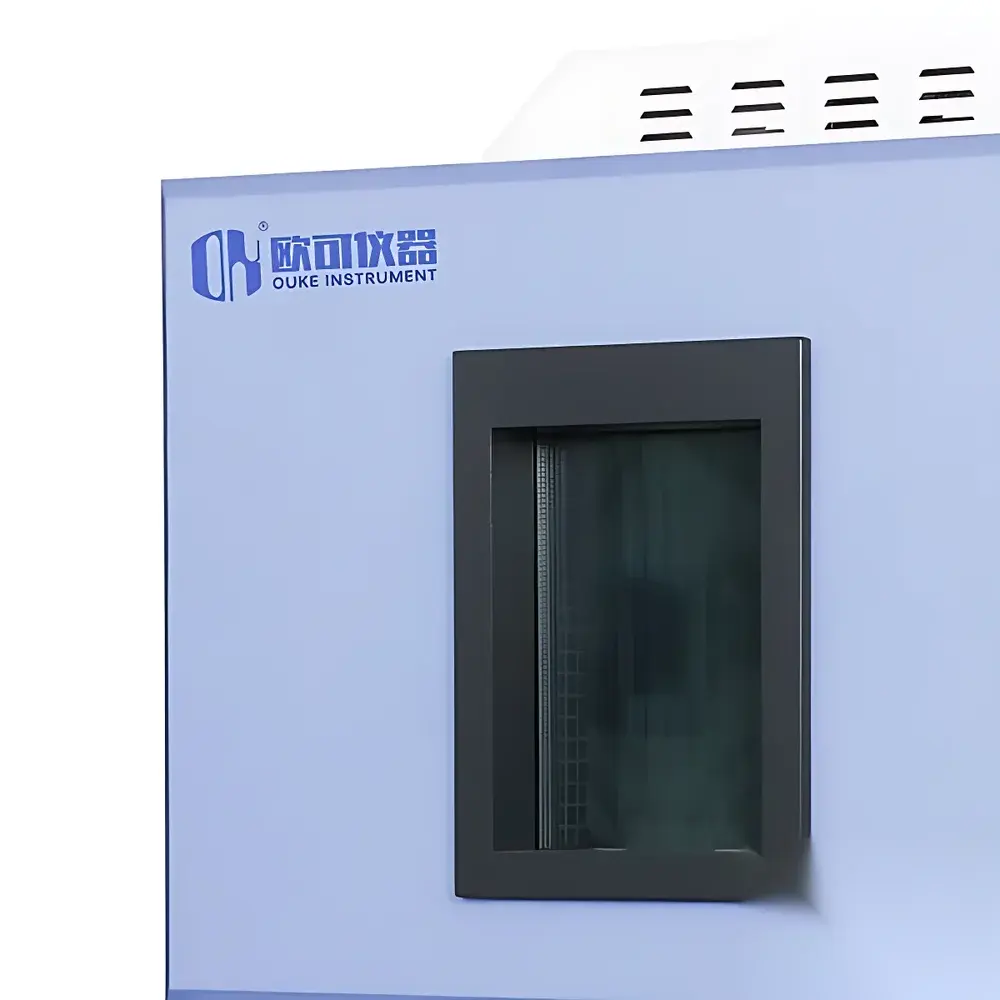
The chamber accommodates specimens up to 500 mm × 500 mm × 500 mm (W × D × H) with maximum mass load of 30 kg. Internal stainless-steel 304 chamber walls and insulated double-glass observation window ensure corrosion resistance and thermal integrity. All electrical components comply with CE marking requirements (EMC Directive 2014/30/EU and Low Voltage Directive 2014/35/EU). The system meets functional safety requirements per ISO 13849-1 PL e and supports audit-ready documentation for GLP/GMP environments when paired with optional data logger and 21 CFR Part 11-compliant software add-ons.
Software & Data Management
Standard RS-232C serial interface enables bidirectional communication with host PCs running Windows-based control software (included). The software provides remote parameter setting, real-time multi-channel temperature graphing, automated report generation (PDF/CSV), and timestamped event logging—including alarm triggers, door openings, and cycle completions. Optional Ethernet module (RS-485/Modbus TCP) supports integration into centralized MES or LIMS platforms. All data files are stored with SHA-256 checksums to ensure integrity; audit trail functionality records operator ID, timestamp, and action type for every configuration change.
Applications
This thermal shock system is routinely deployed in R&D labs and QC departments for: evaluating solder joint integrity in PCB assemblies; validating hermeticity of MEMS packages; assessing delamination resistance in carbon-fiber laminates; screening thermal interface materials (TIMs); qualifying battery enclosures for EV applications; and verifying thermal cycling endurance of optical sensor housings. Its precise, repeatable shock profiles directly inform FMEA inputs and support root-cause analysis of field failures linked to coefficient-of-thermal-expansion (CTE) mismatch.
FAQ
What is the standard temperature range for the hot and cold zones?
The high-temperature zone operates from +60 °C to +150 °C; the low-temperature zone ranges from 0 °C to −70 °C. Both zones maintain ±0.5 °C uniformity under static load conditions.
Can the chamber perform two-zone (hot/cold only) testing?
Yes—user-selectable 2-zone mode disables the intermediate test chamber, allowing direct basket transfer between hot and cold reservoirs for simplified qualification protocols.
Is calibration certification included with shipment?
A factory calibration report (traceable to national metrology institutes) is provided. On-site IQ/OQ/PQ validation support and annual recalibration services are available upon request.
What maintenance intervals are recommended?
Refrigerant oil and filter driers require replacement every 24 months; door gaskets and sensor verification should be performed quarterly; full system performance verification is advised annually.
Does the system support automated pass/fail judgment based on test criteria?
Not natively—but the exported CSV data can be parsed via external scripts or integrated into custom QA dashboards for rule-based compliance assessment.



