
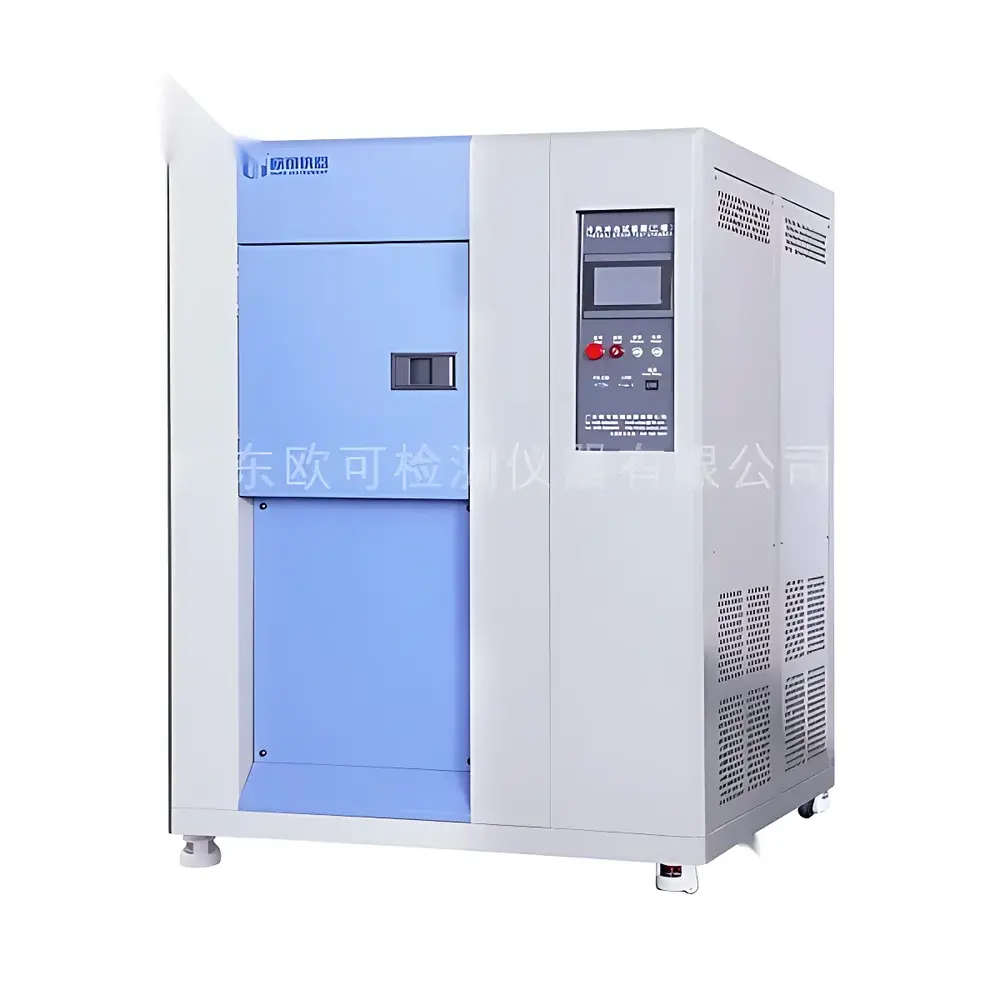
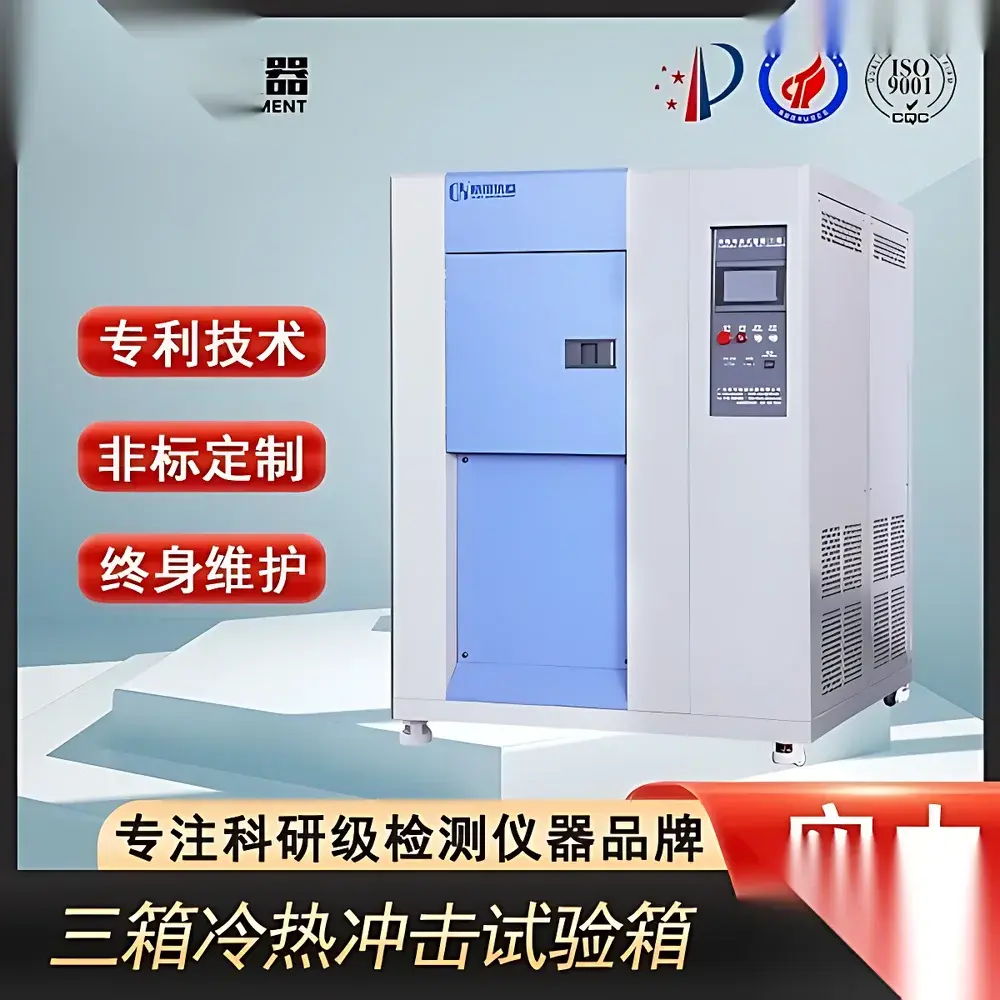
Thermal Shock Test Chamber – Three-Zone or Two-Zone Configuration
| Brand | Other Brands |
|---|---|
| Origin | Imported |
| Manufacturer Type | Authorized Distributor |
| Price | USD 11,200 (FOB) |
Overview
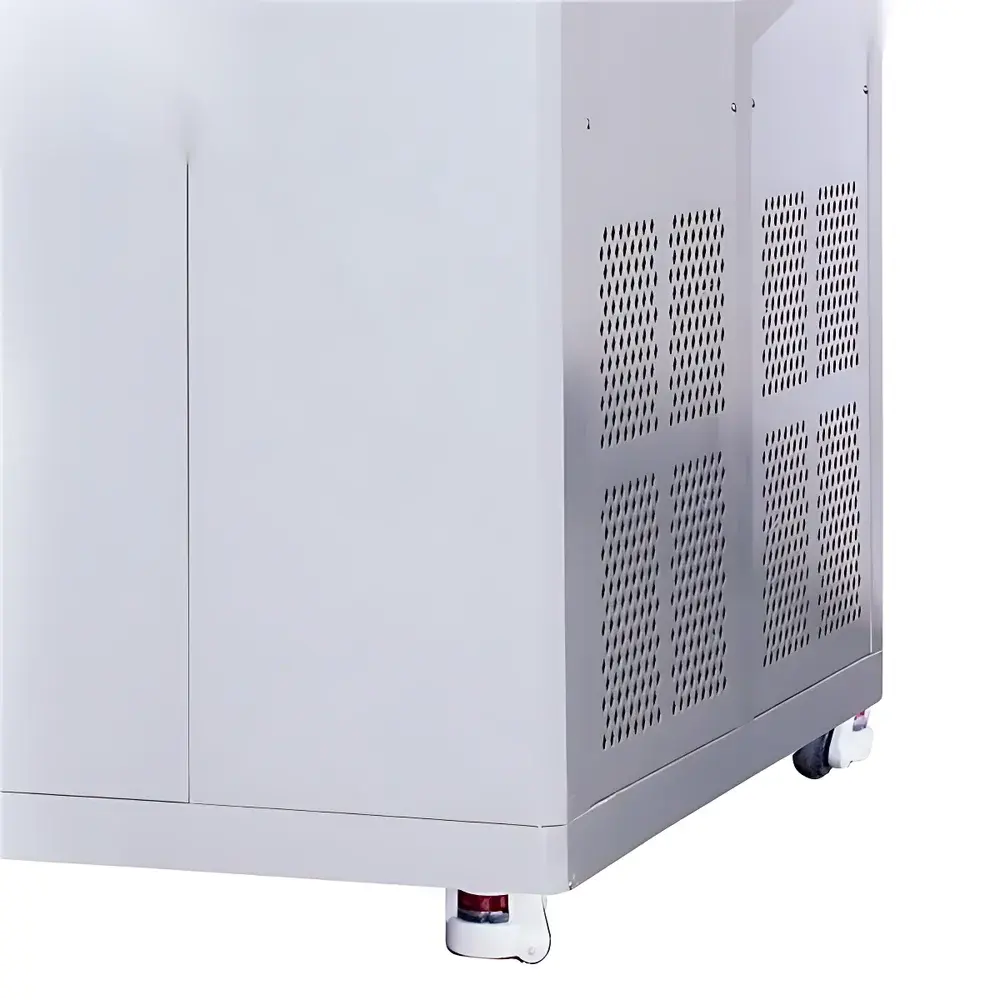
The Thermal Shock Test Chamber is an environmental simulation system engineered for rapid, repeatable temperature transitions between extreme high and low thermal conditions. It operates on the principle of thermal shock testing—subjecting materials, components, or finished products to abrupt, cyclical exposure to predefined high-temperature (typically up to +150 °C) and low-temperature (down to −70 °C) environments—to evaluate structural integrity, material fatigue resistance, solder joint reliability, and interfacial delamination under thermal stress. Two primary configurations are available: the three-zone (separate hot chamber, cold chamber, and test chamber) design enables zero-load transfer time and eliminates thermal cross-contamination; the two-zone (hot/cold dual-chamber) configuration employs a motor-driven test basket that shuttles samples between zones, offering compact footprint and cost-effective operation. Both architectures utilize a dual-refrigeration cascade system based on the reversed Carnot cycle, comprising compression, condensation, expansion, and evaporation stages with high-efficiency hermetic compressors, copper-alloy heat exchangers, and environmentally compliant refrigerants (R404A/R23 blend).
Key Features
- Configurable architecture: Selectable three-zone (static sample placement in central test chamber) or two-zone (basket-transfer) layout per application requirements and throughput needs
- Precision-controlled temperature ranges: Standard operating range from −70 °C to +150 °C, with ramp rates up to 60 K/min (dependent on load mass and chamber volume)
- High-stability control system: Dual PID controllers with real-time deviation compensation, ±0.5 °C temperature uniformity (per IEC 60068-3-5), and ±1.0 °C accuracy across working volume
- Robust refrigeration: Twin independent cascade refrigeration circuits with oil-separation, auto-defrost, and low-ambient start capability (operable down to 5 °C ambient)
- Structural integrity: Stainless steel 304 inner chamber, insulated with ≥150 mm polyurethane foam (thermal conductivity ≤0.022 W/m·K), and reinforced double-glazed observation window with anti-fog heater
- Safety & monitoring: Over-temperature/over-pressure cut-off, refrigerant leak detection, door interlock, and integrated data logging of chamber status (temperature, compressor current, alarm history)
Sample Compatibility & Compliance
The chamber accommodates standard test specimens up to 500 mm × 500 mm × 500 mm (W×D×H) with maximum payload of 50 kg. Internal fixtures support PCBs, automotive ECUs, aerospace connectors, semiconductor packages, and molded polymer housings. The system is validated to meet international thermal shock and temperature change standards including: IEC 60068-2-14 (Test Nb: Change of temperature), MIL-STD-810H Method 503.5, ASTM D6988-20 (Standard Practice for Thermal Shock Testing of Plastics), ISO 16750-4 (Road vehicles — Environmental conditions and testing for electrical and electronic equipment — Part 4: Climate loads), and GB/T 2423.22–2012 (Environmental testing — Part 2: Tests — Test N: Change of temperature). All configurations support GLP-compliant validation protocols (IQ/OQ/PQ) and optional 21 CFR Part 11–enabled audit trail functionality when paired with certified software.
Software & Data Management
Equipped with embedded 7-inch TFT touchscreen HMI running real-time Linux OS, the controller supports multi-step programmable profiles (up to 99 segments, 999 cycles), automatic sequence interruption/resume, and USB export of timestamped CSV log files (temperature, time, alarm codes). Optional PC-based software (Windows 10/11 compatible) provides remote monitoring via Ethernet/Wi-Fi, statistical analysis (min/max/mean/stdev per cycle), graphical overlay of multiple test runs, and PDF report generation with digital signature and electronic record retention. Data integrity safeguards include write-protected storage, cyclic redundancy check (CRC) verification, and configurable user access levels (operator, engineer, administrator).
Applications
- Reliability screening of printed circuit board assemblies (PCBA) per IPC-J-STD-004 and JESD22-A104
- Qualification testing of automotive ADAS sensors, battery modules, and power electronics under ISO 16750-4 and LV-124
- Material compatibility assessment of encapsulants, adhesives, and conformal coatings in LED and optoelectronic packaging
- Failure mode analysis of MEMS devices, ceramic substrates, and wafer-level chip-scale packages (WLCSP)
- Validation of hermetic seal integrity in medical implant housings and diagnostic instrument enclosures
- Accelerated aging studies for polymer composites used in aerospace structural components (per SAE AMS2750E)
FAQ
What is the difference between two-zone and three-zone thermal shock chambers?
The two-zone design uses a single test basket that moves between hot and cold chambers, resulting in brief thermal soak during transfer; the three-zone design isolates the test specimen in a neutral chamber, enabling instantaneous switching without mechanical movement—ideal for high-reproducibility qualification testing.
Does the chamber support automated calibration verification?
Yes—integrated reference sensor ports allow traceable NIST-calibrated thermocouples to be installed for periodic system verification per ISO/IEC 17025 requirements.
Can the system be integrated into a factory MES or LIMS environment?
Yes—via Modbus TCP or OPC UA interface (optional module), enabling real-time data exchange with enterprise manufacturing execution systems and laboratory information management systems.
Is dew point control available for humidity-sensitive tests?
No—this model is strictly a dry thermal shock system; for combined temperature/humidity shock, consider the companion THS-series chamber with integrated desiccant drying and steam humidification.
What maintenance intervals are recommended for the refrigeration system?
Compressor oil and filter replacement every 12 months or 4,000 operating hours; full refrigerant charge verification and leak check every 24 months by certified HVAC-R technician.



