
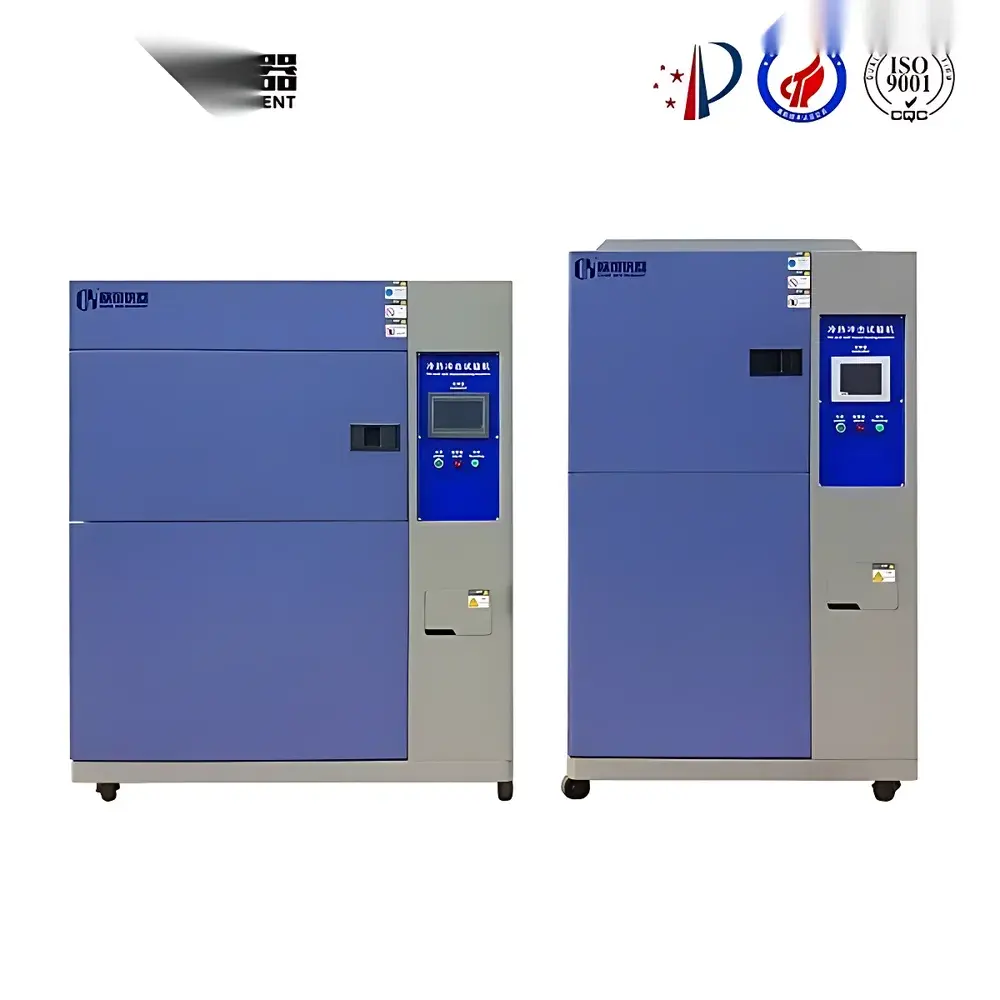
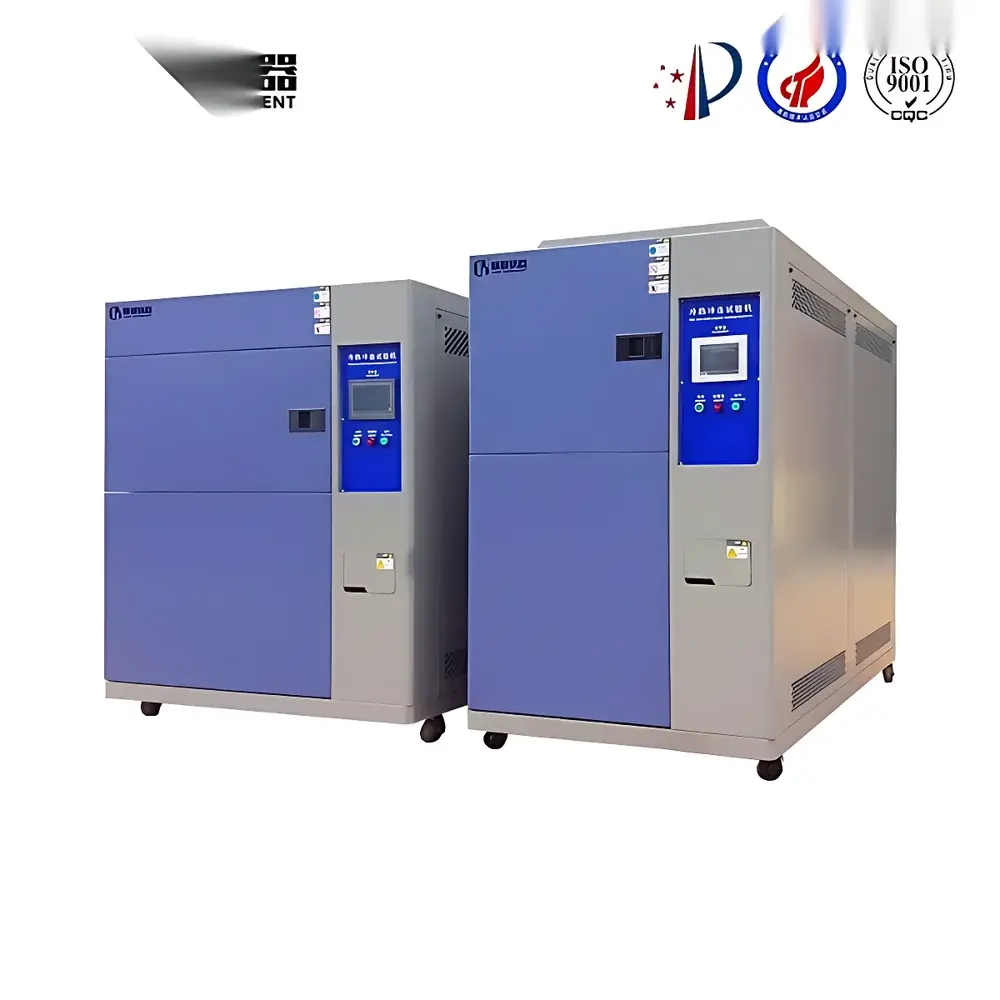
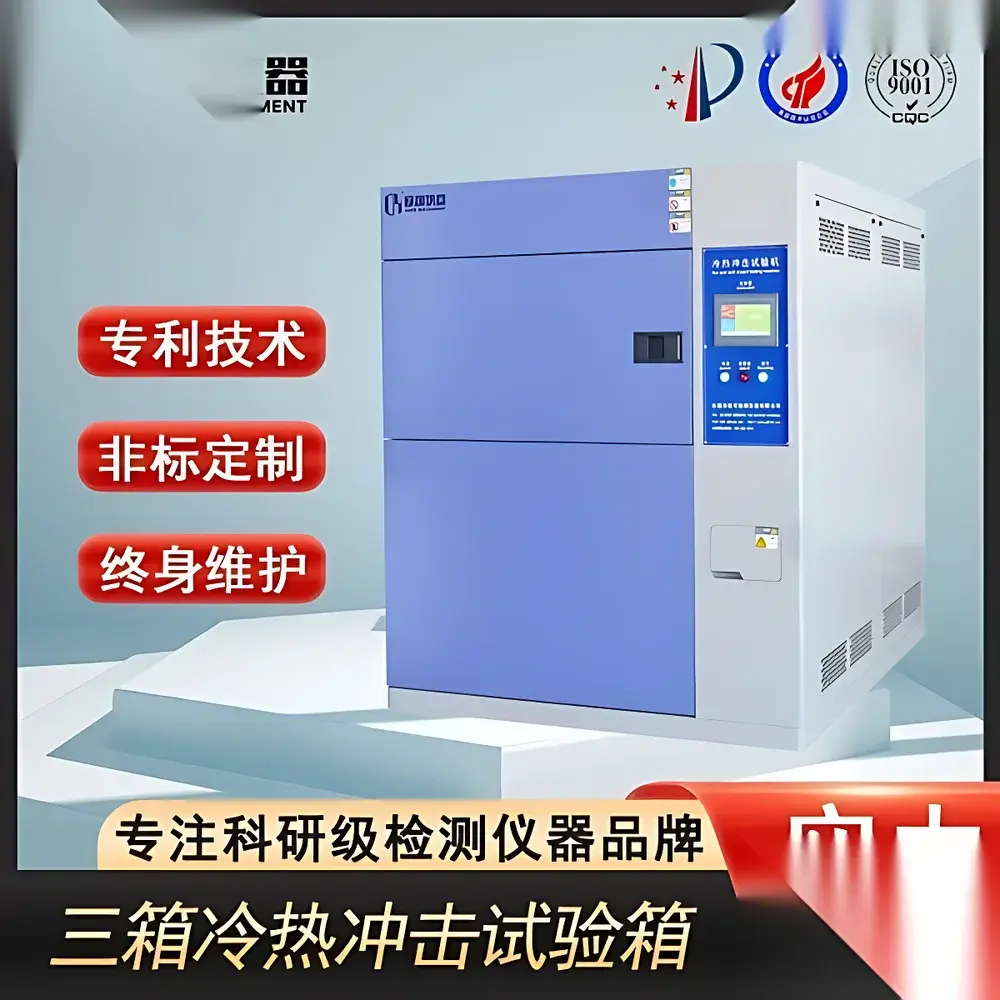
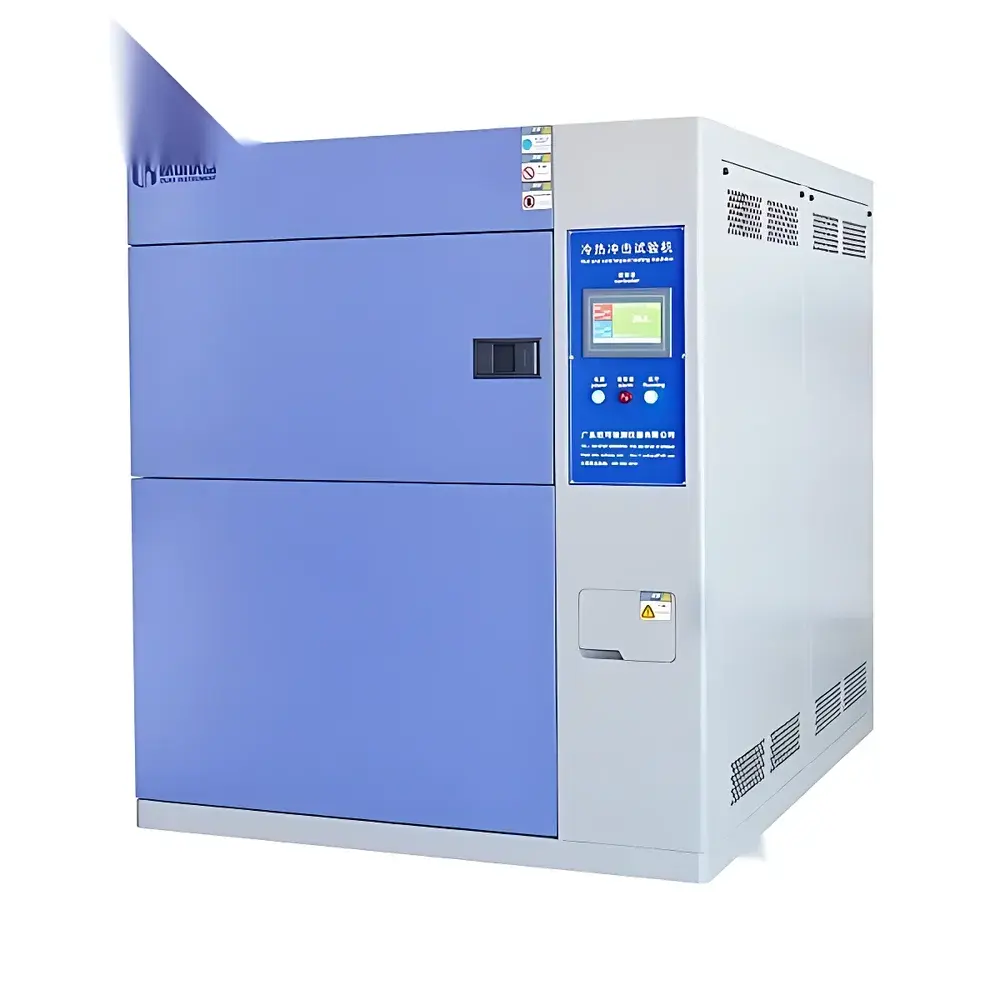
Thermal Shock Test Chamber – Three-Zone and Two-Zone Configurations
| Brand | Other Brands |
|---|---|
| Origin | Imported |
| Manufacturer Type | Authorized Distributor |
| Price | USD 11,200 (FOB) |
| Compliance | GB/T 2423.1, GB/T 2423.2, GB/T 2423.22, GJB 150.3–150.5, IEC 60068-2-14, SJ/T 10186–10187, QC/T 17, EIA-364-32 |
| Refrigeration Cycle | Dual-stage vapor-compression reverse Carnot cycle with independent high-temp/low-temp circuits |
Overview
The Thermal Shock Test Chamber is an environmental stress screening (ESS) instrument engineered for rapid, repeatable temperature transitions between extreme thermal states—designed to evaluate material integrity, solder joint reliability, coating adhesion, and electronic component resilience under abrupt thermal cycling. It operates on the fundamental principle of accelerated thermal fatigue induction: by subjecting test specimens to controlled, high-rate temperature shifts (typically ≤15 s transfer time in two-zone configurations; ≤5 s in three-zone systems), it simulates decades of field-induced thermal expansion mismatch in hours or days. The chamber supports two primary architectural configurations: the two-zone (hot/cold) design, which employs a motor-driven basket mechanism to shuttle samples between thermally isolated compartments; and the three-zone (hot/neutral/cold) design, where the test specimen remains stationary in a central test chamber while thermal energy is transferred via pneumatic or servo-controlled air valves and high-efficiency heat exchangers. Both architectures utilize dual independent refrigeration circuits based on the reverse Carnot cycle—comprising hermetic scroll compressors, microchannel condensers, electronic expansion valves, and copper-finned evaporators—to ensure stable setpoint maintenance (±0.5 °C) and rapid recovery (<5 min after door opening).
Key Features
- Configurable architecture: Selectable two-zone (basket-transfer) or three-zone (stationary-sample) layout per application requirements and throughput targets
- Dual independent refrigeration systems: High-temperature circuit (up to +200 °C) and low-temperature circuit (down to −70 °C) with non-overlapping compressor staging and oil management
- Precision temperature control: PID-based digital controllers with real-time thermocouple feedback (Type K, Class 1 accuracy), ±0.3 °C uniformity across 90% of working volume
- Robust thermal isolation: Vacuum-insulated stainless steel inner chamber walls, multi-layer reflective foil barriers, and argon-filled double-glazed observation window
- Safety-critical interlocks: Over-temperature cut-off, compressor high-pressure shutdown, chamber door safety latch, and emergency purge ventilation
- Compliance-ready hardware: Pre-wired RS-485/Modbus RTU interface, analog 4–20 mA output for external data loggers, and optional Ethernet/IP support for factory network integration
Sample Compatibility & Compliance
The chamber accommodates standard test specimens up to 500 mm × 500 mm × 500 mm (W×D×H) and supports mounting fixtures for PCB assemblies, automotive ECUs, aerospace connectors, and polymer housings. Internal airflow is optimized via tangential blower arrays with adjustable vanes to minimize turbulence-induced mechanical stress during transfer phases. All models are pre-validated against internationally recognized environmental testing standards—including IEC 60068-2-14 (Test Nb: Change of temperature), MIL-STD-810H Method 503.5, GJB 150.5A–2009 (Temperature Shock), and EIA-364-32 (Thermal Shock for Connectors)—and include traceable calibration certificates compliant with ISO/IEC 17025 requirements. Optional GLP/GMP audit packages provide full 21 CFR Part 11–compliant electronic signatures, user access logs, and change history tracking for regulated industries.
Software & Data Management
Built-in embedded controller firmware supports programmable test profiles with up to 99 segments, ramp/halt/soak steps, and conditional branching logic (e.g., “if internal sensor T > 180 °C, initiate cooldown”). Data logging occurs at 1 Hz resolution with onboard 16 GB flash memory retention (≥30 days continuous recording). Export formats include CSV, XML, and PDF test reports with embedded metadata (operator ID, chamber serial number, calibration expiry, ambient conditions). PC-based companion software (Windows 10/11 compatible) enables remote monitoring, multi-chamber fleet synchronization, statistical process control (SPC) charting, and automated report generation aligned with ISO 9001 documentation frameworks.
Applications
- Automotive electronics validation per QC/T 17–2019 and ISO 16750-4 for engine control units, ADAS sensors, and battery management systems
- Aerospace component qualification under DO-160 Section 4 (Temperature Variation) and RTCA/DO-160G
- Consumer electronics reliability assessment for smartphones, wearables, and IoT modules exposed to outdoor thermal gradients
- Materials science research on thermal barrier coatings, shape-memory alloys, and polymer composite delamination thresholds
- Failure analysis labs performing root-cause investigation of solder joint cracking, die attach voiding, and wire bond lift-off
FAQ
What is the difference between two-zone and three-zone thermal shock chambers?
Two-zone chambers use mechanical transfer (basket movement) between hot and cold zones—ideal for medium-volume production testing where sample size and weight permit handling. Three-zone chambers eliminate moving parts by maintaining the specimen stationary and rapidly switching airflow paths—preferred for high-reliability applications requiring zero mechanical disturbance and superior repeatability.
Does the system meet FDA or ISO 13485 requirements for medical device testing?
Yes—when configured with 21 CFR Part 11 software add-ons, electronic audit trails, and IQ/OQ documentation packages, the chamber satisfies design verification and process validation requirements for Class II/III medical devices per ISO 14971 and ISO 13485:2016.
Can the chamber be integrated into an existing MES or LIMS environment?
Absolutely—the standard Modbus RTU and optional OPC UA interfaces allow bidirectional communication with Siemens SIMATIC, Rockwell FactoryTalk, LabVantage, and Thermo Fisher SampleManager platforms for automated job dispatch and result ingestion.
What maintenance intervals are recommended for long-term operational stability?
Compressor oil analysis every 2,000 operating hours; refrigerant leak detection and moisture filter replacement annually; chamber seal inspection and calibration verification semiannually per ISO/IEC 17025 guidelines.



