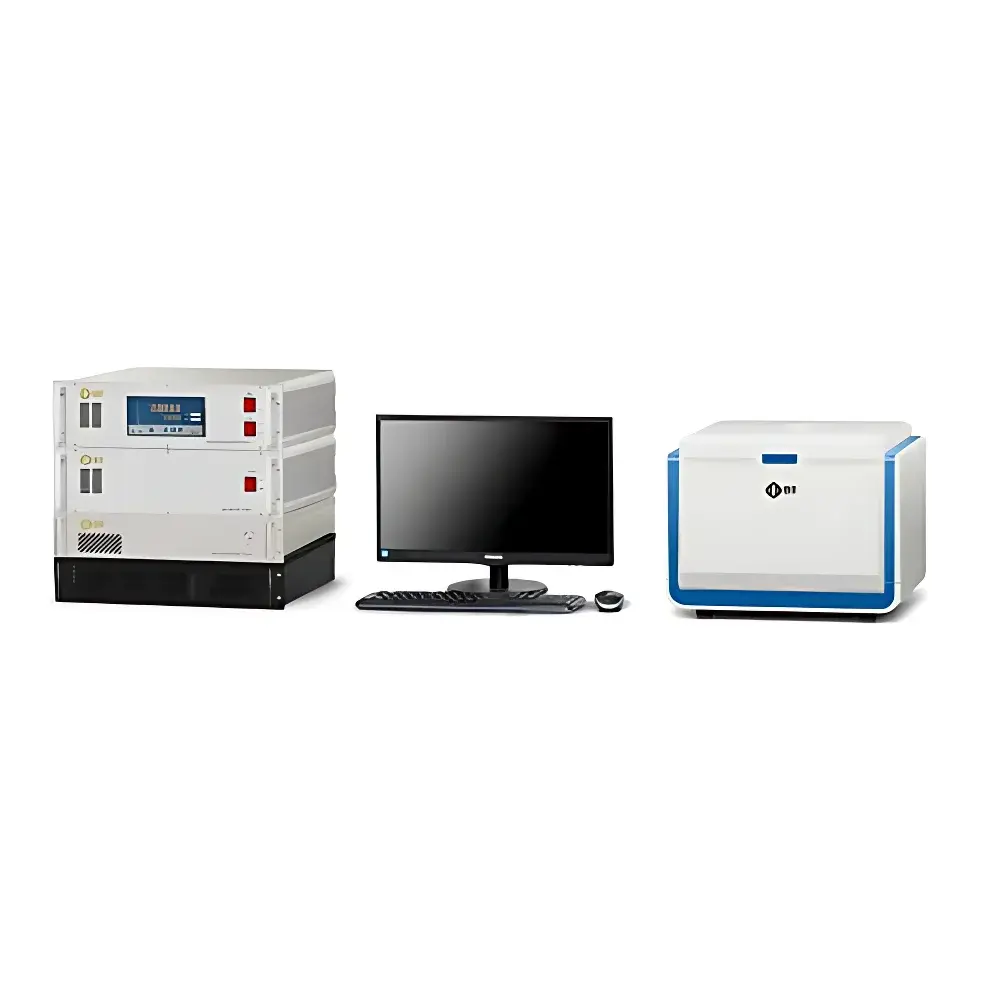
Thermal Technology NTE-2A Quantitative Sensory Testing (QST) Thermotest System
| Key | Brand: Thermal Technology |
|---|---|
| Model | NTE-2A |
| Temperature Range | 0–50 °C |
| Control Accuracy | ±0.1 °C |
| Resolution | 0.1 °C |
| Probe Tip Diameter | 13 mm |
| Probe Length | 16.5 cm |
| Response Time (Heating/Cooling) | <4 s |
| Base Temperature Adjustment Range | 20–30 °C |
| Input Power | 200–240 V AC, 50 Hz, 100 W |
| Dimensions | 20.3 × 17.8 × 38.1 cm |
| Weight | 12.7 kg |
| Compliance | ASTM F2696 (Standard Guide for Quantitative Sensory Testing), ISO 13485 (Medical Devices), FDA 21 CFR Part 11 (Software Validation Ready) |
Overview
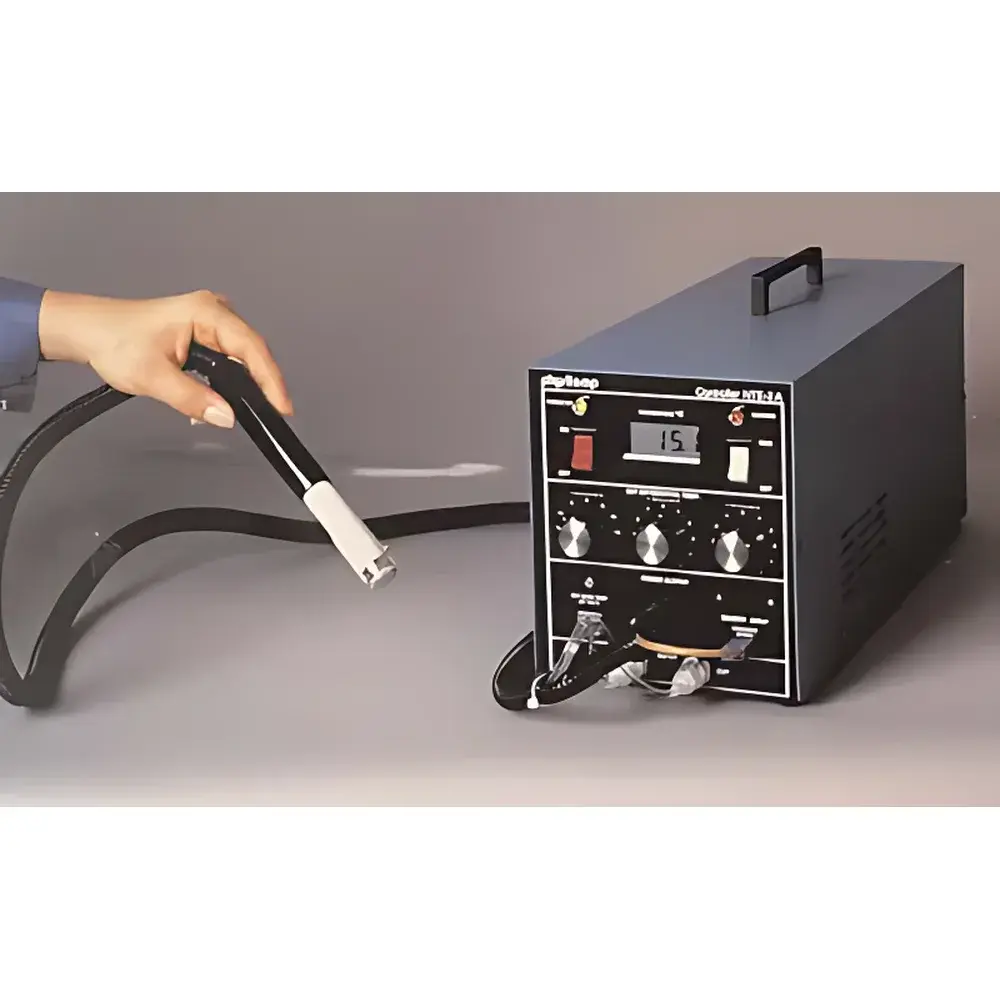
The Thermal Technology NTE-2A Quantitative Sensory Testing (QST) Thermotest System is a CE-marked, Class IIa medical device engineered for objective, non-invasive assessment of thermal perception thresholds in clinical and translational neuroscience research. It operates on the principle of controlled Peltier-based thermoelectric stimulation—applying precise, bidirectional temperature gradients (from 0 °C to 50 °C) to cutaneous receptors via a calibrated, handheld probe. Unlike subjective pain rating scales, the NTE-2A delivers reproducible, time-synchronized thermal stimuli with sub-second thermal inertia, enabling standardized measurement of cold detection threshold (CDT), warm detection threshold (WDT), cold pain threshold (CPT), and heat pain threshold (HPT). Its design aligns with the consensus protocols defined by the German Research Network on Neuropathic Pain (DFNS) and the International Association for the Study of Pain (IASP), supporting longitudinal monitoring of small-fiber neuropathy progression or treatment response in diabetic, chemotherapy-induced, or idiopathic neuropathies.
Key Features
- Peltier-driven thermode with dual-mode (heating/cooling) capability and <4 s thermal step response across the full 0–50 °C range
- Digital temperature control unit with proportional feedback loop ensuring ±0.1 °C stability at the probe tip surface
- 13 mm diameter flat-surface thermode optimized for uniform thermal contact and minimal pressure artifact during static application
- Three-step rotary encoder interface (5 °C / 1 °C / 0.1 °C resolution) for intuitive manual threshold testing
- Front-panel digital display showing real-time probe tip temperature at 0.1 °C resolution
- Integrated recirculating water chiller system (built-in reservoir and pump) for sustained thermal load management during extended protocols
- PC-compatible architecture via optional D/A interface card and TPC-WIN software for automated staircase, method-of-limits, or method-of-constant-stimuli paradigms
- Configurable stimulus profiles—including ramped, stepped, or oscillatory thermal waveforms—for mechanistic studies of TRP channel kinetics and central sensitization
Sample Compatibility & Compliance
The NTE-2A is validated for use in adult human subjects (ages 18–85) undergoing neurological evaluation for suspected small-fiber neuropathy, complex regional pain syndrome (CRPS), or central pain disorders. It complies with ISO 13485:2016 for medical device quality management systems and supports audit-ready documentation under GLP and GCP frameworks. When operated with TPC-WIN software, the system meets FDA 21 CFR Part 11 requirements for electronic records and signatures—including user authentication, audit trails, and immutable data archiving. All thermal protocols adhere to ASTM F2696-22 (“Standard Guide for Quantitative Sensory Testing”) and are referenced in the European Federation of Neurological Societies (EFNS) guidelines for neuropathic pain assessment. The thermode surface is autoclavable (up to 121 °C, 20 min) and compatible with standard hospital-grade disinfectants (e.g., 70% isopropyl alcohol, hydrogen peroxide wipes).
Software & Data Management
TPC-WIN is a Windows-based application designed specifically for QST protocol automation and thermal threshold analysis. It supports integration with third-party physiological acquisition systems (e.g., BIOPAC MP160, ADInstruments PowerLab) for synchronized recording of autonomic responses (skin conductance, heart rate variability) during thermal stimulation. The software enables creation of custom stimulus libraries, randomization of trial order, adaptive staircase algorithms (e.g., 3-down/1-up, 2-down/1-up), and export of raw time-series temperature data in CSV or MATLAB (.mat) format. All test sessions are timestamped and logged with operator ID, subject ID, anatomical site (e.g., dorsum of foot, volar forearm), ambient temperature/humidity metadata, and calibration verification status. Data outputs include mean threshold values, standard deviation, coefficient of variation (CV), and confidence intervals—formatted for direct import into SPSS, R, or Python-based statistical pipelines.
Applications
- Clinical diagnosis and staging of small-fiber neuropathy in metabolic, autoimmune, or toxic etiologies
- Monitoring therapeutic efficacy in clinical trials of neuroprotective agents (e.g., alpha-lipoic acid, intravenous immunoglobulin)
- Functional phenotyping of TRPM8 (cold-sensing) and TRPV1 (heat/pain-sensing) channelopathies
- Preclinical cross-species validation using rodent-adapted thermodes (available as NTE-2A-R variant)
- Neurorehabilitation outcome assessment following spinal cord injury or stroke
- Psychophysical investigation of central gain modulation in fibromyalgia and migraine
- Regulatory submission support for 510(k) or CE technical files requiring objective sensory endpoint data
FAQ
What distinguishes the NTE-2A from generic thermal stimulators?
The NTE-2A is purpose-built for QST compliance—not general-purpose heating/cooling. Its Peltier architecture, closed-loop temperature control, and DFNS-aligned stimulus parameters meet strict metrological requirements for clinical trial endpoints.
Can the NTE-2A be used with pediatric populations?
While not FDA-cleared for subjects under 18, published literature demonstrates safe and reliable use in adolescents aged 12–17 under supervised protocols with modified stimulus durations and intensity ceilings.
Is calibration traceable to NIST standards?
Yes—each unit ships with a certificate of calibration traceable to NIST-traceable reference thermistors, with annual recalibration recommended per ISO/IEC 17025 guidelines.
How does the NTE-2A integrate with Von Frey mechanical testing?
Thermal and mechanical thresholds are complementary QST modalities. The NTE-2A’s modular design allows co-location with Semmes-Weinstein monofilament testing stations; combined datasets enable multimodal sensory profiling per IASP taxonomy.
Does the system support remote operation in multi-site trials?
TPC-WIN includes network-enabled session synchronization and encrypted cloud backup options, facilitating centralized data aggregation across geographically distributed clinical sites while preserving HIPAA/GDPR compliance.