
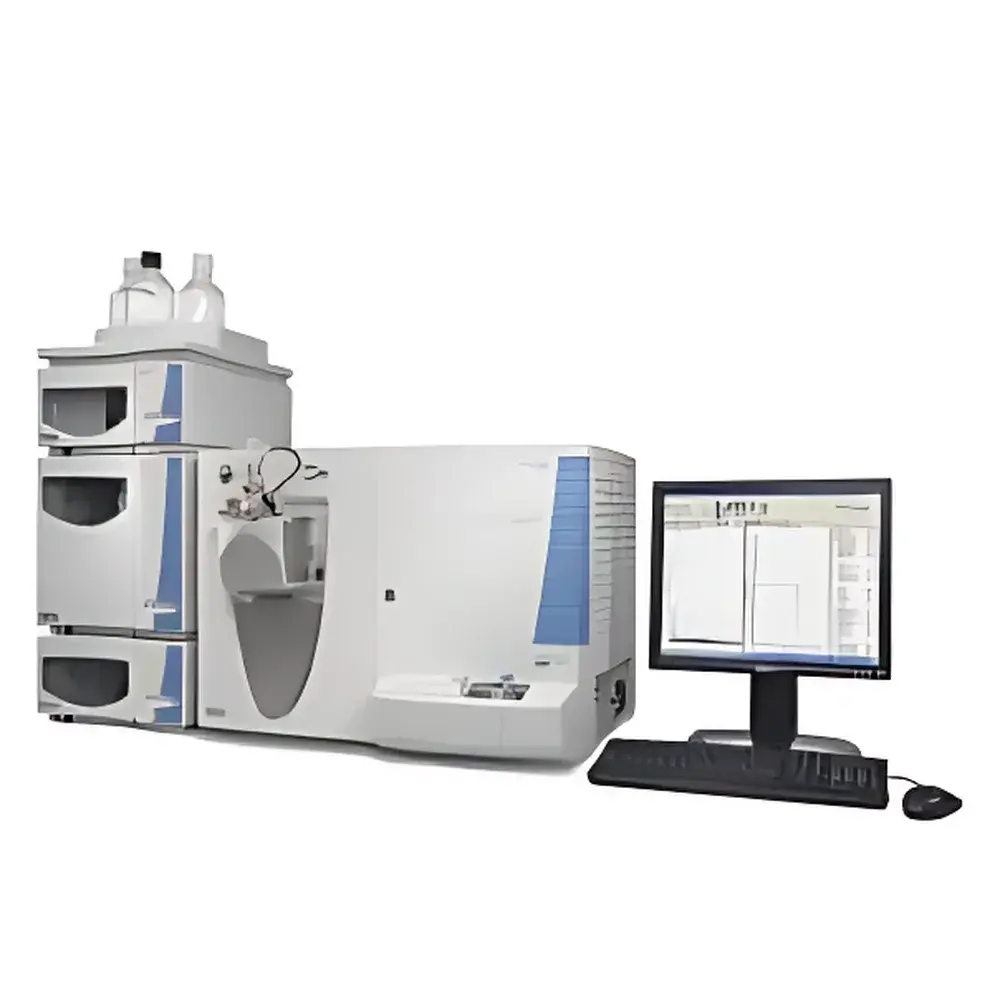
Thermo Fisher LXQ Linear Ion Trap Mass Spectrometer
| Brand | Thermo Fisher |
|---|---|
| Origin | USA |
| Manufacturer Type | Original Equipment Manufacturer (OEM) |
| Product Origin | Imported |
| Model | LXQ Linear Ion Trap Mass Spectrometer |
| Price Range | USD 140,000 – 280,000 (estimated FOB US) |
| Instrument Type | Ion Trap |
Overview
The Thermo Fisher LXQ Linear Ion Trap Mass Spectrometer is a robust, high-throughput benchtop mass spectrometer engineered for routine and discovery-level analysis in pharmaceutical development, clinical research, and proteomics laboratories. Based on linear ion trap (LIT) technology, the LXQ employs radiofrequency (RF) fields to confine ions radially and DC potentials to trap them axially—enabling efficient ion accumulation, isolation, fragmentation, and detection within a single compact device. Unlike traditional 3D quadrupole ion traps, the linear geometry offers higher ion storage capacity, improved duty cycle, and enhanced sensitivity—particularly critical for low-abundance analytes in complex biological matrices. Designed as a dedicated LC-MS platform, the LXQ integrates seamlessly with standard HPLC and UHPLC systems, supporting electrospray ionization (ESI) and atmospheric pressure chemical ionization (APCI) sources. Its architecture prioritizes analytical reproducibility, scan speed, and structural elucidation capability—making it especially suitable for applications requiring rapid MSn sequencing, such as metabolite identification and post-translational modification (PTM) mapping.
Key Features
- Linear ion trap geometry enabling >10× higher ion storage capacity versus conventional 3D traps
- Fast polarity switching (<500 ms) for simultaneous positive/negative mode acquisition in a single run
- Data-dependent acquisition (DDA) with intelligent, real-time decision logic for precursor selection and dynamic exclusion
- Up to MS3 capability for deep structural characterization of small molecules and peptides
- Integrated Xcalibur software with method templates optimized for ADME/Tox workflows, including metabolic stability and metabolite ID modules
- Benchtop footprint with minimal infrastructure requirements: no liquid nitrogen or high-power vacuum pumps required
Sample Compatibility & Compliance
The LXQ supports direct coupling to reversed-phase, HILIC, and ion-pairing LC methods, accommodating a broad range of polar and nonpolar analytes—from small-molecule drugs (<500 Da) to intact peptides (up to ~3,000 Da). It meets essential regulatory expectations for GLP-compliant environments: audit trail functionality, user access control, electronic signature support (aligned with FDA 21 CFR Part 11 principles), and raw data integrity per ASTM E2524 and ISO/IEC 17025 guidelines. While not certified as GMP-grade hardware, its firmware and software architecture support validation protocols required for regulated bioanalysis—including instrument qualification (IQ/OQ/PQ) documentation packages and traceable calibration logs.
Software & Data Management
Controlled exclusively via Thermo Scientific Xcalibur software (v2.2 or later), the LXQ leverages a modular, workflow-driven interface designed for both novice and expert users. Key modules include Quant Browser for targeted quantitation (e.g., pharmacokinetic studies), MetID for automated metabolite prediction and spectral matching against in-house or commercial libraries (e.g., mzCloud, ChemSpider), and Proteome Discoverer-compatible export for peptide-centric workflows. All raw data files (.raw) are stored in Thermo’s proprietary format with embedded metadata (acquisition time, tune parameters, sequence file references), ensuring full traceability. Data backup and archiving comply with institutional policies for long-term retention—supporting hierarchical storage management (HSM) and network-attached storage (NAS) integration.
Applications
- High-throughput metabolic stability screening using human/microsomal incubations
- Structural confirmation of drug metabolites via diagnostic neutral losses and fragment ion mapping
- Simultaneous qualitative and quantitative analysis in forensic toxicology (e.g., opioids, stimulants, novel psychoactive substances)
- Bottom-up proteomics: identification of phosphorylation, acetylation, and ubiquitination sites in complex digests
- Impurity profiling of synthetic APIs under ICH Q3B(R2) guidance
- Reaction monitoring in process chemistry to track intermediate formation and degradation pathways
FAQ
Is the LXQ compatible with ultra-high-performance liquid chromatography (UHPLC) systems?
Yes—the LXQ accepts standard LC flow rates (5–1,000 µL/min) and interfaces directly with Thermo Vanquish and other vendor-neutral UHPLC platforms via standard ESI/APCI sources.
Does the LXQ support scheduled MRM transitions for quantitative work?
No—MRM is not supported; the LXQ is optimized for discovery-oriented, full-scan and data-dependent MSn acquisition rather than triple-quadrupole-style targeted quantitation.
What is the typical mass accuracy for internal calibration?
With standard lock mass correction (e.g., polypropylene glycol), mass accuracy remains ≤0.2 Da across the m/z 50–2,000 range in MS1 mode.
Can the LXQ be validated for use in a GMP-regulated environment?
Yes—though the instrument itself is not pre-certified, its software architecture, audit trail, and electronic record features enable full IQ/OQ/PQ execution per Annex 11 and ALCOA+ principles.
Is remote operation supported?
Yes—Xcalibur allows secure remote desktop access over institutional networks; however, instrument control requires local administrator privileges and physical safety interlocks remain active.



