
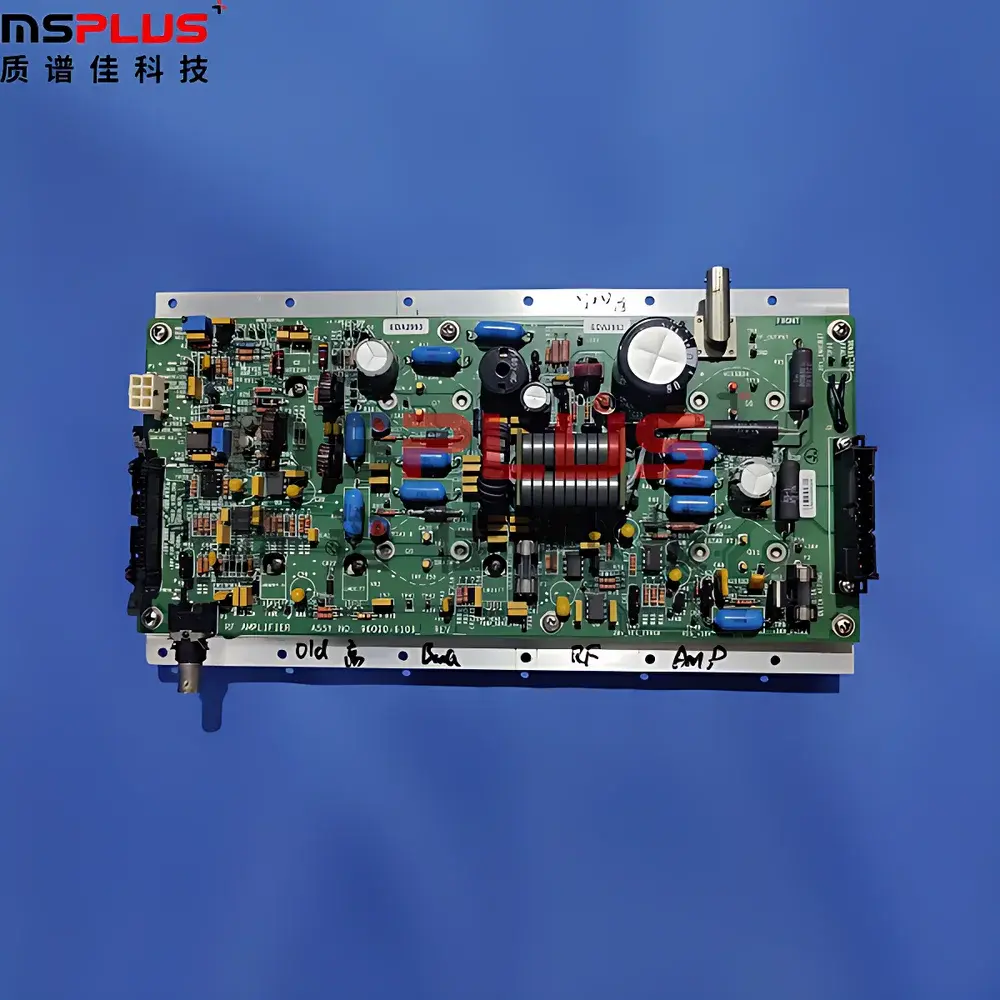
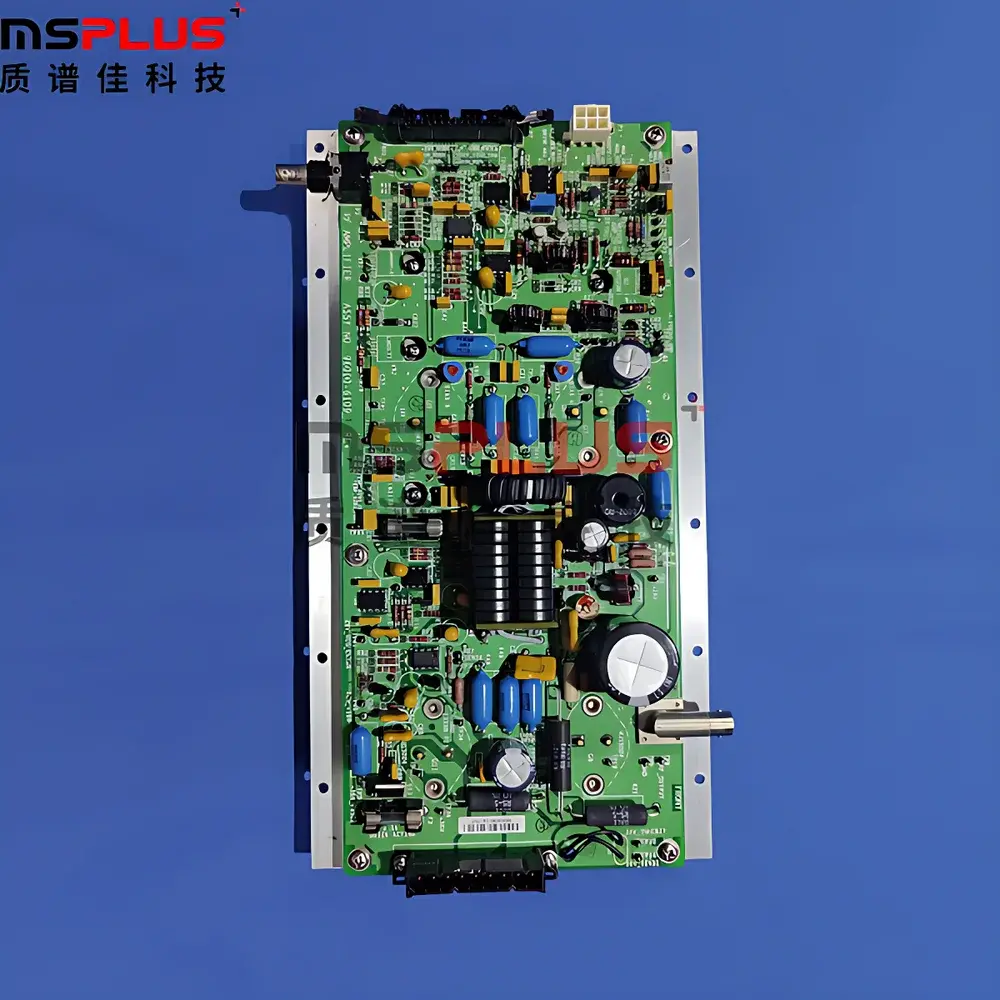
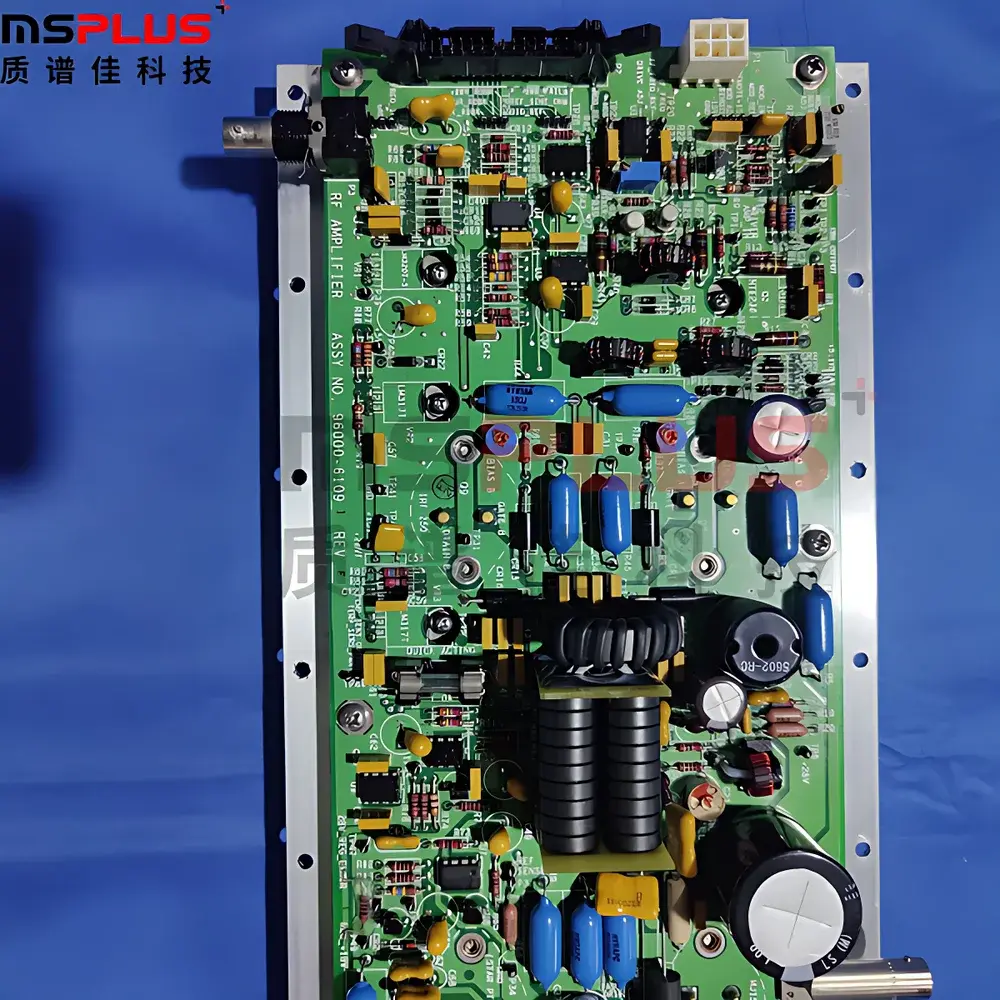
Thermo Fisher RF Board – Radio Frequency Voltage Amplifier Module (Model 96000-61091)
| Brand | Thermo Fisher |
|---|---|
| Origin | USA |
| Model | 96000-61091 |
| Category | Mass Spectrometry Component |
| Import Status | Imported |
| Distributor Type | Authorized Third-Party Distributor |
Overview
The Thermo Fisher RF Board – Radio Frequency Voltage Amplifier Module (Model 96000-61091) is a precision-engineered replacement and upgrade component designed for integration into Thermo Fisher Scientific mass spectrometer systems—particularly those utilizing quadrupole or ion trap architectures requiring stable, low-noise RF voltage generation and amplification. This module serves as the core driver for the RF-only rod set in quadrupole mass filters, where precise amplitude, frequency stability, and harmonic suppression are critical to mass resolution, peak shape fidelity, and long-term signal reproducibility. Built to original equipment manufacturer (OEM) specifications, the 96000-61091 board delivers regulated high-voltage RF output (typically ±0–2000 Vpp, frequency range 0.5–3 MHz) with tight phase-matching across multiple channels and minimal thermal drift under continuous operation. Its design adheres to Thermo Fisher’s internal electromagnetic compatibility (EMC) and thermal management standards, ensuring seamless interoperability with legacy and current-generation instruments including the TSQ series, Quantum series, and certain Exactive platform configurations.
Key Features
- OEM-compliant RF amplification circuitry engineered for sub-0.1% amplitude stability over 8-hour operational cycles at ambient temperatures up to 35 °C
- Integrated overvoltage, overcurrent, and thermal shutdown protection aligned with IEC 61000-4-5 surge immunity requirements
- Low-phase-noise oscillator architecture supporting frequency tuning resolution ≤10 Hz across the operational band
- Gold-plated edge connectors and multi-layer FR-4 PCB substrate for enhanced signal integrity and EMI resilience
- Factory-calibrated gain linearity (±0.25% full-scale) traceable to NIST-traceable RF reference standards
- Designed for hot-swap compatibility within Thermo Fisher instrument chassis—no firmware reflash required upon installation
Sample Compatibility & Compliance
The 96000-61091 RF board is validated for use in Thermo Fisher mass spectrometers requiring analog RF drive signals for mass filtering, including but not limited to: TSQ Altis, TSQ Quantiva, Quantum Ultra AM, and legacy LCQ Deca XP systems. It is compatible with standard Thermo Fisher control firmware versions v2.10 and later. From a regulatory standpoint, the module supports instrument-level compliance with ISO/IEC 17025:2017 (for calibration laboratories), USP <621> (chromatographic system suitability), and FDA 21 CFR Part 11 when deployed within validated workflows that include electronic audit trails and user access controls. While the board itself is not individually CE-marked, its integration maintains the host instrument’s existing EMC and safety certifications per EN 61326-1 and EN 61010-1.
Software & Data Management
This hardware component operates transparently within Thermo Fisher’s Xcalibur and Tune software environments. No standalone driver or configuration utility is required; all operational parameters—including RF amplitude offset, frequency setpoint, and ramp rate—are controlled exclusively through the instrument’s native method editor. System logs record board initialization status, thermal sensor readings, and fault codes (e.g., “RF Overload,” “Phase Mismatch”) in real time, enabling root-cause analysis during preventive maintenance. Audit trail functionality is preserved in full alignment with GLP/GMP data integrity principles: all parameter changes are timestamped, user-attributed, and non-erasable within the instrument’s secure database. Firmware updates affecting RF subsystem behavior are distributed exclusively via Thermo Fisher’s official Software Update Manager (SUM) tool, ensuring version consistency across multi-instrument labs.
Applications
The 96000-61091 RF board is routinely deployed in regulated and research-intensive settings where mass accuracy, duty cycle stability, and inter-day reproducibility are mission-critical. Typical applications include: quantitative bioanalysis of small-molecule pharmaceuticals (per FDA Guidance for Industry on Bioanalytical Method Validation), pesticide residue screening in food matrices (aligned with EU Regulation 2022/2304), environmental PFAS monitoring using isotope-dilution HRAM workflows, and proteomics discovery pipelines employing data-dependent acquisition (DDA) on hybrid quadrupole-Orbitrap platforms. Its robustness under extended duty cycles makes it especially suitable for high-throughput clinical toxicology labs operating 24/7 shift patterns and contract research organizations performing multi-client method transfers.
FAQ
Is this an original Thermo Fisher manufactured part or a third-party replica?
This is an authentic Thermo Fisher OEM part (P/N 96000-61091), sourced directly from authorized U.S.-based distribution channels and supplied with full traceability documentation.
Does installation require instrument recalibration?
Yes—following replacement, full quadrupole mass calibration (using perfluorotributylamine or similar calibrant) and resolution verification per ASTM E1510-22 must be performed before sample analysis.
Can this board be used in non-Thermo mass spectrometers?
No. The electrical interface, timing protocol, and control logic are proprietary to Thermo Fisher’s instrument architecture and incompatible with AB Sciex, Waters, or Shimadzu platforms.
What is the recommended preventive maintenance interval for this module?
Thermo Fisher recommends inspection every 12 months or 2000 operational hours—whichever occurs first—with thermal imaging and RF output spectral analysis included in the service protocol.
Is remote diagnostic support available for RF-related performance issues?
Yes. Qualified field service engineers can remotely access instrument diagnostics—including RF board temperature logs, harmonic distortion spectra, and DC bias drift metrics—via secure TLS-encrypted connections compliant with HIPAA and GDPR data transfer provisions.
Related Products






