
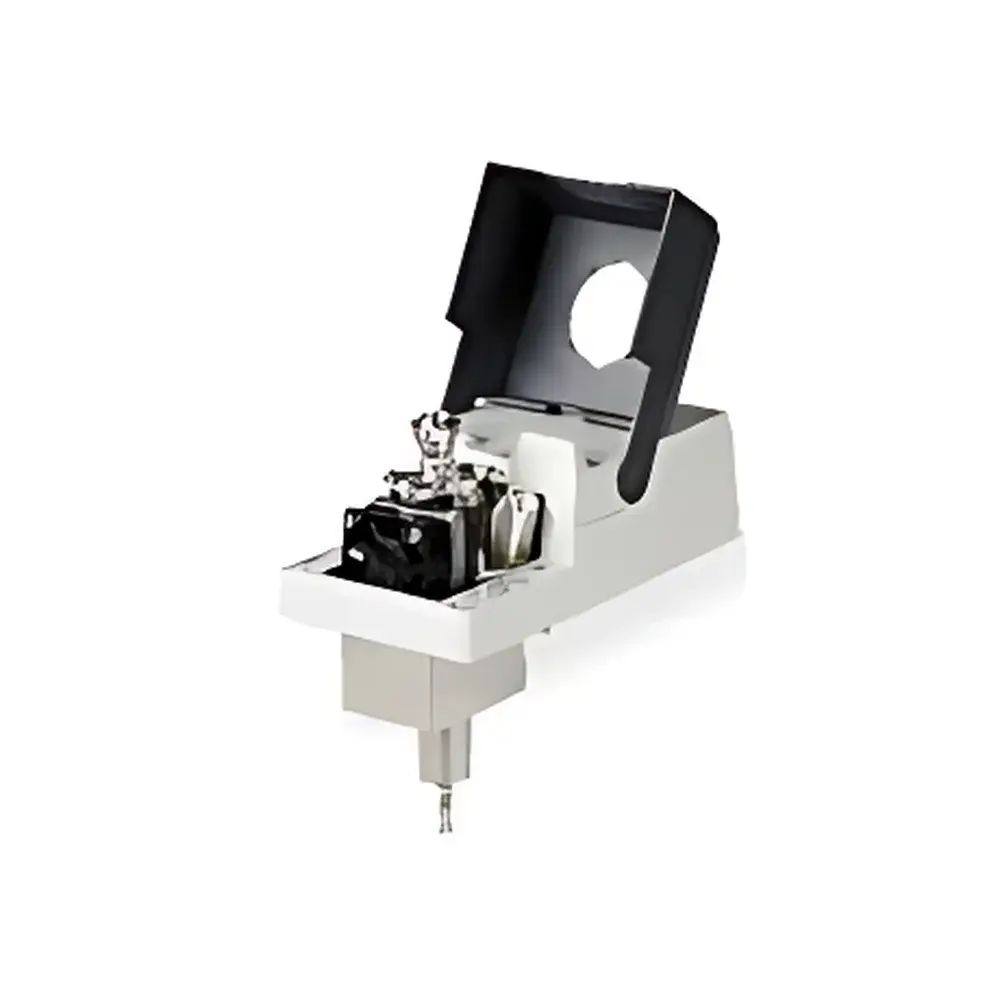
Thermo Fisher Scientific TRACE 1300 Series PTV Inlet with Instant Connect Technology
| Brand | Thermo Fisher Scientific |
|---|---|
| Origin | Italy |
| Manufacturer Type | Original Equipment Manufacturer (OEM) |
| Origin Category | Imported |
| Model | PTV Inlet |
| Instrument Type | Gas Chromatography (GC) Programmable Temperature Vaporizing Inlet |
| Temperature Range | Ambient +5 °C to 450 °C (standard) |
| Optional Cryogenic Cooling | Liquid Nitrogen to –100 °C or CO₂ to –50 °C |
| Max Ramp Rate | 870 °C/min |
| Programmable Temperature Steps | Up to 3 gradients |
| Compatible Autosamplers | Thermo AI/AS 1310 (requires syringe 365D1831), TriPlus 100LS & TriPlus RSH (requires syringe 365D0391) |
| Compliance | Designed for GLP/GMP environments |
Overview
The Thermo Fisher Scientific TRACE 1300 Series PTV Inlet with Instant Connect Technology is a fully programmable temperature vaporizing inlet engineered for high-precision, method-flexible gas chromatography. Based on the fundamental principle of controlled thermal desorption and vaporization under precisely regulated pressure and flow conditions, this inlet enables reproducible introduction of complex, thermally labile, or high-boiling samples into the GC column without degradation. Its core architecture supports multiple operational modes—including hot/cold split, splitless, large-volume injection (LVI) with solvent venting, and on-column injection (TPOC)—making it uniquely suited for applications ranging from environmental pesticide residue analysis to pharmaceutical impurity profiling and petrochemical hydrocarbon fingerprinting.
Key Features
- Instant Connect modular design: Tool-free, sub-two-minute physical interchangeability with other TRACE 1300 inlets and detectors—no recalibration or system revalidation required.
- Wide operational temperature range: Standard operation from ambient +5 °C to 450 °C; optional cryogenic cooling extends low-temperature capability to –100 °C (liquid nitrogen) or –50 °C (CO₂), enabling retention of volatile analytes and improved peak shape for early eluters.
- High-speed thermal programming: Up to three independent temperature ramps with maximum heating rates of 870 °C/min, ensuring rapid transition between injection and transfer phases while minimizing thermal stress on sensitive compounds.
- Integrated backflush functionality: Reverses carrier gas flow direction within the inlet body during analysis to purge non-volatile matrix components and prevent column contamination—critical for dirty samples such as biological extracts or crude oil fractions.
- Merlin Microseal-compatible septum system: Ensures leak-tight sealing across repeated injections and wide temperature excursions, maintaining consistent retention time stability and quantitative accuracy over extended sequences.
- Low thermal mass and forced-air cooling architecture: Reduces cycle time between injections and improves thermal equilibration repeatability—particularly advantageous in high-throughput QC laboratories.
Sample Compatibility & Compliance
The PTV inlet accommodates a broad spectrum of sample matrices—including aqueous solutions, organic solvents, viscous oils, and semi-solid extracts—without requiring derivatization in many cases. Its solvent venting mode allows injection of up to 100 µL of dilute solutions while eliminating bulk solvent prior to column transfer, thereby enhancing sensitivity and reducing detector saturation. The inlet meets essential regulatory expectations for analytical instrumentation used in regulated environments: its mechanical and thermal design aligns with ISO/IEC 17025 requirements for method robustness; when operated with Chromeleon Chromatography Data System (CDS), it supports full 21 CFR Part 11 compliance—including electronic signatures, audit trails, and secure user access controls—facilitating FDA, EMA, and PMDA submissions. It is routinely deployed in laboratories adhering to USP , ASTM D3606/D5501, and EN 15550 standards.
Software & Data Management
Fully integrated with Thermo Fisher’s Chromeleon CDS v7.3+, the PTV inlet is configured, monitored, and validated through a unified software interface. Method parameters—including temperature program, vent timing, pressure control setpoints, and backflush initiation points—are stored as executable objects with version control and change history. Real-time inlet diagnostics (e.g., seal integrity status, temperature deviation alerts, and syringe plunger position feedback) are logged automatically. All events are timestamped and linked to the corresponding chromatographic run, satisfying GLP documentation requirements. Remote monitoring via Chromeleon Web Access enables cross-site method harmonization and centralized instrument management across multi-lab networks.
Applications
This inlet is routinely applied in environmental testing (e.g., EPA Method 8270D for SVOCs), food safety (EU SANTE/11312/2021 multiresidue screening), forensic toxicology (blood alcohol and drug metabolite quantification), and polymer additive analysis (IUPAC TR 131). Its ability to perform cold injection followed by rapid thermal ramping makes it indispensable for preserving labile compounds such as fatty acid methyl esters (FAMEs), terpenoids, and certain mycotoxins. When coupled with mass spectrometric detection, it significantly improves signal-to-noise ratios in trace-level GC-MS/MS workflows by minimizing co-eluting interferences and column bleed.
FAQ
Which autosampler models are natively supported?
The PTV inlet is certified for use with Thermo Scientific AI/AS 1310 (requiring syringe part #365D1831) and TriPlus 100LS/TriPlus RSH (requiring syringe part #365D0391). Third-party autosamplers may be integrated via custom I/O configuration but require validation.
Is method transfer between different TRACE GC systems possible without re-optimization?
Yes—due to hardware standardization and identical thermal dynamics across the TRACE 1300 platform, validated methods retain performance when transferred between instruments equipped with identical inlet modules.
Does the inlet support unattended overnight operation?
Yes—when paired with Chromeleon CDS and a compatible autosampler, the inlet executes fully scheduled sequences including temperature preconditioning, vent timing, and backflush activation—all monitored and logged without manual intervention.
What maintenance intervals are recommended for routine operation?
The liner and septum should be replaced every 100–200 injections depending on sample cleanliness; the Merlin Microseal septum typically lasts ≥500 injections. Full inlet bake-out is recommended weekly for high-matrix applications, and annual calibration verification is advised per ISO/IEC 17025 quality systems.
Can the PTV inlet be retrofitted onto older TRACE GC models?
No—it is exclusively designed for the TRACE 1300 Series architecture and leverages the platform’s proprietary electrical, pneumatic, and communication bus interfaces.



