
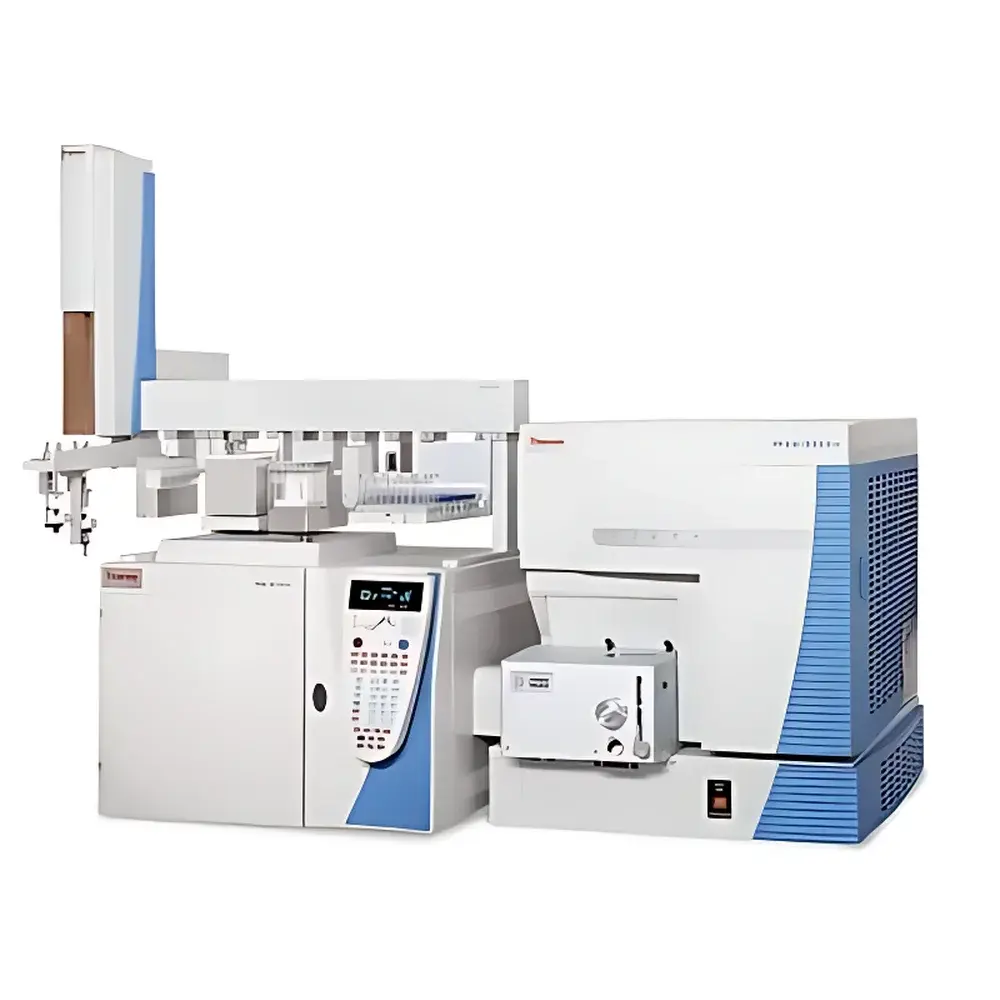
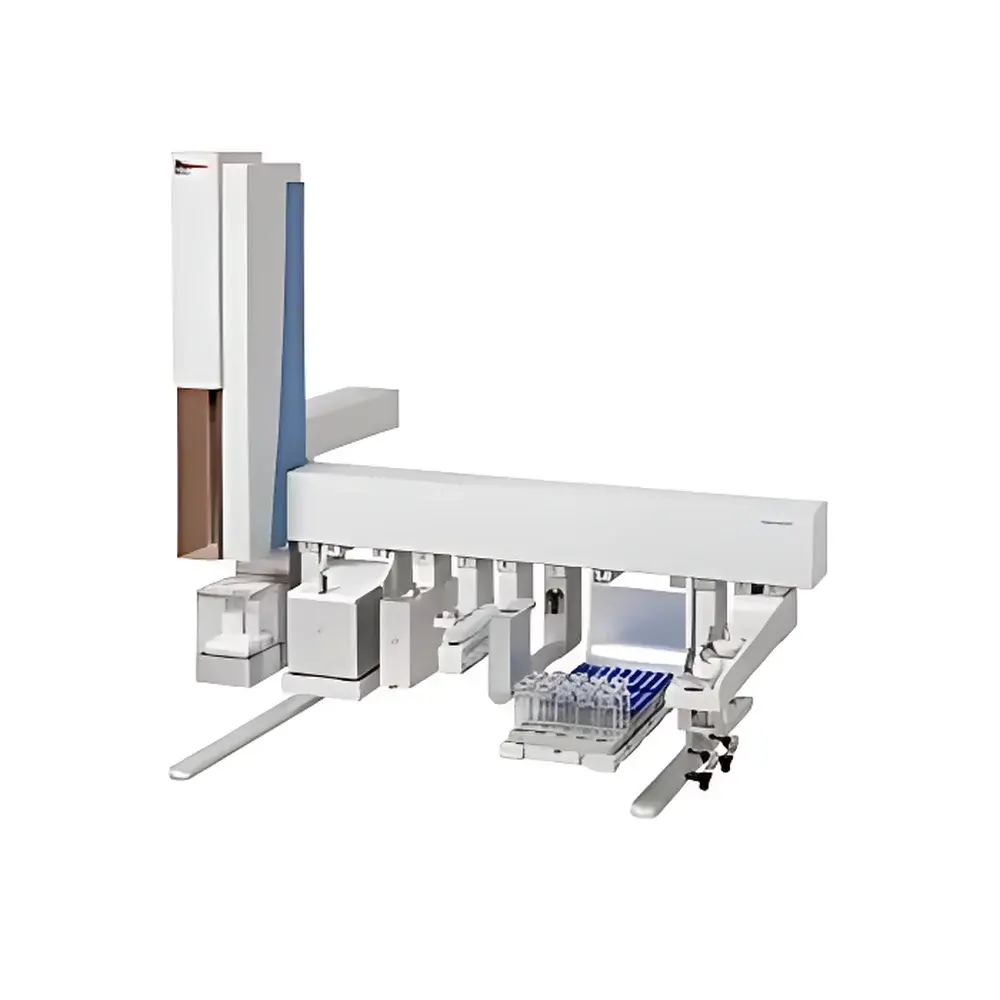
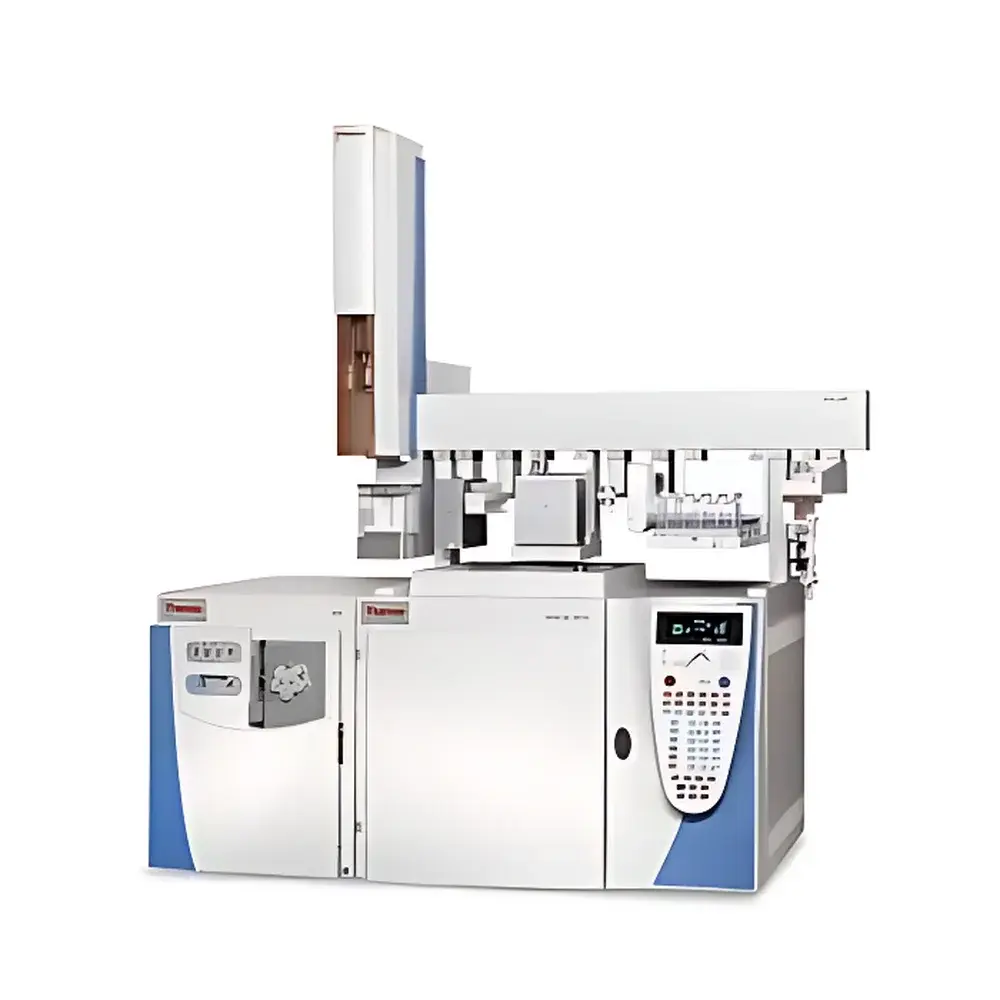
Thermo Fisher Scientific TriPlus RSH Multifunctional Autosampler for GC and GC/MS
| Brand | Thermo Fisher |
|---|---|
| Origin | Italy |
| Manufacturer | Thermo Fisher Scientific |
| Product Type | Imported Instrument |
| Model | TriPlus RSH |
| Instrument Category | Gas Chromatography Autosampler |
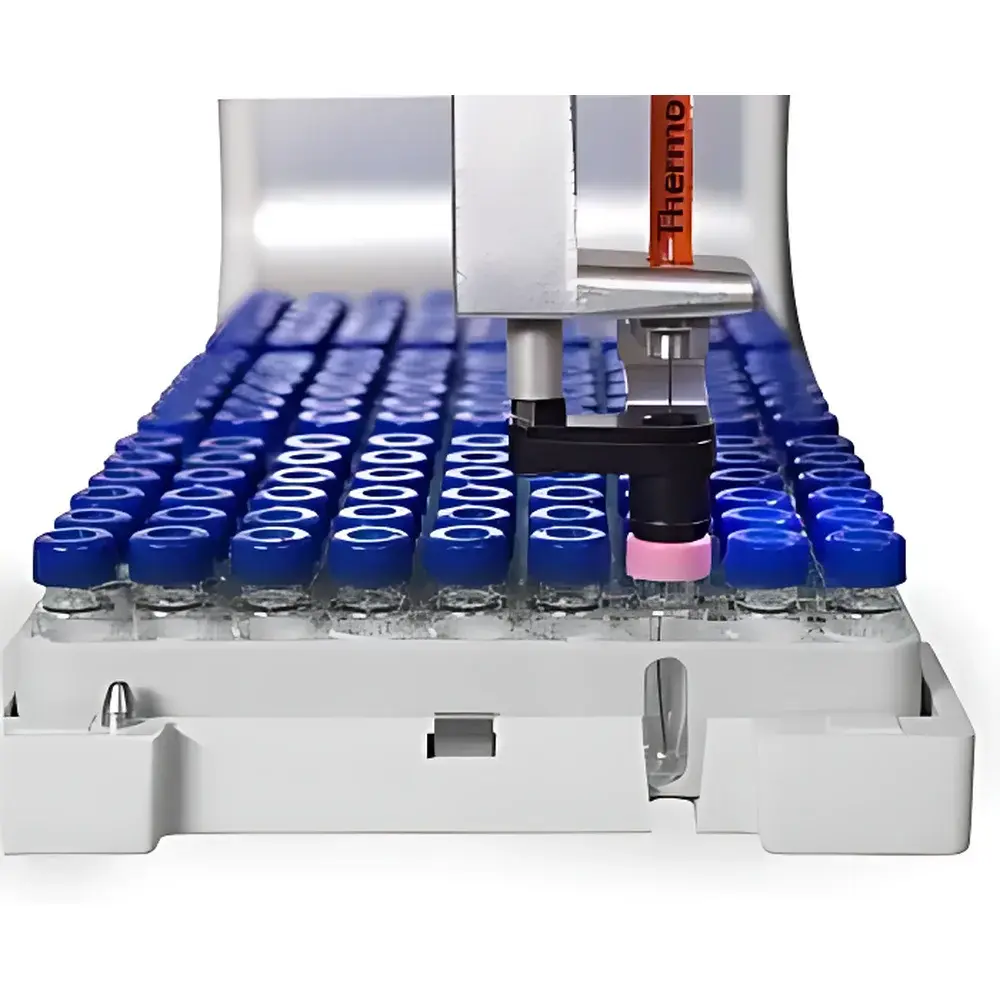
| Sample Capacity | 972 × 2 mL vials + multiple 100 mL wash/waste bottles |
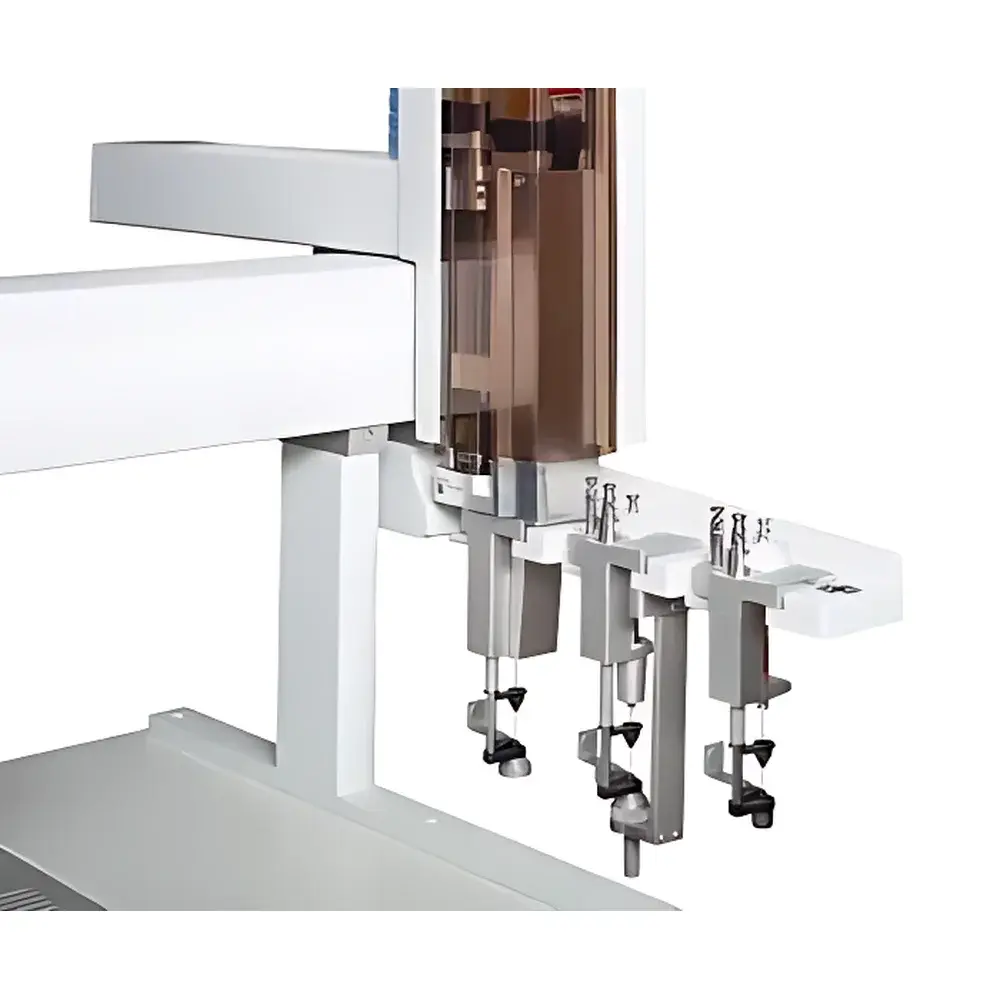
| Needle Exchange | Automatic Tool Change (ATC) |
| Minimum Sample Uptake | 5 µL (with bottom-sensing precision) |
| Liquid Injection Modes | Conventional, Fast (<100 ms), Sandwich |
| Headspace Capacity | 300 × 10/20 mL vials |
| SPME Automation | Full cycle (conditioning, extraction, desorption, cleaning) |
| Integrated Functions | Continuous dilution, spiking, derivatization, vortexing, barcode reading |
Overview
The Thermo Fisher Scientific TriPlus RSH Multifunctional Autosampler is an engineered platform designed to unify liquid, headspace, and solid-phase microextraction (SPME) sample introduction workflows within gas chromatography (GC) and gas chromatography–mass spectrometry (GC/MS) laboratories. Built upon a high-precision robotic arm architecture with integrated position feedback and closed-loop motion control, the system delivers deterministic repeatability in syringe positioning, needle depth, and plunger actuation—critical for trace-level quantitation and method transfer across instruments and sites. Unlike conventional autosamplers limited to single-mode operation, the TriPlus RSH implements a modular, task-oriented automation framework that supports concurrent method execution, dynamic resource allocation, and adaptive sequence logic—enabling full unattended operation over extended periods, including weekend-long runs without intervention.
Key Features
- Automatic Tool Change (ATC): Enables on-the-fly switching between dedicated sampling needles—including GC liquid, headspace, and SPME probes—within a single sequence, eliminating manual intervention and cross-contamination risk.
- Sub-microliter Precision Sampling: Patented vial-bottom sensing technology detects vial geometry and liquid meniscus position, allowing accurate aspiration from as little as 5 µL residual volume with sub-µL repeatability—essential for radiolabeled compounds, clinical microsamples, and costly internal standards.
- Multi-Mode Injection Flexibility: Supports conventional, fast (<100 ms), and sandwich injection modes; all parameters—including pull-up stroke, viscosity delay, wash cycles, and needle penetration depth—are programmable per injection event.
- Integrated Headspace Automation: Features high-temperature sealed syringes eliminating need for transfer lines or quantitative loops; includes overlapping incubation for throughput optimization and optional Multi-Head Space Extraction (MHE) for matrix-compromised solids.
- End-to-End SPME Workflow Control: Automates fiber conditioning, adsorption (with programmable temperature/vibration), thermal desorption into the GC inlet, and post-desorption cleaning—ensuring fiber longevity and analytical consistency.
- Liquid Handling Suite: Performs continuous dilution series, standard spiking, automated derivatization (e.g., silylation, acylation), vortex mixing, and barcode-based sample tracking compliant with LIMS integration protocols.
Sample Compatibility & Compliance
The TriPlus RSH accommodates standard 2 mL crimp-top or screw-cap vials (972-position tray), 10 mL and 20 mL headspace vials (300-position configuration), and SPME fiber assemblies from major vendors (e.g., Supelco, Restek). All liquid handling components are chemically resistant to common solvents (acetonitrile, methanol, chloroform, hexane) and compatible with aggressive derivatization reagents. The system meets mechanical and electrical safety requirements per IEC 61010-1 and is designed for operation in ISO/IEC 17025-accredited laboratories. Its audit-trail-enabled software supports 21 CFR Part 11 compliance when deployed with Thermo Scientific Chromeleon CDS, including electronic signatures, user-role permissions, and immutable sequence logs.
Software & Data Management
Controlled via Thermo Scientific Chromeleon Chromatography Data System (CDS) v7.3 or later, the TriPlus RSH integrates natively into method development, acquisition, and reporting workflows. Sequence templates support conditional branching (e.g., “if peak area < X, trigger re-injection”), dynamic dilution factor calculation, and real-time QC flagging. Raw instrument logs—including syringe pressure profiles, motor current traces, and sensor timestamps—are archived alongside chromatographic data for forensic troubleshooting. Export formats include ASTM E1381-compliant .cdf, .csv, and .pdf reports suitable for regulatory submission.
Applications
The TriPlus RSH serves high-throughput environmental labs performing EPA Method 502.2, 524.4, and 8260 analyses; pharmaceutical QC facilities executing USP GC methods requiring derivatization and internal standard addition; forensic toxicology units analyzing blood volatiles via static/dynamic headspace; and food safety labs conducting pesticide residue screening using SPME-GC/MS. Its capacity for unattended weekend operation makes it especially suited for routine monitoring programs where turnaround time and operator availability constrain productivity.
FAQ
Can the TriPlus RSH perform both liquid injection and headspace analysis in one sequence?
Yes—the system executes mixed-mode sequences by dynamically loading appropriate tools and configuring inlet parameters (e.g., GC oven ramp, detector settings) via method-linked triggers.
Is SPME fiber lifetime monitored or predictive maintenance supported?
While no built-in fiber wear sensor exists, Chromeleon logs total desorption cycles and thermal exposure history per fiber ID, enabling lab-defined replacement schedules based on empirical degradation trends.
Does the system support third-party LIMS integration?
Yes—via ODBC, REST API, and HL7 interfaces; barcode scanning output adheres to GS1 DataMatrix standards for seamless sample registration.
What level of validation documentation is provided for GxP environments?
Thermo Fisher supplies Installation Qualification (IQ) and Operational Qualification (OQ) protocols, along with a Risk Assessment template aligned with ICH Q9 principles.
Can the ATC module be upgraded post-purchase?
ATC is factory-installed and requires mechanical calibration; retrofitting is not supported—configuration must be specified at time of order.




