
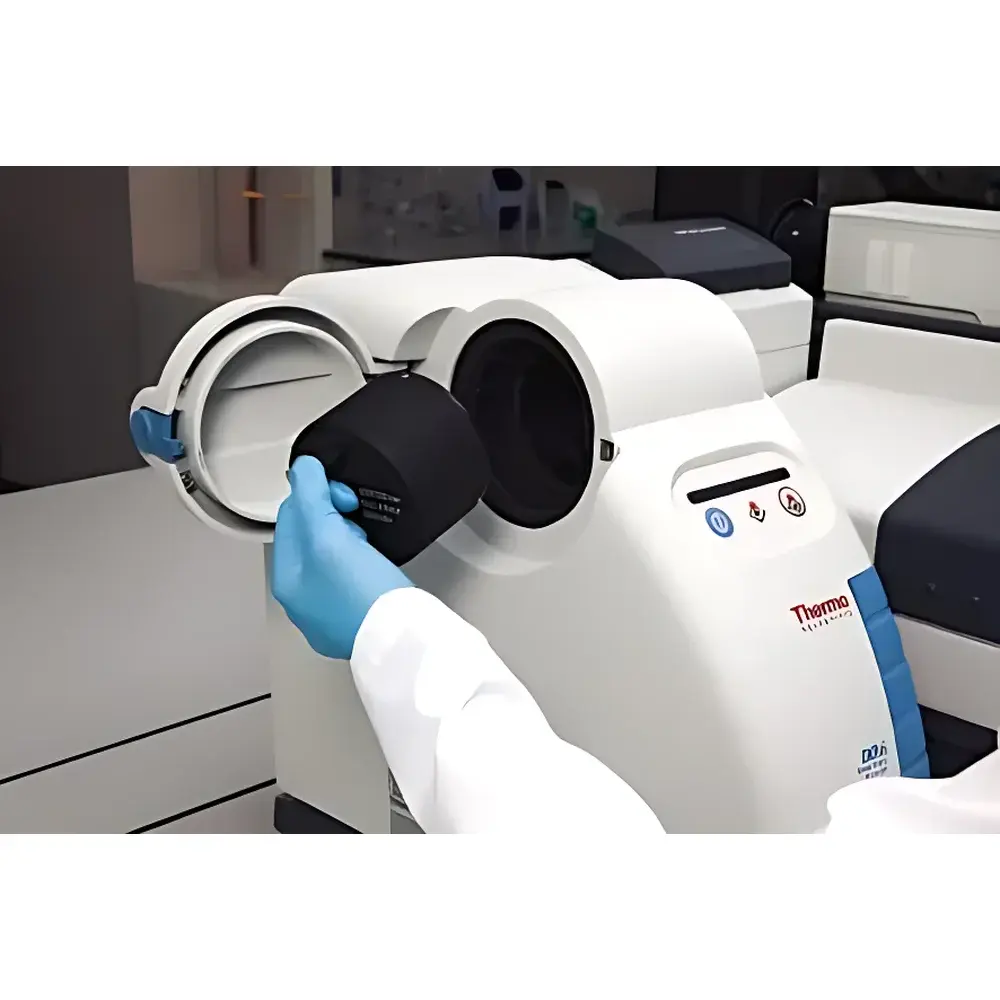
Thermo Scientific DXR2xi Micro-Raman Imaging Spectrometer
| Brand | Thermo Fisher |
|---|---|
| Origin | USA |
| Manufacturer | Thermo Fisher Scientific |
| Product Type | Confocal Micro-Raman Spectrometer |
| Model | DXR2xi |
| Spectral Range | 50–6000 cm⁻¹ |
| Spectral Resolution | <2 cm⁻¹ |
| Spatial Resolution | 500 nm |
| Minimum Wavenumber | 50 cm⁻¹ |
| Spectral Reproducibility | Better than ±0.1 cm⁻¹ |
Overview
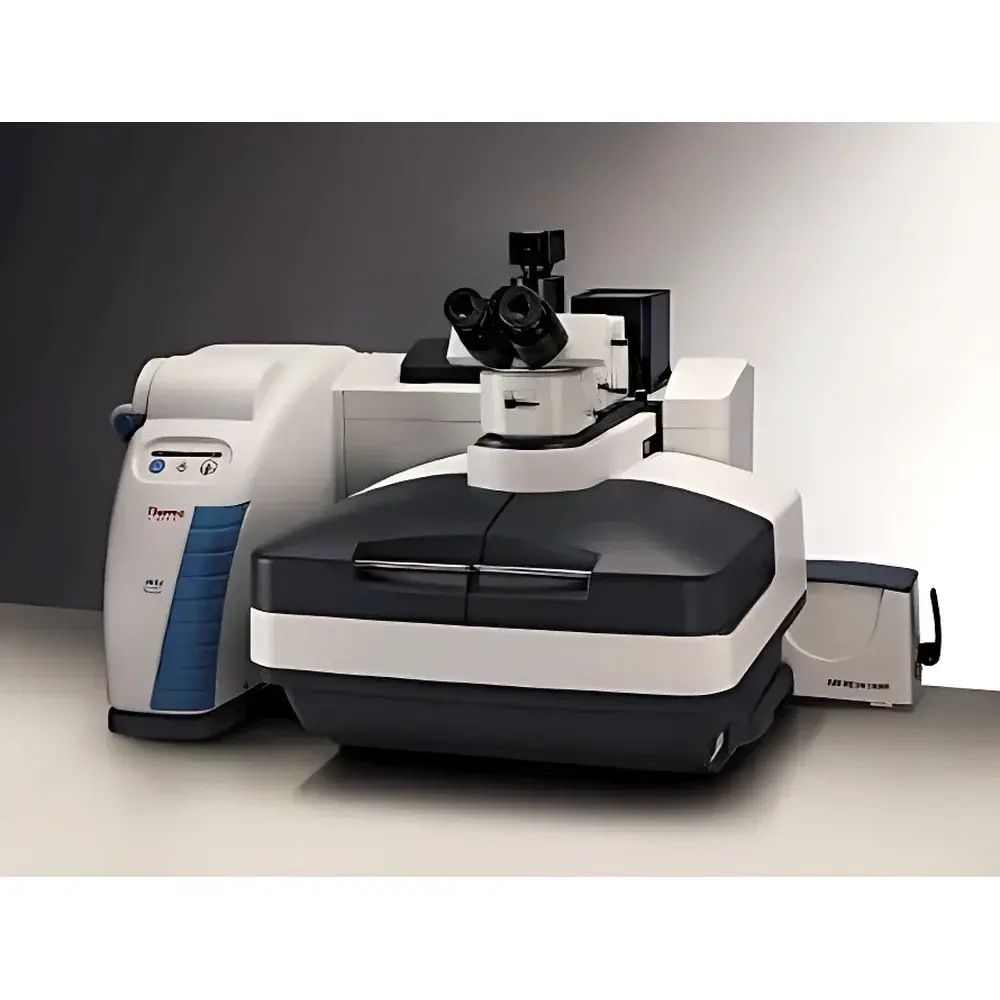
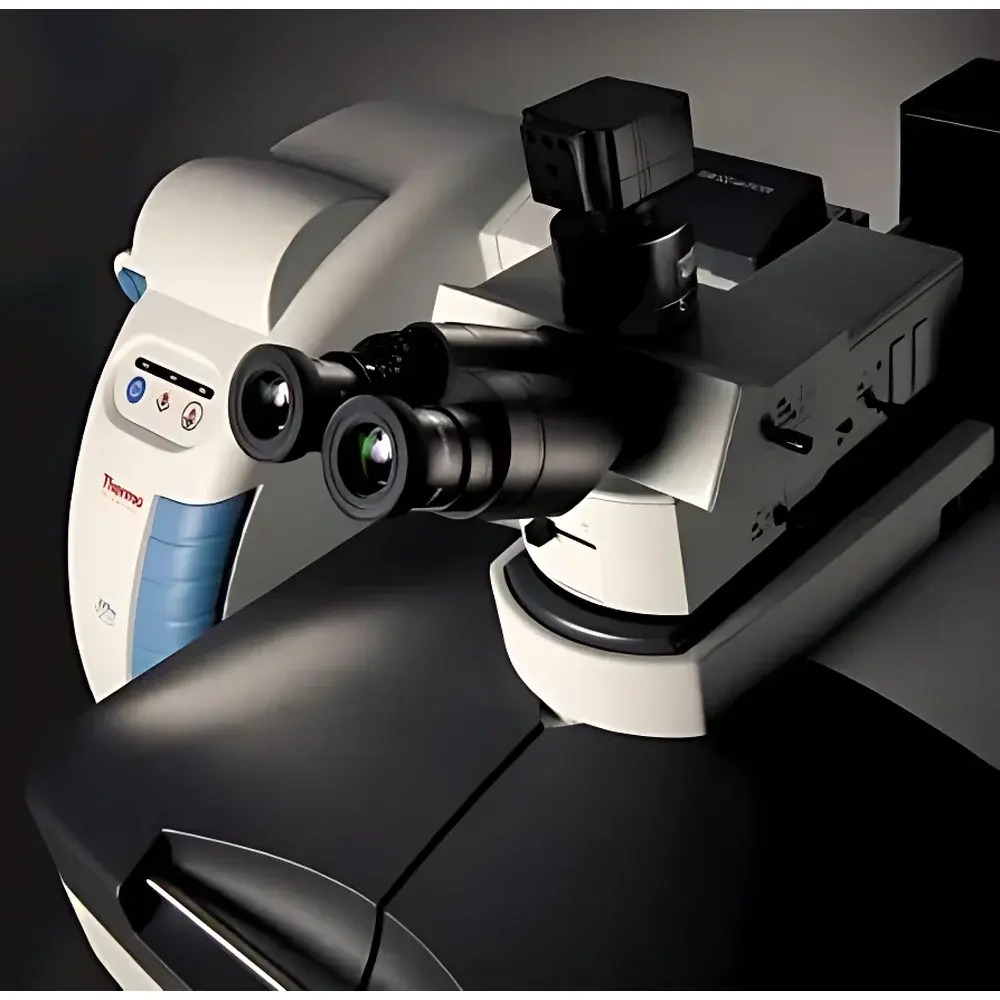
The Thermo Scientific DXR2xi Micro-Raman Imaging Spectrometer is a high-performance confocal Raman spectrometer engineered for quantitative chemical imaging and spatially resolved molecular characterization at the microscale. Based on confocal laser excitation and dispersive spectroscopy, the system employs a high-efficiency holographic grating, thermoelectrically cooled CCD detector, and precision motorized optical path alignment to deliver robust spectral fidelity across the full 50–6000 cm⁻¹ range. Its confocal architecture enables axial sectioning with diffraction-limited spatial resolution (≤500 nm laterally), making it suitable for depth-resolved analysis of multilayer films, crystalline domains, phase boundaries, and heterogeneous particulates. Designed for laboratory environments operating under ISO/IEC 17025-compliant workflows, the DXR2xi supports traceable calibration protocols aligned with ASTM E1840 and ISO 8655-7 for instrument performance verification.
Key Features
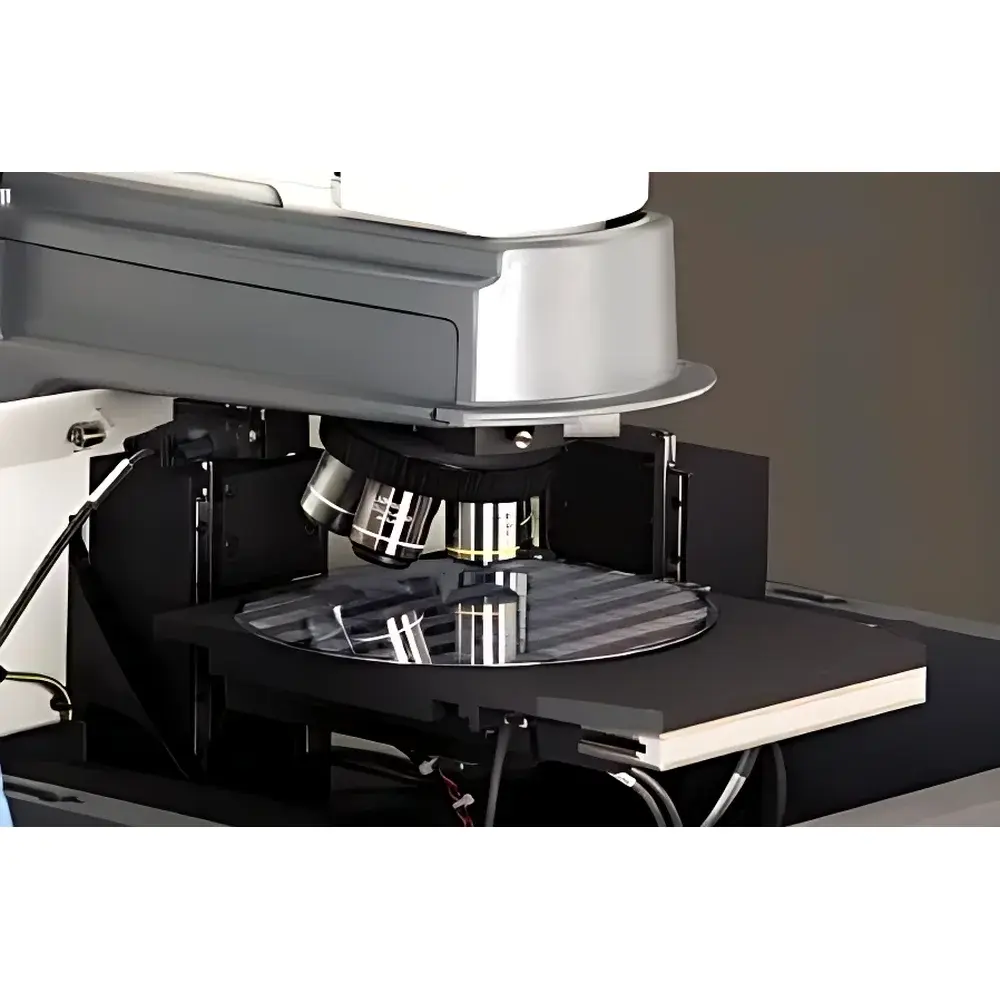
- Confocal optical design with motorized XYZ stage and automated focus tracking for consistent signal acquisition across topographically variable samples.
- Tool-free modular configuration: rapid interchange of lasers (e.g., 532 nm, 633 nm, 785 nm), edge filters, and gratings—no realignment required.
- Real-time spectral optimization via OMNIC™ xi software interface, including live preview of signal-to-noise ratio, spectral drift correction, and auto-exposure control.
- Integrated automatic wavelength calibration using built-in neon lamp and daily self-check routines ensuring long-term wavenumber stability (<±0.1 cm⁻¹ reproducibility).
- Class 1 laser safety certification for the microscope body; optional fiber-coupled or external probe configurations classified as Class 3B—requiring compliance with ANSI Z136.1 and IEC 60825-1.
- Hardware-accelerated Raman mapping: capable of acquiring >10,000 spectra per minute with sub-micron step resolution in line-scan or grid-based modes.
Sample Compatibility & Compliance
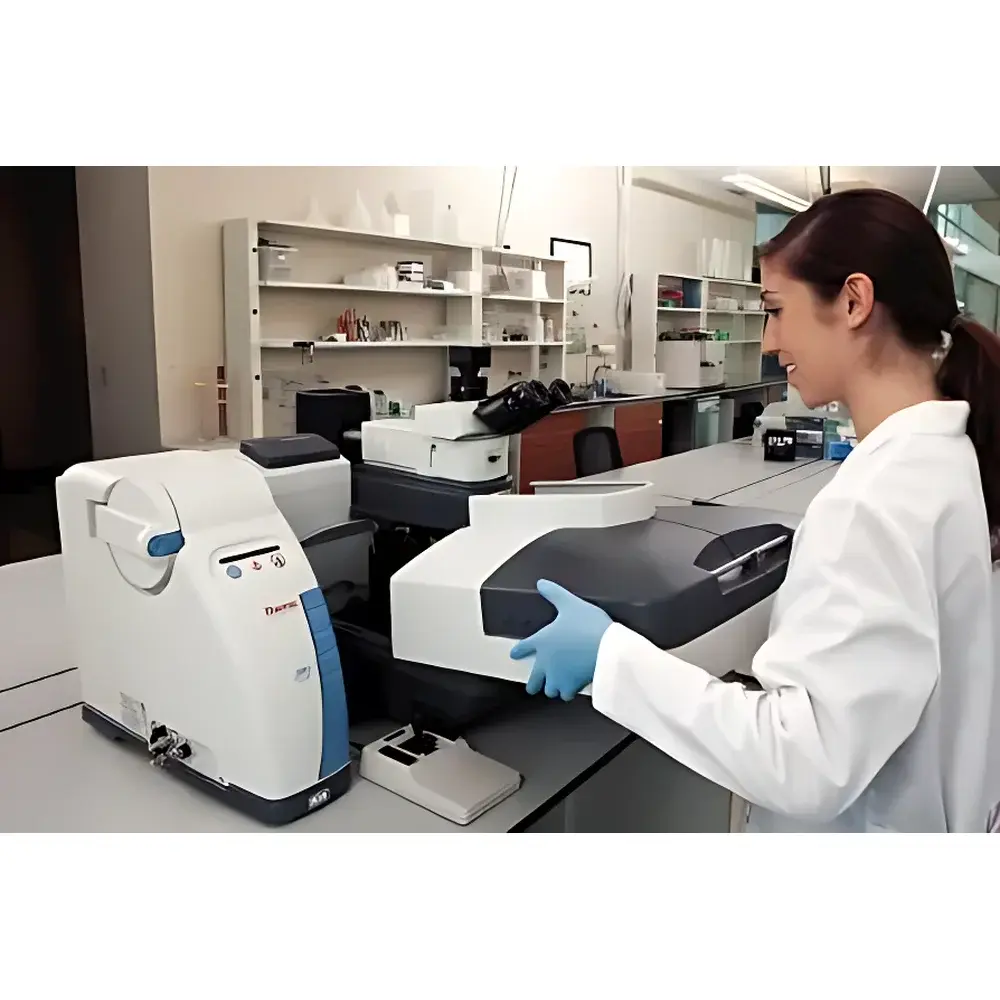
The DXR2xi accommodates solid, powder, thin-film, and semi-transparent samples mounted on standard microscope slides or specialized holders (e.g., heating/cooling stages, electrochemical cells). Its non-destructive, label-free measurement principle eliminates sample preparation artifacts common in electron or mass spectrometry techniques. The system meets regulatory requirements for analytical instrumentation used in GMP environments: audit trail functionality, electronic signature support, and data integrity features compliant with FDA 21 CFR Part 11 and EU Annex 11. All calibration records, acquisition parameters, and raw spectral metadata are embedded in NIST-compatible .spa file format, enabling traceability for GLP audits and inter-laboratory comparison studies.
Software & Data Management
OMNIC™ xi software provides an integrated platform for acquisition, multivariate analysis (PCA, cluster analysis, spectral unmixing), and chemical image generation. It supports batch processing of hyperspectral datasets, region-of-interest (ROI) quantification, and export to third-party tools (MATLAB, Python via HDF5 or ASCII). Built-in chemometric libraries enable rapid identification of polymorphs, contaminants, or degradation products based on reference spectra from commercial databases (e.g., RRUFF, ICDD). Data security is enforced through role-based access control, encrypted project files, and configurable backup schedules synchronized with network-attached storage.
Applications
- Nanomaterials: Graphene layer counting, carbon nanotube chirality mapping, quantum dot composition profiling.
- Pharmaceuticals: Polymorph distribution in tablets, API-excipient interaction assessment, counterfeit drug screening.
- Geosciences: Mineral phase identification in thin sections, fluid inclusion analysis, metamorphic reaction zoning.
- Electronics: Stress mapping in Si wafers, dopant distribution in semiconductor heterostructures, failure analysis of solder joints.
- Academic research: In situ catalytic reaction monitoring, battery electrode degradation kinetics, biomineralization studies.
FAQ
What laser wavelengths are supported natively by the DXR2xi?
The base configuration includes a 532 nm laser; optional modules support 633 nm and 785 nm excitation—each optimized for specific fluorescence suppression and penetration depth requirements.
Is external environmental vibration isolation required?
While not mandatory, operation on a passive or active optical table is recommended for measurements requiring ≤0.1 cm⁻¹ wavenumber stability over extended mapping sessions.
Can the DXR2xi be integrated into automated production QA workflows?
Yes—via Ethernet-connected remote control API (LabVIEW, Python SDK), trigger I/O ports, and programmable stage movement, enabling integration with conveyor-based inspection systems.
Does OMNIC™ xi support spectral library search against proprietary reference sets?
Yes—users may import and manage custom spectral libraries with metadata tagging, version control, and similarity threshold adjustment for match confidence scoring.
How is focus maintained during large-area chemical imaging?
The system employs continuous autofocus using either reflected-light contrast detection or Raman signal intensity maximization, dynamically compensating for thermal drift or mechanical sag over multi-hour acquisitions.
Related Products




