
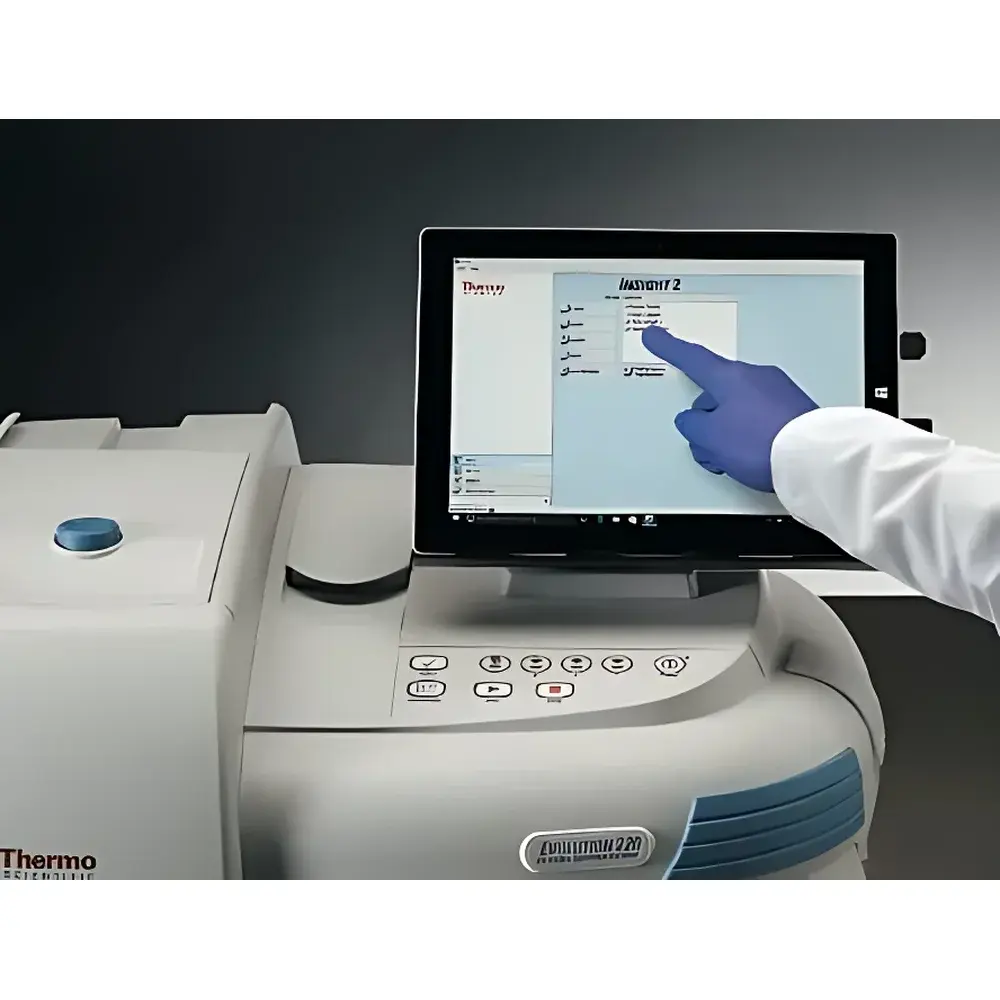
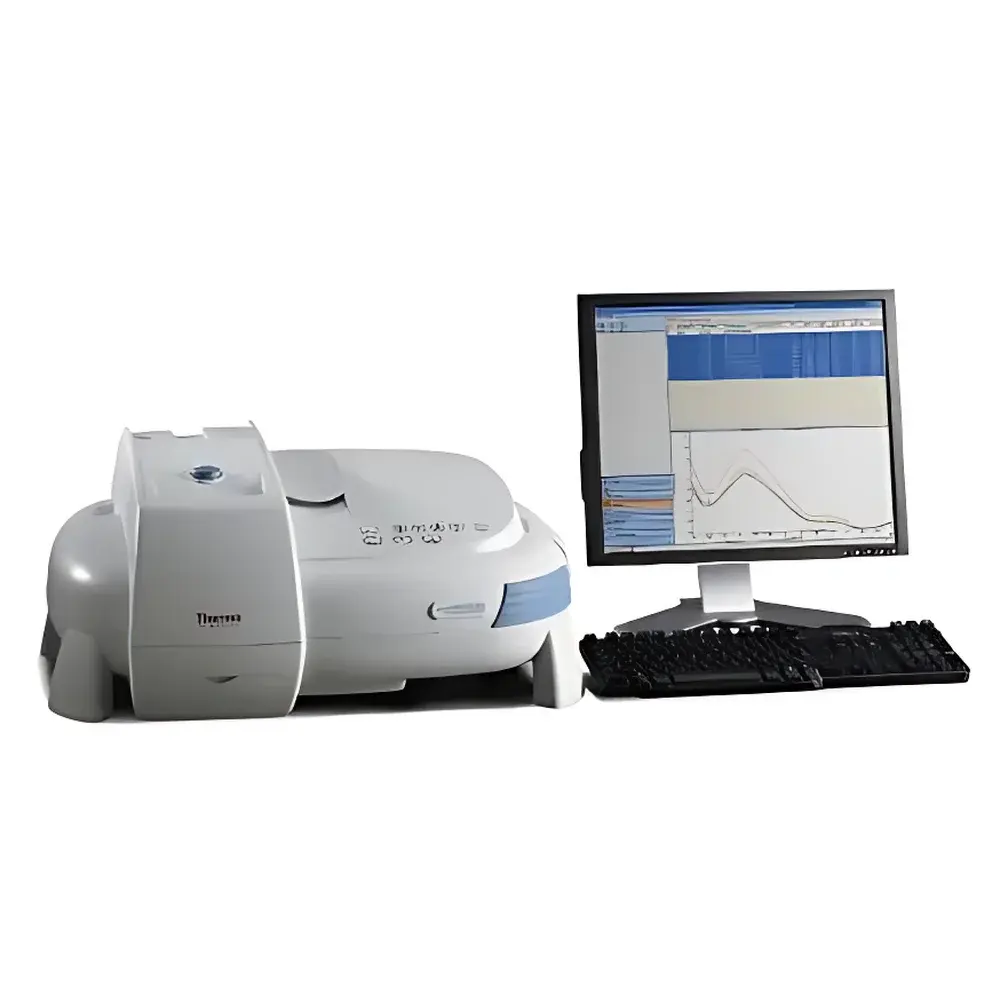
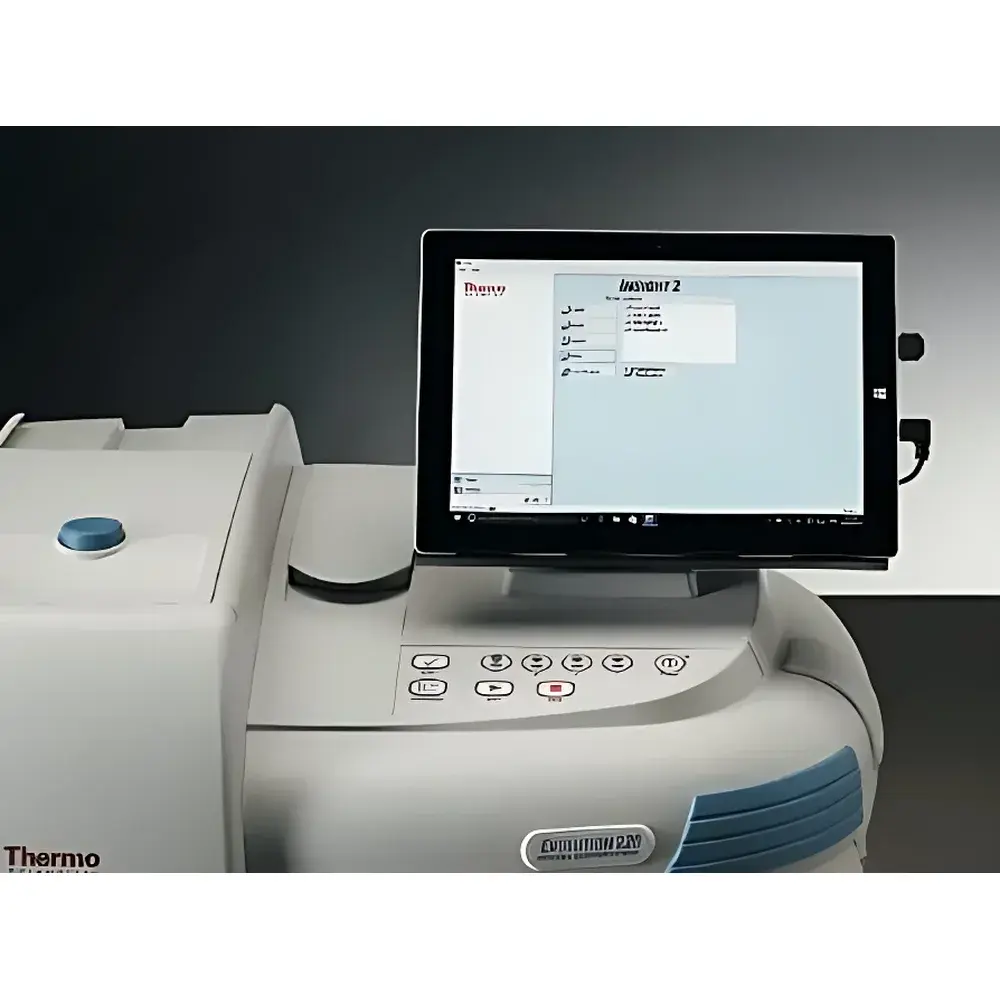
Thermo Scientific Evolution 260 Bio UV-Visible Spectrophotometer
| Brand | Thermo Fisher |
|---|---|
| Origin | USA |
| Manufacturer | Thermo Fisher Scientific |
| Instrument Type | Imported |
| Model | Evolution 260 |
| Optical Design | Double-beam |
| Detector | Photodiode Array (PDA) |
| Wavelength Range | 190–1100 nm |
| Wavelength Accuracy | ±0.8 nm |
| Spectral Bandwidth | 1.0 nm and 2.0 nm |
| Stray Light | ≤1% T |
| Automation | Motorized Wavelength Selection |
| Light Source | Xenon Flash Lamp |
Overview
The Thermo Scientific Evolution 260 Bio UV-Visible Spectrophotometer is a high-performance, double-beam spectrophotometric platform engineered for precision quantitative and qualitative analysis in life science laboratories. It operates on the fundamental principle of absorbance spectroscopy—measuring the attenuation of ultraviolet and visible light as it passes through a sample solution—enabling accurate determination of analyte concentration, purity, and structural characteristics based on Beer-Lambert law compliance. Designed specifically for dynamic bioscience workflows, the Evolution 260 Bio integrates optical stability, rapid data acquisition, and regulatory-ready software architecture to support routine QC, academic research, and GLP-compliant applications. Its xenon flash lamp eliminates warm-up delay and delivers consistent intensity across the full 190–1100 nm spectral range, while the photodiode array detector ensures simultaneous multi-wavelength detection without mechanical scanning artifacts.
Key Features
- Double-beam optical geometry with real-time reference beam compensation—critical for kinetic assays and time-dependent measurements where baseline drift must be minimized.
- Advanced Focusing Optics (AFBG) technology enhances signal-to-noise ratio for low-volume cuvettes (down to 5 µL) and turbid or scattering samples, improving measurement robustness in complex biological matrices.
- Motorized wavelength selection and electronic triggering enable sub-second response times—essential for fast-mixing enzyme kinetics, stopped-flow experiments, and rapid thermal transition monitoring.
- Integrated color touchscreen interface with embedded computing module allows standalone operation; optional PC-based control via USB or Ethernet maintains full functionality and remote accessibility.
- Precision monochromator drive mechanism supports scan speeds up to 2400 nm/min with <±0.8 nm wavelength accuracy and selectable spectral bandwidths (1.0 nm or 2.0 nm) to balance resolution and throughput.
- Comprehensive accessory ecosystem including Peltier-controlled single-cell holders and intelligent 8-position temperature-regulated cell changers (0–100 °C), automated pipetting modules, solid-sample reflectance accessories, and microvolume platforms.
Sample Compatibility & Compliance
The Evolution 260 Bio accommodates standard 10 mm pathlength quartz or UV-grade plastic cuvettes, microvolume adapters (e.g., NanoDrop-style pedestal), flow cells, and solid reflectance accessories. It meets international performance standards for UV-Vis instrumentation per ASTM E275, ISO 6425, and USP . System validation is supported by the Thermo Scientific UV Validation Kit, which includes NIST-traceable holmium oxide and didymium filters for wavelength verification and neutral density filters for photometric accuracy checks. All hardware and firmware components are designed to comply with IEC 61010-1 safety requirements. The instrument’s design and documentation framework align with FDA 21 CFR Part 11, EU Annex 11, and ISO/IEC 17025 quality management system expectations for analytical instrument qualification (IQ/OQ/PQ).
Software & Data Management
INSIGHT software—version 3.0 and later—is the native application environment for the Evolution 260 Bio. It provides pre-validated, protocol-driven workflows for nucleic acid quantification (A260, A260/A280, A260/A230), protein analysis (A205, A280, Pierce 660, Bradford, BCA, Lowry), fluorescence labeling efficiency (single/dual-dye), and microarray dye incorporation assessment. The software features audit-trail-enabled user management, electronic signatures, and role-based access controls compliant with 21 CFR Part 11 and EU GMP Annex 11. CUE scripting enables creation of custom method interfaces and automated sequence execution—reducing operator error and ensuring procedural consistency. Data export supports CSV, PDF, XML, and JCAMP-DX formats, and raw spectral files are stored with full metadata (instrument ID, date/time stamp, operator ID, method parameters, calibration history). Integrated workbook tools enforce step-by-step procedural adherence and auto-calculate derived values with uncertainty propagation.
Applications
The Evolution 260 Bio serves as a primary analytical tool across molecular biology, biochemistry, pharmaceutical development, and biomanufacturing. Typical use cases include: quantification and purity assessment of plasmid DNA, genomic DNA, RNA, and synthetic oligonucleotides; kinetic characterization of enzyme activity (e.g., NADH/NADPH oxidation at 340 nm); protein folding/unfolding studies via thermal denaturation monitored at 280 nm; ligand-binding assays using chromophore displacement; excipient compatibility screening in formulation development; and routine QC of purified antibodies and recombinant proteins. Its adaptability to variable temperature, microvolume, and high-throughput sampling configurations makes it suitable for both discovery-phase experimentation and regulated release testing environments.
FAQ
Does the Evolution 260 Bio support GLP-compliant data integrity requirements?
Yes—the INSIGHT Security Edition provides full 21 CFR Part 11 compliance, including electronic signatures, audit trails, user authentication, and secure data archiving.
Can the instrument perform kinetic measurements with millisecond time resolution?
Yes—electronic triggering and xenon flash lamp synchronization allow data collection at intervals as short as 10 ms, supporting rapid enzymatic and photochemical reaction monitoring.
Is wavelength calibration traceable to NIST standards?
Yes—Thermo Fisher supplies certified reference materials (holmium oxide, didymium) with documented NIST traceability for routine wavelength verification and system suitability testing.
What temperature control options are available for thermal stability studies?
Two configurations: single-cell Peltier holder (0–100 °C, ±0.1 °C stability) and intelligent 8-position Peltier changer with independent temperature zoning and ramp-rate programming.
How does the AFBG optical system improve performance with turbid samples?
AFBG uses optimized collimation and focusing optics to maximize photon collection efficiency at the detector plane, reducing scattering-induced noise and enhancing sensitivity for suspensions, liposomal formulations, and cell lysates.




