
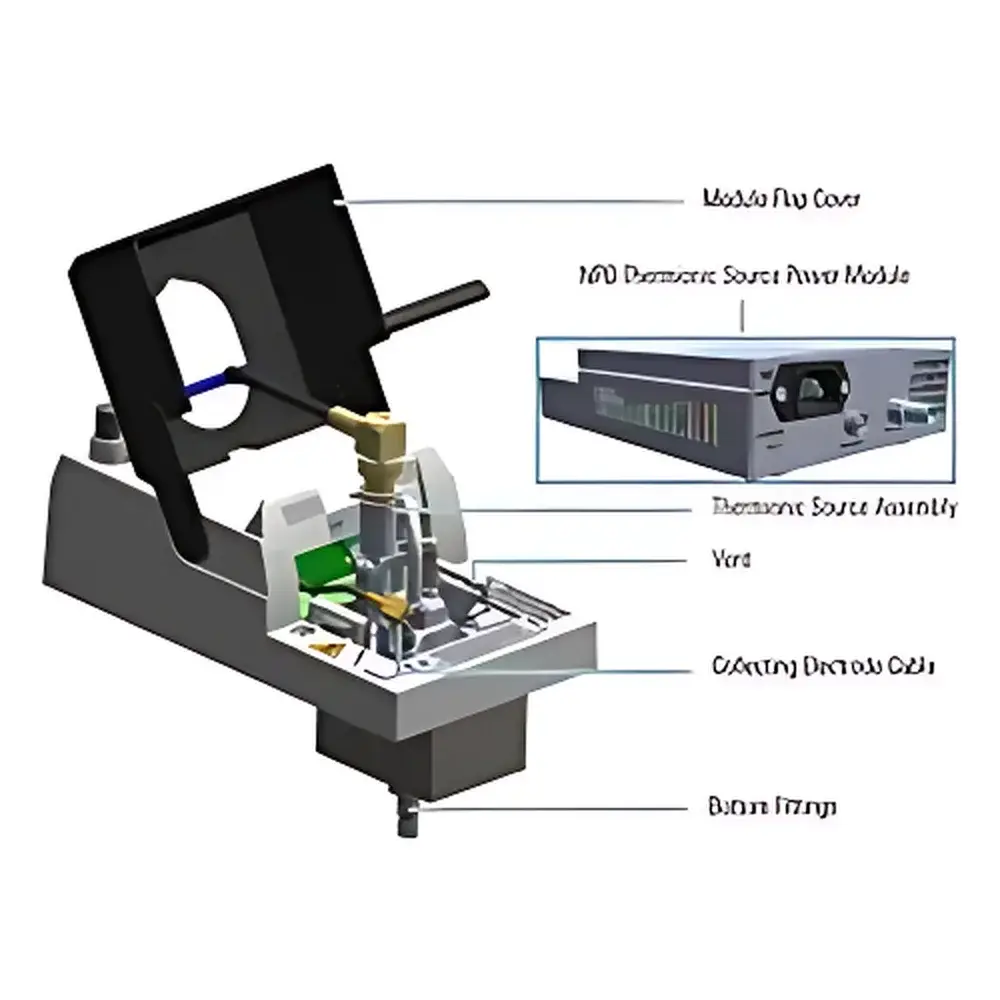
Thermo Scientific Instant Connect Nitrogen Phosphorus Detector (NPD) for Gas Chromatography
| Brand | Thermo Fisher |
|---|---|
| Origin | Italy |
| Manufacturer Type | Original Equipment Manufacturer (OEM) |
| Product Origin | Imported |
| Model | NPD Detector |
| Instrument Category | Element-Selective Chromatographic Detector |
| Compatibility | Designed for Thermo Scientific TRACE 1300/1310 GC and ISQ EC/LSQ MS platforms |
Overview
The Thermo Scientific Instant Connect Nitrogen Phosphorus Detector (NPD) is a thermionic, element-selective detector engineered for high-sensitivity, low-background quantification of nitrogen- and phosphorus-containing compounds in gas chromatography (GC) and GC-MS applications. Operating on the principle of selective thermal ionization—where alkali metal salt (typically rubidium or cesium)–impregnated ceramic beads emit electrons upon heating, and analyte-derived N/P species enhance ion current through electron capture and subsequent ionization—the NPD delivers exceptional selectivity over hydrocarbons and halogenated compounds. Integrated into Thermo’s modular TRACE 1300/1310 GC platform, the Instant Connect NPD eliminates mechanical alignment, gas line disassembly, and electrical recalibration during module exchange. Its plug-and-play architecture leverages standardized thermal, pneumatic, and electronic interfaces compliant with Thermo’s GC system bus protocol, enabling full detector recognition and parameter auto-loading within the Chromeleon CDS software environment.
Key Features
- True Instant Connect mechanical and electrical interface: tool-free, sub-two-minute detector swap without recalibration or realignment.
- Ceramic bead-based thermionic source with field-replaceable, pre-aged alkali salt cartridges—ensuring consistent response factor stability across batches and extended operational lifetime.
- Optimized thermal management architecture: independent heater zones for bead, collector, and nozzle maintain precise temperature gradients critical for reproducible N/P signal generation and minimal baseline drift.
- Integrated pneumatic control: fully automated gas flow regulation (hydrogen, air, makeup) via onboard mass flow controllers synchronized with method parameters in Chromeleon.
- Native compatibility with Thermo Scientific ISQ EC and LSQ series GC-MS systems—enabling seamless transition between selective NPD detection and full-scan or SIM MS confirmation in hybrid workflows.
- Designed for GLP/GMP environments: supports audit trail logging, user access levels, and electronic signature compliance per FDA 21 CFR Part 11 when used with validated Chromeleon CDS configurations.
Sample Compatibility & Compliance
The Instant Connect NPD demonstrates high sensitivity for organophosphates (e.g., pesticides such as chlorpyrifos, malathion), alkylamines, nitroaromatics, and heterocyclic nitrogen bases—including pharmaceutical impurities, environmental contaminants, and forensic toxicology markers. It complies with ASTM D5504 (determination of sulfur/nitrogen compounds in gaseous fuels), USP (chromatography), and ISO 17025–accredited laboratory requirements for detector qualification. The ceramic bead assembly meets RoHS Directive 2011/65/EU material restrictions, and the detector housing conforms to IEC 61010-1 safety standards for laboratory electrical equipment.
Software & Data Management
Fully integrated with Thermo Scientific Chromeleon Chromatography Data System (CDS) v7.3 or later, the NPD supports method-driven detector configuration, real-time signal monitoring, and automated calibration curve generation using internal standard or external standard protocols. All hardware events—including module insertion, temperature ramping, gas flow activation, and bead aging status—are timestamped and logged in the system event history. Raw data files (.CDF) preserve full detector metadata (bead lot number, cumulative runtime, hydrogen flow setpoint), supporting traceability for regulatory submissions. Optional Chromeleon Compliance Pack enables 21 CFR Part 11–compliant electronic records, including role-based permissions, change control logs, and non-erasable audit trails.
Applications
- Residue analysis of organophosphate and carbamate pesticides in food and environmental matrices (per EPA Method 8081B/8082A).
- Quantification of nitrogen-containing alkaloids (e.g., nicotine, caffeine, mycotoxins) in botanical extracts and pharmaceutical intermediates.
- Trace-level detection of phosphine-related degradation products in semiconductor process gases.
- Verification of nitrogen dopants in polymer additives and flame retardants under ISO 11357-5 thermal stability protocols.
- Method development support for multi-detector GC systems—where NPD serves as orthogonal verification alongside FID or ECD in pesticide multiresidue screening workflows.
FAQ
Does the Instant Connect NPD require recalibration after module replacement?
No. The detector retains its calibration coefficients in non-volatile memory and auto-negotiates configuration parameters with the GC mainframe upon physical connection.
Can the ceramic bead be cleaned or regenerated in-house?
No. Beads are single-use, factory-aged consumables; replacement is required per manufacturer specifications to ensure consistent sensitivity and linear dynamic range.
Is this detector compatible with third-party GC systems?
No. The Instant Connect interface and communication protocol are proprietary to Thermo Scientific TRACE-series instruments and ISQ GC-MS platforms.
What is the typical linear dynamic range for triethyl phosphate under standard operating conditions?
Approximately 10⁴–10⁵ (mass on column), as defined by ASTM D5504 validation criteria at 150 °C bead temperature and 3 mL/min hydrogen flow.
How is detector performance verified during routine operation?
Chromeleon CDS includes built-in NPD performance check routines that monitor baseline noise, signal-to-noise ratio (S/N ≥ 500:1 for 100 pg N injected), and response factor stability against certified reference standards (e.g., methyl parathion).





