
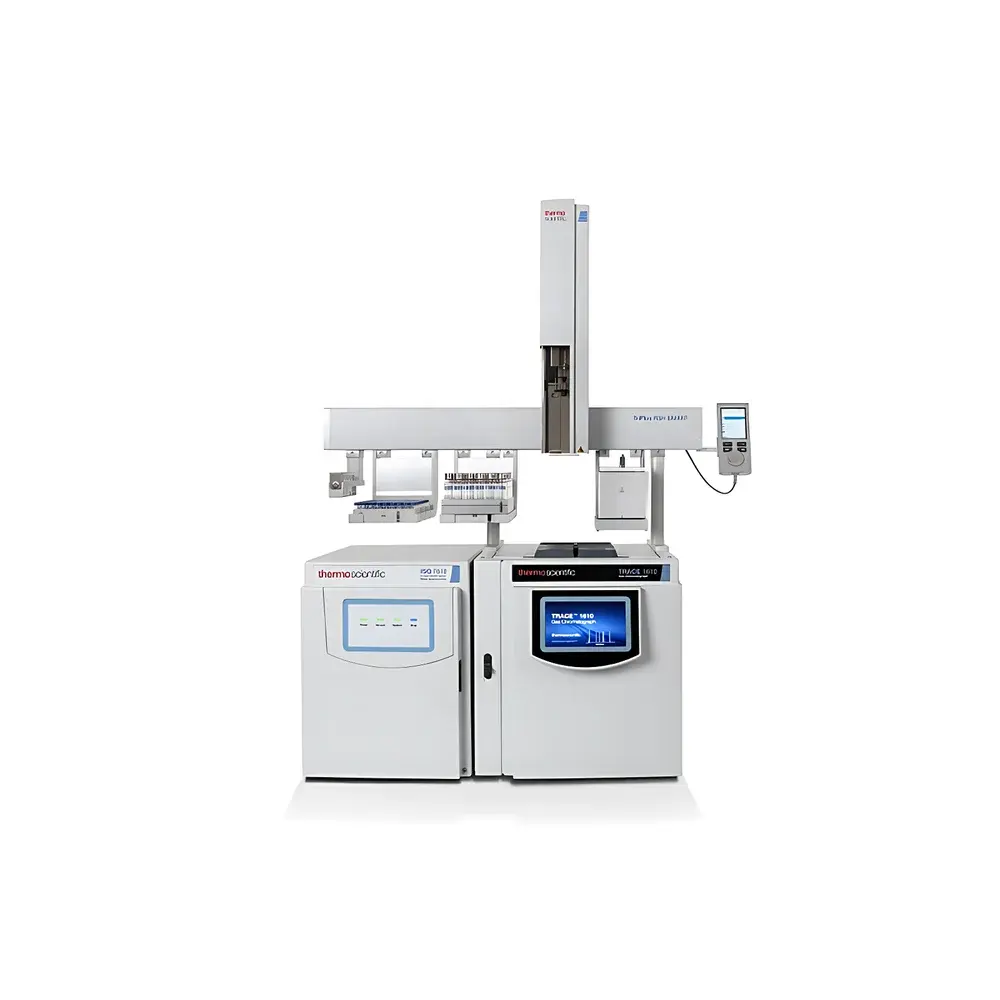
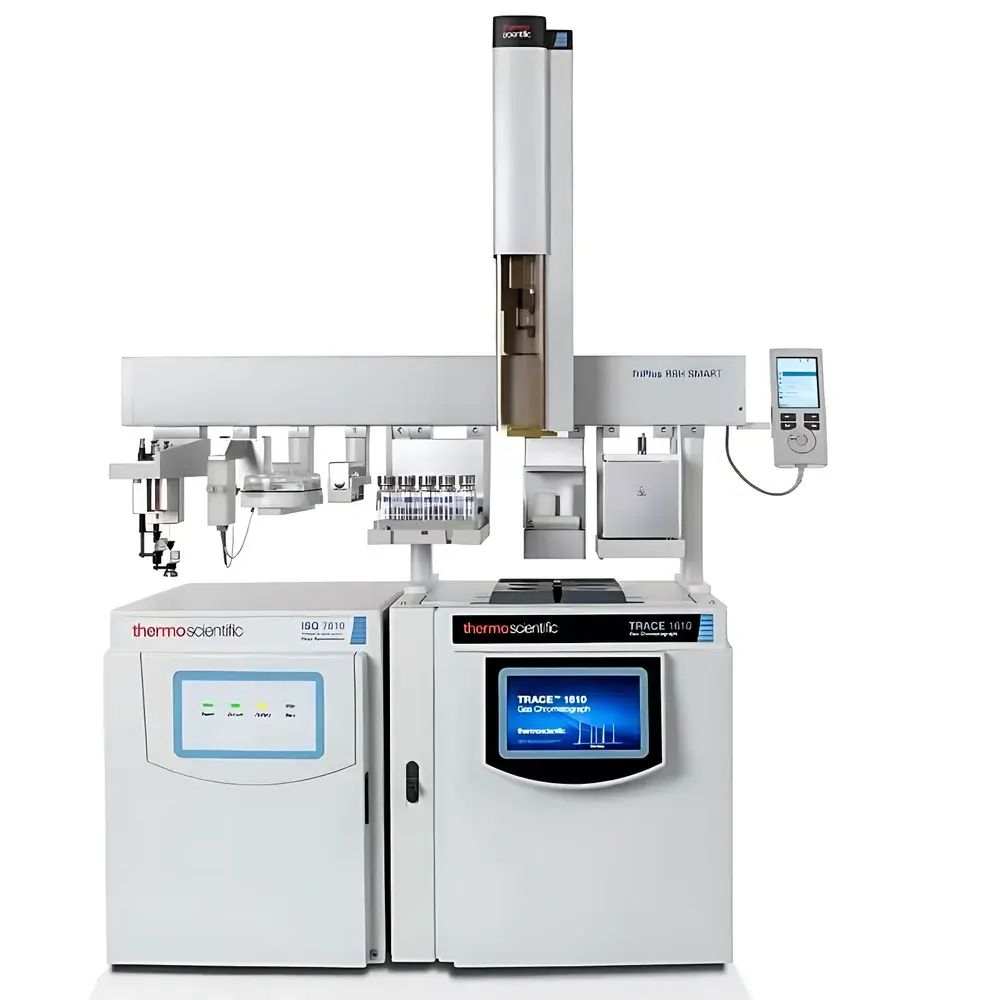
Thermo Scientific ISQ 7610 Single Quadrupole GC-MS System
| Brand | Thermo Fisher |
|---|---|
| Origin | Singapore |
| Manufacturer | Thermo Fisher Scientific |
| Instrument Type | Single Quadrupole Mass Spectrometer |
| GC Configuration | Conventional Gas Chromatography Coupling |
| Scan Speed | ≤ 20,000 u/s |
Overview
The Thermo Scientific ISQ 7610 Single Quadrupole GC-MS System is a robust, entry-level benchtop mass spectrometer engineered for routine qualitative and quantitative analysis in regulated and high-throughput laboratory environments. It integrates gas chromatography separation with electron ionization (EI) and optional chemical ionization (CI) detection via a single quadrupole mass analyzer—operating on the principle of mass-to-charge (m/z) filtering under radiofrequency (RF) and direct current (DC) voltage fields. Designed for reproducible trace-level detection across diverse sample matrices, the ISQ 7610 delivers consistent sensitivity, linear dynamic range, and method transferability between GC platforms—making it suitable for environmental testing, food safety screening, forensic toxicology, pharmaceutical impurity profiling, and academic research applications requiring regulatory-compliant data acquisition.
Key Features
- NeverVent™ Column Replacement Technology: Enables rapid, vacuum-intact GC column exchange and ion source cleaning without venting the mass spectrometer, reducing instrument downtime by up to 70% per maintenance cycle.
- XLXR Detector: A next-generation electron multiplier offering an extended dynamic linear range of up to 5×10⁶ (2× improvement over prior generation), coupled with an 8× longer operational lifetime under continuous high-sensitivity operation.
- SmartTune™ Auto-Optimization: Fully automated mass calibration and ion optics tuning routines that adapt to changing analytical conditions—including flow rate, carrier gas type, and column dimensions—ensuring consistent spectral fidelity and retention time stability.
- Instrument Health Monitoring Dashboard: Real-time visualization of vacuum integrity, filament emission current, detector gain, and RF amplifier temperature—providing predictive alerts for proactive service intervention.
- Modular Hardware Architecture: Field-upgradable configurations support integration of optional CI source, direct inlet probe, or enhanced GC interfaces (e.g., split/splitless, PTV, or GC×GC coupling) without system requalification.
Sample Compatibility & Compliance
The ISQ 7610 accommodates volatile and semi-volatile organic compounds (VOCs/SVOCs) with molecular weights ranging from 12 to 1,050 Da. It supports standard 0.25–0.53 mm ID fused silica capillary columns (up to 60 m length) and is compatible with common carrier gases (He, H2, N2). The system complies with key international standards including ASTM D5845 (determination of oxygenates in gasoline), EPA Method 8270 (semivolatile organics), and ISO 17025:2017 requirements for method validation and uncertainty estimation. Data acquisition and reporting adhere to 21 CFR Part 11-compliant audit trail functionality when operated with Thermo Scientific Chromeleon CDS v7.3 or later, supporting GLP/GMP workflows with electronic signatures, user access controls, and secure data archiving.
Software & Data Management
Controlled via Thermo Scientific TraceFinder™ and Chromeleon Chromatography Data System (CDS), the ISQ 7610 enables seamless method development, batch processing, and report generation. TraceFinder provides preconfigured application-specific method packages—including pesticide residue, PAHs, phthalates, and residual solvents—that include retention time locking, spectral library matching (NIST/EPA/NIOSH), and automated peak integration with customizable signal-to-noise thresholds. All raw data files (.RAW) are stored in open-format, vendor-neutral mzML-compliant structure, facilitating third-party data reprocessing and long-term archival. Audit trails record every parameter change, sequence modification, and calibration event with timestamp, operator ID, and reason-for-change annotation—fully traceable for regulatory inspections.
Applications
- Environmental Analysis: Quantification of chlorinated pesticides, PCB congeners, and emerging contaminants (e.g., PFAS precursors) in water, soil, and air samples per EPA SW-846 protocols.
- Food & Beverage Safety: Screening for mycotoxins, veterinary drug residues, and flavor adulterants at sub-ppb levels in complex lipid-rich matrices.
- Pharmaceutical Quality Control: Identification and quantification of genotoxic impurities (GTIs) and residual solvents in APIs and finished dosage forms per ICH Q2(R2) and USP <1225> guidelines.
- Forensic Toxicology: Rapid confirmation of controlled substances (e.g., opioids, cannabinoids, stimulants) in biological fluids using targeted SIM and full-scan acquisition modes.
- Academic & Industrial Research: Method development for novel compound characterization, reaction monitoring, and metabolite identification in synthetic chemistry and biotransformation studies.
FAQ
What ionization modes does the ISQ 7610 support?
The system ships standard with Electron Ionization (EI) and offers optional Chemical Ionization (CI) capability via field-installable source upgrade.
Is the ISQ 7610 compatible with legacy Thermo GC instruments?
Yes—it maintains full hardware and software interoperability with TriPlus RSH autosamplers, TRACE 1300/1600 GCs, and ISQ 7000 series controllers via standard GC-MS interface protocols.
How is data integrity ensured during long unattended runs?
Automatic data backup to redundant network storage locations, real-time checksum validation of acquired spectra, and continuous vacuum pressure logging ensure forensic-grade data provenance.
Can the system be integrated into a LIMS environment?
Yes—Chromeleon CDS supports ASTM E1578-compliant LIMS connectivity through ODBC, RESTful API, and HL7 message exchange for sample tracking and result dissemination.
What maintenance intervals are recommended for routine operation?
Ion source cleaning every 2–4 weeks (depending on sample load), detector replacement every 18–24 months, and annual RF amplifier calibration—guided by built-in health metrics and scheduled service reminders.



