
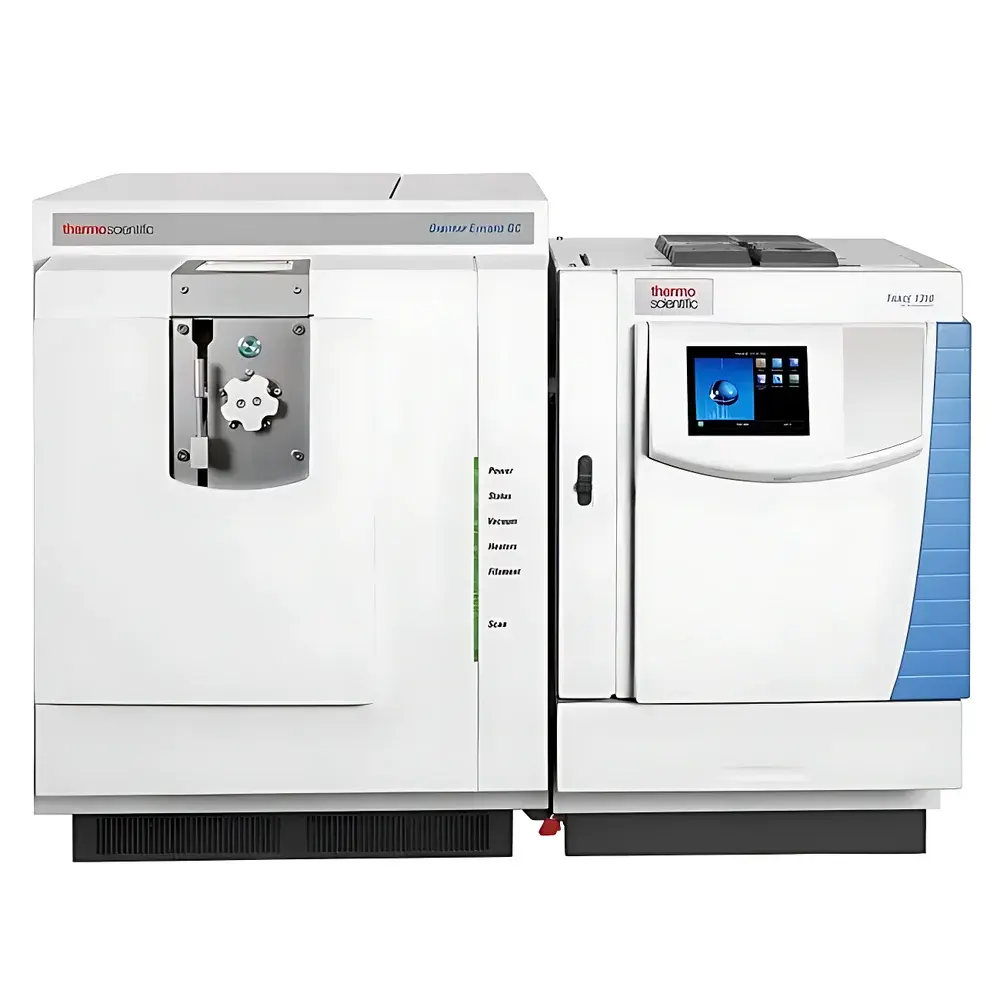
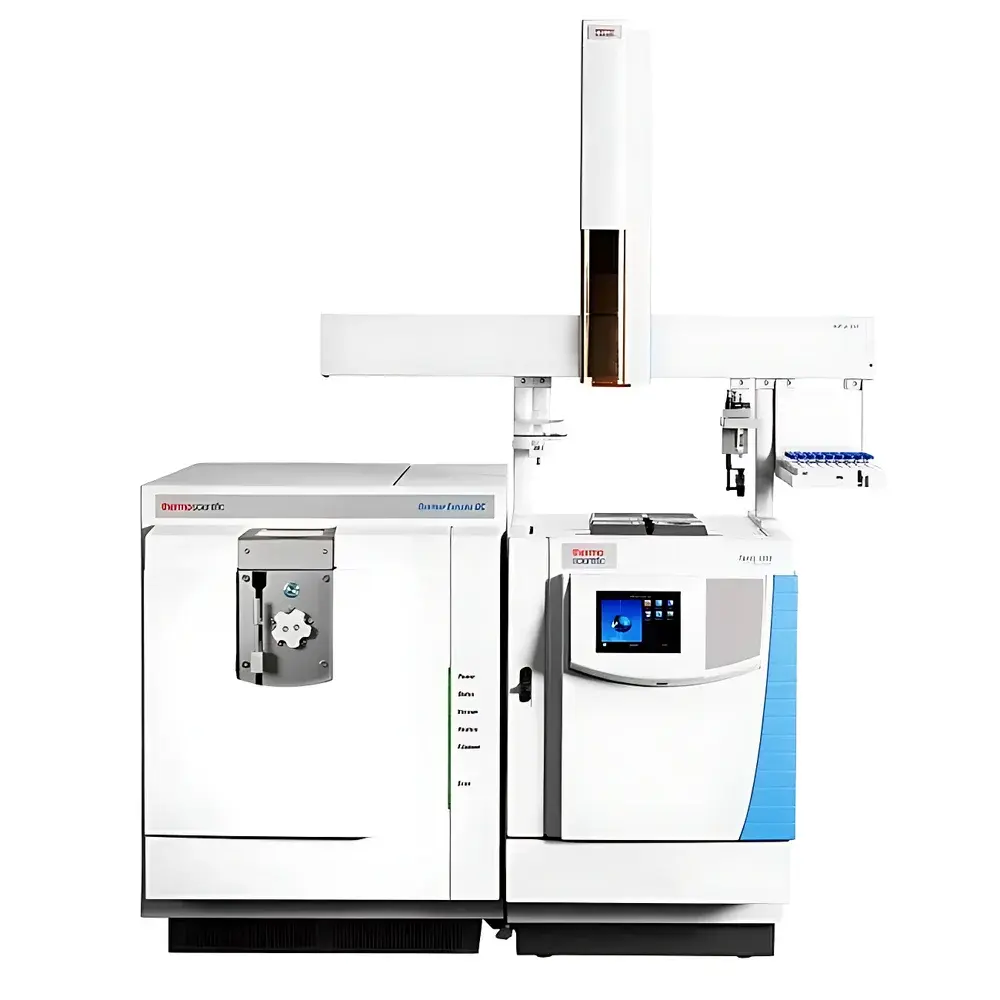
Thermo Scientific Orbitrap Exploris GC Gas Chromatography Mass Spectrometer
| Brand | Thermo Fisher |
|---|---|
| Origin | Imported |
| Manufacturer Type | Original Equipment Manufacturer (OEM) |
| Instrument Type | Orbitrap Mass Spectrometer |
| GC-MS Configuration | Conventional Gas Chromatography–Mass Spectrometry System |
| Mass Range | m/z 30–3000 |
| Resolution | Up to 30,000 FWHM at m/z 200 |
| Scan Speed | Up to 40 Hz at Resolution Setting of 7,500 (FWHM) at m/z 200 |
Overview
The Thermo Scientific Orbitrap Exploris GC is a high-performance gas chromatography mass spectrometry (GC-MS) system engineered for laboratories requiring robust, high-resolution accurate-mass (HRAM) analysis across diverse application domains—from environmental monitoring and food safety screening to forensic toxicology and pharmaceutical impurity profiling. At its core, the system integrates a dedicated GC front-end with a compact, high-field Orbitrap mass analyzer operating on electrostatic ion trapping principles. Unlike quadrupole or time-of-flight (TOF) platforms, the Orbitrap delivers Fourier-transform-based mass measurement, enabling simultaneous acquisition of full-scan HRAM data without sacrificing sensitivity or duty cycle. This architecture supports both untargeted screening and targeted quantitation within a single analytical run—eliminating method duplication and reducing instrument time overhead. The system is designed for routine operation in regulated environments, with hardware and firmware built to sustain stable calibration and mass accuracy over extended periods, minimizing recalibration frequency and supporting long-term data comparability.
Key Features
- Compact, integrated GC-Orbitrap platform optimized for laboratory footprint efficiency and operational simplicity.
- Full-scan HRAM data acquisition at up to 30,000 resolution (FWHM at m/z 200), enabling confident elemental composition assignment and isobaric separation.
- Scan speed of up to 40 Hz at 7,500 resolution, ensuring sufficient spectral density for complex chromatographic peaks—even under fast-gradient or narrow-bore column conditions.
- Mass range spanning m/z 30–3000, accommodating small volatile organics, semi-volatile metabolites, and thermally labile derivatized compounds.
- Intuitive instrument control via Thermo Scientific TraceFinder™ software, featuring pre-configured method templates, automated calibration workflows, and guided maintenance alerts.
- Robust ion source design with electron ionization (EI) and optional chemical ionization (CI) capability, supporting reproducible ionization across matrix-varied samples.
Sample Compatibility & Compliance
The Orbitrap Exploris GC accommodates standard 0.25–0.53 mm ID fused-silica capillary columns and is compatible with common GC inlet configurations (split/splitless, PTV, and direct injection). It accepts derivatized and underivatized analytes—including pesticides, PAHs, PCBs, drugs of abuse, and volatile organic compounds (VOCs)—without signal suppression artifacts typical of low-resolution systems. From a regulatory standpoint, the platform supports audit-trail-enabled data acquisition, electronic signatures, and secure user-role management aligned with FDA 21 CFR Part 11 requirements. Method validation documentation, IQ/OQ/PQ protocols, and compliance-ready reporting modules are available through Thermo’s validated software suite, facilitating GLP and GMP-aligned workflows in contract research organizations (CROs) and quality control laboratories.
Software & Data Management
Data acquisition, processing, and reporting are unified under Thermo Scientific Compound Discoverer™ and TraceFinder™ software environments. Compound Discoverer enables non-targeted workflow automation—including retention time alignment, peak deconvolution, formula prediction (based on isotopic pattern fidelity and mass defect filtering), and library-independent structural annotation. TraceFinder provides validated, customizable quantitation templates compliant with ISO/IEC 17025 and ASTM D7622–19 for residual solvent analysis. All raw data files (.raw) are stored in a vendor-neutral, metadata-rich format; export options include mzML for third-party informatics integration (e.g., OpenMS, MZmine). Data integrity safeguards include automatic checksum verification, write-once-read-many (WORM) archive support, and encrypted database backups.
Applications
- Environmental analysis: Screening and confirmation of persistent organic pollutants (POPs), flame retardants, and emerging contaminants in water, soil, and air matrices.
- Food safety: Multi-residue pesticide analysis, mycotoxin detection, and adulterant identification using retrospective data mining.
- Forensics: Rapid identification of novel psychoactive substances (NPS) and metabolite mapping in biological fluids.
- Pharmaceutical development: Residual solvent profiling per ICH Q3C guidelines and genotoxic impurity characterization.
- Academic research: Metabolomic profiling of volatile and semi-volatile metabolites in plant volatiles, microbial headspace, and breath analysis studies.
FAQ
What ionization modes are supported by the Orbitrap Exploris GC?
Electron ionization (EI) is standard; chemical ionization (CI) is available as an optional configuration.
Does the system support scheduled or retention-time-locked acquisition?
Yes—TraceFinder allows retention time windowing and dynamic exclusion scheduling to optimize duty cycle during multi-analyte runs.
Is the Orbitrap mass analyzer compatible with GC temperature programming up to 350 °C?
The GC oven and transfer line are rated to 400 °C; the Orbitrap interface maintains thermal stability across standard GC temperature ramps without performance degradation.
Can legacy GC methods be migrated to the Orbitrap Exploris GC platform?
Method translation tools in TraceFinder assist in adapting existing EI-based methods, including dwell time adjustments and resolution optimization for HRAM acquisition.
How is mass calibration maintained during extended unattended operation?
The system employs internal lock-mass correction using perfluorotributylamine (PFTBA) or custom calibrants, with automated recalibration triggered by user-defined time or scan count intervals.





