
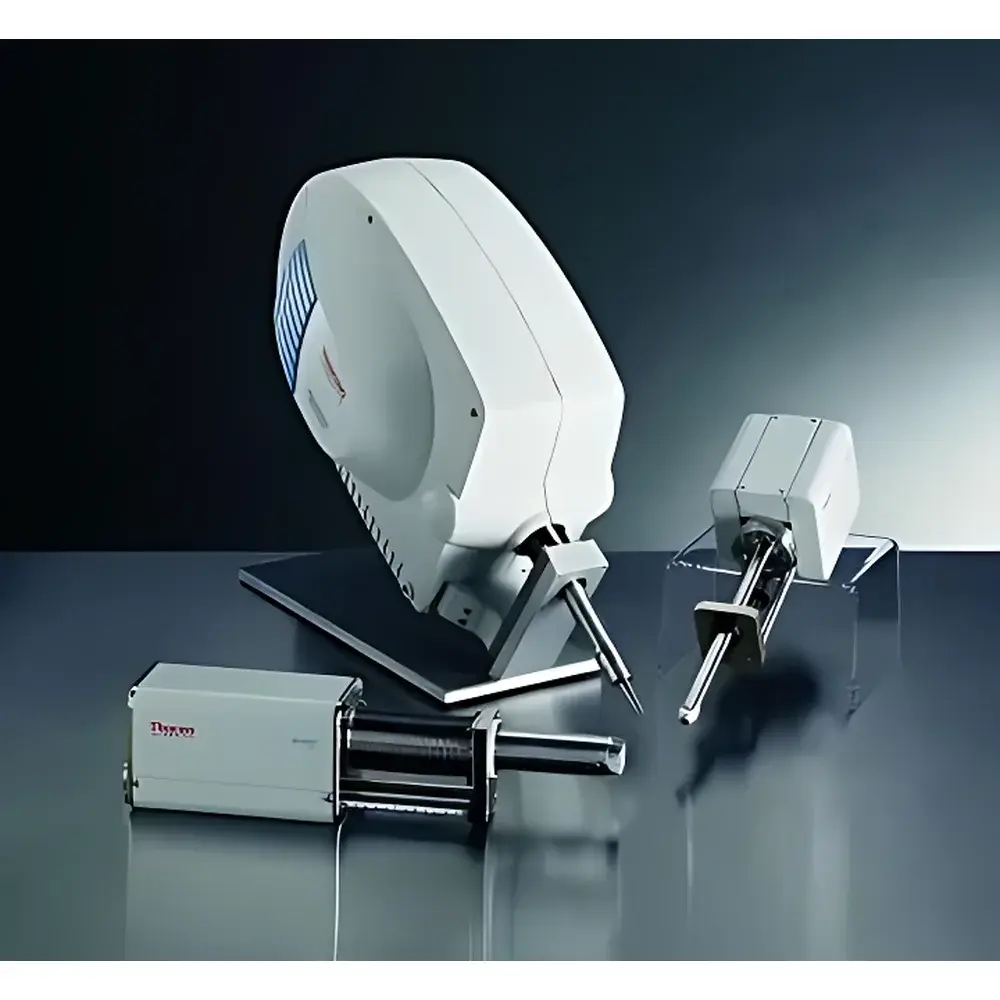
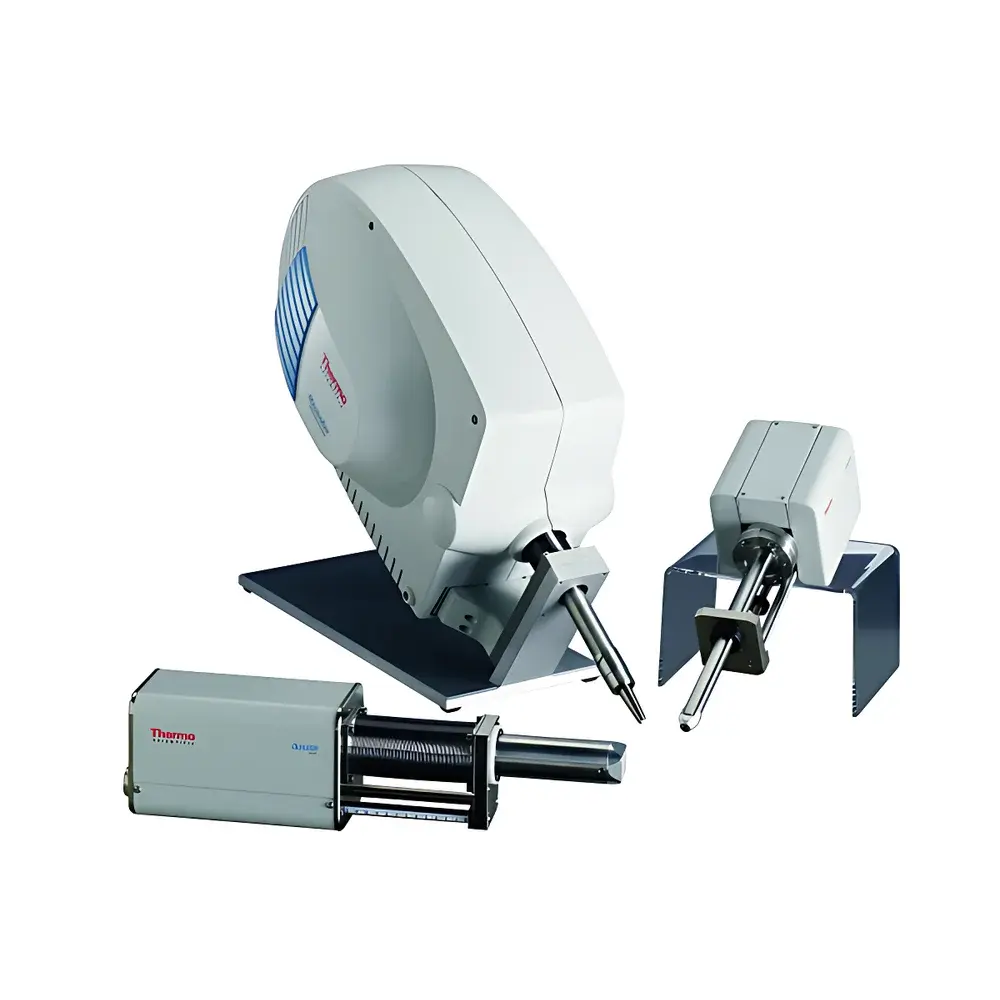
Thermo Scientific QuasOr Electron Backscatter Diffraction (EBSD) System
| Brand | Thermo Fisher Scientific |
|---|---|
| Origin | USA |
| Manufacturer Type | Original Equipment Manufacturer (OEM) |
| Import Status | Imported |
| Model | Thermo Scientific QuasOr |
| Pricing | Upon Request |
Overview
The Thermo Scientific QuasOr Electron Backscatter Diffraction (EBSD) System is a fully integrated, high-performance crystallographic characterization solution engineered for routine and advanced microstructural analysis within scanning electron microscope (SEM) platforms. Operating on the fundamental principle of electron backscatter diffraction—where a focused electron beam interacts with crystalline material to generate Kikuchi diffraction patterns—the QuasOr system enables quantitative orientation mapping, phase identification, grain boundary analysis, and strain assessment at sub-micron spatial resolution. Designed as a core module of the Thermo Scientific NORAN System 7 microanalysis platform, the QuasOr EBSD system delivers synchronized acquisition of crystallographic, compositional, and topographic data without compromising analytical throughput or positional fidelity. Its architecture supports rigorous materials science workflows in metallurgy, geology, semiconductor R&D, additive manufacturing QA, and nuclear materials characterization—where correlation between crystallographic texture and local chemistry is essential for structure–property relationship modeling.
Key Features
- Fully embedded integration within the Thermo Scientific NORAN System 7 software environment—eliminating cross-application switching and ensuring consistent parameter management across EBSD, energy-dispersive X-ray spectroscopy (EDS), and wavelength-dispersive X-ray spectroscopy (WDS).
- Guided setup wizard for EBSD calibration and acquisition configuration—reducing operator dependency and minimizing setup time while maintaining traceable, repeatable experimental conditions.
- High-speed CMOS-based EBSD detector synchronized with NORAN System 7’s full-spectrum EDS imaging—enabling concurrent acquisition of orientation maps and elemental distribution data pixel-by-pixel, without preselection of elements or emission lines.
- Single-project file architecture storing raw EBSD patterns, indexed orientation solutions, EDS/WDS spectra, acquisition metadata (beam voltage, working distance, tilt angle, detector geometry), and processing history—ensuring full auditability and reproducibility.
- One-click report generation exporting orientation maps, phase distributions, grain statistics, and compositional overlays directly to editable Microsoft Word documents or printer-ready PDFs.
- Offline analysis capability via licensed NORAN System 7 software installations—allowing post-acquisition indexing refinement, misorientation analysis, kernel average misorientation (KAM) mapping, and texture pole figure computation independent of SEM instrument time.
Sample Compatibility & Compliance
The QuasOr EBSD system is compatible with standard SEM-compatible bulk specimens—including polished metallographic sections, ion-milled thin films, ceramic cross-sections, and geological thin sections—provided they meet typical EBSD surface quality requirements (root-mean-square roughness < 5 nm, minimal charging, and adequate conductivity or carbon/metal coating). It supports automated stage navigation and region-of-interest (ROI) stitching for large-area orientation mapping. From a regulatory standpoint, data integrity and workflow traceability align with GLP and GMP principles; project files retain complete provenance metadata required for internal quality audits. While not FDA-cleared as a medical device, its data handling framework supports compliance with 21 CFR Part 11 when deployed in regulated environments using validated NORAN System 7 configurations and controlled user access protocols.
Software & Data Management
The QuasOr system operates exclusively through the Thermo Scientific NORAN System 7 microanalysis software suite—a unified interface for hardware control, real-time visualization, and quantitative post-processing. All acquired datasets—including pattern indexing results (e.g., confidence index, fit quality), grain reconstruction outputs (grain size, aspect ratio, boundary character), and correlated EDS/WDS quantification—are stored in a proprietary but exportable binary project format (.nsp). ASCII exports (CSV, TXT) are available for orientation matrices, Euler angles, and elemental concentrations, facilitating interoperability with third-party tools such as MTEX, Dream.3D, or Python-based materials informatics pipelines. Version-controlled software updates and documented change logs support long-term method validation and laboratory accreditation (e.g., ISO/IEC 17025).
Applications
- Quantitative texture analysis in rolled aluminum alloys and titanium sheet for aerospace component certification.
- Grain boundary engineering studies in nickel-based superalloys subjected to thermomechanical processing.
- Phase transformation mapping in heat-treated steels, including martensite/austenite/ferrite discrimination and retained austenite quantification.
- Misorientation gradient analysis in additively manufactured Inconel 718 to assess recrystallization behavior and residual stress accumulation.
- Crystallographic preferred orientation (CPO) characterization in metamorphic rocks for tectonic strain interpretation.
- Defect density estimation in silicon wafers and compound semiconductors via dislocation density mapping derived from high-resolution EBSD.
FAQ
Is the QuasOr EBSD system compatible with non-Thermo SEMs?
Yes—QuasOr hardware and software can be adapted to select third-party SEM platforms via OEM integration agreements; however, full synchronization with EDS/WDS and NORAN System 7 functionality requires native Thermo instrumentation.
What level of training is required to achieve reliable indexing accuracy?
Operators typically attain proficiency in routine orientation mapping within two days of hands-on training; advanced applications (e.g., HR-EBSD, pattern deconvolution) require additional specialist instruction and method validation.
Can QuasOr data be used for finite element model input?
Yes—exported orientation and phase data in standard grid formats (e.g., .ang, .ctf) are directly ingestible by commercial crystal plasticity FEM solvers such as DAMASK and CPFEM.
Does the system support automated phase identification during acquisition?
Yes—integrated phase library matching with real-time confidence scoring enables on-the-fly phase discrimination across multi-phase systems, including complex intermetallics and mineral assemblages.
How is data security managed in multi-user laboratories?
NORAN System 7 supports role-based access control, encrypted project file storage, and optional integration with enterprise authentication systems (LDAP/Active Directory) to enforce data governance policies.



