
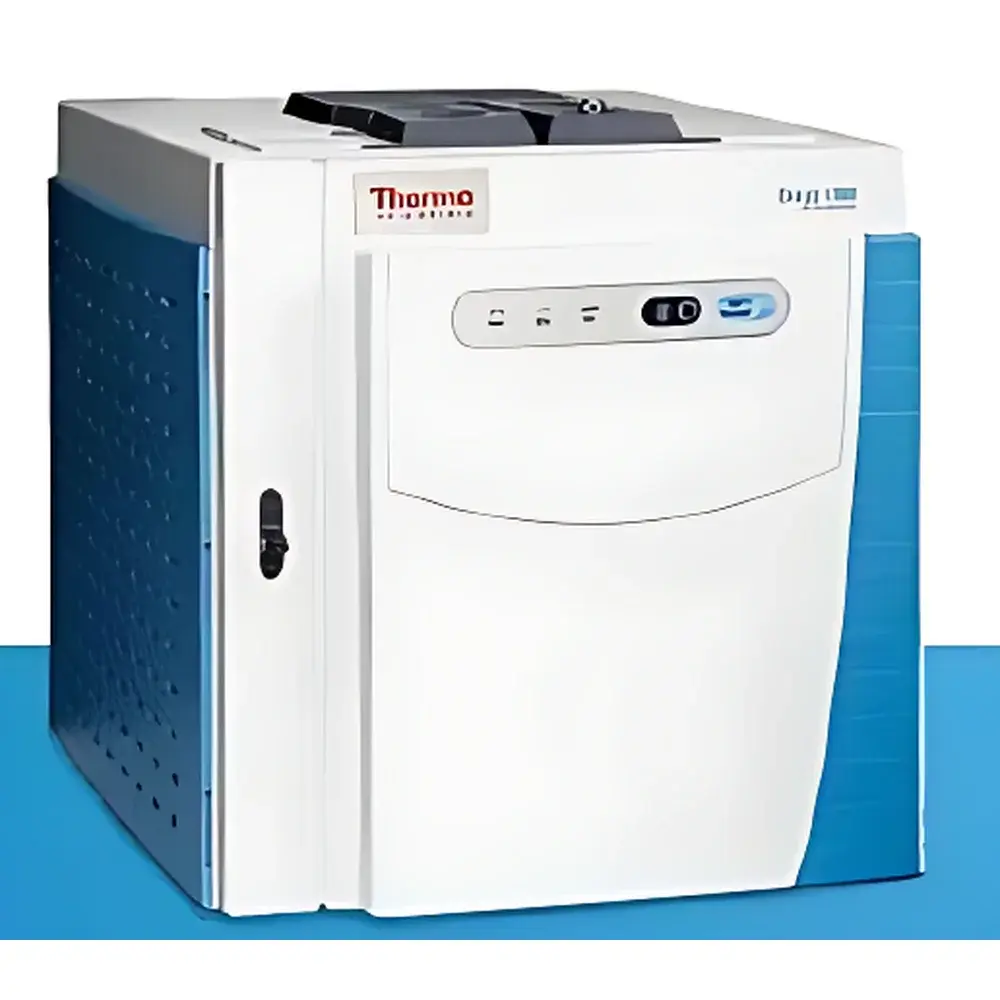
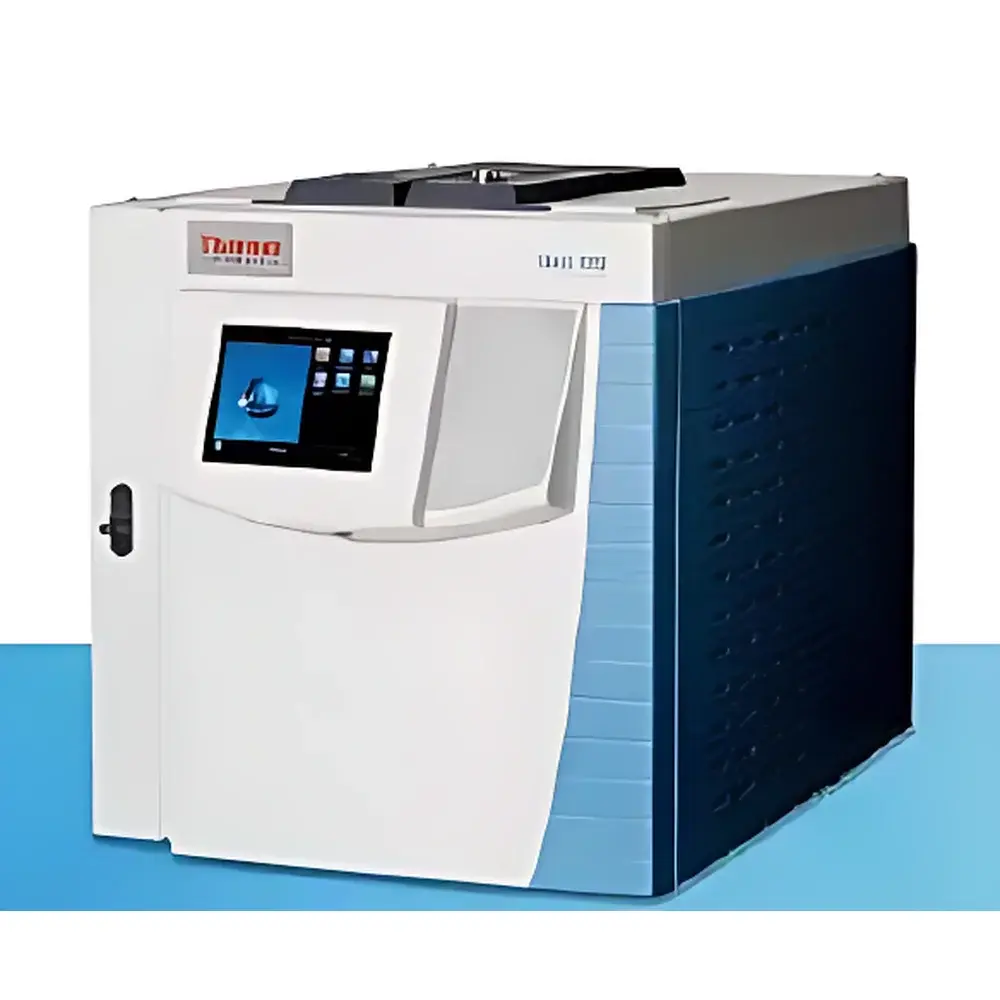
Thermo Scientific TRACE 1300 Modular Gas Chromatograph
| Brand | Thermo Fisher |
|---|---|
| Origin | Italy |
| Manufacturer Type | Original Equipment Manufacturer (OEM) |
| Origin Category | Imported |
| Model | TRACE 1300 |
| Instrument Type | Laboratory Gas Chromatograph |
| Application Scope | General-Purpose |
Overview
The Thermo Scientific™ TRACE™ 1300 Modular Gas Chromatograph is an engineered platform built on modular architecture and Couette-flow–optimized thermal management, delivering high-resolution separation performance with operational agility for routine and method-development laboratories. Designed around a plug-and-play mechanical interface standard compliant with ISO/IEC 17025-aligned mechanical interchangeability principles, the system enables tool-free swapping of inlet and detector modules in under two minutes—without recalibration or firmware reinitialization. Its core separation principle relies on temperature-programmed partitioning of volatile and semi-volatile analytes across a capillary column under precisely controlled carrier gas flow (helium, hydrogen, or nitrogen), with retention time reproducibility ≤ 0.02% RSD (n = 10) under GLP-compliant conditions. The oven’s low-thermal-mass design achieves ramp rates up to 120 °C/min and stabilizes at setpoint within ±0.1 °C, supporting fast-cycle analysis while maintaining baseline stability required for trace-level quantitation.
Key Features
- Modular inlet/detector interface compliant with IEC 61010-2-081:2002 mechanical safety specifications, enabling field-reconfigurable GC layouts without service engineer intervention
- Three standardized inlet options: Split/Splitless (SSL) with optional backflush; Programmable Temperature Vaporizing (PTV) inlet with cryo-focusing and backflush capability; and Gas Sampling Valve (GSV) interface for direct gas-phase introduction
- Detector suite including Flame Ionization Detector (FID), Thermal Conductivity Detector (TCD), Electron Capture Detector (ECD), Nitrogen Phosphorus Detector (NPD), and Flame Photometric Detector (FPD), all featuring micro-volume cell geometry and active temperature control (±0.05 °C)
- Helium conservation module integrated at the electronic pressure control (EPC) level, reducing carrier gas consumption by up to 70% without compromising resolution or retention time stability
- Oven architecture with dual-zone independent heating elements and real-time thermal mapping ensures uniform column temperature distribution across 5–450 °C operating range
- Front-panel touchscreen interface with Chromeleon™ CDS shortcut keys; full remote operation via Ethernet or USB-C, supporting simultaneous multi-user access with role-based permissions
Sample Compatibility & Compliance
The TRACE 1300 accommodates liquid, gaseous, and headspace-derived samples across matrices ranging from environmental water extracts (EPA Method 8260/8270) to pharmaceutical residual solvents (ICH Q3C) and petrochemical hydrocarbon fractions (ASTM D3606/D5186). Its inlet systems tolerate particulate-laden or high-boiling-point samples through inert deactivation treatments and selectable liner configurations. All hardware modules conform to IEC 61010-1:2001, CAN/CSA C22.2 No. 61010-1, UL 61010-1, and EN 61010-1:2001 safety standards. Electromagnetic compatibility meets CISPR 11/EN 55011 Group 1 Class A and IEC/EN 61326-1:2006 requirements. When operated with Chromeleon CDS v7.3 or later, the system supports 21 CFR Part 11-compliant audit trails, electronic signatures, and data integrity controls aligned with ALCOA+ principles.
Software & Data Management
Chromeleon Chromatography Data System (CDS) v7.3+ serves as the native acquisition and processing environment, providing method editor templates compliant with USP , EP 2.2.46, and ISO 17025 documentation requirements. The software features automated peak integration using adaptive valley-to-valley algorithms, customizable reporting templates with embedded metadata (instrument ID, operator, calibration status), and secure database storage with encrypted backups. Raw data files (.RAW) are stored in vendor-neutral format compatible with third-party spectral libraries (NIST, Wiley) and LIMS interfaces via ASTM E1384-compliant HL7 or ODBC drivers. Audit trail logs record every parameter change, sequence modification, and report export with timestamp, user ID, and IP address—retained for ≥ 36 months per internal validation protocols.
Applications
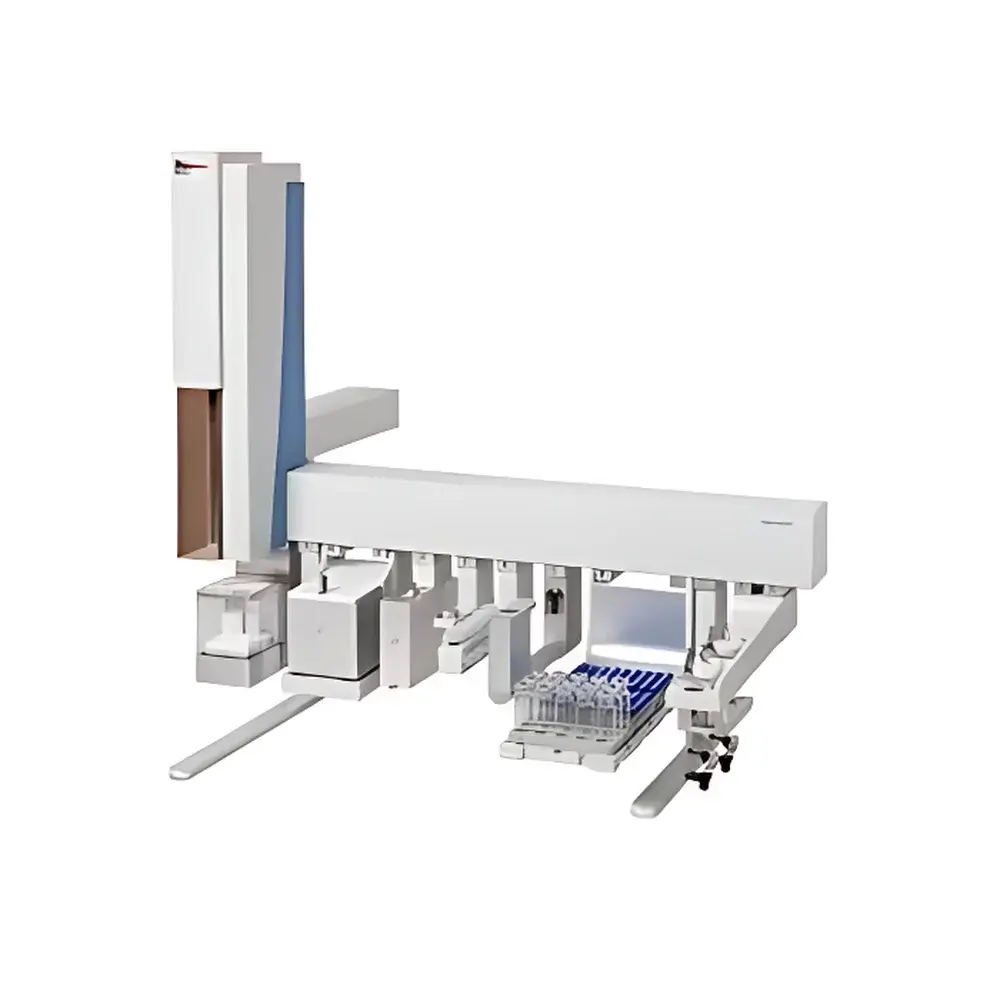
The TRACE 1300 is validated for use in environmental monitoring (VOCs in air/water per EPA TO-17/TO-15), food safety testing (pesticide residues per AOAC 2007.01), clinical toxicology (blood ethanol, volatile organics), polymer additive profiling (ISO 11341), and forensic drug analysis (SWGDAM guidelines). Its PTV inlet supports large-volume injection (up to 100 µL) for trace enrichment without pre-concentration hardware, while FID/ECD combinations enable simultaneous detection of hydrocarbons and halogenated compounds at sub-ppt levels. Integration with TriPlus RSH autosamplers allows unattended analysis of 162 samples per run, and GC-MS coupling (ISQ 7000, TSQ 9000) extends capabilities into structural identification and quantitative MRM workflows.
FAQ
Does the TRACE 1300 support regulatory-compliant data archiving?
Yes—when paired with Chromeleon CDS v7.3+, it fulfills 21 CFR Part 11 requirements for electronic records, including immutable audit trails, role-based access control, and digital signature validation.
Can inlet and detector modules be interchanged between different TRACE 1300 systems?
Yes—all modules adhere to a common mechanical and electrical interface specification defined in Thermo Fisher Engineering Specification GC-MOD-IF-001, ensuring cross-system interoperability without recalibration.
Is hydrogen carrier gas supported with safety interlocks?
Yes—the system includes hydrogen-specific EPC firmware, auto-shutdown logic triggered by leak detection sensors, and compliance with EN 61010-2-081:2002 Annex H for flammable gas handling.
What column dimensions and phases are compatible?
Standard 0.10–0.53 mm ID fused-silica capillaries up to 60 m length; all commercially available stationary phases (e.g., DB-5ms, HP-INNOWAX, VF-WAXms) are supported via universal column nut and ferrule kits.
How is method transfer accuracy ensured when switching between instruments?
TRACE 1300 implements retention time locking (RTL) technology calibrated against NIST SRM 1648a, enabling ±0.02 min retention time reproducibility across instruments within the same model family.





