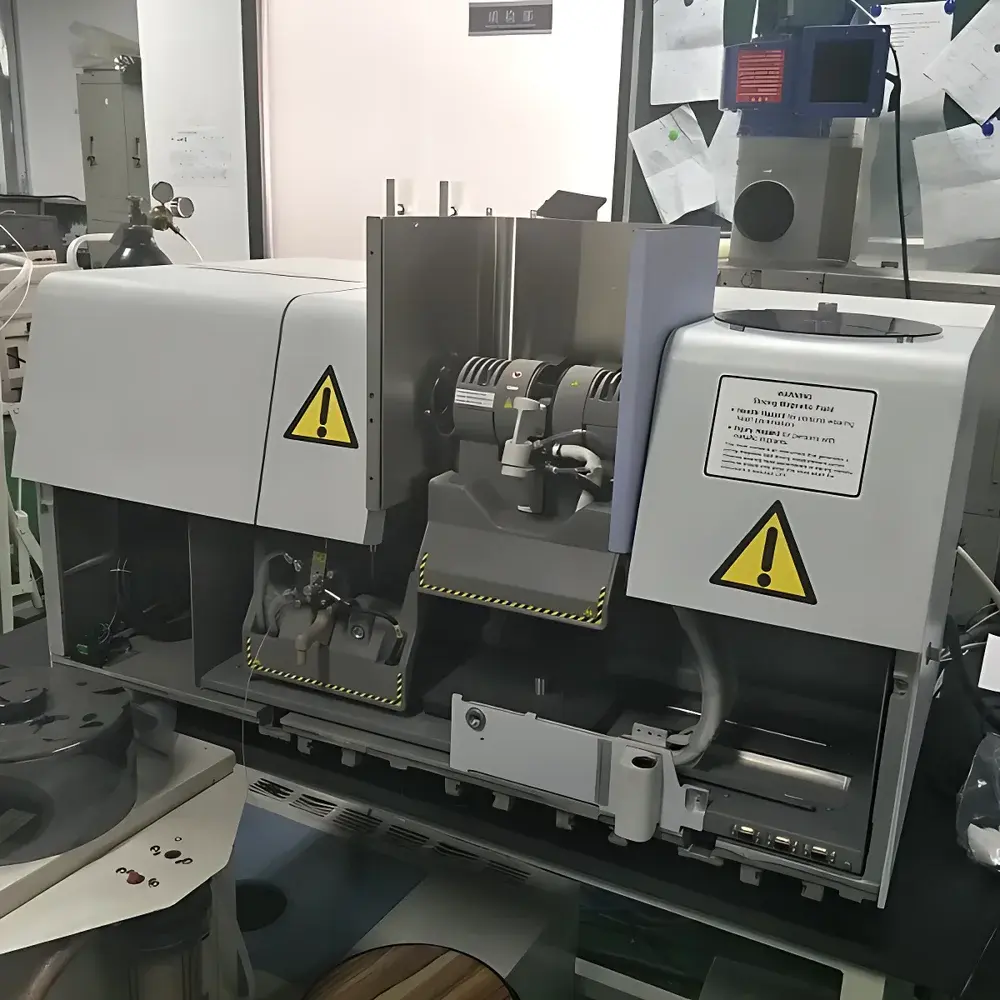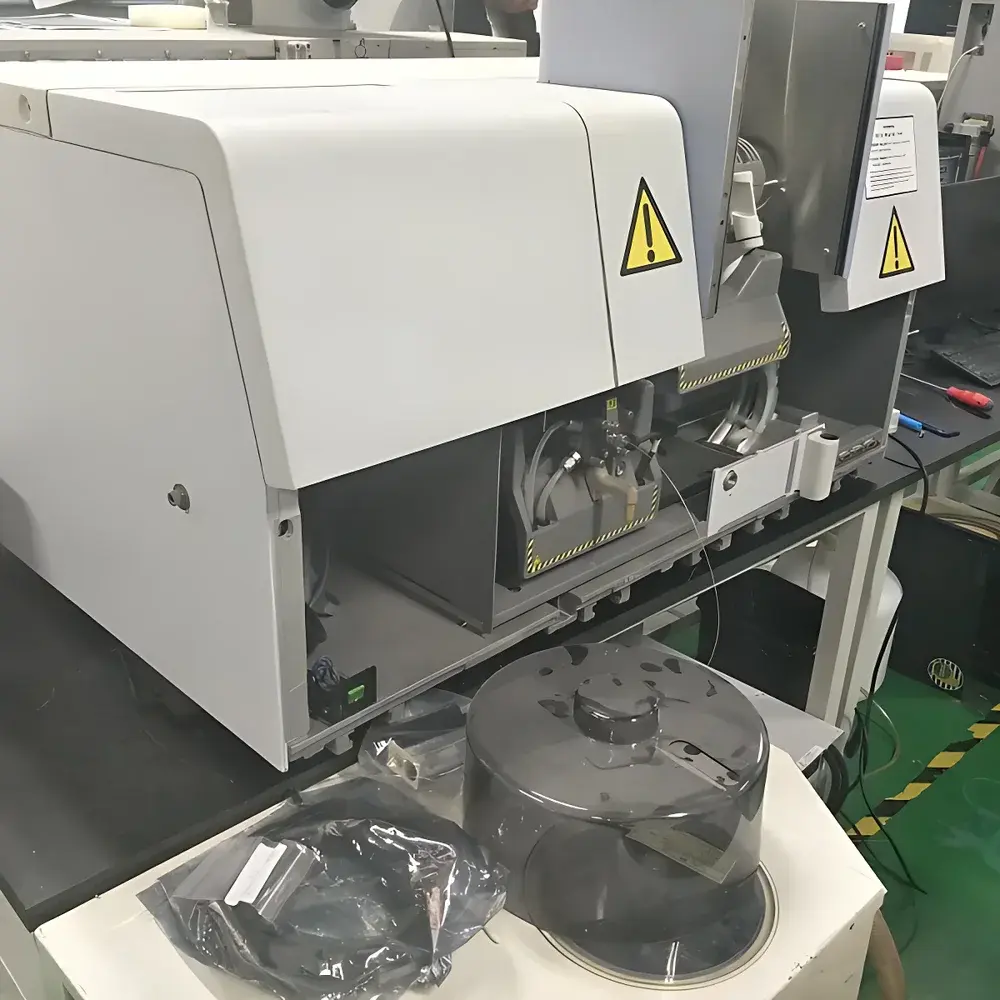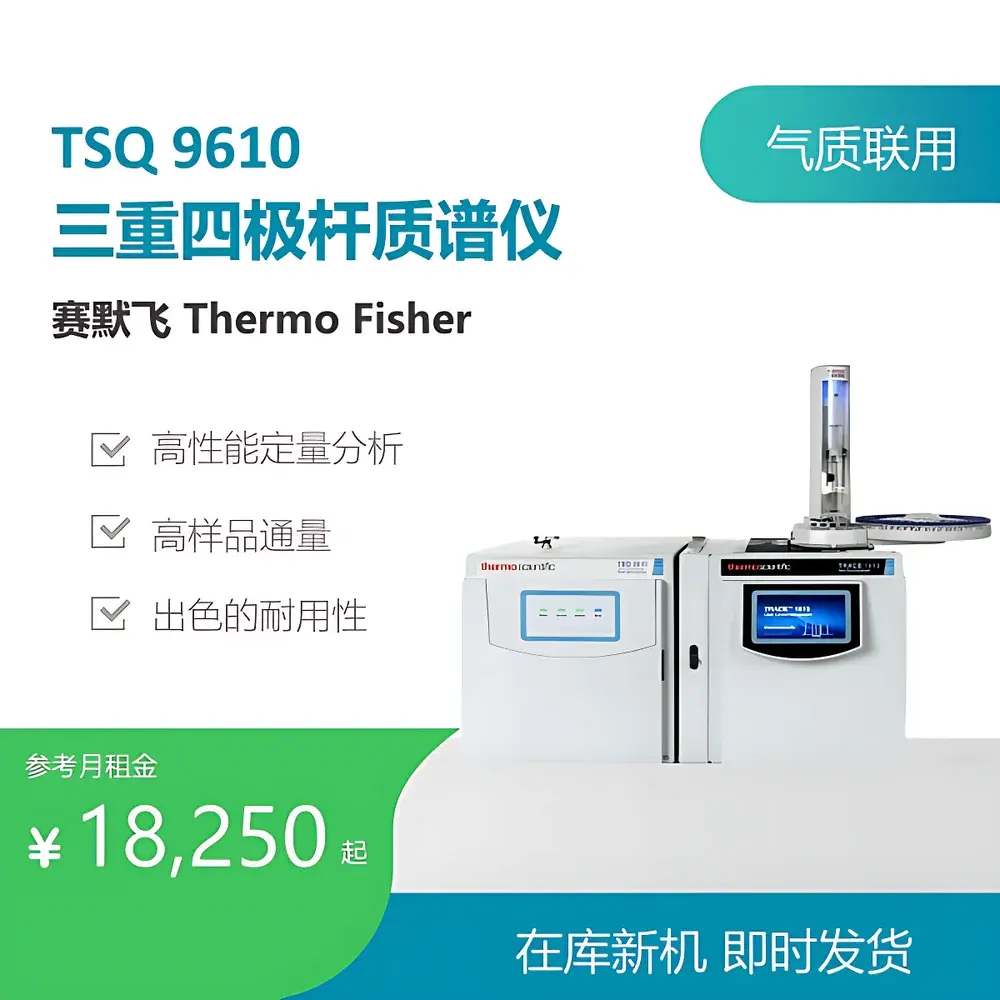
Thermo Scientific TSQ 9610 Triple Quadrupole GC-MS/MS System (Rental Unit)
| Brand | Thermo Fisher |
|---|---|
| Origin | USA |
| Manufacturer Type | Authorized Distributor |
| Origin Category | Imported |
| Model | TSQ 9610 |
| Pricing | Available Upon Request |
Overview
The Thermo Scientific TSQ 9610 Triple Quadrupole Gas Chromatography–Tandem Mass Spectrometry (GC-MS/MS) system is engineered for high-throughput, regulatory-grade quantitative analysis in environmental, clinical toxicology, food safety, and pharmaceutical laboratories. Operating on the principle of tandem mass spectrometry—where precursor ions are selected in Q1, fragmented in the collision cell (Q2), and product ions are detected in Q3—the TSQ 9610 delivers exceptional selectivity, sensitivity, and reproducibility in complex matrix analysis. Its core architecture integrates a robust Trace 1600 Gas Chromatograph with an ExtractaBrite ion source and a 240 L/s turbo molecular pump, enabling stable electron ionization (EI) and chemical ionization (CI) performance without vacuum interruption during routine maintenance. Designed specifically for rental deployment, this configuration supports rapid instrument commissioning, minimal operator training overhead, and seamless integration into existing laboratory workflows under GLP, ISO/IEC 17025, and FDA 21 CFR Part 11–compliant environments.
Key Features
- NeverVent™ Technology: Enables GC column trimming, ion source cleaning, and detector replacement without breaking high-vacuum conditions—reducing downtime by up to 60% compared to conventional triple quad systems.
- ExtractaBrite Ion Source: Optimized for long-term stability and high signal-to-noise ratio across diverse analyte classes, including polar, thermally labile, and low-abundance compounds.
- Extended Linear Dynamic Range (>5 orders of magnitude): Supports simultaneous quantitation of trace-level contaminants and high-concentration analytes within a single injection—critical for multi-residue methods per EU SANTE/11312/2021 or EPA Method 1694.
- SmartStatus™ Instrument Monitoring: Embedded diagnostics within Chromeleon Chromatography Data System (CDS) provide real-time status alerts for vacuum integrity, filament life, detector gain, and consumable usage—enabling predictive maintenance scheduling.
- SRM Scan Optimization: Accelerated dwell time switching and intelligent duty cycle management allow >1,000 SRM transitions per run at sub-millisecond dwell times without sacrificing sensitivity or precision.
- Rental-Ready Configuration: Pre-installed and factory-validated with Trace 1600 GC, autosampler, TG-5MS column (30 m × 0.25 mm), and full software licensing—including method templates compliant with USP <1225>, ICH Q2(R2), and AOAC Official Methods®.
Sample Compatibility & Compliance
The TSQ 9610 accommodates liquid, solid, and gaseous samples following standard extraction protocols (e.g., QuEChERS, SPE, headspace). It supports derivatized and underivatized analytes across pesticide residues, mycotoxins, veterinary drugs, environmental pollutants (PCBs, PAHs, dioxins), and small-molecule biomarkers. All hardware and software components meet CE marking requirements and comply with ISO 9001-certified manufacturing standards. Data acquisition and audit trails conform to FDA 21 CFR Part 11, EU Annex 11, and GLP/GMP documentation requirements when deployed with Chromeleon CDS v7.3 or later. Full electronic records—including raw data (.raw), processed results (.cdf), and instrument logs—are encrypted, timestamped, and exportable in vendor-neutral formats (mzML, ANDI-NetCDF) for third-party review.
Software & Data Management
Chromeleon CDS serves as the unified platform for instrument control, sequence management, peak integration, calibration curve generation, and report generation. The system includes built-in compliance tools: electronic signatures, role-based access control, change history logging, and automated backup to network-attached storage (NAS) or cloud repositories via SFTP. Customizable dashboards display real-time metrics—such as % RSD across QC injections, carryover rates, and system suitability parameters—for continuous performance verification. Batch reprocessing, retrospective data mining, and cross-method comparison are supported without reacquisition. Optional add-ons include Compound Discoverer for semi-targeted screening and ToxID for forensic toxicology libraries.
Applications
- Regulatory residue testing in food and feed per USDA-FSIS, EFSA, and MRL enforcement programs.
- High-sensitivity quantification of illicit drugs and metabolites in urine, blood, and oral fluid per SAMHSA and CAP guidelines.
- Environmental monitoring of persistent organic pollutants (POPs) in soil, water, and air particulates (EPA Methods 8270, 1613, 1668C).
- Pharmaceutical impurity profiling and genotoxic nitrosamine detection (ICH M7) at sub-ppb levels.
- Method development and validation support for ISO 17025-accredited testing laboratories seeking scope expansion without capital expenditure.
FAQ
What is included in the rental package?
The standard rental unit comprises the TSQ 9610 mainframe with 240 L/s turbo pump, Trace 1600 GC with integrated oven and EPC modules, AS1300 autosampler, pre-installed TG-5MS column, Chromeleon CDS software with full license, power cables, and initial consumables (ion source parts, filaments, septa, liners). Installation, qualification (IQ/OQ), and basic operator training are provided onsite.
Can the rental term be extended or converted to purchase?
Yes—flexible options include short-term (1–6 months), mid-term (6–24 months), and long-term leases (24+ months) with structured buyout clauses. “Rent-to-own” agreements allow accumulated lease payments to offset final purchase price; title transfers upon full payment and successful PQ verification.
Is remote support available during the rental period?
Thermo Scientific-certified field service engineers provide 24/7 remote diagnostics, firmware updates, and troubleshooting via secure VPN. Onsite intervention is scheduled within 48 business hours for critical failures affecting regulatory reporting deadlines.
How is data security and instrument calibration maintained?
All instruments undergo annual recalibration using NIST-traceable standards prior to deployment. Data resides locally on customer-controlled servers unless explicit cloud hosting is contracted. Audit logs capture all user actions, parameter changes, and calibration events—retained for ≥2 years per internal SOPs aligned with ISO/IEC 17025 Clause 7.7.
Are method transfer services offered?
Yes—application scientists assist with method porting from legacy GC-MS/MS platforms (e.g., TSQ Quantum XLS, 8000 Series), including retention time alignment, SRM optimization, and matrix-matched calibration setup—all documented per ICH Q5E and ASTM E2655 standards.
Related Products