
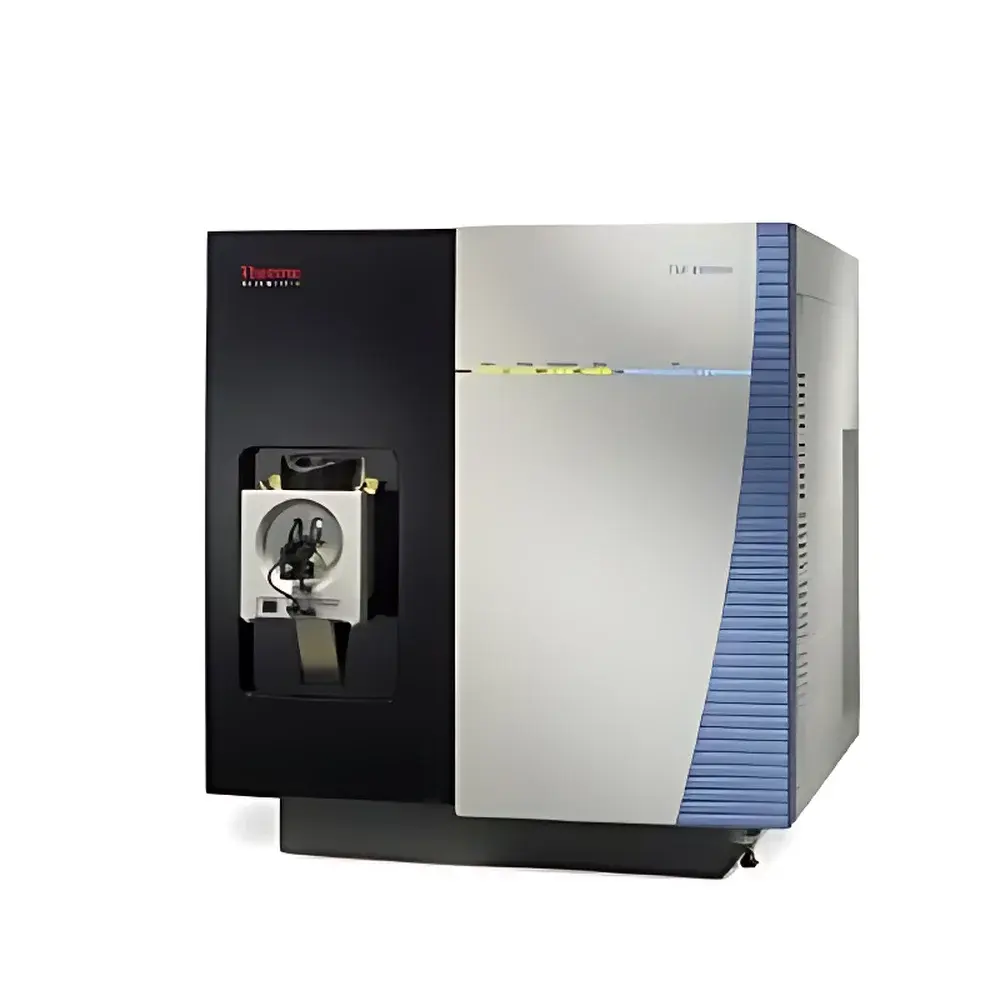
Thermo Scientific TSQ Endura Triple Quadrupole Mass Spectrometer
| Brand | Thermo Fisher |
|---|---|
| Origin | USA |
| Manufacturer Type | Original Equipment Manufacturer (OEM) |
| Origin Category | Imported |
| Model | TSQ Endura |
| Price Range | USD 260,000 – 390,000 (based on FOB US pricing and typical import duty/tax assumptions) |
| Instrument Type | Tandem Quadrupole (Triple Quadrupole) |
Overview
The Thermo Scientific TSQ Endura Triple Quadrupole Mass Spectrometer is a high-performance, research-grade LC-MS/MS system engineered for quantitative accuracy, long-term robustness, and operational simplicity in regulated and discovery laboratories. Built upon Thermo Fisher’s proven triple quadrupole architecture, the TSQ Endura implements a fully re-engineered ion path—from source to detector—optimized for maximum ion transmission efficiency, minimal neutral interference, and exceptional signal-to-noise ratio. Its core measurement principle relies on electrospray ionization (ESI) or atmospheric pressure chemical ionization (APCI), followed by mass selection in Q1, collision-induced dissociation (CID) in a pressurized curved collision cell (Q2), and product-ion analysis in Q3. This tandem mass spectrometry (MS/MS) workflow enables highly selective multiple reaction monitoring (MRM), enabling trace-level quantitation of small molecules, peptides, metabolites, and contaminants across complex matrices—including plasma, urine, environmental extracts, and food homogenates—with high reproducibility and low inter-run variability.
Key Features
- Easy Max NG Ion Source: Integrated heated ESI/APCI dual-mode source with tool-free spray needle exchange; auto-sensing source identification and mode-switching; tilted spray geometry with XYZ-adjustable positioning; asymmetric venting surface beneath ion transfer optics for rapid solvent vapor removal; continuous nitrogen purge at exhaust port to suppress chemical noise and extend maintenance intervals.
- High-Efficiency RF Lens Ion Optics: Monolithic stainless-steel RF lens assembly providing >95% ion transmission from transfer tube to Q1; modular design enables rapid disassembly and in-lab cleaning without realignment.
- Bent Linear Ion Path with Neutral Beam Trap: Curved ion guide geometry combined with an electrostatic neutral particle barrier eliminates neutral species prior to Q1 entry—reducing background noise, minimizing contamination accumulation, and preserving mass spectral fidelity over extended operation.
- Patented HyperQuad Dual-Radius Quadrupole (Q1 & Q3): Precision-machined hyperbolic rod sets delivering 5–2000 m/z mass range; asymmetric RF voltage profile applied across rods enhances ion confinement and axial transmission efficiency across the full mass range.
- Active Curved Collision Cell (Q2): Bent geometry with segmented DC bias fields accelerates precursor ions through argon-filled CID region; enables controlled fragmentation kinetics, improved fragment ion transmission, and enhanced MRM sensitivity—particularly for labile or low-yield transitions.
- Dual-Mode Discrete Dynode Detector: Electron-multiplier-based detection system operating in analog and pulse-counting modes; automatic gain switching ensures linear dynamic range exceeding 6 orders of magnitude while maintaining sub-femtogram detection limits.
Sample Compatibility & Compliance
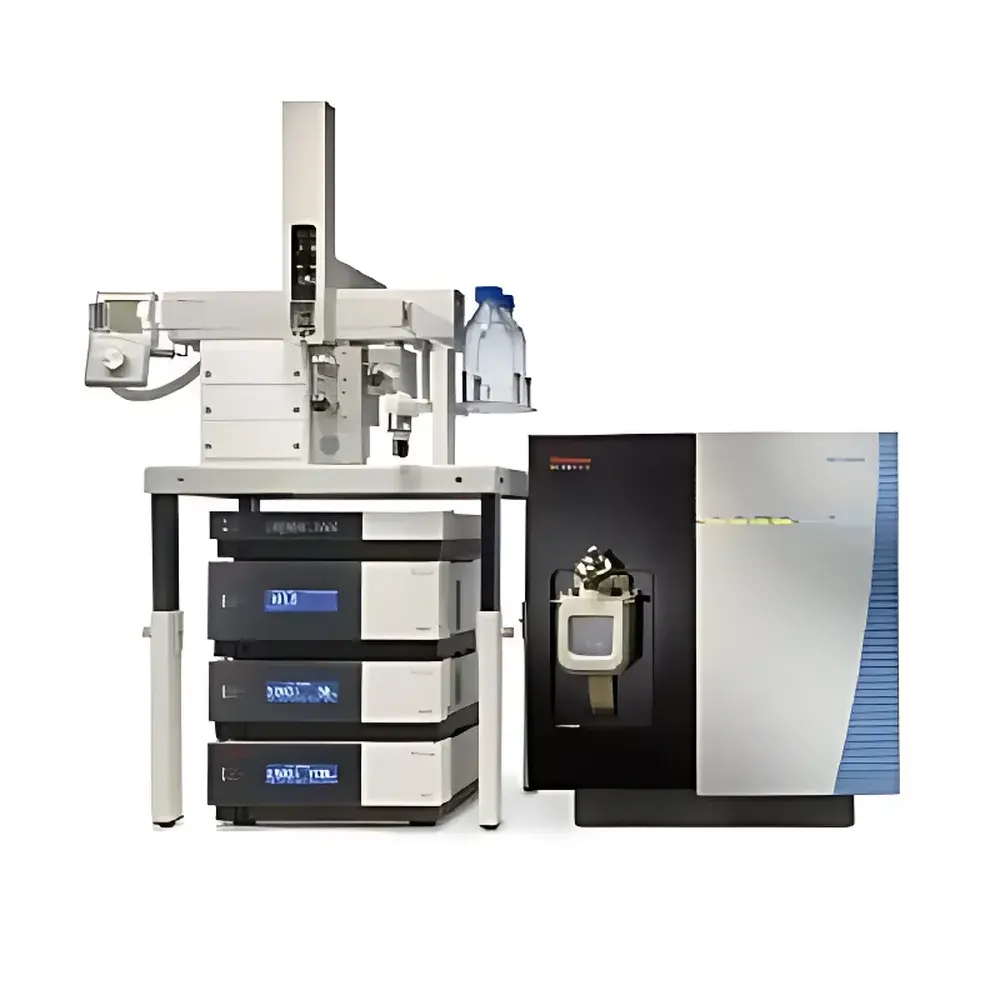
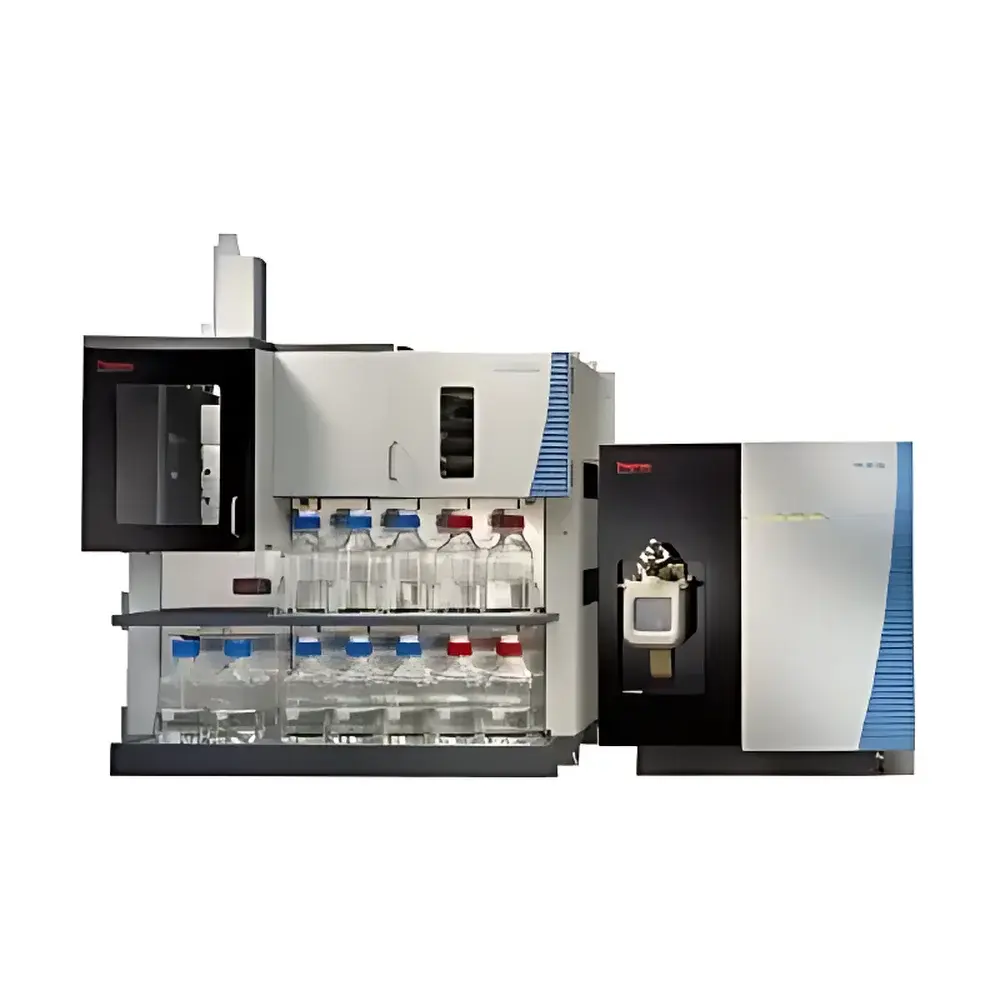
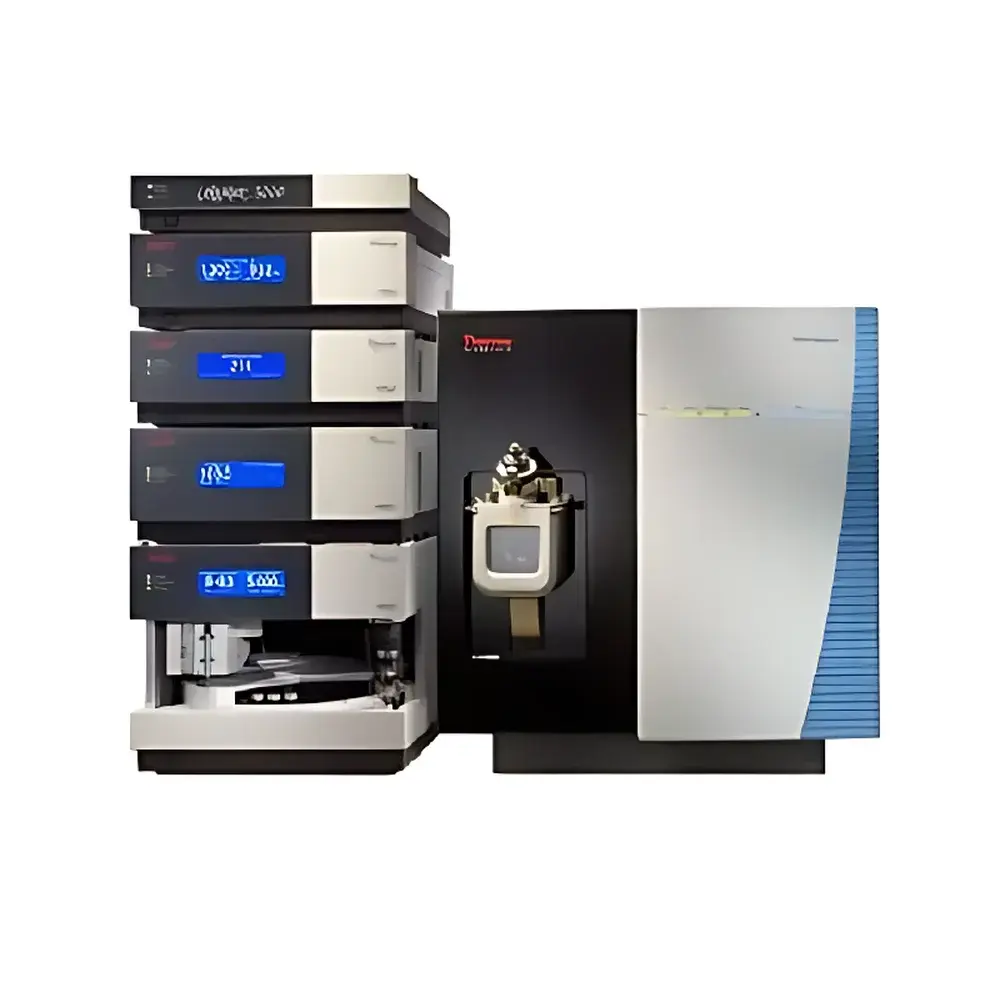
The TSQ Endura supports direct coupling with all major UHPLC and HPLC platforms, including Thermo Scientific Vanquish, UltiMate 3000, and third-party systems via standard ESI/APCI interfaces. It accommodates aqueous, organic, and mixed-solvent mobile phases, as well as volatile and non-volatile additives (e.g., formic acid, ammonium acetate, TFA). The instrument meets key regulatory requirements for GLP, GMP, and CLIA environments: full audit trail capability per FDA 21 CFR Part 11; electronic signature support; method version control; raw data immutability; and IQ/OQ/PQ documentation templates aligned with ASTM E2500 and ISO/IEC 17025 guidelines. All firmware and software updates are validated per Thermo Fisher’s Quality Management System (QMS), certified to ISO 9001:2015.
Software & Data Management
Controlled by Thermo Scientific Compound Discoverer 3.3 and TraceFinder 5.1 software suites, the TSQ Endura delivers intuitive method setup, automated calibration, real-time MRM optimization, and integrated post-acquisition processing. TraceFinder provides preconfigured workflows for environmental, clinical toxicology, food safety, and pharmaceutical applications—including built-in libraries for >10,000 compounds and customizable reporting templates compliant with LIMs export standards (ASTM E1482, HL7). Raw data files (.raw) are stored in vendor-neutral, open-format structures compatible with third-party processing tools (e.g., Skyline, MS-DIAL). All acquisition parameters, calibration logs, and user actions are timestamped and cryptographically hashed to ensure data integrity during internal audits or regulatory inspections.
Applications
The TSQ Endura is routinely deployed in high-throughput quantitative workflows requiring regulatory-grade precision: pharmacokinetic (PK) and toxicokinetic (TK) studies in preclinical development; residue analysis of veterinary drugs and pesticides in food commodities (per EU SANTE/11312/2021); endocrine disruptor screening in wastewater effluents (EPA Method 1694); therapeutic drug monitoring (TDM) of immunosuppressants and antiepileptics in clinical labs; and targeted metabolomics profiling in biomarker validation studies. Its stability under continuous 24/7 operation makes it suitable for contract research organizations (CROs) and central testing laboratories supporting global regulatory submissions to FDA, EMA, PMDA, and NMPA.
FAQ
What ionization sources are supported?
ESI and APCI modes are natively integrated into the Easy Max NG source; no hardware modification is required to switch between them.
Is the system compatible with non-Thermo LC systems?
Yes—standard ESI/APCI interface modules support connection to Waters, Agilent, Shimadzu, and other HPLC/UHPLC systems via analog/digital I/O and TTL triggering.
Does the TSQ Endura support scheduled MRM?
Yes—TraceFinder enables retention-time-based MRM windowing to maximize dwell time per transition without sacrificing cycle time.
What calibration standards are used for mass accuracy verification?
Standard calibrants include sodium formate clusters (m/z 69, 137, 195, 253, 311) and polypropylene glycol (PPG) series; automated calibration routines execute in <90 seconds.
Can raw data be exported for reprocessing in open-source tools?
Yes—.raw files are readable by ProteoWizard msConvert, OpenMS, and Skyline; metadata follows mzML 1.1 schema conventions.
Related Products





