
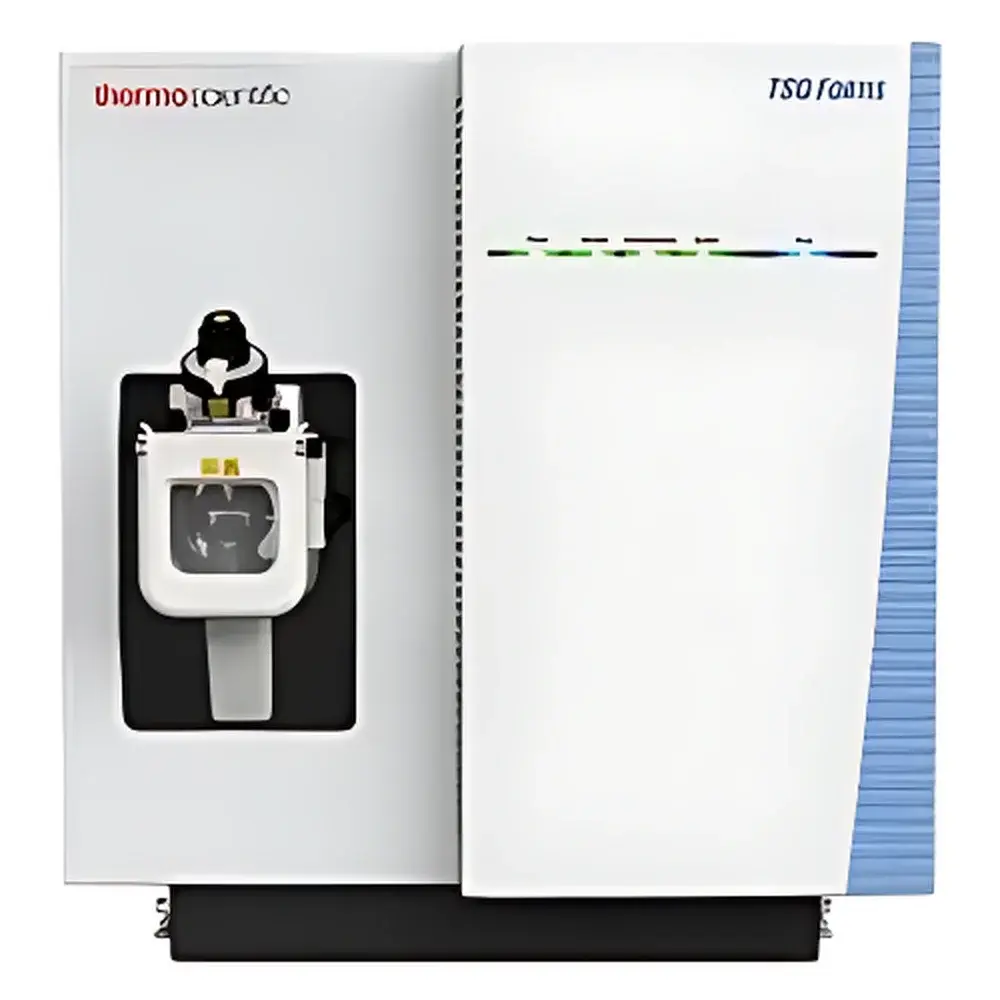
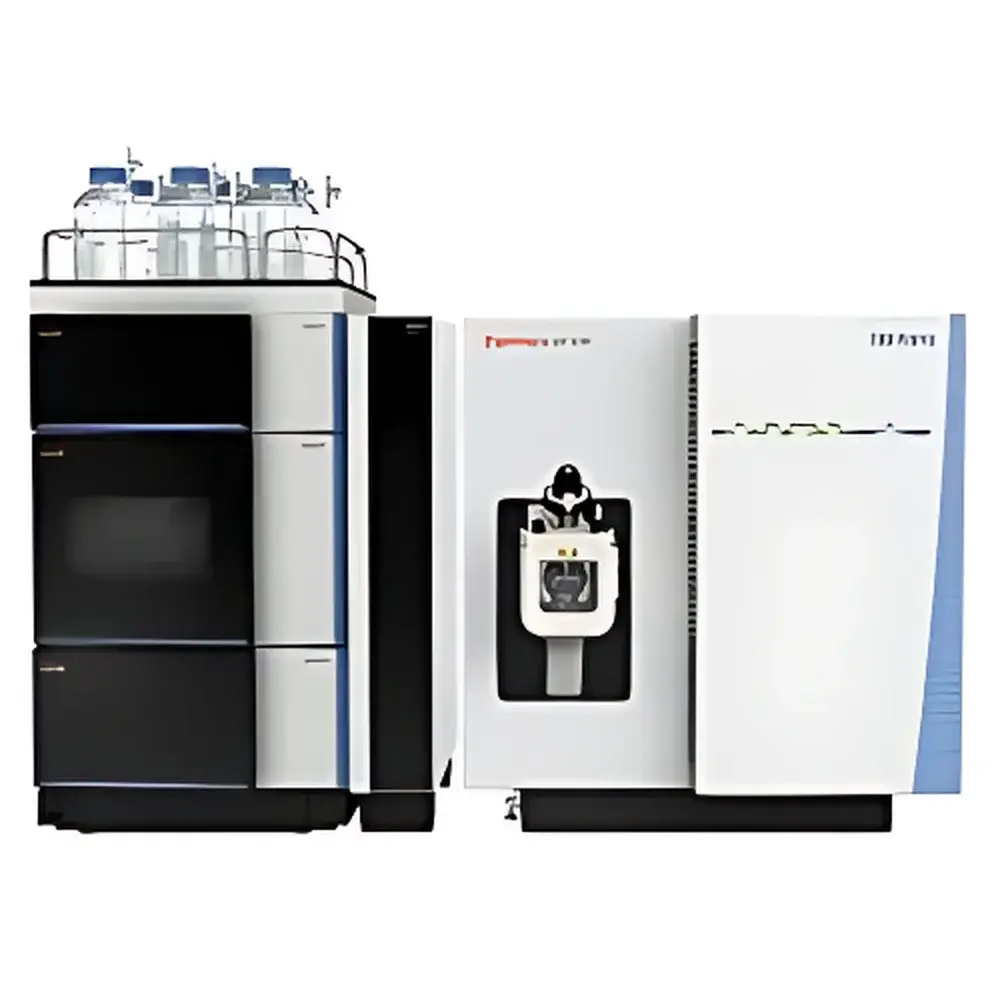
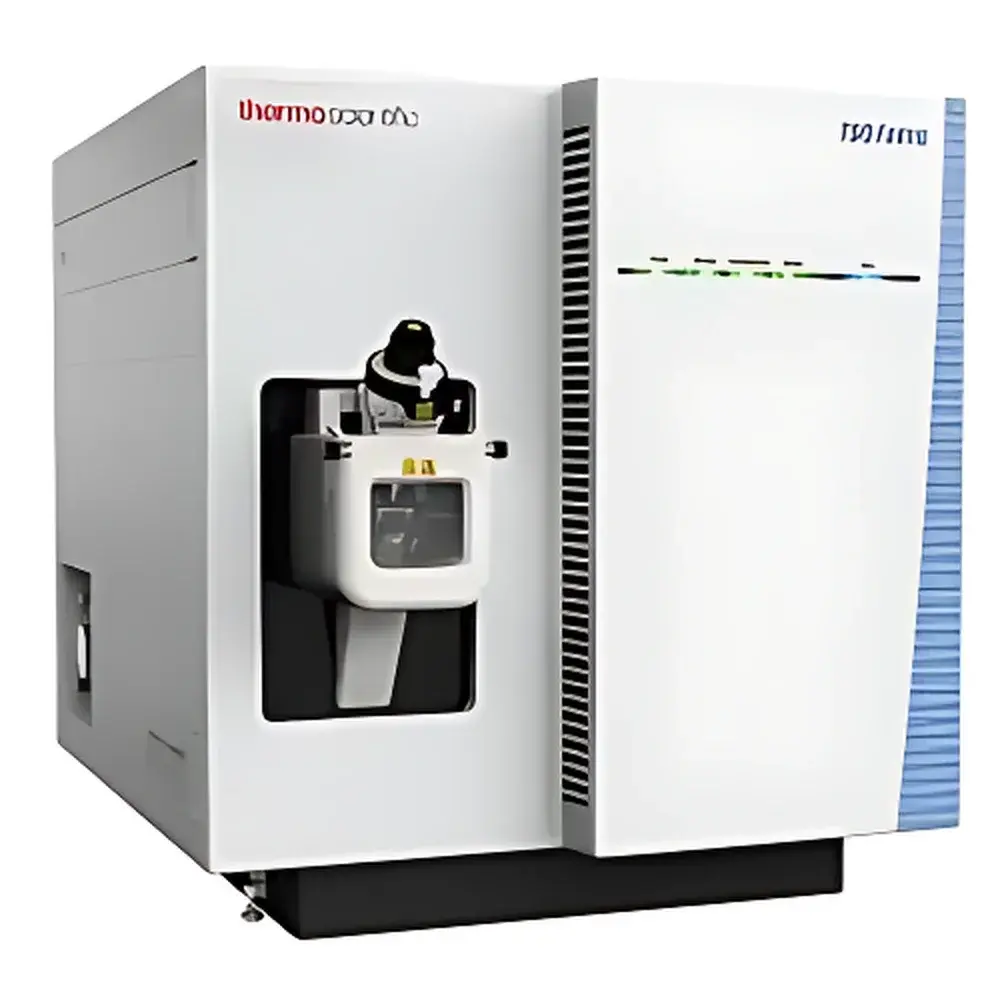
Thermo Scientific TSQ Fortis™ Triple Quadrupole Mass Spectrometer
| Brand | Thermo Fisher |
|---|---|
| Origin | USA |
| Manufacturer Type | Original Equipment Manufacturer (OEM) |
| Product Category | Imported Instrument |
| Model | TSQ Fortis™ |
| Price Range | USD 650,000 – 980,000 (FOB US port) |
| Instrument Type | Triple Quadrupole (QqQ), not Q-TOF |
Overview
The Thermo Scientific TSQ Fortis™ Triple Quadrupole Mass Spectrometer is a purpose-engineered platform for high-throughput, robust targeted quantitative analysis in regulated and non-regulated laboratories. Operating on the well-established tandem mass spectrometry (MS/MS) principle—where precursor ions are selected in Q1, fragmented in the collision cell (q2), and product ions are analyzed in Q3—the TSQ Fortis delivers exceptional sensitivity, specificity, and reproducibility for small molecules, peptides, metabolites, and pharmaceutical compounds. Its quadrupole-based architecture ensures stable mass filtering across extended duty cycles, supporting compliance-critical workflows in clinical toxicology, environmental residue testing, food safety screening, and pharmaceutical bioanalysis. Unlike time-of-flight (TOF) or hybrid Q-TOF systems—which prioritize high-resolution untargeted profiling—the TSQ Fortis is optimized for precision, linearity, and low detection limits in routine SRM (Selected Reaction Monitoring) and MRM (Multiple Reaction Monitoring) acquisition modes.
Key Features
- Triple quadrupole design with independently controlled RF/DC voltages on all three mass filters, enabling high transmission efficiency and consistent peak shape across wide dynamic ranges.
- Dual-pressure API (Atmospheric Pressure Ionization) source compatible with electrospray ionization (ESI) and atmospheric pressure chemical ionization (APCI), supporting polarity switching within a single run without signal loss.
- Advanced ion optics featuring Active Beam Guide technology to maintain ion transmission stability under variable flow rates (0.05–2.0 mL/min), ideal for UHPLC and nanoLC coupling.
- Robust vacuum architecture with dual-stage turbomolecular pumping system, minimizing downtime and ensuring long-term calibration stability over >12 months between maintenance intervals.
- Integrated hardware-based dwell time optimization algorithm that dynamically allocates cycle time across transitions, preserving quantitative accuracy even at sub-10-ms dwell times per MRM channel.
Sample Compatibility & Compliance
The TSQ Fortis accommodates diverse sample matrices—including plasma, urine, tissue homogenates, soil extracts, and fortified food digests—without requiring extensive method re-optimization. Its hardware and firmware support 21 CFR Part 11-compliant audit trails when paired with Thermo Scientific Chromeleon™ CDS or TraceFinder™ software configured in validated mode. System suitability tests (SST), instrument qualification (IQ/OQ/PQ) protocols, and electronic signature workflows align with GLP, GMP, and ISO/IEC 17025 requirements. The platform meets ASTM D7622 (pesticide residue analysis), USP (validation of compendial procedures), and ICH M10 (bioanalytical method validation) guidelines through documented performance verification packages.
Software & Data Management
TraceFinder™ 5.1 software provides an integrated environment for method development, acquisition control, automated peak integration, calibration curve fitting (linear/log-linear with weighting), and regulatory-grade reporting. All processing parameters—including retention time windows, integration algorithms, and outlier rejection criteria—are stored as immutable metadata within raw data files (.raw). Audit trail logging captures user actions, parameter changes, and report generation timestamps with tamper-evident hashing. Raw data files comply with mzML 1.1 open format standards and are fully interoperable with third-party quantitation tools (e.g., Skyline, MultiQuant™) via vendor-neutral export. Data archiving supports hierarchical storage management (HSM) and long-term retention policies compliant with FDA ALCOA+ principles.
Applications
- Clinical research: Quantification of therapeutic drugs (e.g., immunosuppressants, antiepileptics) and endogenous biomarkers (e.g., cortisol, vitamin D metabolites) in human biofluids.
- Environmental monitoring: Detection of per- and polyfluoroalkyl substances (PFAS), polycyclic aromatic hydrocarbons (PAHs), and legacy pesticides at sub-pg/mL levels in water and sediment.
- Food safety: Multi-residue analysis of veterinary drug residues (e.g., fluoroquinolones, sulfonamides) and mycotoxins (e.g., aflatoxin B1, ochratoxin A) in meat, dairy, and cereals.
- Pharmaceutical development: PK/PD studies, metabolite identification support (via MS/MS spectral libraries), and impurity profiling in stability-indicating assays.
FAQ
Is the TSQ Fortis compatible with non-Thermo LC systems?
Yes—it accepts standard analog and digital trigger signals (TTL, RS-232, Ethernet) from Agilent, Waters, Shimadzu, and other major HPLC/UHPLC platforms.
Does it support scheduled MRM acquisition?
Yes—scheduled MRM reduces cycle time by activating transitions only during expected elution windows, improving dwell time allocation and quantitative precision.
What maintenance intervals are recommended for routine operation?
Ion source cleaning every 2–4 weeks depending on matrix complexity; turbo pump inspection annually; full system calibration semiannually using certified reference standards.
Can raw data be reprocessed with updated methods after acquisition?
Yes—acquired .raw files retain full centroided and profile-mode spectra, enabling retrospective reprocessing with modified integration parameters or new analyte lists.
Is remote monitoring supported?
Yes—via Thermo Scientific Connect™ cloud service (optional subscription), enabling real-time status alerts, instrument health dashboards, and secure remote diagnostics by certified field engineers.





