
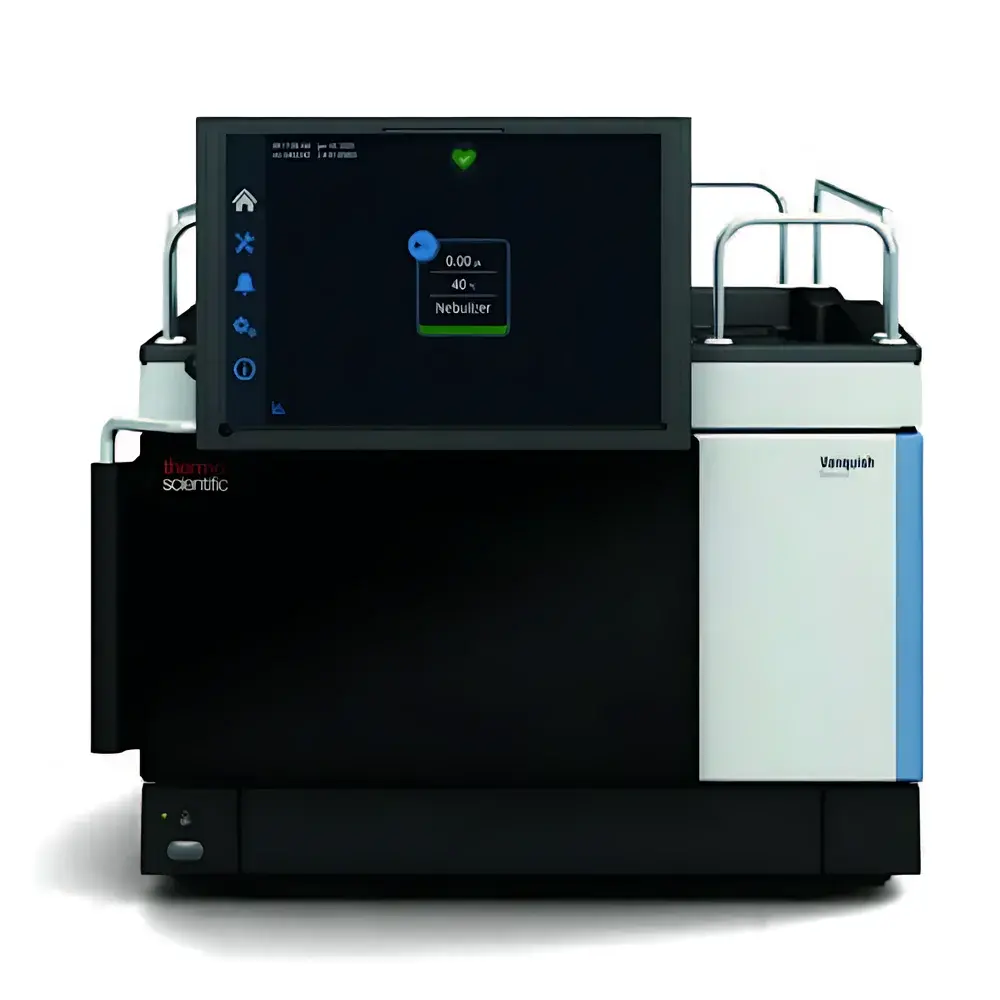
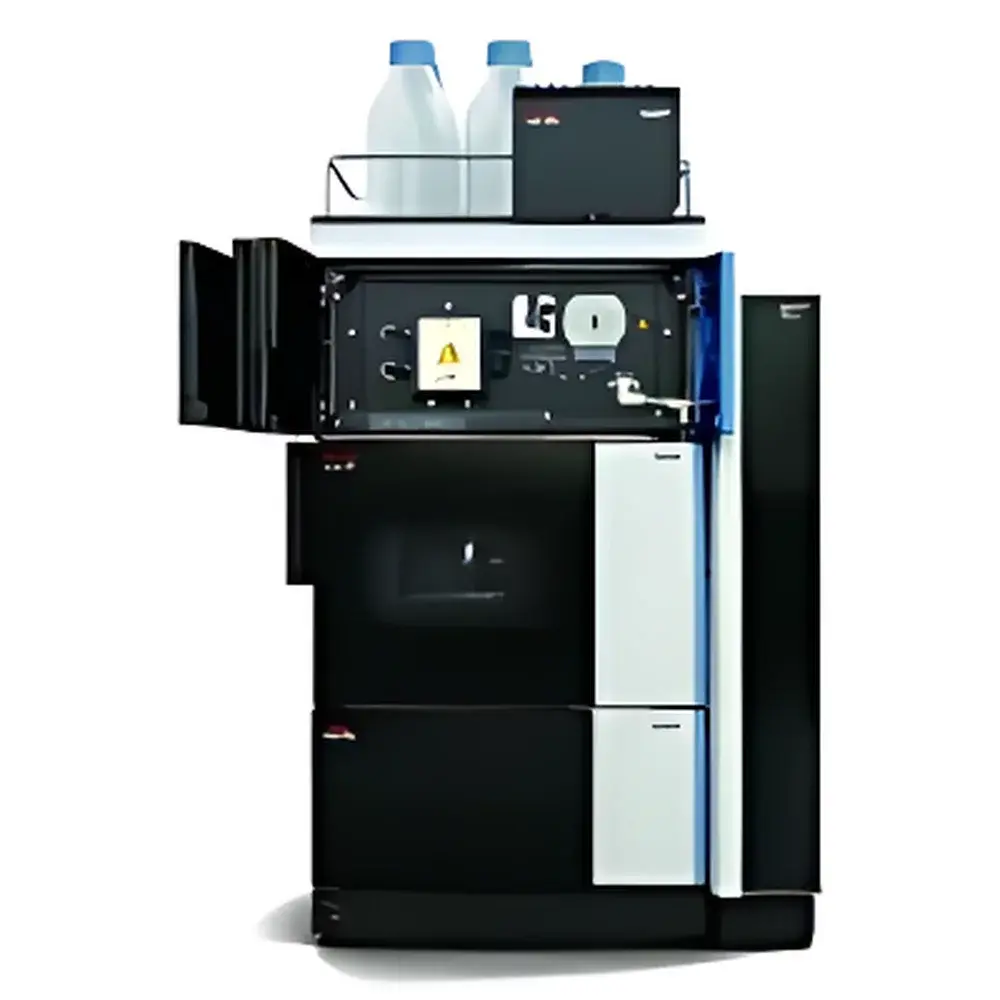
Thermo Scientific Vanquish Charged Aerosol Detector P Series
| Brand | Thermo Fisher |
|---|---|
| Origin | Germany |
| Manufacturer Type | Original Equipment Manufacturer (OEM) |
| Origin Category | Imported |
| Model | Vanquish Charged Aerosol Detector P Series |
| Instrument Type | Conventional High-Performance Liquid Chromatography (HPLC) Detector |
| Application Scope | Universal Detection |
| Flow Rate Range | 0.01–2.0 mL/min |
| Temperature Control Range | 10–100 °C |
| Data Acquisition Frequency | 200 Hz |
Overview
The Thermo Scientific Vanquish Charged Aerosol Detector (CAD) P Series is a universal, mass-sensitive detector engineered for high-performance liquid chromatography (HPLC) and ultra-high-performance liquid chromatography (UHPLC) systems. Unlike optical or ionization-based detectors—such as UV-Vis, fluorescence, or mass spectrometry—the CAD operates on the principle of aerosol charging and subsequent charge measurement. Analytes are nebulized into fine droplets, dried to form non-volatile particles, and then uniformly charged via corona discharge. The resulting particle charge is measured by a highly sensitive electrometer, generating a signal proportional to analyte mass concentration—not molar response, chromophore presence, or ionization efficiency. This physical detection mechanism enables consistent, near-uniform response across structurally diverse non-volatile and semi-volatile compounds, including pharmaceuticals, peptides, lipids, carbohydrates, polymers, and small-molecule organics lacking strong UV absorbance.
Key Features
- Universal detection capability for non-volatile and semi-volatile analytes independent of chemical structure or chromophore presence
- Mass-proportional signal response with <7.2% relative response deviation across 22 chemically heterogeneous compounds (per internal validation per ASTM D7984-16 guidelines)
- Enhanced robustness via precision-controlled evaporation temperature (10–100 °C) and integrated split-flow valve to minimize solvent load fluctuations
- High-speed data acquisition at 200 Hz, enabling accurate peak integration even for narrow UHPLC peaks
- Optimized integration with Thermo Scientific Vanquish LC platforms—including gradient compatibility, real-time system parameter monitoring via touchscreen interface, and embedded step-by-step maintenance guidance
- Dynamic range spanning four orders of magnitude and linear response over two decades—exceeding the sensitivity and dynamic performance of refractive index (RI) and evaporative light scattering detectors (ELSD)
Sample Compatibility & Compliance
The Vanquish CAD P Series supports broad sample compatibility across regulated and research environments. It detects all non-volatile and most semi-volatile compounds eluting from reversed-phase, HILIC, ion-exchange, and size-exclusion columns. Compatible mobile phases include aqueous buffers (e.g., ammonium acetate/formate), acetonitrile, methanol, isopropanol, and chlorinated solvents—provided they are fully volatile under drying conditions. The detector meets design requirements for GLP and GMP-compliant laboratories, with audit-trail-capable software (when used with Chromeleon CDS v7.3 or later) supporting 21 CFR Part 11 compliance, electronic signatures, and instrument qualification documentation per IQ/OQ/PQ protocols. It aligns with ISO/IEC 17025:2017 principles for analytical method validation and supports quantitative workflows compliant with ICH Q2(R2) and USP .
Software & Data Management
Fully integrated into Thermo Scientific Chromeleon Chromatography Data System (CDS) v7.3+, the CAD P Series delivers seamless method transfer, automated calibration, and real-time baseline correction. Raw charge-signal data is stored in open-format .cdf files, enabling third-party processing and long-term archival. The detector firmware supports scheduled diagnostics, leak detection alerts, and consumables tracking (e.g., nebulizer tip life, corona needle status). All system events—including temperature setpoint changes, flow interruptions, and voltage adjustments—are timestamped and logged within the CDS audit trail. Remote monitoring and configuration are enabled via secure HTTPS API endpoints compatible with enterprise LIMS and ELN infrastructure.
Applications
The Vanquish CAD P Series serves critical roles in pharmaceutical development (impurity profiling, excipient quantification, stability-indicating assays), biopharmaceutical characterization (intact protein analysis, glycan mapping, oligonucleotide purity assessment), food & beverage quality control (sweetener quantitation, lipid oxidation products, pesticide residues), polymer additive analysis (plasticizers, antioxidants, flame retardants), and specialty chemical R&D (surfactant mixtures, catalyst ligands, ionic liquids). Its response uniformity enables single-calibrant quantitation strategies—reducing reference standard dependency and accelerating method development where certified standards are unavailable or prohibitively expensive.
FAQ
How does the CAD differ from an ELSD in terms of sensitivity and reproducibility?
The CAD measures particle charge rather than scattered light intensity, yielding superior signal-to-noise ratio, lower baseline drift, and improved inter-day reproducibility—particularly under gradient conditions.
Can the CAD be used with aqueous-rich mobile phases?
Yes, provided the mobile phase contains ≤0.1% non-volatile additives; buffer concentrations must be minimized and volatile alternatives (e.g., ammonium bicarbonate) preferred for optimal droplet drying.
Is CAD data compliant with regulatory submissions?
When acquired and processed using validated Chromeleon CDS configurations—including electronic signatures, audit trails, and raw data integrity controls—CAD-generated reports meet FDA, EMA, and PMDA submission requirements for QC and stability studies.
What maintenance is required for sustained CAD performance?
Routine tasks include weekly nebulizer tip cleaning, quarterly corona needle inspection, and annual calibration verification using caffeine or sucrose standards per manufacturer-recommended SOPs.
Does the CAD support method transfer from legacy HPLC systems?
Yes—its standardized analog/digital output interfaces (RS-232, Ethernet, USB) and vendor-neutral data formats ensure compatibility with third-party CDS platforms and facilitate straightforward migration from existing ELSD or RI-based methods.




