
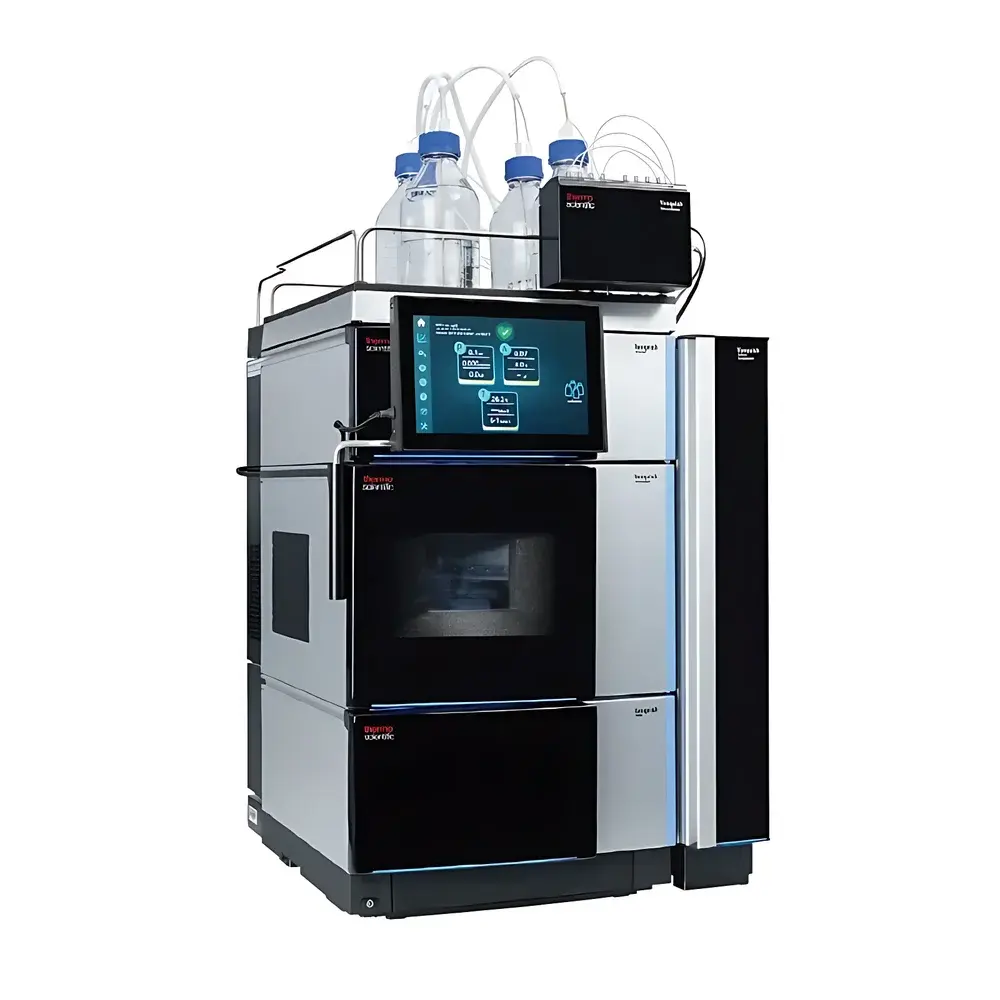
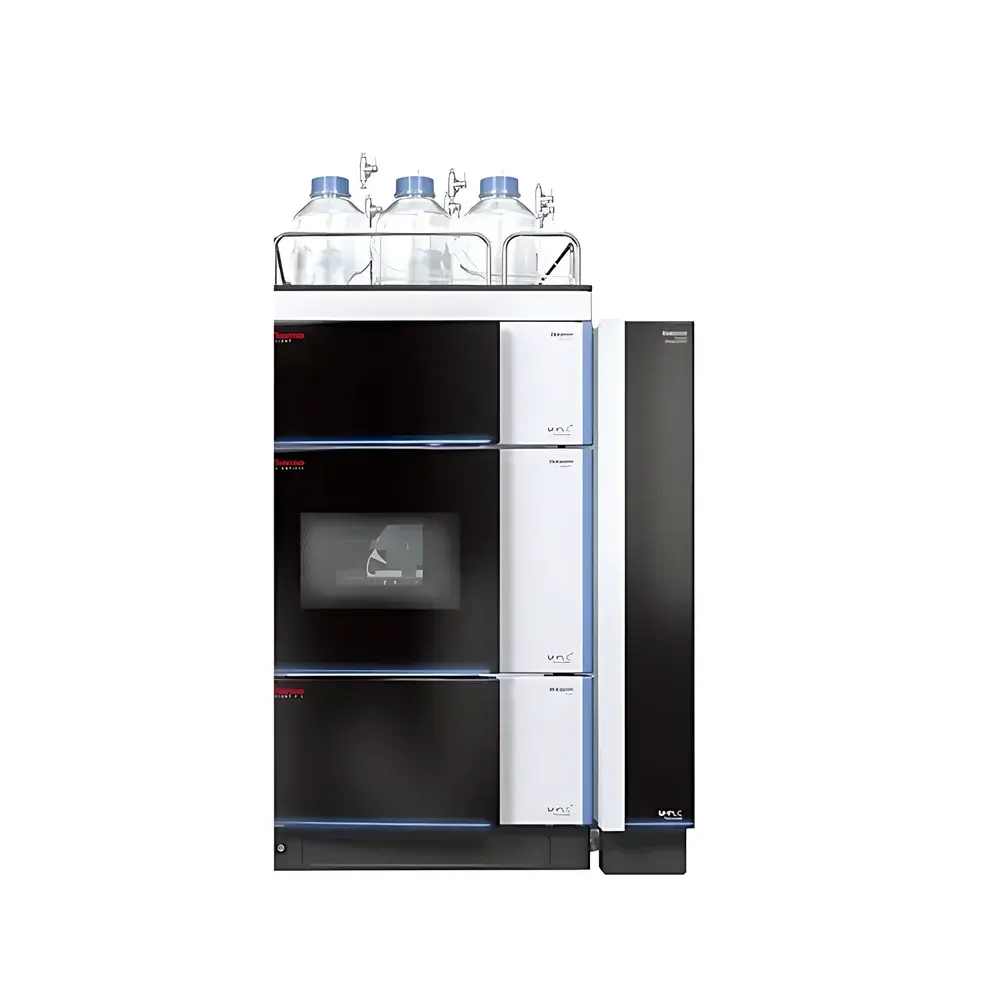
Thermo Scientific Vanquish Core Ultra-High-Performance Liquid Chromatograph
| Brand | Thermo Fisher |
|---|---|
| Origin | Germany |
| Manufacturer | Thermo Fisher Scientific |
| Product Category | Imported Instrument |
| Model | Vanquish Core |
| Instrument Type | Ultra-High-Performance Liquid Chromatograph (UHPLC) |
| Maximum Operating Pressure | 700 bar |
| Column Oven Temperature Range | 5 °C to 85 °C |
| Data Acquisition Rate | 125 Hz |
| System Configuration Options | Quaternary, Binary, and Isocratic Configurations |
Overview
The Thermo Scientific Vanquish Core Ultra-High-Performance Liquid Chromatograph (UHPLC) is an engineered platform designed for robust, routine analytical performance in regulated and non-regulated laboratory environments. Built on the proven mechanical architecture and fluidic precision of the Vanquish family, it delivers consistent separation efficiency, pressure stability, and thermal control—without requiring method revalidation when migrating from legacy HPLC systems. Its core design adheres to fundamental UHPLC principles: high-pressure gradient delivery (up to 700 bar), thermally stabilized column compartment (5–85 °C), and high-speed data acquisition (125 Hz) to resolve co-eluting peaks and support fast, reproducible chromatographic runs. Unlike conventional HPLC systems, the Vanquish Core integrates deterministic pump dynamics and low-dead-volume flow paths to minimize dwell volume variability—critical for method transfer fidelity across instruments and laboratories.
Key Features
- Three configurable system variants: Quaternary (low-pressure mixing), Binary (high-precision gradient formation), and Isocratic (cost-optimized for fixed-composition separations)
- Column oven with precise temperature control (±0.1 °C stability over 5–85 °C range), supporting retention time reproducibility and method robustness
- Integrated solvent monitoring system that autonomously detects solvent depletion, logs mobile phase composition changes, and triggers alerts—supporting ALCOA+ data integrity principles
- Real-time waste bottle level sensing to prevent overflow of hazardous solvents, enhancing lab safety and operational continuity
- Native compatibility with Chromeleon Chromatography Data System (CDS) and Empower CDS via standardized instrument drivers, enabling seamless integration into existing enterprise-wide data management workflows
- Self-diagnostic routines—including leak detection, pressure profile validation, and valve cycle verification—that reduce unplanned downtime and support preventive maintenance scheduling
Sample Compatibility & Compliance
The Vanquish Core accommodates standard 2.1–4.6 mm ID analytical columns and supports common reversed-phase, HILIC, ion-exchange, and size-exclusion chemistries. Its low dispersion flow path (<10 µL total system volume) ensures compatibility with sub-2 µm particle-packed columns while maintaining peak capacity and resolution. From a regulatory perspective, the system meets essential requirements for GxP environments: audit trail functionality (via Chromeleon 7.3+ or Empower 3+), electronic signature support, and full 21 CFR Part 11 compliance when deployed with validated configurations. It also aligns with ISO/IEC 17025 documentation expectations for instrument qualification (IQ/OQ/PQ) and supports traceable calibration using NIST-traceable reference standards. Method transfer protocols conform to ICH Q5A and USP guidelines for chromatographic system suitability.
Software & Data Management
Instrument control, sequence execution, and raw data acquisition are fully managed through Chromeleon CDS or Empower CDS—both certified for use in FDA-regulated submissions. The Vanquish Core exposes all hardware parameters (flow rate, gradient profile, oven temperature, detector settings) via open API interfaces, enabling custom scripting for automated system qualification or integration with LIMS and ELN platforms. All method files, audit trails, and raw chromatograms are stored with immutable timestamps and user attribution. Data archiving complies with long-term retention policies per internal SOPs and external mandates such as EU Annex 11. Batch processing tools allow concurrent evaluation of multiple injections against user-defined system suitability criteria—including tailing factor, resolution, and %RSD of retention time—without manual intervention.
Applications
- Pharmaceutical quality control: Release testing of APIs and finished dosage forms per USP, EP, and JP monographs
- Stability-indicating assays for forced degradation studies under ICH Q1–Q5 guidelines
- Generic drug development requiring high-fidelity method transfer between R&D, QC, and contract laboratories
- Food safety analysis: Detection and quantification of mycotoxins, pesticides, and veterinary drug residues
- Environmental monitoring: Analysis of PAHs, PCBs, and pharmaceutical contaminants in water matrices
- Academic and industrial research labs requiring reliable, low-maintenance UHPLC performance without premium-tier pricing
FAQ
Is method transfer from legacy HPLC systems supported?
Yes—the Vanquish Core includes dedicated method conversion utilities within Chromeleon that automatically adjust dwell volume compensation, gradient delay, and injection timing to preserve retention order and relative peak areas across platforms.
Does the system support GLP/GMP audit readiness out-of-the-box?
When configured with Chromeleon 7.3 or later and deployed under documented IQ/OQ protocols, the system provides full 21 CFR Part 11 compliance, including electronic signatures, audit trails with edit history, and role-based access controls.
What column oven specifications ensure method robustness?
The oven maintains ±0.1 °C temperature stability across its full 5–85 °C operating range, with ramp rates programmable from 0.1 to 99.9 °C/min—enabling precise optimization of selectivity and efficiency in temperature-sensitive separations.
How does solvent monitoring contribute to data integrity?
The integrated solvent sensor logs real-time mobile phase composition shifts, correlates them with chromatographic events, and stores metadata in the audit trail—fulfilling ALCOA+ criteria for attributable, legible, contemporaneous, original, and accurate records.
Related Products





