Thies Clima LPM Laser Precipitation Monitor (Rainfall & Hydrometeor Classification Sensor)
| Brand | AZ / Thies Clima |
|---|---|
| Origin | Germany |
| Manufacturer | Thies Clima GmbH (OEM by AZ for China market) |
| Model | Thies-LPM |
| Laser Wavelength | 785 nm, Class 1M |
| Measurement Area | 46 cm² (23 × 2.0 cm) |
| Particle Diameter Range | 0.16–8 mm |
| Fall Velocity Range | 0.2–20 m/s |
| Particle Classification Resolution | 440 bins (22 size × 20 velocity classes) |
| Rain/Snow Discrimination Accuracy | >97% |
| Minimum Detectable Intensity | 0.005 mm/h |
| Maximum Rain Rate | 250 mm/h |
| Visibility (MOR) | 0–99.999 m |
| Radar Reflectivity (Z) | −9.9 to +99.9 dBZ |
| Operating Temperature | −40 to +70 °C (optional −60 to +70 °C) |
| Humidity Range | 0–100% RH |
| Enclosure | Stainless steel, IP65 |
| Power Supply | 24 V AC/DC, 750 mA (or 230 V AC optional |
| Weight | 4.8 kg |
| Dimensions | 270 × 170 × 540 mm |
| Data Output | Dual RS485, full-duplex, 1200–115200 Bd |
| Protocol Support | SYNOP WaWa4680 / WW4677, METAR 4678 |
| Optional Sensors | Anemometer (0.5–50 m/s), Wind Vane (0–360°), PT100-based Temp/RH (−30 to +70 °C, ±0.25 °C / ±2 %RH) |
| Logger Cube Data Logger | SD card up to 16 GB, IP66, −30 to +85 °C, RS485 interface (1200–1,000,000 Bd), 6–32 V DC |
Overview
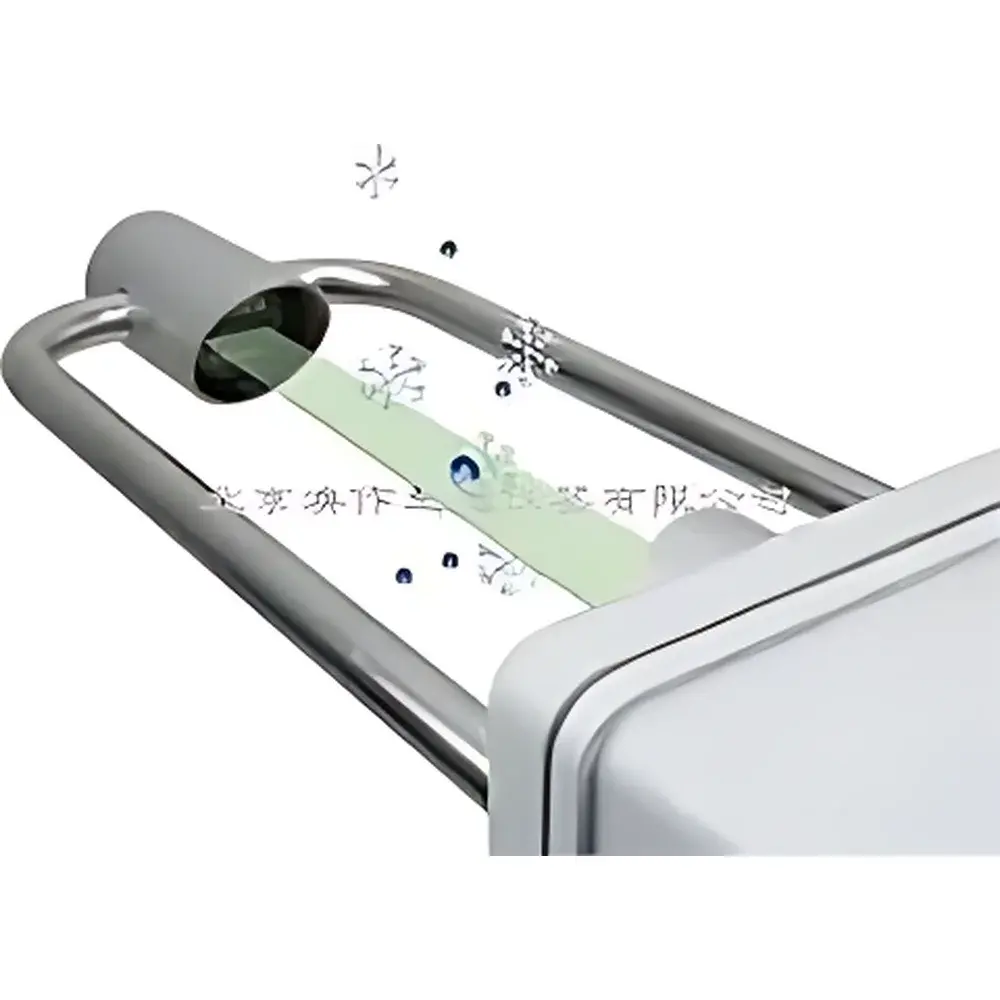
The Thies Clima LPM Laser Precipitation Monitor is an optoelectronic instrument engineered for real-time, high-resolution hydrometeor classification and quantitative precipitation measurement. It operates on the principle of laser obscuration (light extinction) using a collimated 785 nm Class 1M diode laser beam across a defined sensing volume (46 cm²). As hydrometeors—raindrops, drizzle, snowflakes, graupel, hailstones, or mixed-phase particles—pass through the beam, they generate time-resolved shadow pulses proportional to their cross-sectional area and transit velocity. These raw signals are processed in real time using embedded algorithms calibrated against empirical fall-speed–diameter relationships (e.g., Atlas et al., 1973; Gunn & Kinzer, 1949) to assign each particle to one of 440 discrete size–velocity bins. The system outputs physically meaningful meteorological parameters—including rainfall rate (mm/h), accumulated precipitation (mm), particle size distribution (PSD), visibility (MOR), radar reflectivity factor (Z), and Z–R relationship coefficients—enabling direct integration into operational weather services, hydrological modeling, and radar calibration workflows.
Key Features
- High-fidelity hydrometeor discrimination: >97% accuracy in distinguishing rain, drizzle, snow, sleet, graupel, and hail based on simultaneous size and fall velocity measurement
- Robust optical design with active thermal and dust compensation: integrated temperature sensors and adaptive baseline correction minimize drift under extreme ambient conditions (−40 to +70 °C, 0–100% RH)
- Class 1M laser safety compliance: no external shielding required; suitable for unattended outdoor deployment in public infrastructure
- IP65 stainless-steel enclosure: corrosion-resistant housing rated for continuous operation in coastal, industrial, and alpine environments
- Dual RS485 interfaces with configurable baud rates (1200–115200 Bd): supports daisy-chaining, protocol translation (e.g., RS485-to-RS232), and integration with SCADA, PLCs, or central data loggers
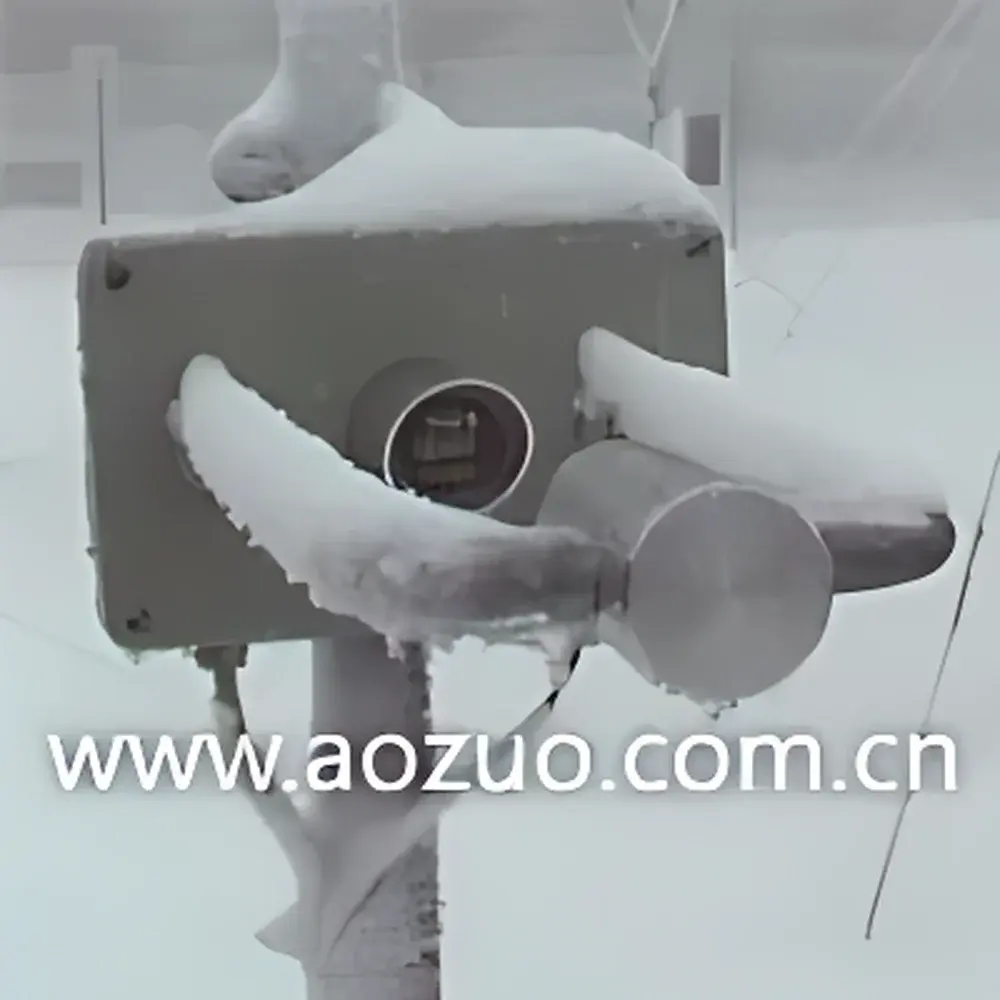
- Optional heated sensor head: prevents ice accumulation and ensures reliable operation during freezing rain or snow events
- Modular expansion capability: native support for co-located Thies Clima wind speed/vane and PT100-based temperature/humidity sensors via standardized analog/digital interfaces
Sample Compatibility & Compliance
The LPM is validated for continuous, unattended monitoring of natural atmospheric precipitation across all climatic zones. Its detection threshold of 0.16 mm diameter enables resolution of fog droplets and light drizzle, while its upper limit of 8 mm accommodates large raindrops and small hail. The instrument complies with WMO Guide to Meteorological Instruments and Methods of Observation (CIMO Guide, Chapter 12) for precipitation measurement and meets the technical requirements for SYNOP (code 4680/4677) and METAR (code 4678) reporting. Data integrity adheres to GLP-aligned practices: timestamped records include sensor health flags, signal-to-noise ratios, and diagnostic metadata. When deployed with the optional Logger Cube unit (IP66-rated, SD-card logging), the system satisfies long-term archival requirements under national meteorological service standards (e.g., DWD, DMI, Met Office).
Software & Data Management
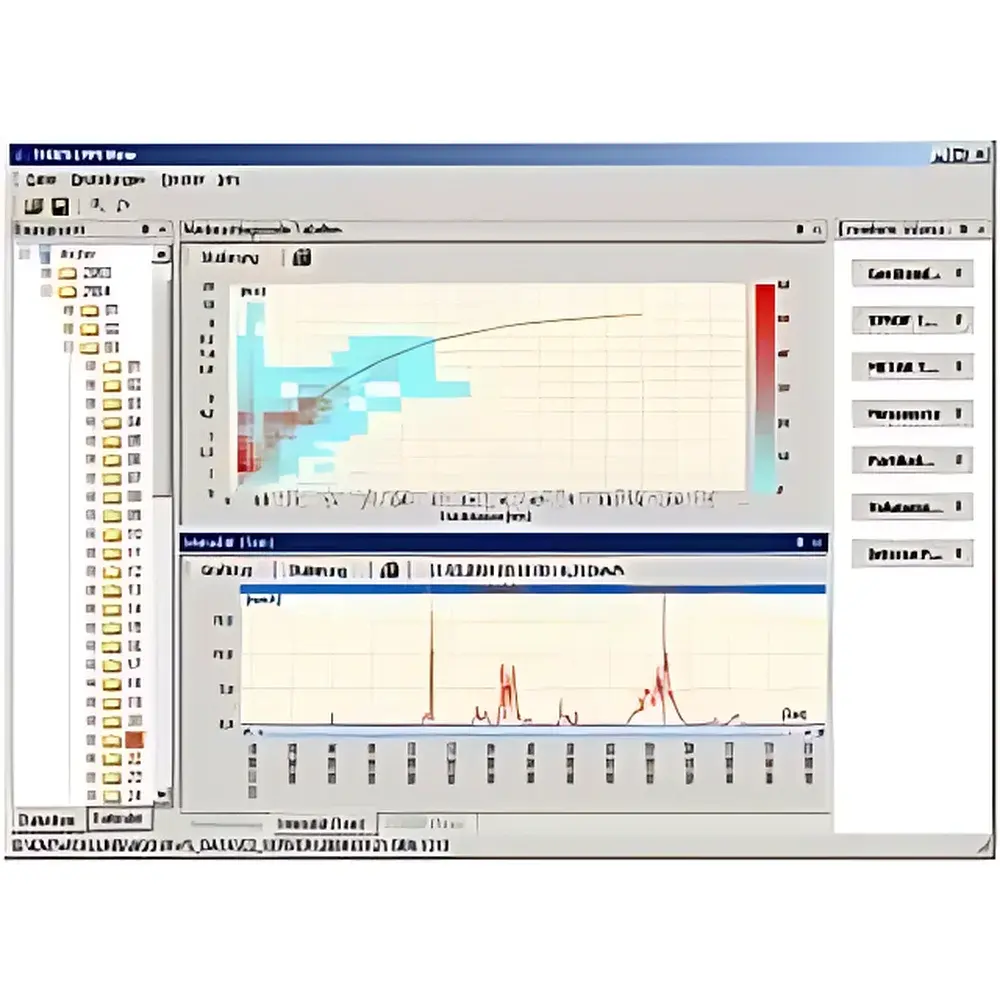
The DA100 analysis software (Windows-based) provides comprehensive post-processing and visualization capabilities. It supports multilingual UI (English, German, Chinese), client-server architecture for centralized fleet management, and secure remote access via TCP/IP. Up to 30 real-time parameters—including PSD histograms, MOR time series, Z–R scatter plots, and co-located sensor overlays—are displayable in synchronized graphical windows. All datasets export natively to CSV and Microsoft Excel formats; PSD matrices are stored in HDF5-compliant structures for interoperability with Python (NumPy/Pandas), MATLAB, or R environments. The software implements audit-trail functionality for critical operations (e.g., calibration updates, data exports), aligning with documentation expectations under ISO/IEC 17025 and FDA 21 CFR Part 11 when used in regulated research settings. Raw binary files from Logger Cube SD cards are directly ingestible without proprietary conversion.
Applications
- Radar quantitative precipitation estimation (QPE) calibration: derivation of site-specific Z–R coefficients and attenuation correction factors
- Aviation meteorology: real-time visibility (MOR) and precipitation type alerts for airport surface operations and ILS approach decision support
- Transportation safety: integration into road weather information systems (RWIS) for black ice prediction and dynamic signage control
- Hydrological modeling: high-temporal-resolution input for urban drainage simulation and flash flood forecasting
- Climate research: long-term PSD trend analysis in changing precipitation regimes (e.g., shifts toward convective vs. stratiform dominance)
- Calibration reference: traceable ground truth for disdrometer intercomparison studies under WMO Solid Precipitation Intercomparison Experiment (SPICE) protocols
FAQ
What is the minimum detectable precipitation intensity?
The LPM reliably detects intensities as low as 0.005 mm/h, corresponding to light drizzle conditions with median drop diameters near 0.2 mm.
Can the LPM operate during freezing precipitation?
Yes—when equipped with the optional heated sensor head, it maintains optical clarity and measurement continuity during freezing rain, wet snow, and rime events.
Does the system support NIST-traceable calibration?
While the LPM does not require routine factory recalibration due to its self-compensating optical architecture, Thies Clima provides documented uncertainty budgets (k=2) per ISO/IEC 17025 for key outputs (e.g., DSD, Z, MOR) upon request.
How is data synchronization handled when multiple sensors are connected?
All auxiliary sensors (anemometer, wind vane, thermo-hygrometer) share the same internal clock and timestamping engine; measurements are aligned to microsecond precision within the LPM’s embedded acquisition cycle.
Is the RS485 interface compatible with Modbus RTU?
The native protocol is Thies Clima’s ASCII-based command set; however, third-party protocol converters or custom firmware modules enable seamless Modbus RTU mapping for PLC integration.