
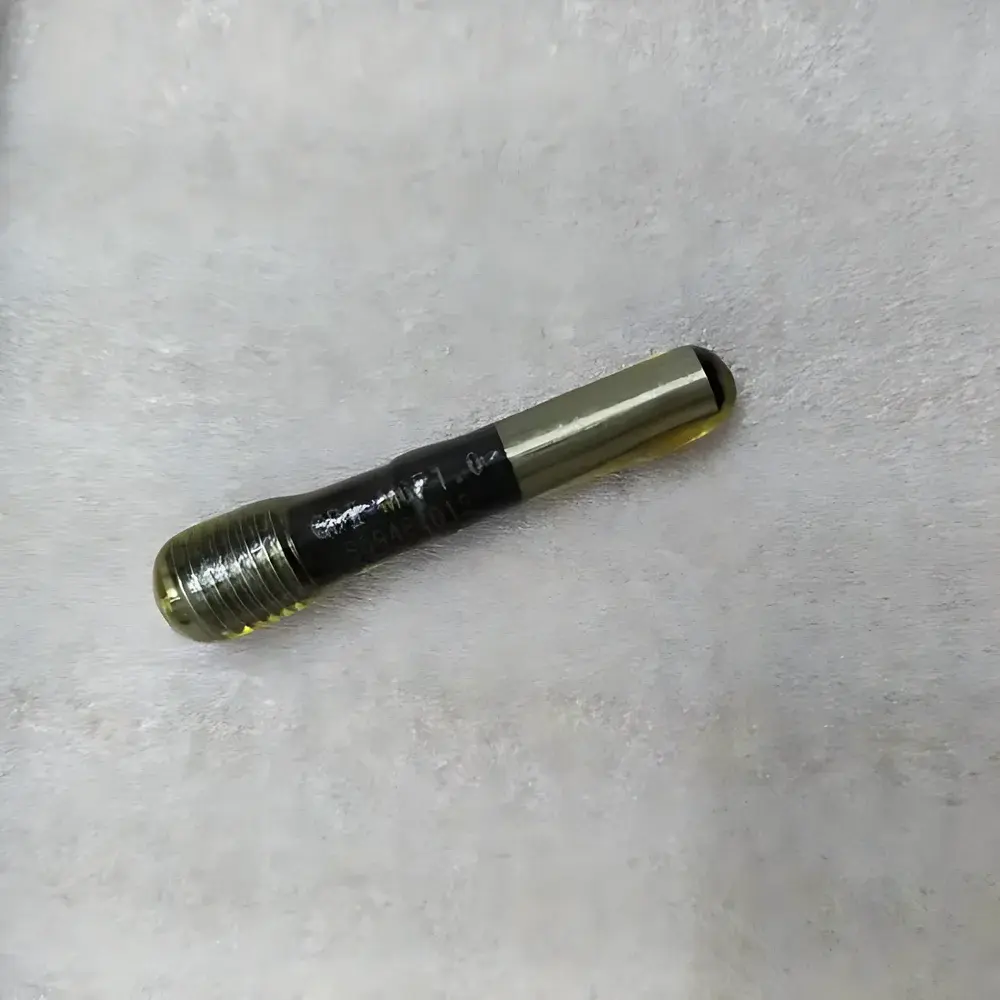
Thread OJIYAS M6×1.0 GP2-DS2 Thread Ring Gauge (JIS Class 2, Metric Fine Pitch)
| Brand | TAMASAKI (Kyoto) |
|---|---|
| Origin | Japan |
| Model | M6×1.0 GP2-DS2 |
| Thread Type | Metric ISO/JIS General Purpose (M), Pitch: 1.0 mm |
| Class | JIS B 1341 Grade 2 (equivalent to ISO 965-3 Class 2H/2G) |
| Nominal Size | M6×1.0 |
| Gage Body Material | Gauge Steel (SUJ2 hardened and stabilized) |
| Sleeve Material | Anodized Aluminum Alloy |
| Mass | 27.7 g |
| Compliance | JIS B 1341, ISO 965-3, ISO 1502 |
| Application Scope | In-process verification of threaded holes in semiconductor packaging substrates, printed electronics interconnect components, and fine-pitch SMT fixture hardware |
Overview
The OJIYAS M6×1.0 GP2-DS2 Thread Ring Gauge is a precision metrology tool engineered for rapid, repeatable verification of internal metric threads in high-accuracy manufacturing environments—particularly within printed electronics and semiconductor packaging workflows. Designed per JIS B 1341 (Grade 2) and aligned with ISO 965-3 (Class 2H for internal threads), this dual-purpose gauge integrates thread depth measurement capability with functional go/no-go thread checking in a single compact assembly. Its GP2-DS2 designation indicates compliance with the “General Purpose – Depth-Sensing” configuration, enabling simultaneous assessment of pitch diameter conformity and effective thread engagement depth—critical parameters when validating tapped holes in thin-film ceramic substrates, flex PCB mounting bosses, or micro-coaxial connector housings where thread truncation or incomplete tap formation may compromise mechanical integrity or electrical grounding continuity.
Key Features
- Integrated depth-sensing geometry: The DS2 design incorporates a calibrated reference face and axial stop that engages the part’s top surface while the threaded portion engages the internal thread—allowing direct correlation between functional fit and actual thread depth.
- JIS Grade 2 accuracy: Maintains maximum permissible deviation of ±13 µm on pitch diameter for M6×1.0, meeting stringent tolerance requirements for Class 2 applications in electronic hardware assembly.
- Thermally stable construction: Gauge steel body (SUJ2, hardened to 58–62 HRC, stress-relieved and aged) ensures long-term dimensional stability under ambient lab or cleanroom conditions (20 ± 1 °C).
- Lightweight anodized aluminum sleeve: Reduces operator fatigue during high-frequency inspection cycles while providing corrosion resistance and ESD-safe handling (surface resistivity < 10⁹ Ω/sq).
- Traceable calibration support: Supplied with optional NIST-traceable calibration certificate (certification code: TAM-JP-GR-2024-XXXX), compliant with ISO/IEC 17025 requirements for accredited metrology labs.
Sample Compatibility & Compliance
This gauge is validated for use with internally threaded features produced via CNC tapping, thread milling, or cold forming—common in aluminum alloy heat sinks, stainless steel RF shield cans, and alumina-based IC carrier plates. It complies with JIS B 1341 (2019 edition), ISO 965-3:2022 (Tolerances for screw threads — Part 3: Standard tolerances for general purpose metric screw threads), and ISO 1502:2018 (ISO general purpose metric screw threads — Gauging system). Its dimensional specifications satisfy the acceptance criteria defined in IPC-A-610 Class 3 for high-reliability electronics assemblies and align with internal QA protocols referenced in SEMI F20-02 (Specification for Semiconductor Equipment Mechanical Interfaces).
Software & Data Management
While the GP2-DS2 is a manual mechanical gauge, its measurement outcomes integrate seamlessly into digital quality management systems. Each unit carries a unique serial number laser-engraved on the sleeve, enabling traceability linkage to MES (Manufacturing Execution Systems) or QMS platforms such as ETQ Reliance or MasterControl. When used with digital calipers or optical comparators for secondary depth validation, data can be exported in CSV or XML format supporting FDA 21 CFR Part 11-compliant audit trails. Calibration records—including temperature-compensated deviation reports—are archived per ISO 10012 requirements and retained for minimum 10 years in accordance with GLP/GMP documentation standards.
Applications
- Verification of M6×1.0 tapped holes in semiconductor test sockets and probe card interface plates.
- In-line inspection of threaded inserts embedded in flexible hybrid electronics (FHE) substrates.
- Final QA check for press-fit threaded bushings in printed electronics thermal management modules.
- Process capability studies (Cp/Cpk) for CNC tapping operations targeting ≤ ±0.015 mm positional tolerance on thread axis.
- First-article inspection (FAI) per AS9102 requirements in aerospace-grade printed circuit board assemblies incorporating threaded metal cores.
FAQ
Is this gauge suitable for measuring blind hole thread depth?
Yes—the DS2 configuration includes a fixed axial stop that contacts the workpiece surface, allowing unambiguous determination of effective thread depth up to the bottom of the blind hole when used with calibrated depth micrometers or optical profilometers.
Does it comply with ISO 965-3 Class 2G or 2H?
It conforms to JIS Grade 2, which maps directly to ISO 965-3 Class 2H for internal thread ring gauges and Class 2G for plug gauges—verified through comparative measurement against master setting plugs certified to ISO 1502 Annex A.
Can it be recalibrated in-house?
Recalibration requires specialized thread metrology equipment (e.g., Zeiss Contura G2 RDS or Mitutoyo TM-500) and certified reference masters; therefore, recalibration must be performed by an ISO/IEC 17025-accredited laboratory using procedures documented in JIS Z 8401.
What is the recommended recalibration interval?
Per JIS B 7451, the standard recalibration interval is 12 months under normal usage; however, in high-cycle production environments (>500 engagements/day), quarterly verification against certified masters is advised.
Is ESD protection built into the design?
The anodized aluminum sleeve provides inherent static-dissipative properties (10⁶–10⁹ Ω/sq), satisfying ANSI/ESD S20.20 requirements for handling sensitive printed electronics components without supplemental grounding straps.




