
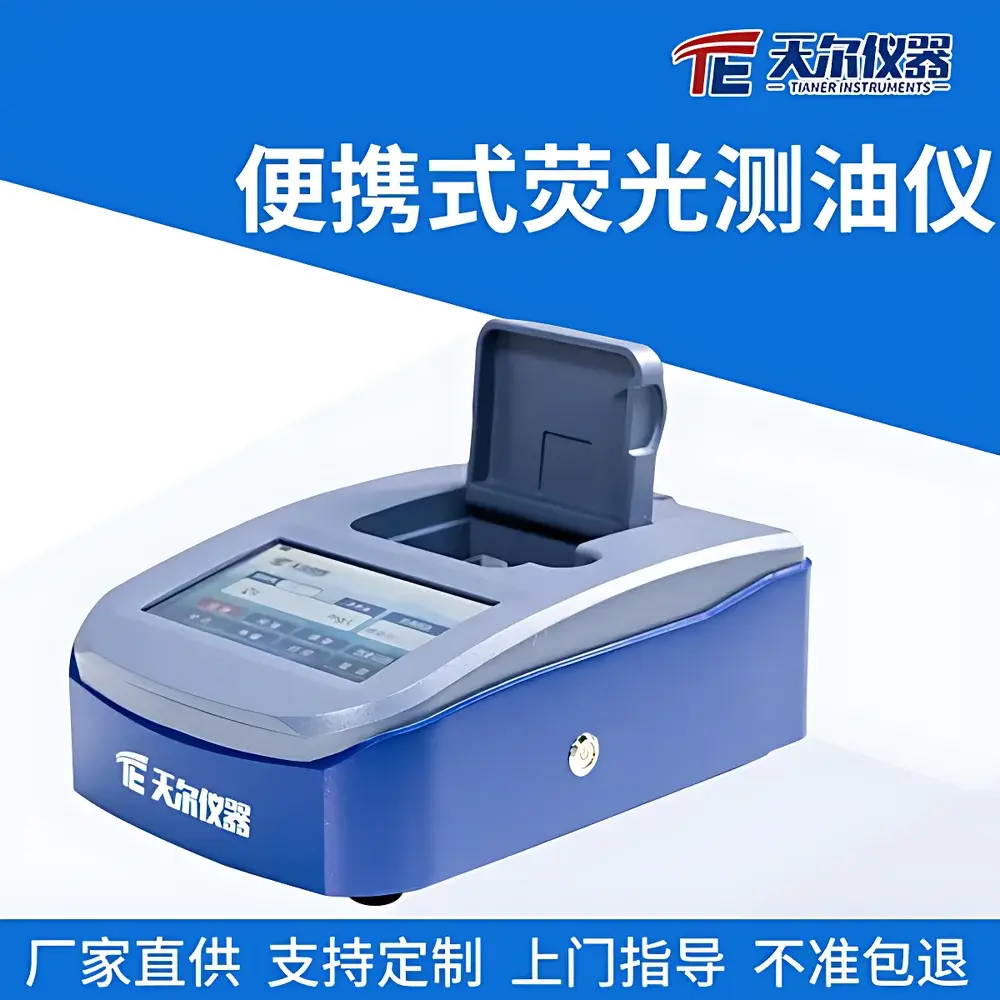
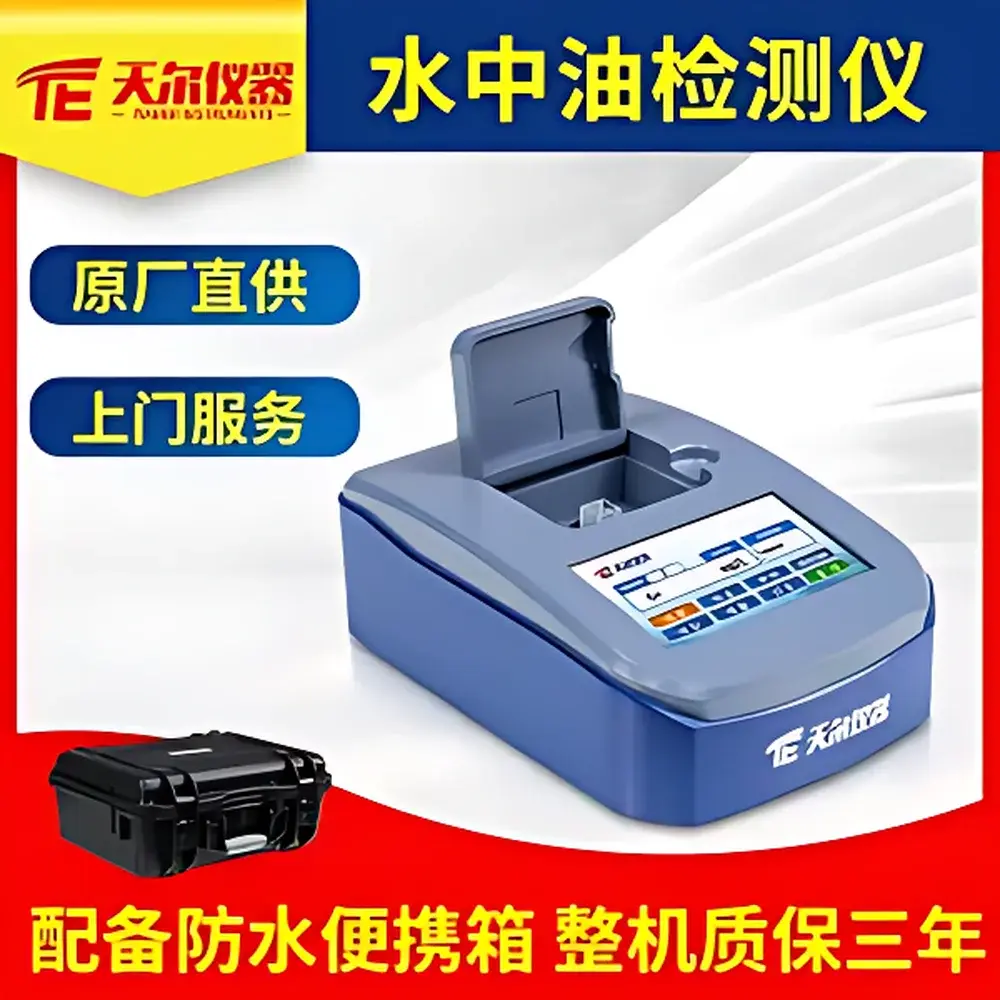
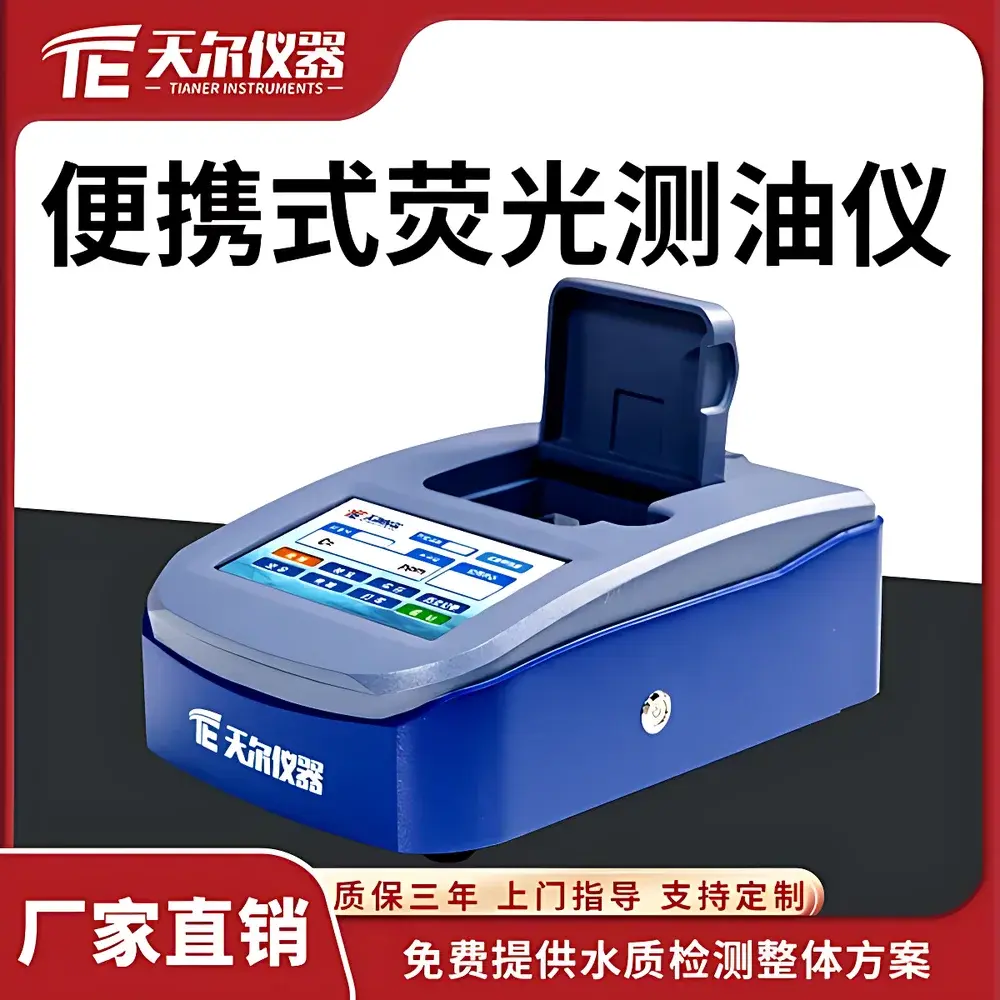
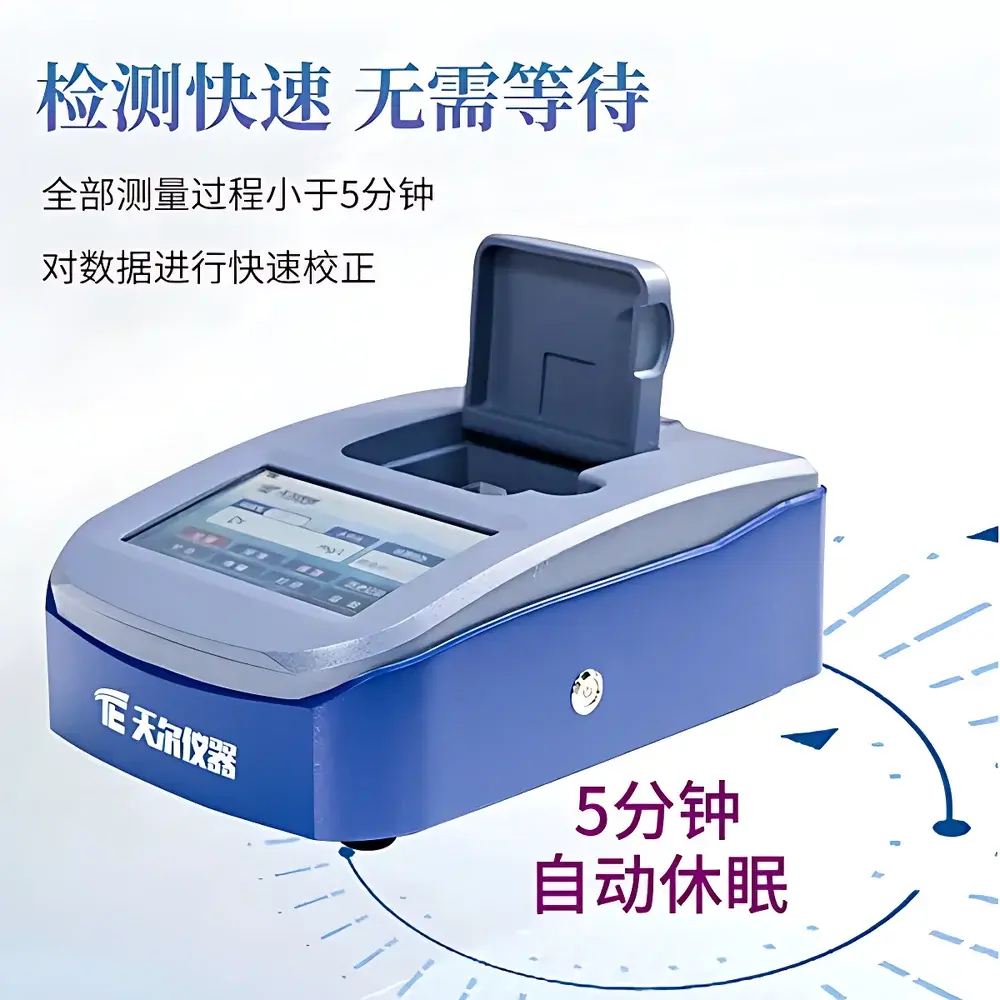
TIANER TE-1050 Portable Oil-in-Water Analyzer
| Brand | TIANER |
|---|---|
| Origin | Tianjin, China |
| Manufacturer Type | Direct Manufacturer |
| Product Category | Domestic |
| Model | TE-1050 |
| Instrument Type | Portable |
| Measurement Principle | Ultraviolet Fluorescence Spectrophotometry |
| Measurement Range | 40 ppb – 100 ppm |
| Detection Limit | 5 ppb |
| Accuracy | < ±5% |
| Resolution | 0.001 ppm |
| Measurement Cycle | 5 seconds per analysis |
Overview
The TIANER TE-1050 Portable Oil-in-Water Analyzer is an engineered field-deployable instrument designed for rapid, on-site quantification of hydrocarbon contaminants in aqueous matrices. It operates on the principle of ultraviolet fluorescence spectrophotometry—where polycyclic aromatic hydrocarbons (PAHs) and aliphatic hydrocarbons in extracted oil phases are excited by UV light (typically 254–365 nm), emitting characteristic fluorescence proportional to concentration. This method delivers high selectivity for petroleum-derived compounds while minimizing interferences from common water matrix constituents. Unlike legacy infrared or gravimetric methods, the TE-1050 eliminates reliance on hazardous solvents such as carbon tetrachloride; instead, it is optimized for use with n-hexane—a solvent compliant with U.S. EPA Method 1664A and ISO 9377-2 for oil and grease extraction. Its compact architecture, integrated power management, and ruggedized enclosure enable reliable operation in ambient outdoor conditions, making it suitable for regulatory monitoring, emergency response, and routine compliance verification.
Key Features
- UV fluorescence detection system with dual-path optical referencing for enhanced signal stability and reproducibility
- Automatic chromatic compensation algorithm to correct for sample coloration and turbidity-induced quenching effects
- One-touch calibration protocol with built-in reference standards, reducing operator dependency and procedural variability
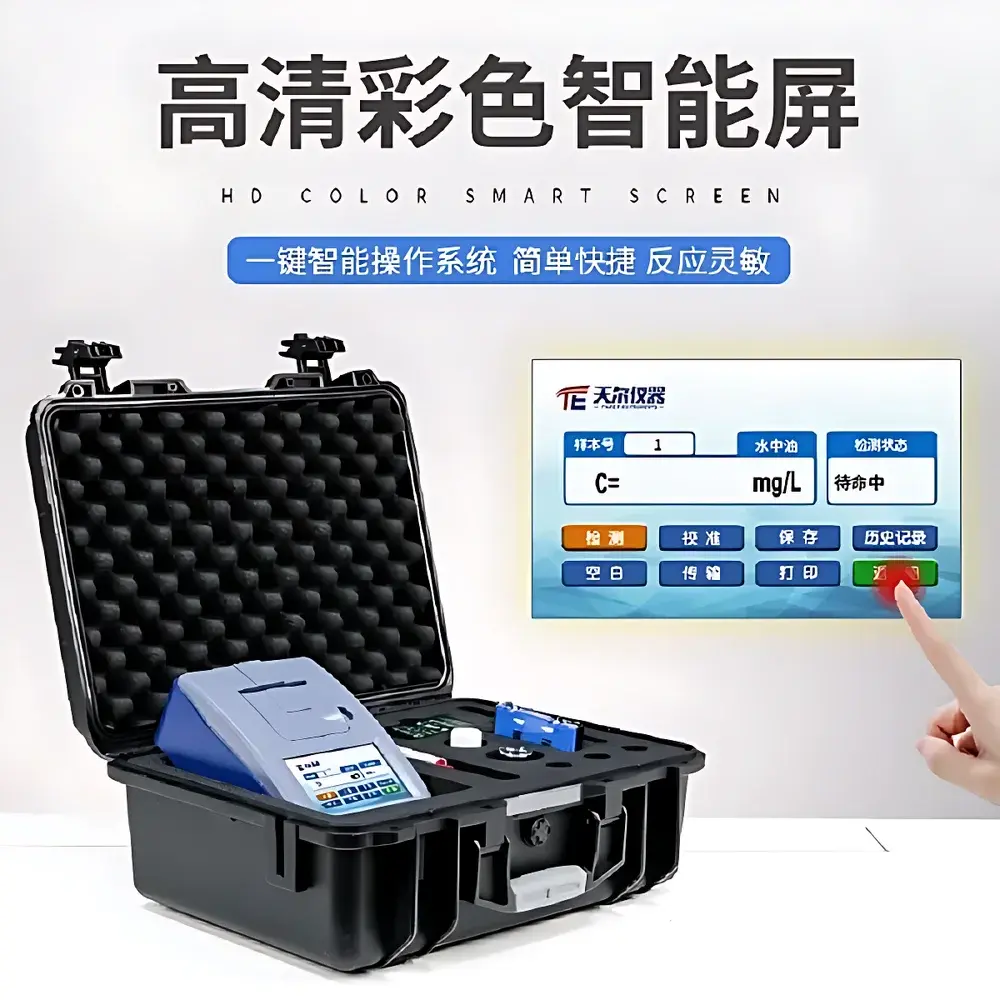
- 5-inch capacitive touchscreen interface with intuitive workflow navigation and real-time graphical feedback
- Integrated thermal printer for immediate hard-copy documentation—fully traceable with timestamp, sample ID, and operator tag
- Rechargeable lithium-ion battery pack supporting >30 days standby time and ≥8 hours continuous operation per charge
- Disposable quartz-cuvette-style measurement cells—low-cost, pre-aligned, and eliminating cross-contamination and cleaning validation burdens
- Complete field kit housed in an IP65-rated portable case, including n-hexane vials, extraction funnels, pipettes, calibration standards, and QC check solutions
Sample Compatibility & Compliance
The TE-1050 is validated for use with surface water, groundwater, wastewater effluents, cooling tower water, boiler feedwater, and produced water from upstream operations. It accommodates samples with total suspended solids (TSS) ≤ 100 mg/L and salinity up to 35 g/L without filtration or dilution. Method performance aligns with key regulatory frameworks: correlation studies demonstrate strong linear agreement (R² > 0.995) against EPA 1664B (n-hexane extractable material) and ISO 9377-2 (petroleum hydrocarbons). The instrument’s firmware supports audit-trail logging in accordance with GLP and GMP principles, and data export formats (CSV, PDF) are compatible with LIMS integration. All optical components meet IEC 61000-4 electromagnetic compatibility requirements for industrial environments.
Software & Data Management
Firmware version 2.4.1 includes embedded data management tools supporting user-defined sample naming, multi-level password protection (operator/admin), and encrypted local storage of ≥10,000 test records. Calibration history, QC flagging (e.g., drift alerts, out-of-range blanks), and measurement metadata (ambient temperature, humidity, battery level) are automatically embedded. USB-C and Bluetooth 5.0 interfaces enable secure transfer to desktop software for statistical review—including control charting (X-bar/R), trend analysis, and method comparison reports per ISO 5725-2. Exported datasets include full uncertainty propagation fields based on repeatability, calibration curve residuals, and solvent blank variability.
Applications
- Regulatory compliance monitoring at wastewater discharge points per NPDES permits
- Leak detection and source tracking in refinery perimeter groundwater networks
- Pre-treatment verification in municipal and industrial pretreatment facilities
- Routine surveillance in drinking water distribution systems and reservoir intakes
- Field validation of online oil-in-water sensors during commissioning and QA/QC audits
- Educational laboratory exercises in environmental chemistry and instrumental analysis curricula
- Emergency spill assessment for rapid triage and remediation prioritization
FAQ
What extraction solvent is required—and is it EPA-compliant?
The TE-1050 is validated for n-hexane (≥95% purity), fully aligned with U.S. EPA Method 1664A and ISO 9377-2. Carbon tetrachloride is neither supported nor recommended.
Can the instrument be used for seawater samples?
Yes—performance has been verified across salinities up to 35 g/L (standard seawater); no desalting or dilution is necessary.
How is measurement traceability maintained?
Each analysis logs instrument serial number, firmware version, calibration certificate ID, and operator credentials; all stored records are digitally signed and non-erasable.
Is third-party software integration supported?
Yes—via standardized CSV export and optional API-enabled desktop suite for automated ingestion into LIMS, ELN, or SCADA platforms.
What maintenance is required beyond consumables?
No scheduled optical alignment or lamp replacement is needed; the UV-LED excitation source has a rated lifetime of >10,000 hours with stable output intensity.
Related Products







