
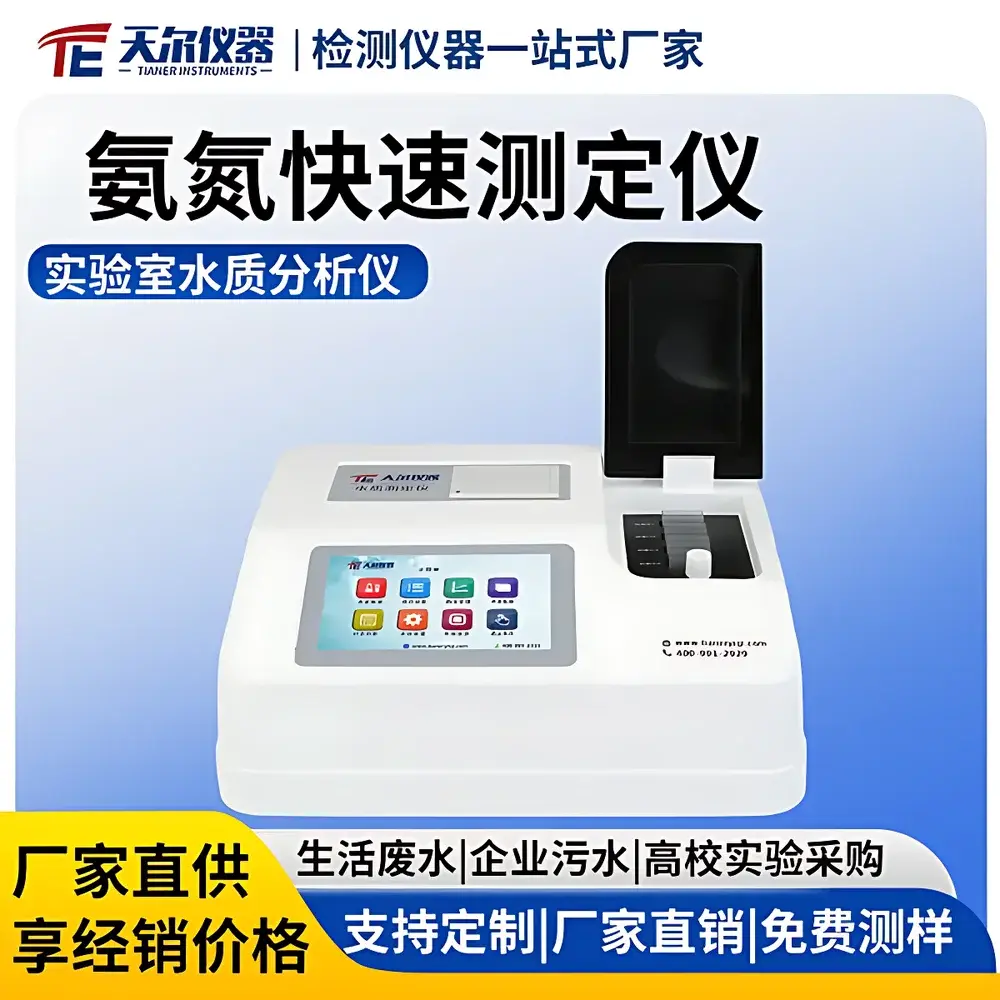
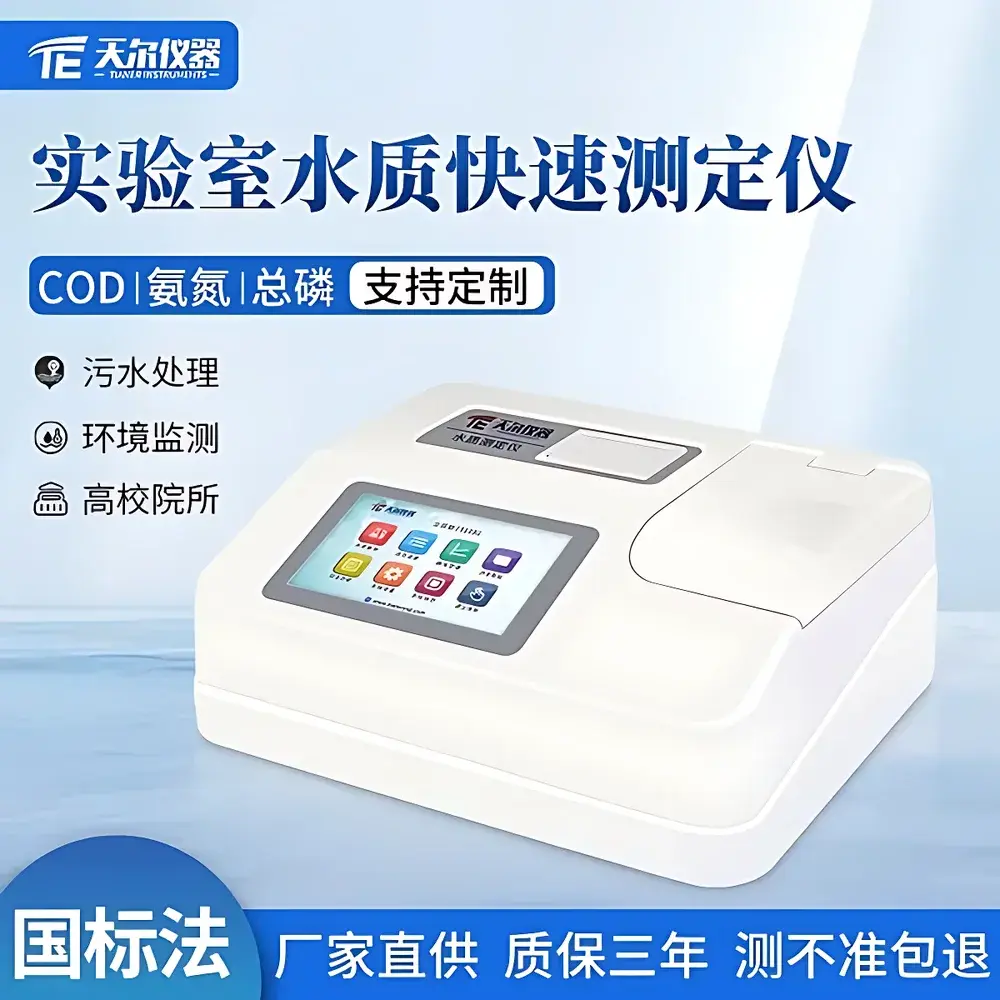
TIANER TE-5105G Ammonia Nitrogen Analyzer
| Brand | TIANER |
|---|---|
| Origin | Tianjin, China |
| Manufacturer Type | Direct Manufacturer |
| Instrument Category | Domestic |
| Model | TE-5105G |
| Instrument Type | Laboratory Benchtop Analyzer |
| Measurement Principle | Colorimetric Method (Nessler Reagent Spectrophotometry) |
| Measurement Range | 0.01–150 mg/L (multi-range segmented calibration) |
| Accuracy | ≤ ±5% |
| Detection Limit | 0.01 mg/L |
| Measurement Time | 15–20 min per batch |
| Throughput | 5 simultaneous sample positions |
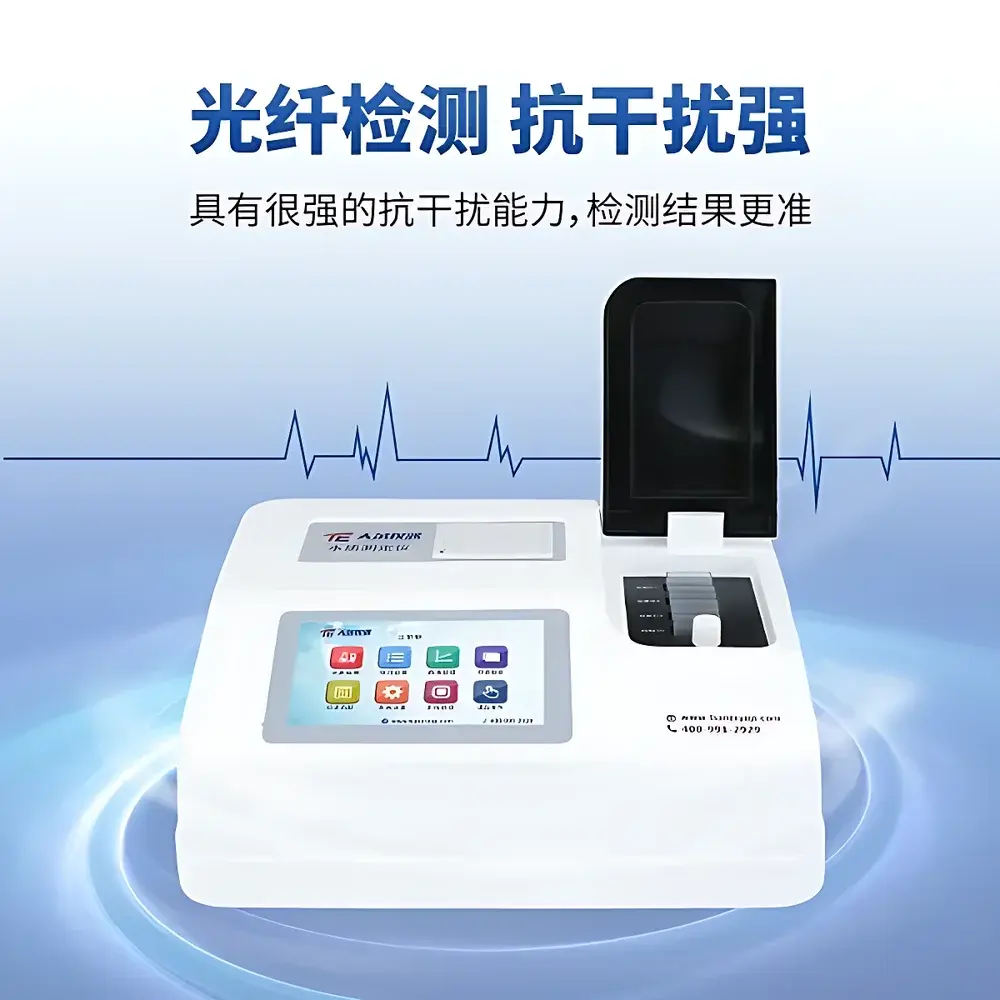
| Optical System | Fiber-optic spectrophotometric system |
| Light Source | Imported 12 V / 20 V halogen lamp (rated lifetime ≥ 100,000 h) |
| Wavelength | 420 nm |
| Reference Channel | Fixed automatic reference channel |
| Repeatability | ≤ ±2% |
| Inter-channel Variation | ≤ ±2% |
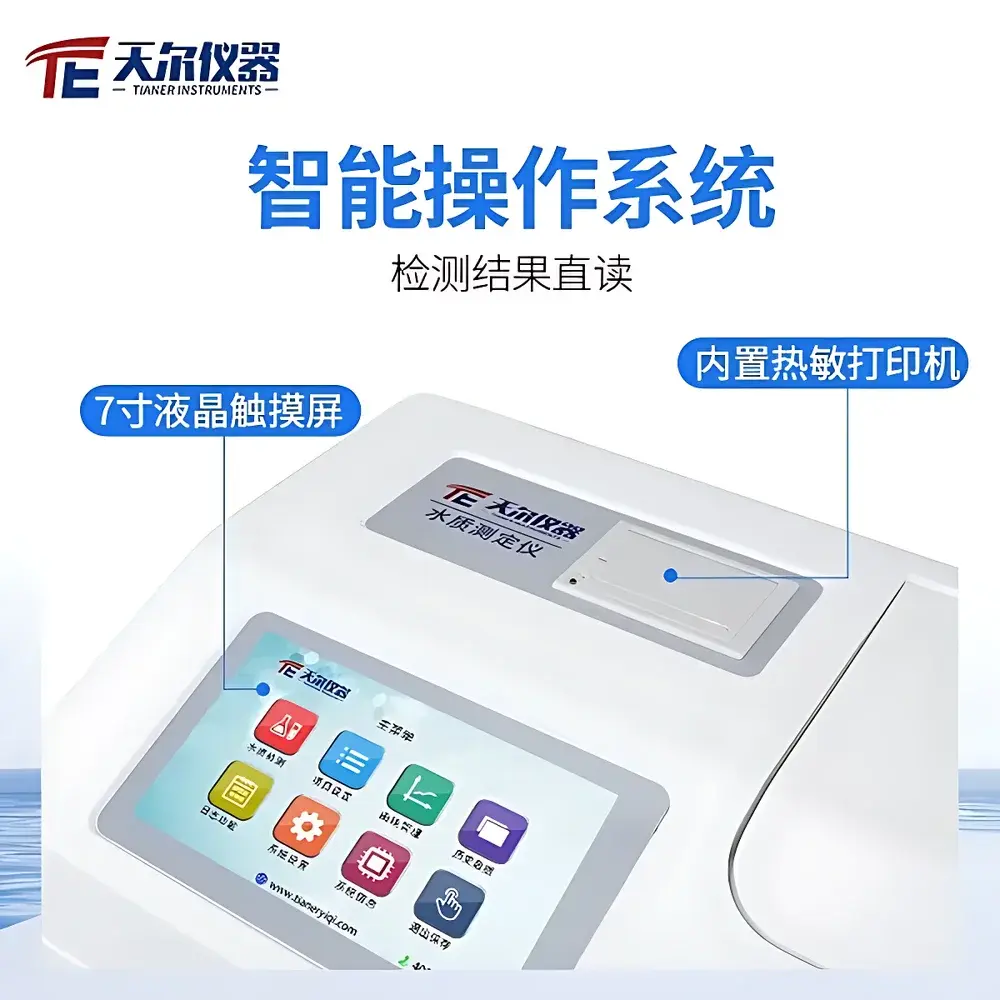
| Display | 7-inch color TFT capacitive touchscreen |
| Sample Introduction | Automated multi-channel sampling module |
| Sample Formats | Pre-filled colorimetric tubes (liquid reagents) and cuvettes (powder reagents) |
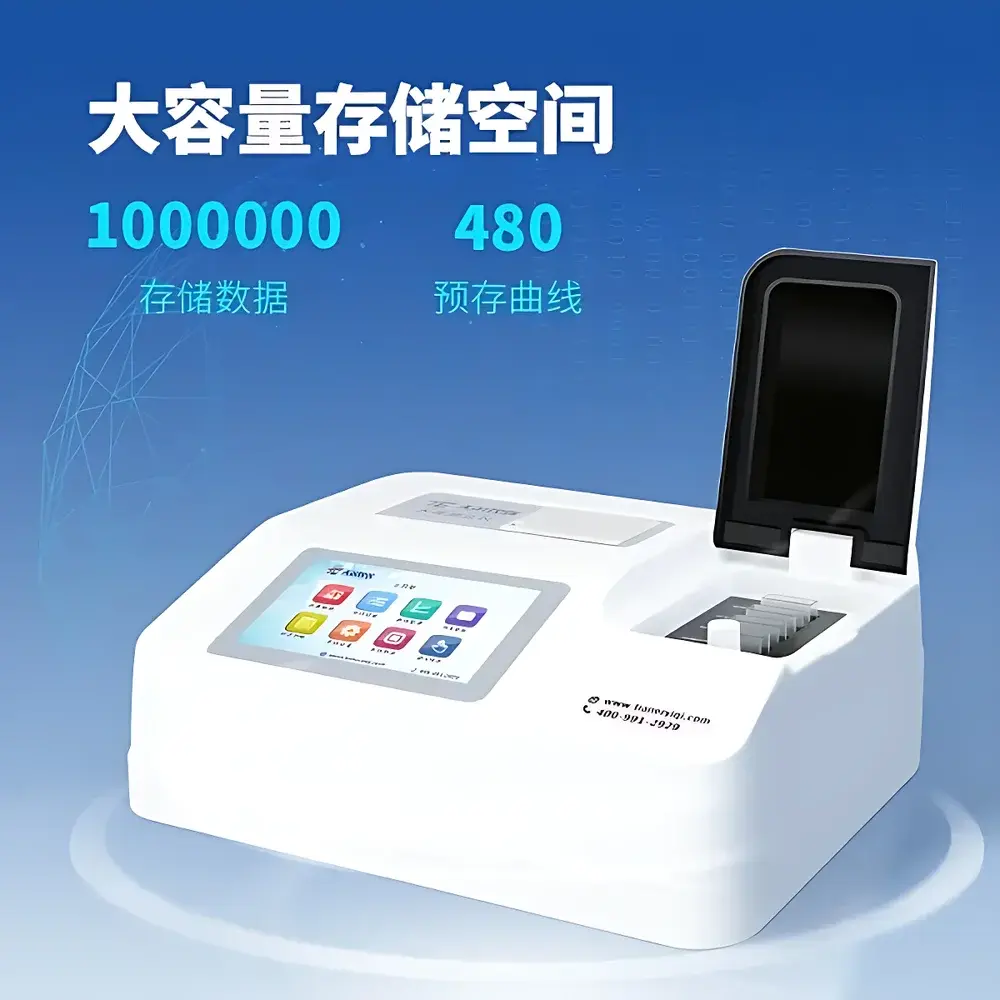
| Data Storage | Up to 1,000,000 measurement records with timestamp, sample ID, and operator log |
| Preloaded Calibration Curves | 180 factory-validated curves (user-modifiable, extensible, and recalibratable) |
| Auto-calibration | Built-in self-calibration routine using reference standards |
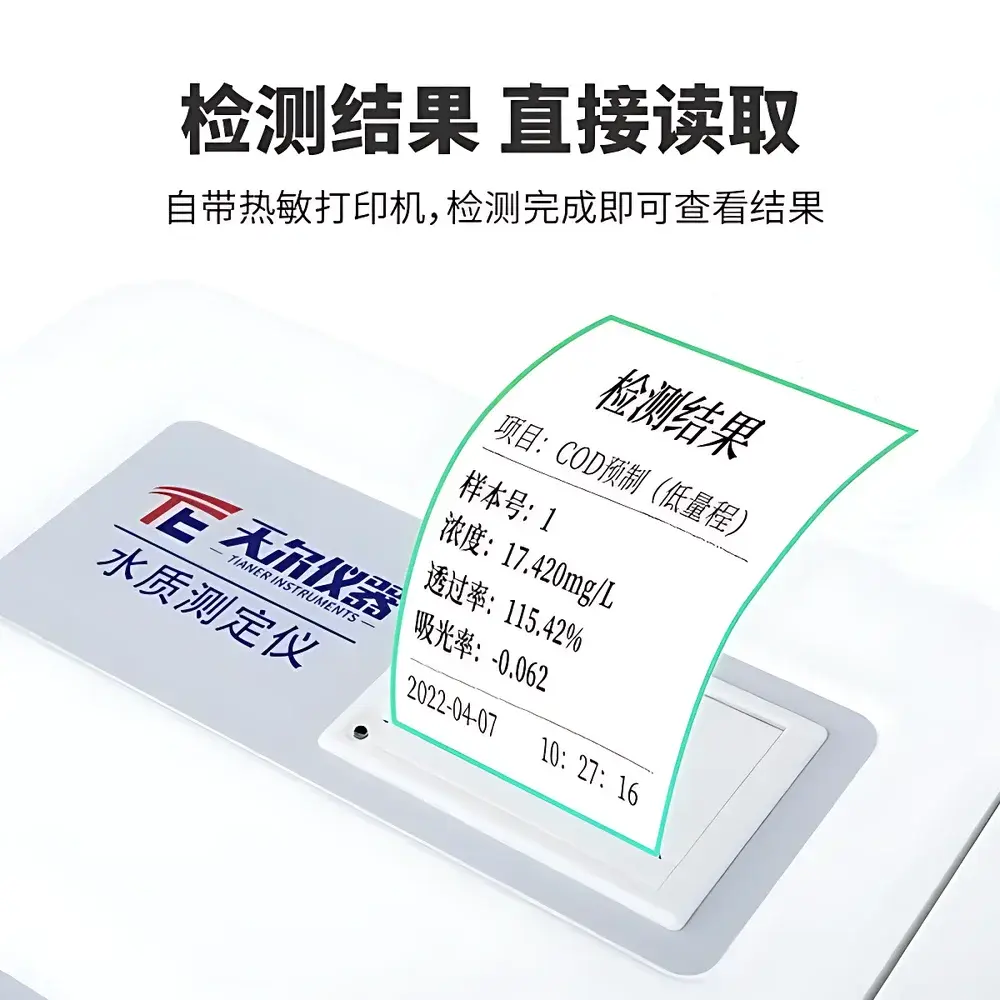
| Data Output | Integrated thermal printer |
| Connectivity | USB 2.0 port + RS-232 serial interface |
| Compliance | Fully aligned with HJ 535–2009 “Water Quality — Determination of Ammonia Nitrogen — Nessler Reagent Spectrophotometric Method” |
Overview
The TIANER TE-5105G Ammonia Nitrogen Analyzer is a laboratory-grade benchtop photometer engineered for precise, trace-level quantification of ammonia nitrogen (NH₃-N) in aqueous matrices using the standardized Nessler reagent spectrophotometric method. It operates on the principle of absorbance measurement at 420 nm, where ammonium ions react with alkaline iodomercuric reagent to form a yellow-colored complex proportional to concentration. This method is codified in China’s national standard HJ 535–2009 and widely accepted internationally for regulatory compliance testing in environmental and industrial water laboratories. The instrument integrates a fiber-optic optical path, thermally stabilized halogen illumination, and a fixed reference channel to minimize drift and ensure long-term photometric stability. Designed for reproducible operation under variable ambient conditions, the TE-5105G delivers robust performance across diverse sample types—including municipal wastewater, industrial effluents, groundwater, surface water, reclaimed water, and aquaculture systems—without requiring operator expertise in optical alignment or manual zeroing.
Key Features
- Fiber-optic spectrophotometric architecture with dual-beam referencing for enhanced baseline stability and reduced stray light interference
- High-intensity, long-life halogen light source (≥100,000 h operational lifetime) ensuring consistent spectral output over extended service intervals
- Five independent detection positions enabling parallel processing of up to five samples per assay cycle—optimized for routine QC workflows
- 7-inch capacitive touchscreen with multilingual UI (English default), context-sensitive prompts, and voice-guided operation sequences for intuitive workflow navigation
- Automated multi-channel sampling module supporting both pre-filled Nessler reagent tubes and standard 10-mm cuvettes with powdered reagents
- Integrated thermal printer for immediate hardcopy documentation compliant with GLP audit requirements (timestamp, sample ID, curve ID, operator code)
- Onboard data management system storing up to 1,000,000 test records with full metadata: date/time stamp, calibration status, user ID, and raw absorbance values
- 180 pre-validated calibration curves—including EPA 350.1, ISO 7150-1, and HJ 535–2009—fully editable, expandable, and field-recalibratable via slope/intercept adjustment
- Automatic optical and electronic calibration routines using certified reference standards, reducing dependency on external verification between scheduled maintenance
Sample Compatibility & Compliance
The TE-5105G is validated for use with turbid, colored, and high-salinity water samples following standard pretreatment protocols (e.g., flocculation, filtration, or distillation per HJ 535–2009 Section 7). It meets metrological requirements for Class II laboratory analyzers under JJG 975–2012 (Chinese Verification Regulation for Photometers). Its optical design minimizes interferences from common co-analytes including chloride (<2000 mg/L), nitrate (<5 mg/L), and heavy metals when used with recommended masking agents. All firmware and data handling modules comply with basic ALCOA+ principles—Attributable, Legible, Contemporaneous, Original, Accurate—and support retrospective audit trails for GLP/GMP environments. While not natively 21 CFR Part 11 compliant, the instrument’s secure user access control (3-tier password hierarchy), immutable data logs, and exportable CSV/Excel reports facilitate integration into validated LIMS ecosystems.
Software & Data Management
The embedded operating system features a real-time clock, hierarchical user roles (Administrator, Technician, Viewer), and encrypted local database storage. All measurements are automatically time-stamped and tagged with operator ID and calibration certificate number. Data export is supported via USB mass storage mode (FAT32 formatted drives) or RS-232 ASCII protocol compatible with SCADA and laboratory information management systems (LIMS). Firmware updates are performed offline using signed binary packages to preserve integrity. Curve management includes linear, polynomial, and logarithmic regression models; users may generate custom curves from certified reference standards and assign unique identifiers for method traceability. Audit logs record all critical events—including calibration attempts, curve modifications, and user logins—for regulatory review.
Applications
The TE-5105G serves as a primary analytical tool in municipal wastewater treatment plants for monitoring influent/effluent NH₃-N levels prior to nitrification-denitrification stages. It supports compliance reporting for discharge permits under GB 8978–1996 and local ecological regulations. In industrial settings—including power generation (cooling tower blowdown), pharmaceutical manufacturing (cleaning validation), food processing (wastewater BOD/N ratio control), and aquaculture (toxicity risk assessment)—it enables rapid decision-making during process optimization and emergency response. Educational institutions utilize its modular design for teaching spectrophotometric fundamentals, standard addition methods, and QA/QC practices such as spike recovery and duplicate analysis. Research labs employ its high repeatability (≤±2%) for method development and inter-laboratory comparison studies.
FAQ
Does the TE-5105G comply with international standards such as ISO or ASTM?
Yes—the optical configuration and measurement protocol align with ISO 7150-1:1984 and ASTM D1426–15 (Standard Test Methods for Nitrogen in Water), though final method validation must be performed per site-specific matrix characteristics.
Can the instrument store custom calibration curves developed in-house?
Yes—up to 180 total curves may be stored; users may import, edit, rename, and validate new curves using certified reference materials and documented SOPs.
Is remote data retrieval supported via Ethernet or Wi-Fi?
No—data transfer is limited to USB 2.0 and RS-232 interfaces. Network connectivity requires external gateway hardware or middleware integration.
What maintenance is required to sustain optical accuracy?
Annual verification of wavelength accuracy (using holmium oxide filter) and photometric linearity (neutral density filters) is recommended; lamp replacement is typically needed only after ≥100,000 h of operation.
How does the instrument handle turbid or highly colored samples?
Users should apply optional pretreatment steps defined in HJ 535–2009 Section 7—including coagulation-flocculation with zinc sulfate or distillation—to minimize matrix interference prior to analysis.
Related Products







