
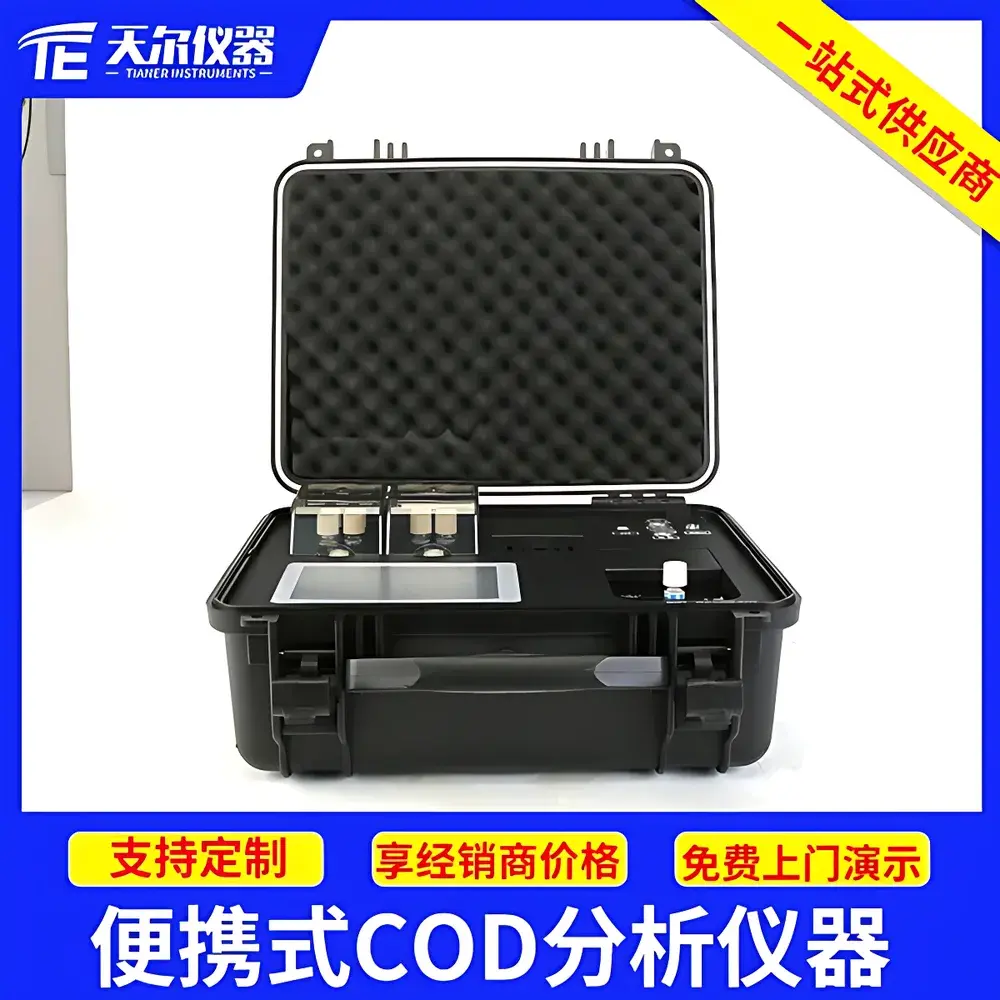
TIANER TE-703 Portable COD Analyzer
| Brand | TIANER |
|---|---|
| Origin | Tianjin, China |
| Manufacturer Type | Direct Manufacturer |
| Instrument Type | Portable |
| Measurement Principle | Rapid Digestion Spectrophotometry (Lab-Grade) |
| Wavelength Range | 340–900 nm |
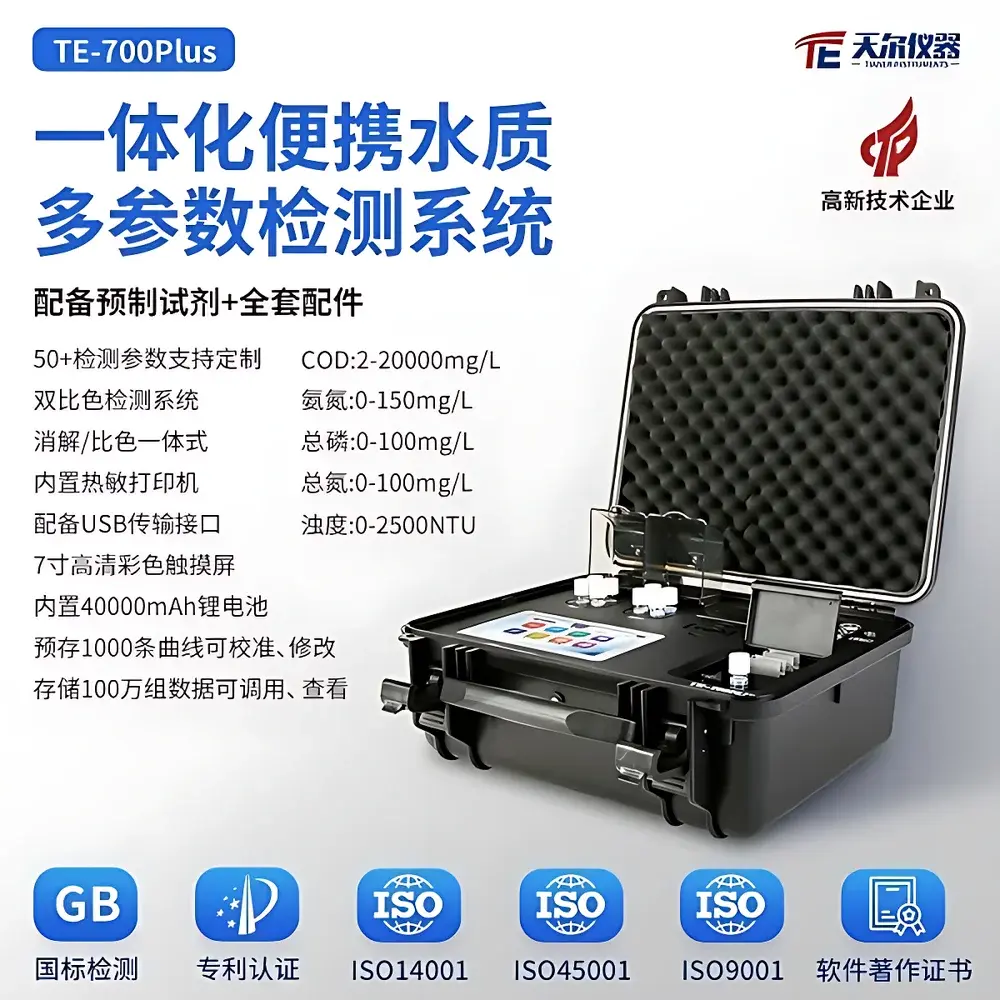
| COD Range | 2–20,000 mg/L |
| Accuracy | ≤ ±5% |
| Repeatability | ≤ ±2% |
| LOD | 0.01 mg/L |
| Digestion Time | 30 min |
| Batch Capacity | 8 samples |
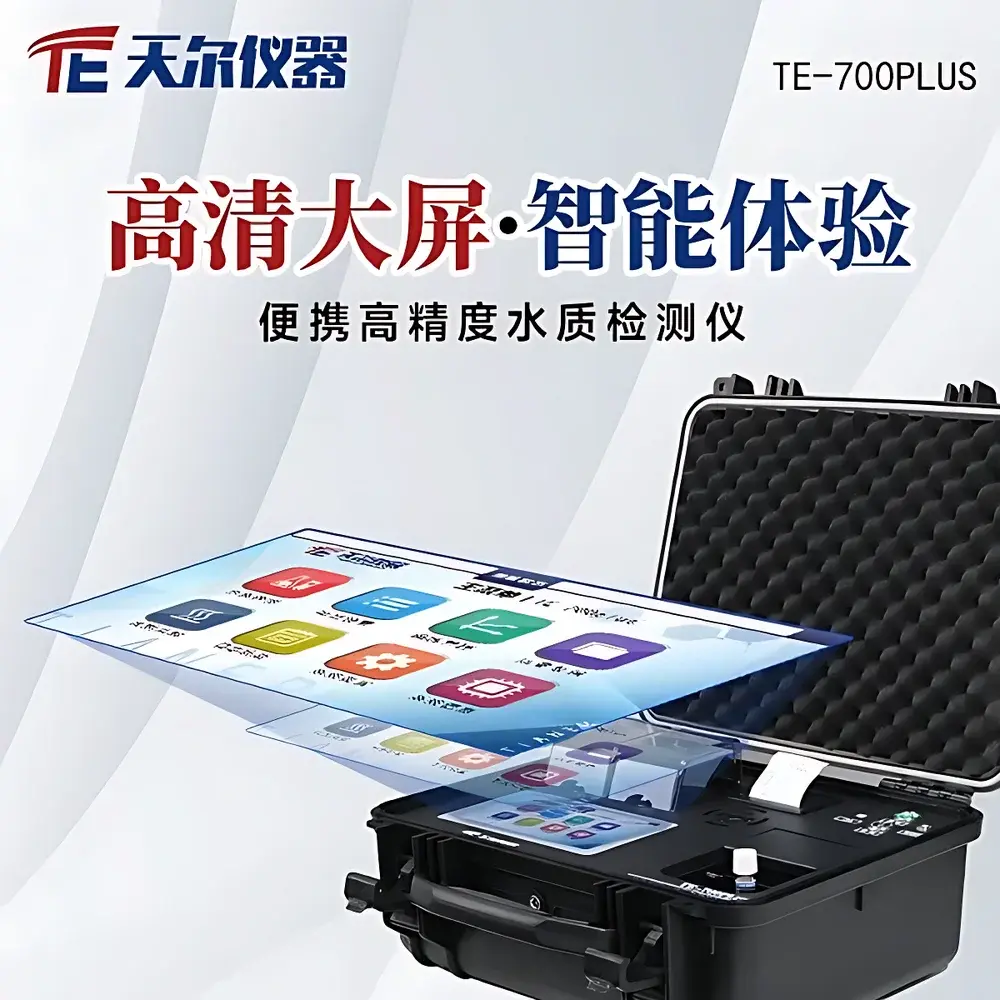
| Display | 7-inch color capacitive touchscreen |
| Data Storage | 1,000,000 measurement records |
| Preloaded Calibration Curves | 1,000 |
| Optical System | Fiber-optic detection with imported cold-light source (≥100,000 h lifetime) |
| Wavelength Accuracy | ±1 nm |
| Spectral Bandwidth | 4 nm |
| Resolution | 0.001 AU |
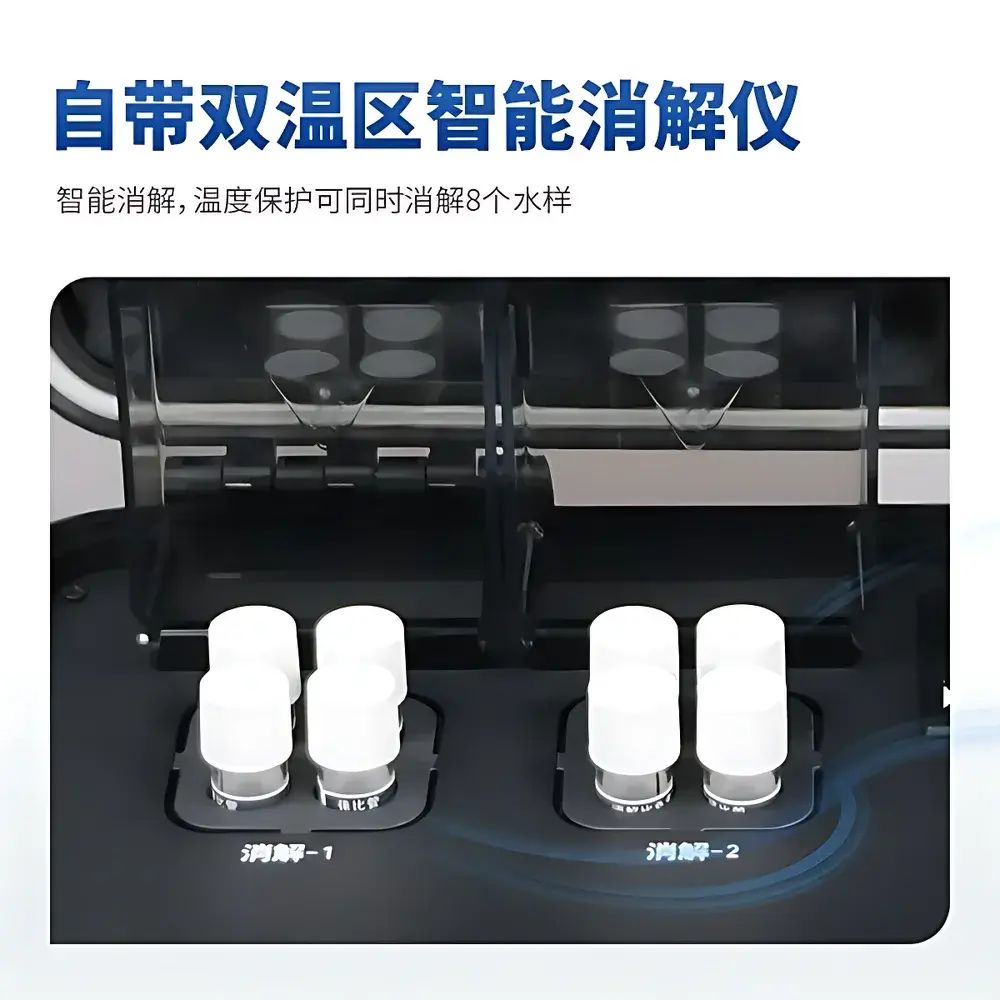
| Dual-Zone Digestion Block | 8-position, independently controlled (0–200 °C) |
| Power | Integrated 40,000 mAh Li-ion battery |
| Connectivity | USB, RS232, optional Bluetooth |
| Compliance | ISO 9001 & ISO 14001 certified |
| Software | Proprietary water quality analysis platform (registered copyright) |
Overview
The TIANER TE-703 Portable COD Analyzer is a field-deployable, laboratory-grade spectrophotometric instrument engineered for precise and reproducible determination of Chemical Oxygen Demand (COD) in diverse aqueous matrices. It operates on the principle of rapid digestion spectrophotometry—where organic matter in water samples is oxidized under acidic, high-temperature conditions using potassium dichromate as the oxidant, followed by quantitative photometric analysis of the resulting Cr3+ absorbance at selected wavelengths (340–900 nm). Unlike conventional benchtop systems, the TE-703 integrates dual-zone thermal digestion, fiber-optic optical path architecture, and embedded firmware calibrated to ASTM D1252 (Method B) and ISO 6060 reference protocols. Its ruggedized design—housed in an IP67-rated impact-resistant carry case—enables reliable operation in mobile laboratories, wastewater treatment plants, remote monitoring stations, and emergency response scenarios without dependency on mains power or external peripherals.
Key Features
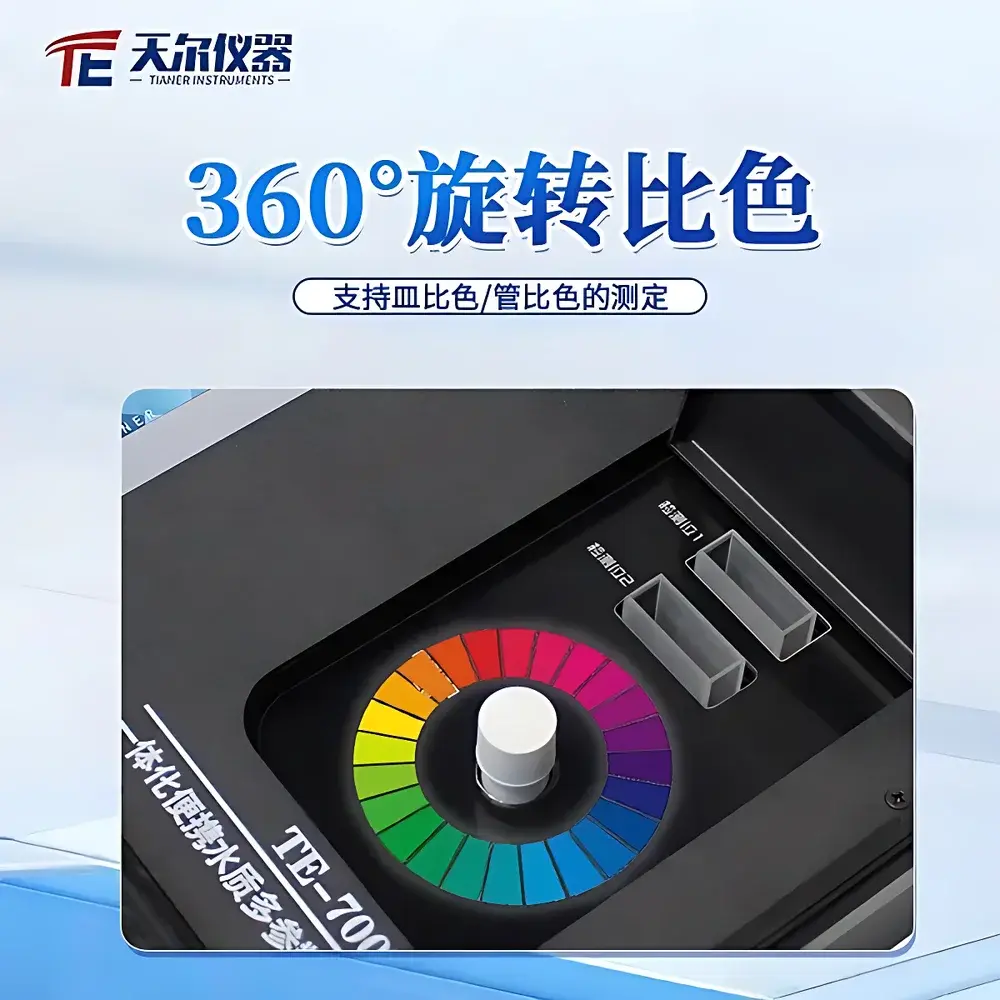
- Dual-Channel Detection Architecture: Combines one 360° rotating cuvette holder with two independent automatic cuvette positions—enabling concurrent analysis of duplicate samples or parallel measurement of COD and a secondary parameter (e.g., ammonia nitrogen or total phosphorus) without manual repositioning.
- Thermally Isolated Dual-Zone Digestion Module: Eight-position block with two independently controlled temperature zones (0–200 °C), each supporting programmable ramp/hold profiles and real-time thermal feedback. Includes dual-stage overtemperature protection and pre-optimized digestion programs for standard EPA 410.4 and ISO 6060 methods.
- Fiber-Optic Photometric System: Utilizes a stabilized imported cold-light source (≥100,000 h operational life) coupled with silica-core optical fibers to minimize stray light, thermal drift, and alignment sensitivity—ensuring long-term baseline stability and inter-instrument comparability.
- Embedded Intelligent Platform: 7-inch capacitive touchscreen running a dedicated water quality OS (copyright-registered software), featuring eight context-aware soft-key modules, auto-calibration routines, self-diagnostic diagnostics with audible/visual fault alerts, and fixed reference channel compensation for drift correction.
- Field-Ready Power & Data Management: Integrated 40,000 mAh rechargeable lithium-ion battery supports ≥12 hours of continuous operation (including digestion cycles). Internal thermal printer enables immediate hardcopy reporting; data export via USB mass storage or RS232 serial interface complies with LIMS integration requirements.
Sample Compatibility & Compliance
The TE-703 is validated for use across municipal wastewater, industrial effluents (including electroplating, textile dyeing, and pharmaceutical discharge streams), surface water, groundwater, reclaimed water, and aquaculture systems. Its broad dynamic range (2–20,000 mg/L COD) accommodates both low-concentration environmental samples and highly polluted process streams without dilution. All optical and thermal subsystems conform to ISO/IEC 17025 technical competency criteria for testing laboratories. The instrument carries valid ISO 9001:2015 (Quality Management) and ISO 14001:2015 (Environmental Management) certifications. Metrological verification reports issued by provincial-level institutes confirm traceability to national standards (GB/T 11914–1989 equivalent). While not FDA 21 CFR Part 11–compliant out-of-the-box, audit trails, user access logs, and electronic signature support can be enabled via firmware update for GLP/GMP-aligned workflows.
Software & Data Management
The proprietary analysis software provides full lifecycle data handling: from method selection and curve fitting (linear, polynomial, or non-linear regression) to statistical validation (R2, SD, CV%). Preloaded calibration curves cover 1,000+ configurations—including EPA-compliant COD digestion protocols and multi-parameter combinations (e.g., COD + turbidity + suspended solids). Users may import custom curves, perform slope/intercept adjustment, or generate new calibrations using NIST-traceable standards. One million measurement records are stored with timestamp, operator ID, sample ID, digestion parameters, and raw absorbance values. Data export formats include CSV, PDF reports, and XML-compatible structured output suitable for regulatory submission (e.g., US EPA NetDMR, EU WISE reporting frameworks).
Applications
- Routine compliance monitoring per local discharge permits (e.g., China’s GB 8978–1996, EU Urban Wastewater Treatment Directive)
- Process control in activated sludge, MBR, and anaerobic digestion units
- Source water vulnerability assessment and watershed health screening
- Educational labs requiring hands-on COD methodology training aligned with APHA Standard Methods 5220D
- Emergency spill response—rapid quantification of organic loading in stormwater or runoff
- Third-party verification audits for ISO 14001-certified facilities
FAQ
Is the TE-703 compliant with international COD testing standards such as ISO 6060 or ASTM D1252?
Yes—the optical path design, digestion kinetics, and calibration traceability align with ISO 6060:1989 and ASTM D1252–12 (Method B). Validation reports document recovery rates of 92–105% for certified reference materials (CRMs) across the full measurement range.
Can the instrument store and recall calibration curves for multiple operators or sites?
Yes—each user profile supports private curve libraries, method templates, and instrument configuration snapshots. Up to 100 user accounts with role-based permissions (admin/operator/viewer) can be configured.
What maintenance is required for long-term optical stability?
The fiber-optic system requires no alignment; only periodic cleaning of cuvette holders and verification against blank standards every 50 runs. The cold-light source eliminates lamp replacement over the instrument’s service life.
Does the dual-zone digestion module support simultaneous different temperature protocols?
Yes—Zone A and Zone B operate independently, enabling concurrent digestion at 150 °C (for COD) and 120 °C (for total phosphorus), for example—reducing total analysis cycle time by up to 40%.
Is remote firmware update supported?
Firmware updates are delivered via encrypted USB drive or secure HTTPS download; version history, changelogs, and rollback capability are fully auditable within the system log.
Related Products







