
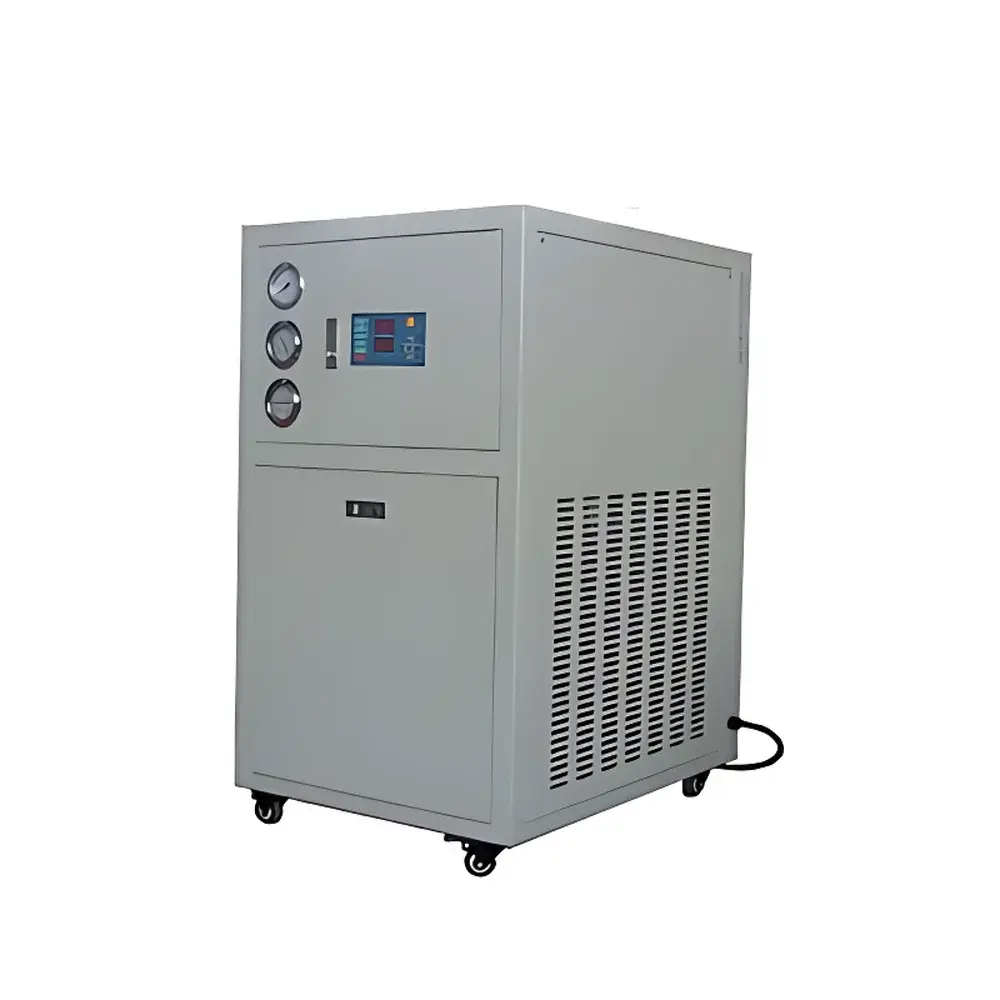
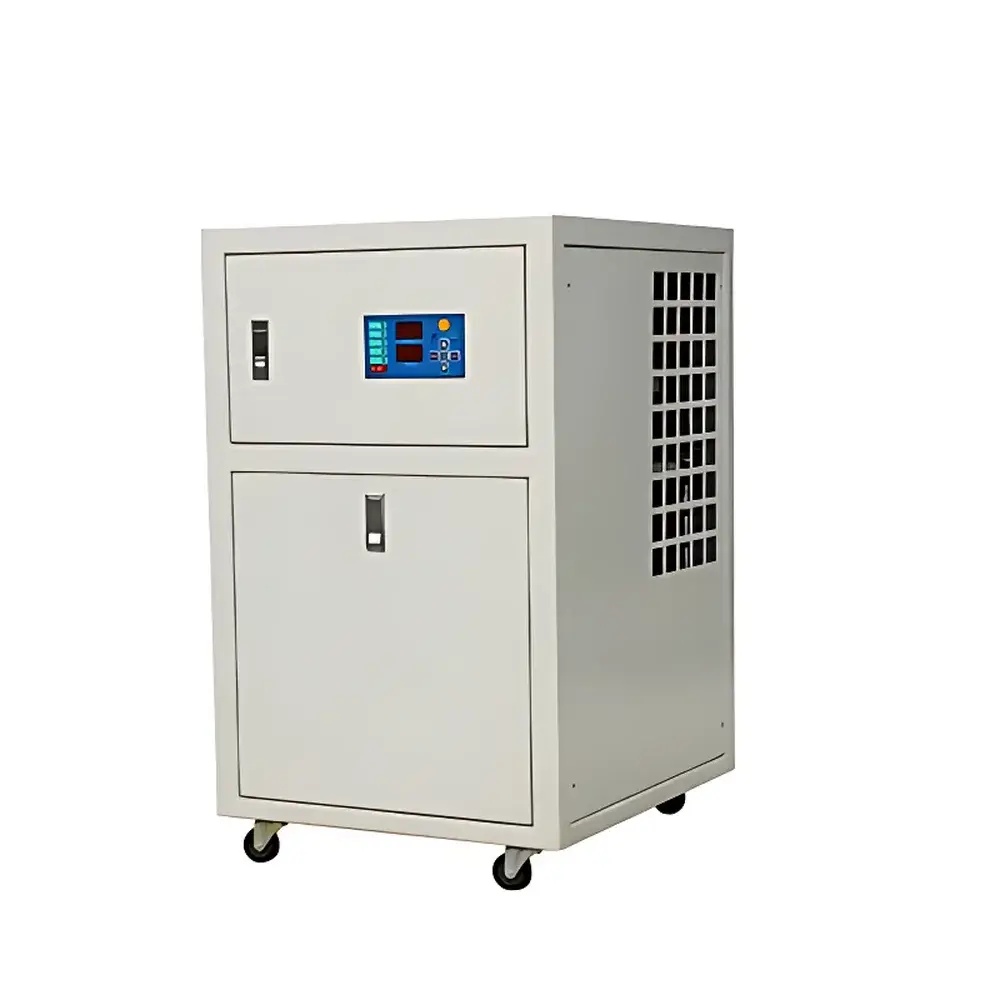
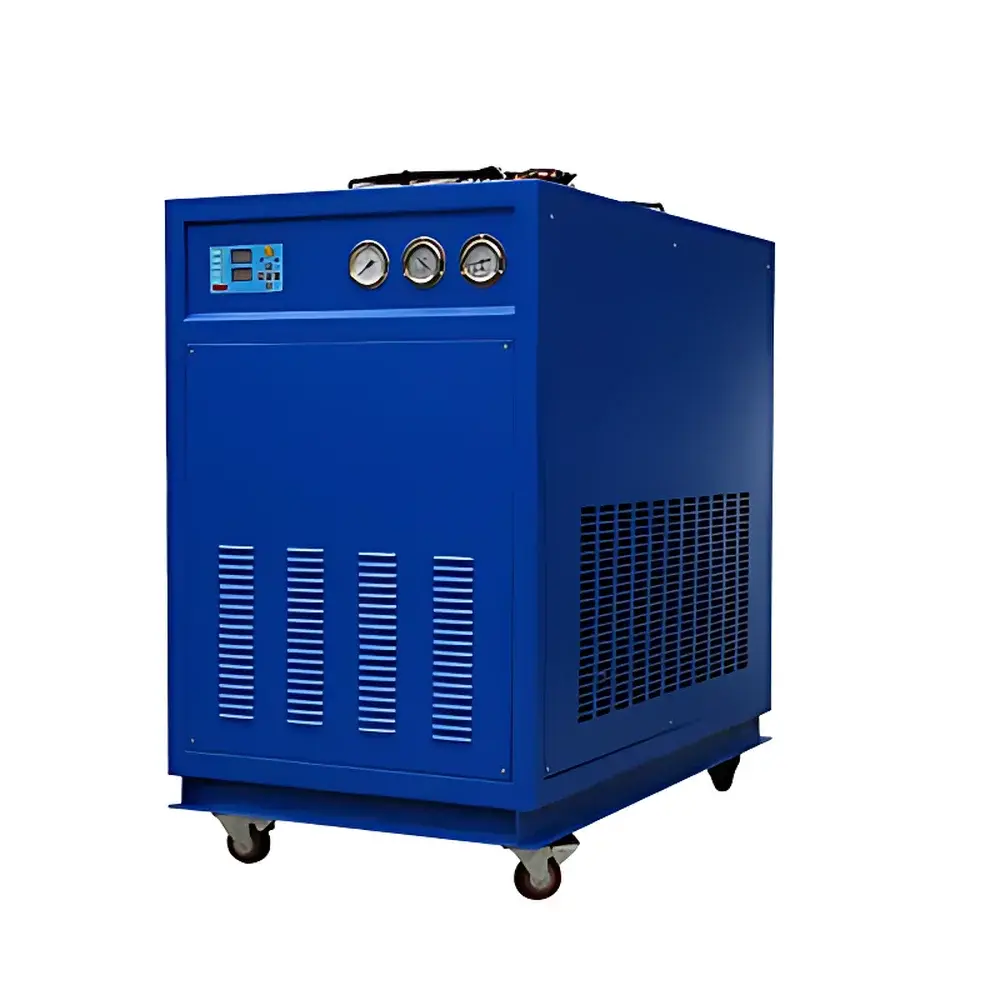
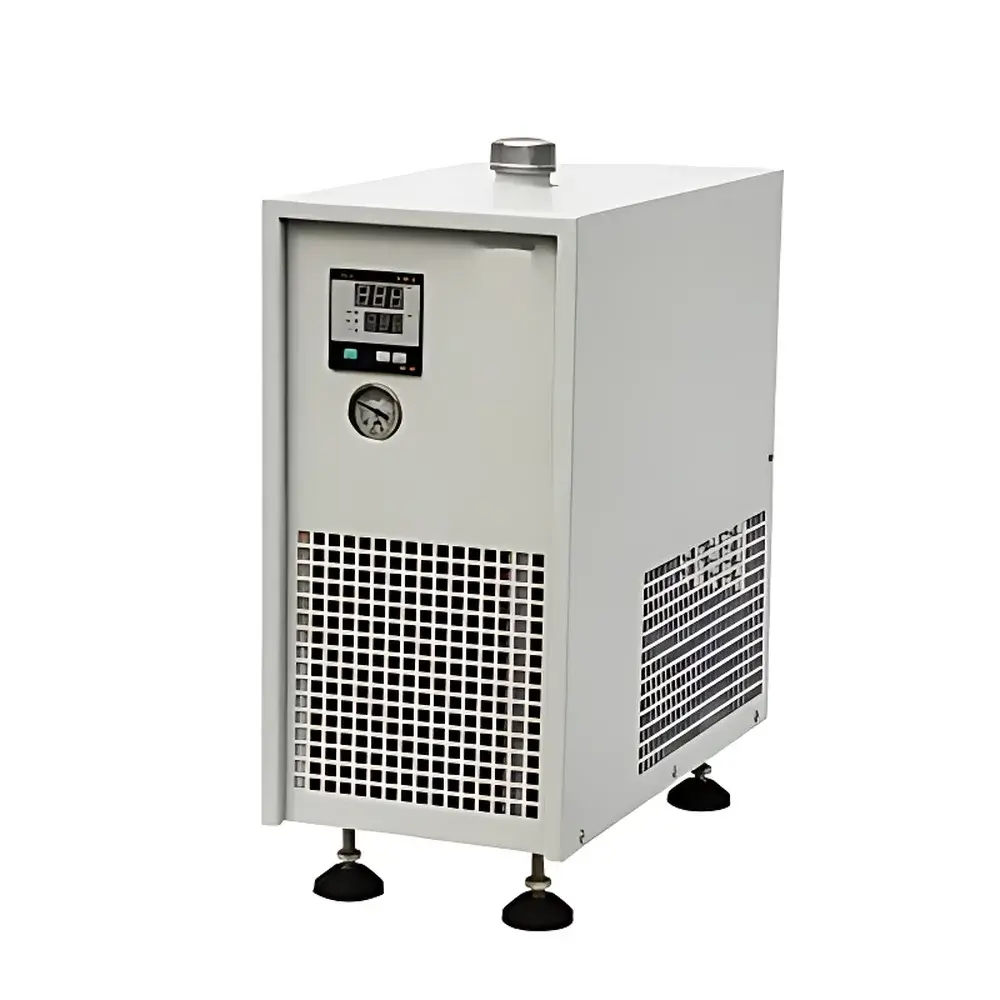
Tianfeng LS-4.5KW Integrated Circulating Chiller
| Brand | Tianfeng |
|---|---|
| Origin | Shanghai, China |
| Manufacturer Type | Direct Manufacturer |
| Model | TF-LS-4.5KW |
| Cooling Capacity | 4.5 kW |
| Water Tank Volume | 45 L |
| Pump Flow Rate | 0–60 L/min |
| Pump Pressure | 0–2 kgf/cm² |
| Input Power | 2.2 kW |
| Voltage/Frequency | 220 V / 50 Hz |
| Dimensions (L×W×H) | 800 × 600 × 1065 mm |
| Weight | Not specified |
| Cooling Method | Water-cooled |
| Temperature Control Range | 5–30 °C (process water) |
| Temperature Stability | ±0.3 °C (typical, under stable ambient and load conditions) |
| Compressor Type | Scroll compressor |
| Safety Protections | High/low pressure switch, overcurrent protection, compressor overheat protection, overtemperature alarm |
| Construction | Stainless steel tank and pump |
| Controller | Digital PID temperature controller (optional RKC unit available) |
| Certifications | ISO 9001:2000 compliant |
| Compliance | Designed for industrial and laboratory environments per IEC 61000-6-2 (EMC immunity) and IEC 60335-1 (safety of electrical appliances) |
Overview
The Tianfeng LS-4.5KW Integrated Circulating Chiller is a precision-engineered, water-cooled thermal management system designed for continuous-duty operation in demanding laboratory and industrial applications. It operates on the vapor-compression refrigeration cycle, utilizing a high-efficiency scroll compressor, thermostatic expansion valve (TXV), and copper-aluminum finned condenser to deliver stable cooling capacity of 4.5 kW at standard operating conditions (inlet water 12 °C, outlet water 7 °C; ambient cooling air 30 °C inlet / 40 °C outlet). The chiller maintains process fluid temperature within a programmable range of 5–30 °C with typical stability of ±0.3 °C under steady-state load and ambient conditions—critical for instrumentation requiring thermal drift minimization, such as analytical spectrometers, electron microscopes, and laser systems. Its integrated architecture eliminates external piping complexity, reduces footprint, and enhances operational reliability through factory-aligned refrigerant charge and pre-validated control logic.
Key Features
- Integrated design with stainless steel water reservoir (45 L capacity) and corrosion-resistant centrifugal circulation pump (0–60 L/min flow, 0–2 kgf/cm² pressure)
- High-precision digital PID temperature controller with real-time display, adjustable setpoint, and hysteresis tuning—supports optional RKC brand controller for enhanced repeatability and data logging capability
- Robust safety architecture including dual-pressure monitoring, compressor overheat cutoff, overcurrent protection, and high-temperature alarm with relay output for external interlock integration
- Low-noise scroll compressor (rated <65 dB(A) at 1 m) coupled with vibration-dampened mounting and insulated condenser fan assembly
- Industrial-grade electrical components from Siemens, Schneider Electric, and Omron—certified to IEC 60947 standards for contactor and relay durability
- Modular refrigeration circuit with internationally sourced TXV and solenoid valves (Italy/Germany origin), ensuring consistent superheat control and long-term refrigerant metering accuracy
- Front-access service panel with diagnostic LED indicators, facilitating rapid fault identification during GLP or GMP-aligned maintenance routines
Sample Compatibility & Compliance
This chiller is compatible with deionized water, glycol-water mixtures (up to 30% concentration), and other non-corrosive heat transfer fluids commonly used in analytical instrumentation cooling loops. It meets mechanical and electrical safety requirements per IEC 61000-6-2 (industrial immunity) and IEC 60335-1 (household and similar equipment), and its construction adheres to ISO 9001:2000 quality management system protocols throughout design, production, and final testing. While not FDA 21 CFR Part 11–validated out-of-the-box, its analog/digital alarm outputs, stable setpoint retention, and optional RKC controller enable integration into regulated environments where audit-trail-capable SCADA or LIMS interfaces are deployed. It supports compliance with ASTM E2912 (standard practice for thermal stability of analytical instruments) when operated within specified ambient (≤35 °C) and inlet water temperature (≤40 °C) limits.
Software & Data Management
The standard unit features a local digital interface only—no embedded software stack or network connectivity. However, its analog 4–20 mA temperature output and dry-contact alarm relays allow seamless integration with third-party data acquisition systems (e.g., LabVIEW, DeltaV, Ignition SCADA) for centralized monitoring, trending, and automated shutdown sequencing. Optional RKC controllers provide RS-485 Modbus RTU communication, enabling remote setpoint adjustment, real-time temperature logging, and event-based trigger recording—supporting basic electronic record requirements under GLP Annex 11 and 21 CFR Part 11 when paired with validated host software. All firmware updates require physical access and are performed via USB or serial interface under controlled change management procedures.
Applications
- Instrument cooling for graphite furnace atomic absorption spectrometers (GFAAS), ICP-OES and ICP-MS plasma sources, XRF and XRD goniometers, SEM/TEM column chillers, and laser ablation systems
- Thermal stabilization of high-speed spindles, CNC machine tool hydraulic oil, and vacuum chamber cryo-pumps in precision manufacturing
- Process cooling in plastic injection molding (mold temperature control), electroplating baths, ultrasonic cleaning tanks, and pharmaceutical fermentation vessels
- Support of vacuum deposition systems (e.g., sputtering, e-beam evaporation) where substrate temperature uniformity directly impacts film adhesion and stoichiometry
- Concrete precooling in civil engineering labs per ASTM C1064, and rapid post-processing cooling of food samples in sensory analysis workflows
FAQ
What is the maximum allowable return water temperature?
The chiller is rated for continuous operation with inlet water temperature ≤40 °C. Exceeding this threshold accelerates compressor wear and may trigger high-pressure cutout; sustained operation above 45 °C is not recommended.
Can this unit operate with ethylene glycol solutions?
Yes—up to 30% by volume glycol/water mixture is supported; however, flow rate and cooling capacity must be derated per manufacturer’s correction curves due to increased viscosity and reduced specific heat.
Is remote monitoring possible without upgrading the controller?
Basic remote status monitoring (e.g., fault signal, run status) is achievable via dry-contact relay outputs; full parameter telemetry requires the optional RKC controller with Modbus support.
Does the unit include insulation on the water tank and piping?
The stainless steel tank is uninsulated; external insulation of supply/return lines is recommended in ambient environments >28 °C or where condensation risk exists.
What maintenance intervals are recommended for laboratory use?
Compressor oil and refrigerant levels should be verified annually; condenser coil cleaning every 6 months in dusty environments; PID sensor calibration every 12 months using NIST-traceable reference thermometers.



