
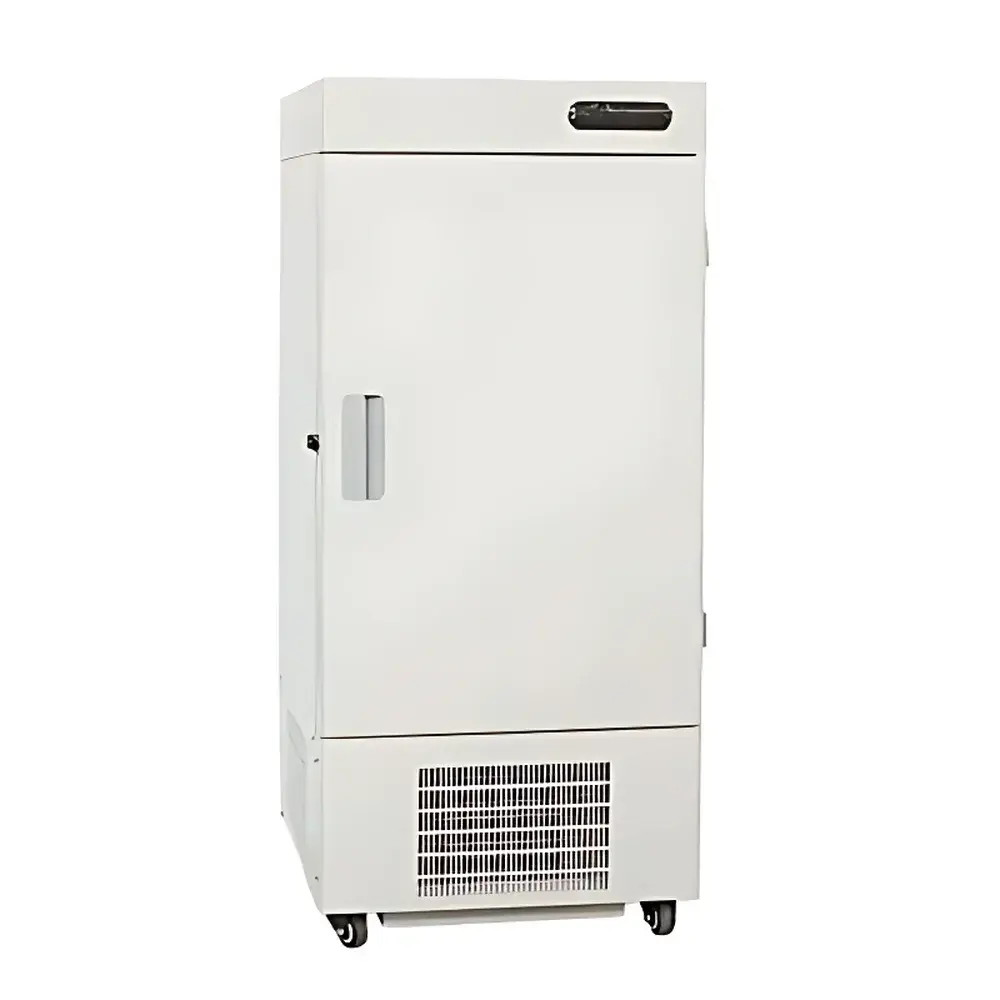
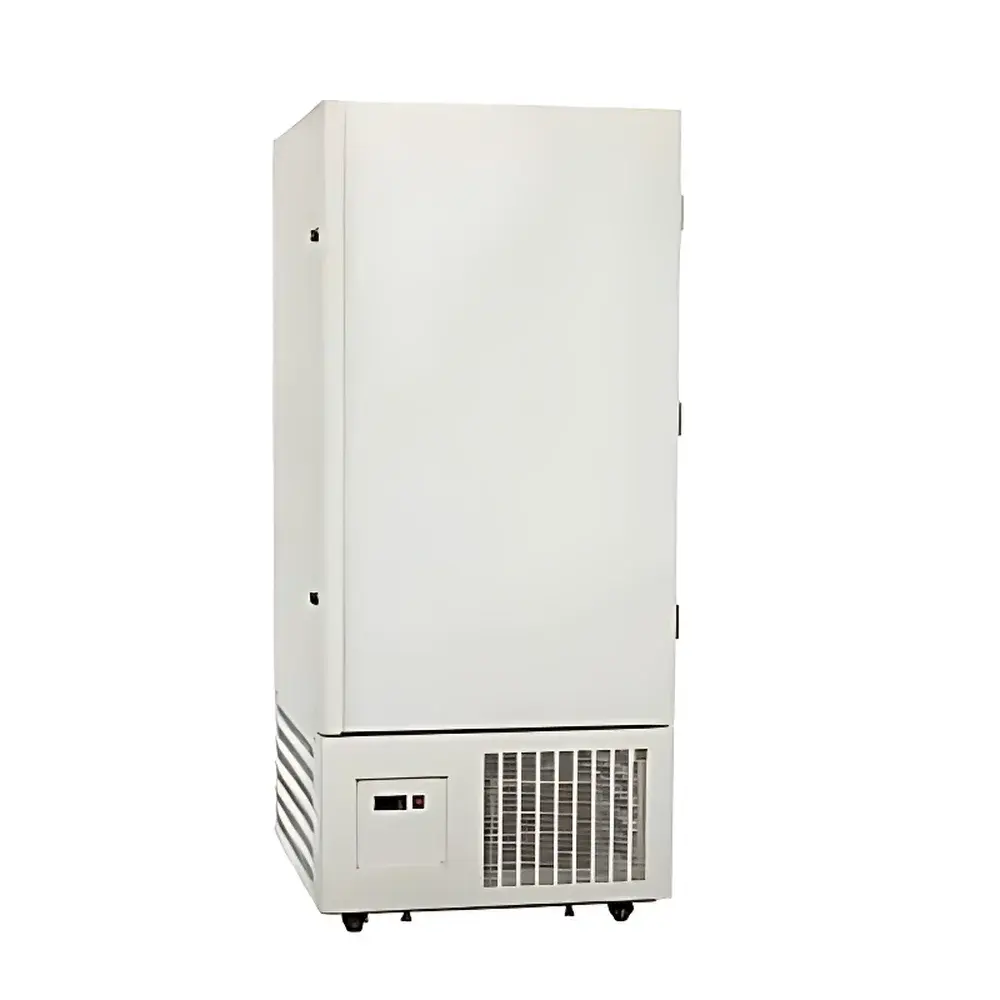
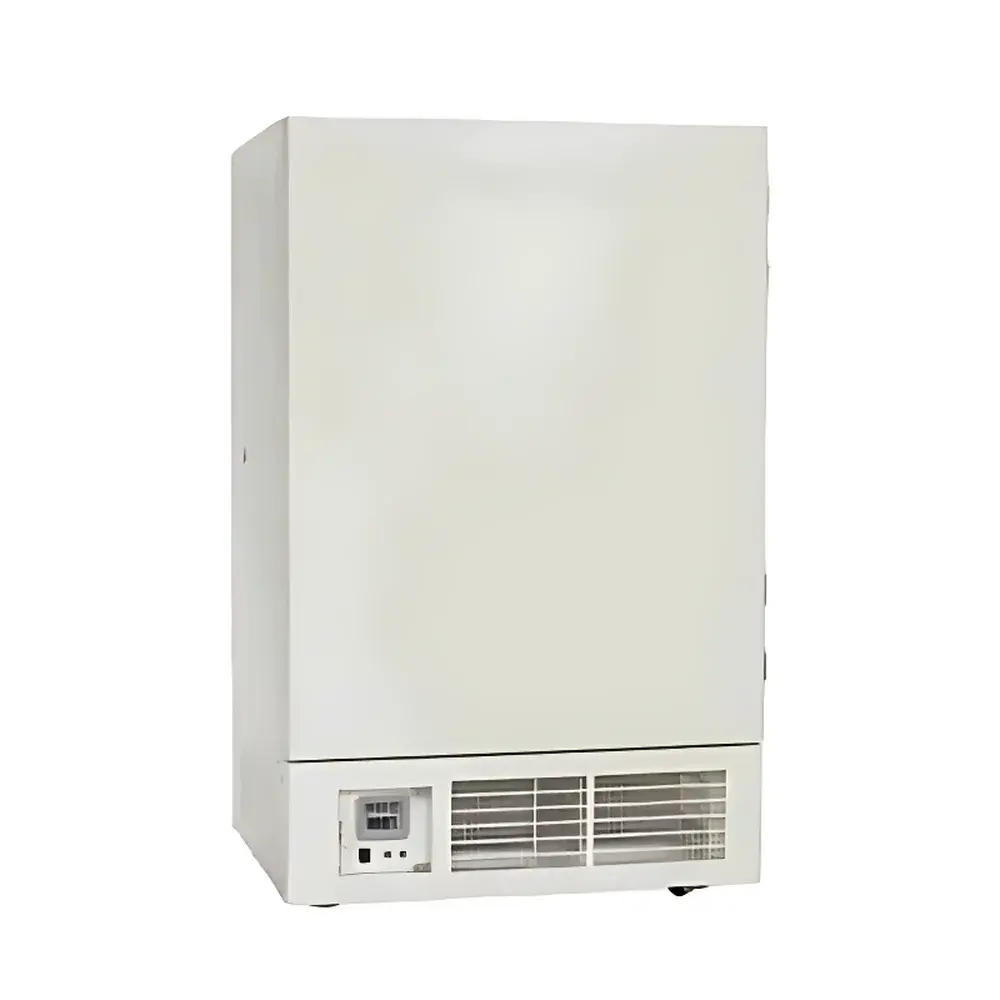
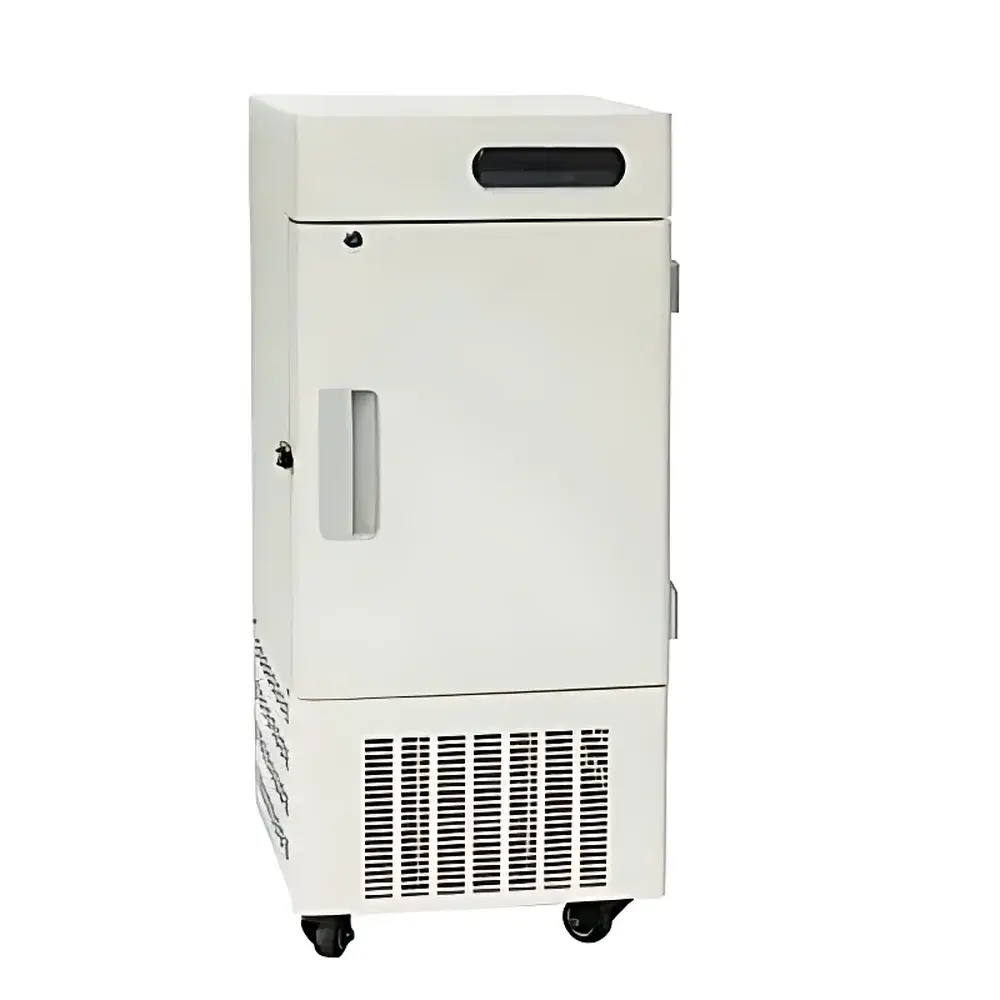
Tianfeng TF-40-158D-LA Medical Low-Temperature Refrigerator
| Brand | Tianfeng |
|---|---|
| Origin | Shanghai, China |
| Manufacturer Type | Direct Manufacturer |
| Country of Origin | China |
| Model | TF-40-158D-LA |
| Effective Volume | 158 L |
| Temperature Range | −15 °C to −40 °C |
| Inner Dimensions (mm) | 460 × 455 × 800 |
| External Dimensions (mm) | 700 × 700 × 1535 |
| Power Supply | 220 V / 50 Hz |
| Rated Power | 630 W |
| Noise Level | 57 dB(A) |
| Refrigerant | Eco-friendly non-CFC/HFC-free refrigerant (R290/R170 blend or equivalent) |
| Interior Material | Stainless steel (304 grade) |
| Door Configuration | Four independent inner doors |
| Shelving | Three adjustable stainless-steel shelves |
| Cooling Method | Hybrid condensation — partial natural convection + partial forced-air cooling |
| Interface | RS-232 (optional) |
| Compliance | ISO 9001:2000 certified design and manufacturing process |
| Safety Features | Dual lock system (door lock + power lock), audible/visual high-temp alarm, door ajar detection |
Overview
The Tianfeng TF-40-158D-LA Medical Low-Temperature Refrigerator is an engineered solution for stable, energy-efficient storage of temperature-sensitive biological materials at sustained sub-zero conditions. Designed specifically for clinical, diagnostic, and research-grade applications, it operates within a precisely controlled temperature range of −15 °C to −40 °C—optimized for long-term preservation of blood components (e.g., red blood cells, plasma), vaccines, microbial cultures, tissue samples, and reagent-grade chemicals. Its thermodynamic architecture integrates a high-efficiency imported ultra-low-temperature compressor with a hybrid heat dissipation system—combining passive natural convection and active fan-assisted cooling—to ensure consistent thermal performance even under ambient temperatures up to 35 °C and in environments with elevated particulate load. The unit complies with ISO 9001:2000 quality management standards throughout its design, component sourcing, assembly, and factory testing phases. All critical subsystems—including the evaporator, condenser, thermostat, and alarm circuitry—are subject to 72-hour continuous operational validation prior to shipment.
Key Features
- Stainless-steel interior (grade 304) and inner doors—corrosion-resistant, non-porous, and compliant with ISO 13485–aligned cleaning protocols for biomedical environments.
- Four independently sealed inner doors minimize cold air loss during frequent access; each door features magnetic gasket integrity verification.
- Three-tier adjustable shelving system enables flexible configuration for vial racks, cryoboxes, or stacked sample containers without obstructing airflow.
- Radius-rounded internal corners and seamless welds facilitate GMP-compliant cleaning and reduce microbial retention risk.
- Hybrid condensation system enhances reliability: if the fan-cooled section becomes partially obstructed (e.g., by dust accumulation), natural convection maintains baseline heat rejection—preventing compressor overload or thermal shutdown.
- Low-noise operation at ≤57 dB(A) achieved via vibration-damped compressor mounting, acoustically insulated cabinet walls, and optimized fan blade geometry.
- Dual-lock security system includes mechanical door latch and integrated power cut-off switch—meeting CLIA and CAP requirements for controlled-access specimen storage.
- RS-232 serial interface (optional) supports integration into laboratory information management systems (LIMS) for automated temperature logging and audit trail generation.
Sample Compatibility & Compliance
The TF-40-158D-LA accommodates standard biomedical storage formats including 2 mL cryovials (up to 1,200 units), 50 mL conical tubes, plate stacks (96-/384-well), and cryobags (up to 500 mL). Its uniform temperature distribution (±2.5 °C max deviation across all zones per IEC 61000-4-2 validation) ensures stability for WHO-prequalified vaccine formulations and USP -defined storage conditions. The unit satisfies key regulatory expectations for clinical laboratories: temperature monitoring meets FDA 21 CFR Part 11 data integrity criteria when paired with validated external loggers; physical construction adheres to IEC 61010-1 safety standards for laboratory equipment; and refrigerant selection conforms to EU F-Gas Regulation (No. 517/2014) and Montreal Protocol phase-out schedules.
Software & Data Management
While the base model features analog temperature indication with digital setpoint control, the optional RS-232 interface enables bidirectional communication with third-party environmental monitoring platforms (e.g., TempTale®, Sensitech®, or custom Python-based SCADA integrations). Users may configure alarm thresholds, export time-stamped temperature histories (CSV format), and trigger email/SMS alerts via compatible middleware. All logged data retain immutable timestamps and user-access metadata—supporting GLP/GMP audit readiness. Firmware updates are performed offline via USB-to-serial adapter to prevent network exposure, aligning with NIST SP 800-82 guidelines for embedded medical device cybersecurity.
Applications
This refrigerator serves as a primary storage platform in blood banks (per AABB Standard 5.11.2 for RBC storage at −18 °C to −30 °C), hospital core labs maintaining ELISA reagents and monoclonal antibodies, biobanks archiving FFPE tissues and PBMC isolates, and contract research organizations (CROs) handling Phase I–III clinical trial biospecimens. It is also deployed in pharmaceutical QC labs for stability testing per ICH Q5C guidelines, electronics manufacturing for moisture-sensitive device storage (MSL 1–3), and marine bioprospecting facilities preserving deep-sea extremophiles. Its compact footprint (0.49 m² floor area) and height-adjusted design (1.535 m cabinet; total 1.89 m with casters) allow installation in ISO Class 7 cleanrooms and narrow corridor spaces without compromising service access.
FAQ
What is the recommended maintenance schedule for optimal performance?
Perform visual inspection of condenser coils and dust filter every 30 days; clean using dry compressed air or soft brush. Verify door seal integrity quarterly via the “dollar bill test.” Calibrate temperature sensor annually using NIST-traceable reference probe (e.g., Fluke 1523).
Can this unit be integrated into a centralized building management system (BMS)?
Yes—via optional RS-232-to-Modbus RTU gateway, enabling real-time status polling (compressor runtime, alarm state, current temp) and remote setpoint adjustment within BACnet/IP or LonWorks networks.
Does the unit support 24/7 operation under continuous load conditions?
Yes—rated for uninterrupted duty cycle per IEC 60335-2-24 Annex BB. Compressor duty cycle remains ≤65% under worst-case ambient (35 °C, 60% RH) and full-load conditions.
How is temperature uniformity validated across the chamber?
Factory validation uses nine calibrated PT100 sensors placed at ICH Q5C-defined locations (center, corners, top/mid/bottom planes); results are documented in the Certificate of Conformance shipped with each unit.
Is field calibration of the internal thermostat possible?
No—thermostat calibration is performed exclusively at the factory using metrology-grade dry-block calibrators. Field adjustments are restricted to setpoint offset correction only, accessible via service menu with dual-password protection.




