
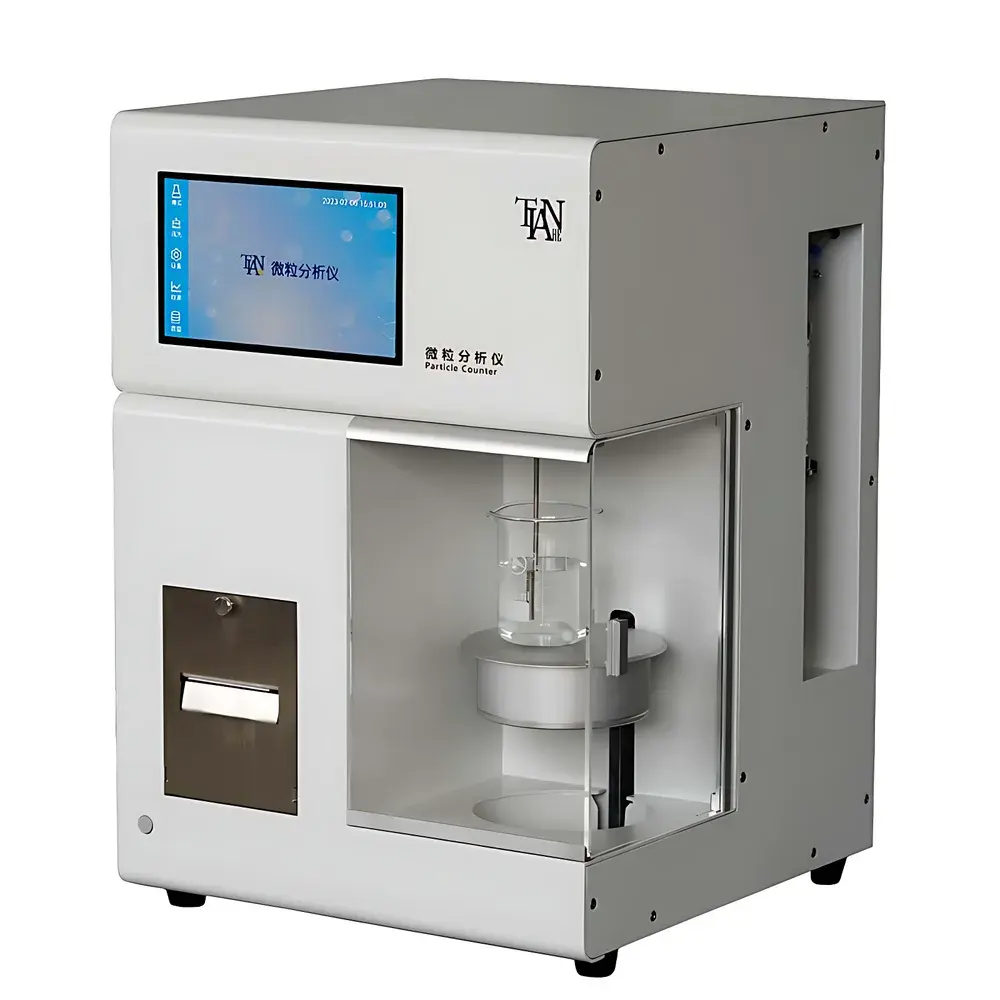
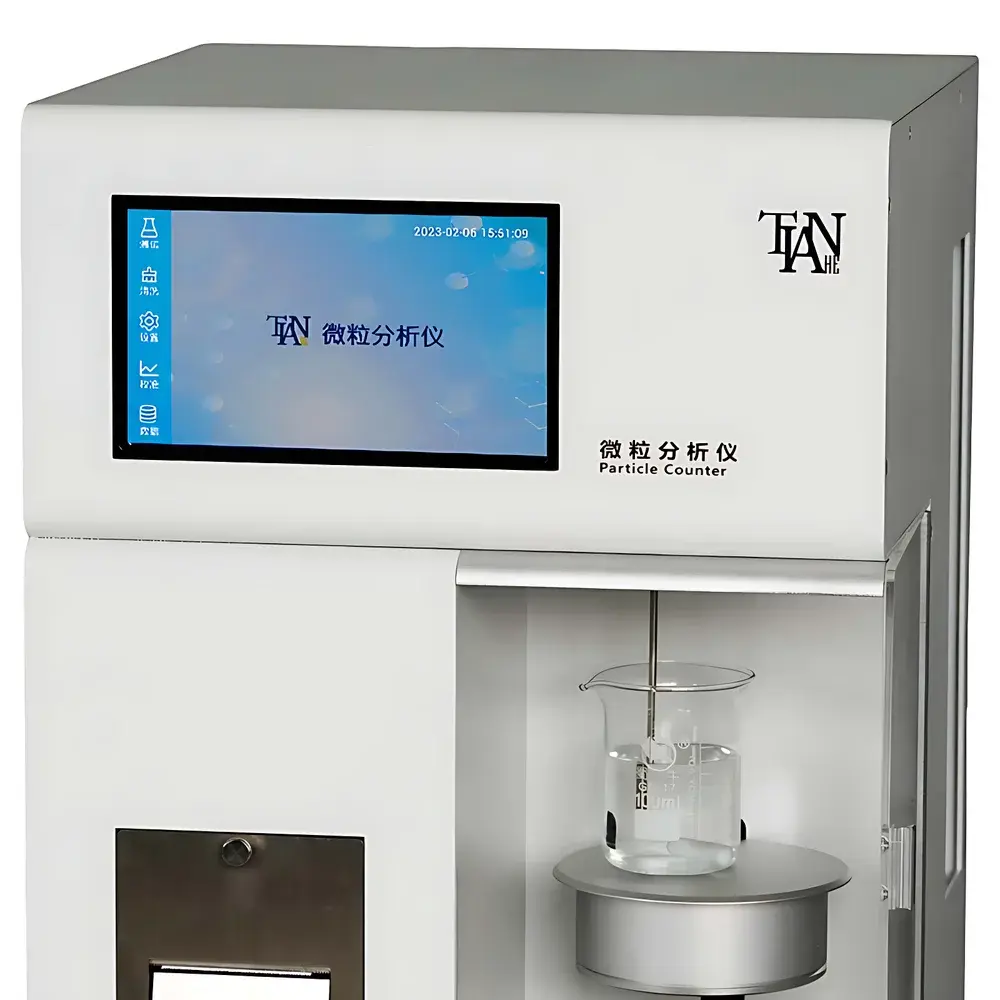
Tianhe GWF-A1 Insoluble Particle Analyzer
| Brand | Tianhe |
|---|---|
| Origin | Tianjin, China |
| Manufacturer Type | Authorized Distributor |
| Product Origin | Domestic (China) |
| Model | GWF-A1 |
| Pricing | Available Upon Request |
Overview
The Tianhe GWF-A1 Insoluble Particle Analyzer is a fully automated, light-blockage (obscuration) principle-based instrument engineered for quantitative detection and size-resolved enumeration of insoluble particulate matter in parenteral pharmaceuticals, biologics, ophthalmic solutions, and medical device rinsates. It operates in strict compliance with pharmacopoeial requirements—including Chinese Pharmacopoeia (ChP) Volume IV General Chapter 0903, United States Pharmacopeia (USP) and , European Pharmacopoeia (Ph. Eur.) 2.9.19, and ISO 21510:2017—ensuring regulatory acceptability across global markets. The system employs a high-stability 850 nm near-infrared laser source coupled with real-time optical energy compensation circuitry to maintain measurement consistency across transparent, colored, and low-turbidity formulations—including lipid emulsions, ethanol-based tinctures, and iodinated contrast media—without signal drift or baseline instability.
Key Features
- Laser obscuration detection with dual-stage optical alignment and automatic intensity normalization for reproducible particle counting across variable sample absorbance and refractive index.
- Fluidic path constructed entirely from electropolished ASTM F899-grade 316L stainless steel and PTFE-lined capillaries—chemically inert to organic solvents (e.g., acetone, DMSO, chloroform), weak acids/bases (pH 2–12), and oily matrices—enabling direct analysis without dilution or filtration artifacts.
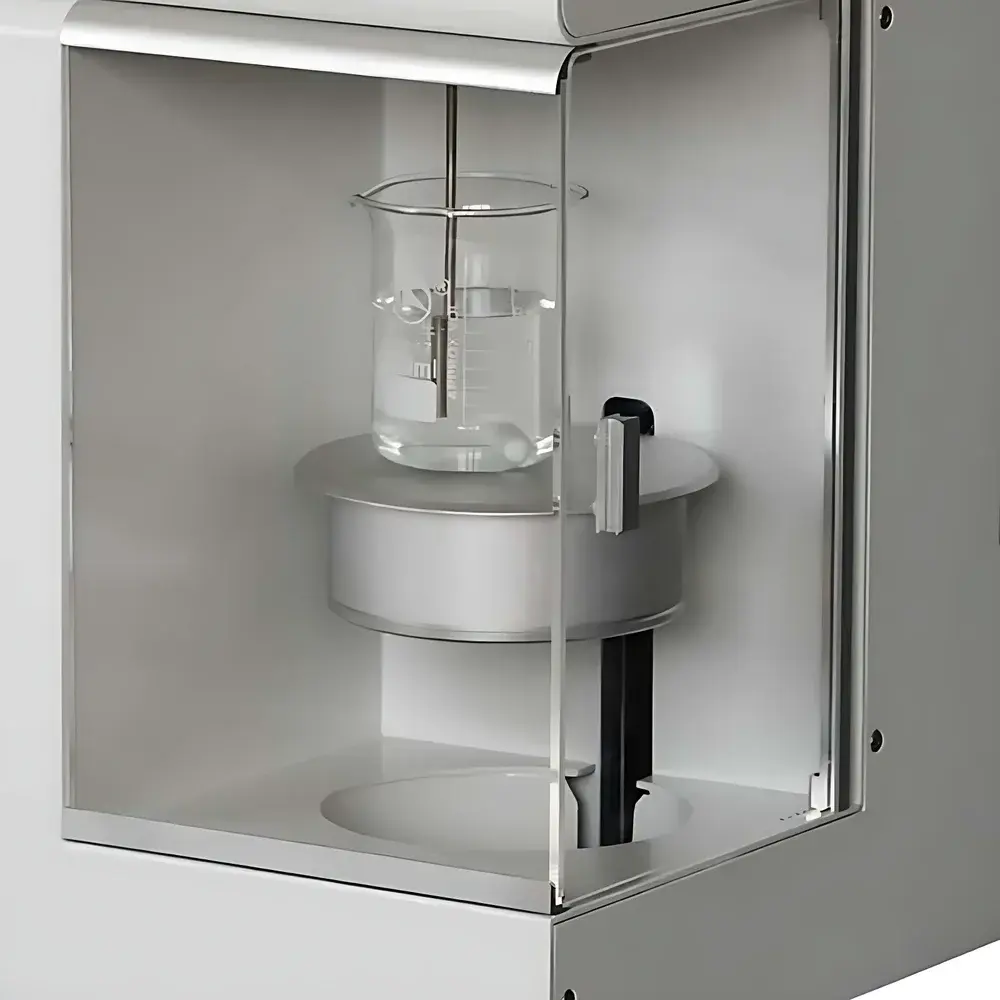
- Motorized, interlocked sample chamber with transparent polycarbonate dust shield and auto-lift mechanism; prevents ambient contamination and ensures operator safety during vial loading/unloading.
- Dedicated ARM Cortex-A53 quad-core processor with embedded 4 GB LPDDR4 RAM and 32 GB eMMC storage—supports concurrent execution of particle classification, statistical validation, and audit-trail logging.
- Full-system automated calibration using NIST-traceable polystyrene latex (PSL) reference standards; supports multi-point verification per ChP/USP/ISO protocols with on-screen pass/fail reporting.
- Role-based access control (RBAC) with three-tier permission levels (Operator, Supervisor, Administrator); enforces ALCOA+ data integrity principles including attributable, legible, contemporaneous, original, and accurate records.
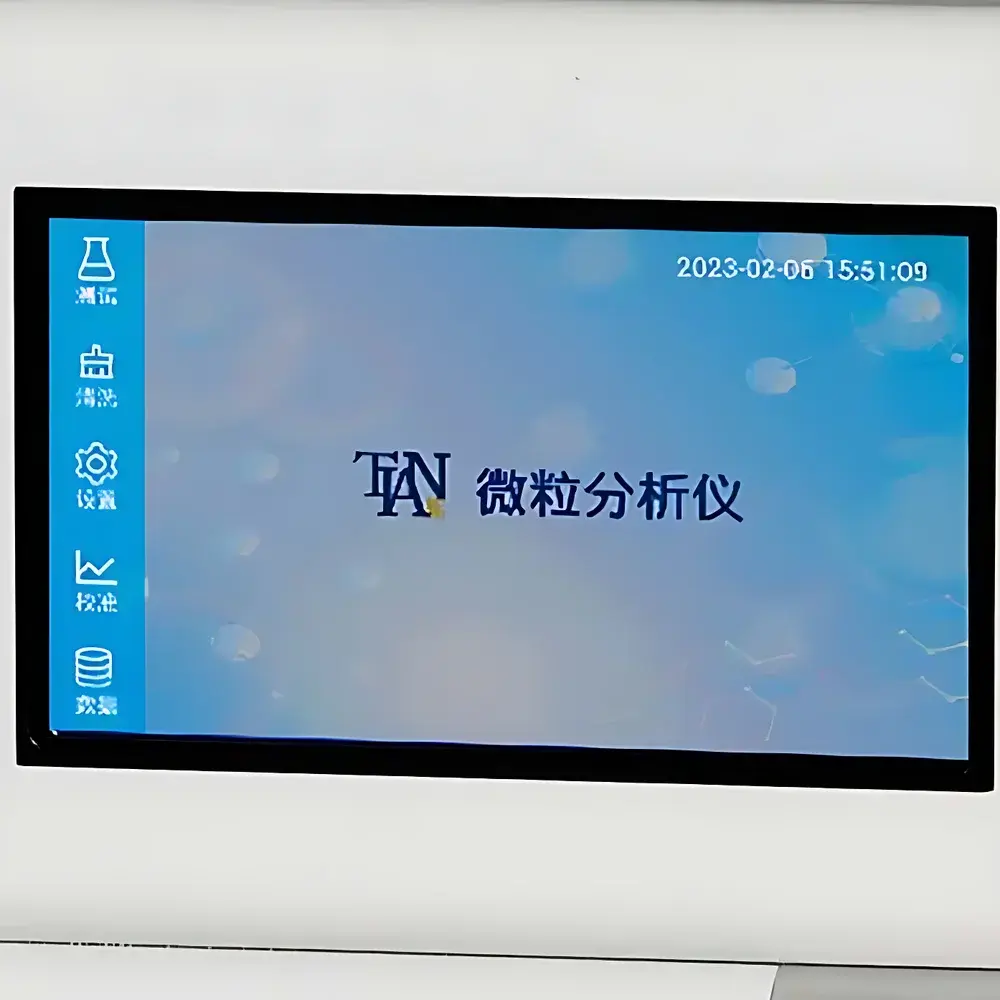
- Android 11-based HMI with 10.1-inch capacitive touchscreen, gesture navigation, and context-aware soft-key layout—designed for glove-compatible operation in ISO Class 5–8 cleanrooms.
Sample Compatibility & Compliance
The GWF-A1 accommodates standard USP/ChP-compliant containers (vials, ampoules, syringes, IV bags) with volume ranges from 0.2 mL to 1000 mL. Its wide dynamic concentration range (up to 18,000 particles/mL) and adjustable flow rate (5–80 mL/min) support both low-volume high-potency injectables (e.g., monoclonal antibodies) and large-volume infusions (e.g., saline, dextrose). All firmware and data handling routines conform to FDA 21 CFR Part 11 Annex 11 requirements for electronic records and signatures. System validation documentation includes IQ/OQ/PQ templates aligned with ICH Q5A(R2), EU GMP Annex 15, and WHO TRS 992 Annex 6.
Software & Data Management
Embedded software provides full lifecycle data governance: raw pulse data retention, configurable report generation (PDF/CSV/XLSX), batch-level statistical summaries (mean, SD, RSD, %CV), and trend analysis over time. Audit trails record all user actions—including method edits, calibration events, result deletions—with immutable timestamps and digital signatures. Data export occurs via USB 2.0 host port (FAT32-formatted drives only) or RS-232 serial interface (ASCII protocol, 9600 baud, no parity); network connectivity is intentionally omitted to prevent unauthorized remote access and satisfy air-gapped lab security policies.
Applications
- Final container testing of sterile injectables (small-volume parenterals, lyophilized reconstitutes, prefilled syringes).
- Filter integrity verification and extractables/leachables assessment in primary packaging components (glass vials, rubber stoppers, plastic cartridges).
- Stability-indicating monitoring of protein aggregation and silicone oil droplet formation during accelerated and real-time storage studies.
- QC release testing for biosimilars and advanced therapy medicinal products (ATMPs) under EMA CHMP/Q5A and FDA CMC guidance.
- Supporting root cause analysis in manufacturing deviations involving visible particulates or subvisible particle spikes.
FAQ
Does the GWF-A1 comply with USP mandatory requirements for flow rate accuracy and volumetric precision?
Yes. The peristaltic pump system achieves ±0.5% volumetric accuracy across the full 0.2–1000 mL range, validated per USP Section 3.2. Flow rate stability is maintained within ±1.2% RSD at all setpoints (5–80 mL/min), verified using gravimetric collection and calibrated analytical balances.
Can the instrument differentiate between intrinsic and extrinsic particles?
No. As a light-obscuration platform, it reports total particle count by size bin only. Differentiation requires orthogonal techniques such as microflow imaging (MFI) or Raman spectroscopy, which may be used in tandem for root cause investigation.
Is 21 CFR Part 11 compliance hardware-locked or software-configurable?
Compliance is enforced at firmware level: all electronic signatures require biometric (fingerprint) or two-factor authentication (PIN + smartcard), and audit logs are cryptographically hashed and write-once archived to internal flash memory.
What maintenance intervals are recommended for fluidic path components?
The 316L/PTFE flow cell and tubing require cleaning after every 50 runs using 70% isopropanol followed by ultrapure water flush; full replacement is recommended every 12 months or after 1,000 operational cycles, whichever occurs first.
Does the system support custom particle size binning beyond the default 48-channel configuration?
Yes. Users may define up to 1,024 discrete size thresholds with 0.1 µm resolution via the “Advanced Channel Editor” module, enabling alignment with internal specifications or non-pharmacopoeial particle classification schemes (e.g., ISO 8573-1 for compressed air quality).
Related Products






