
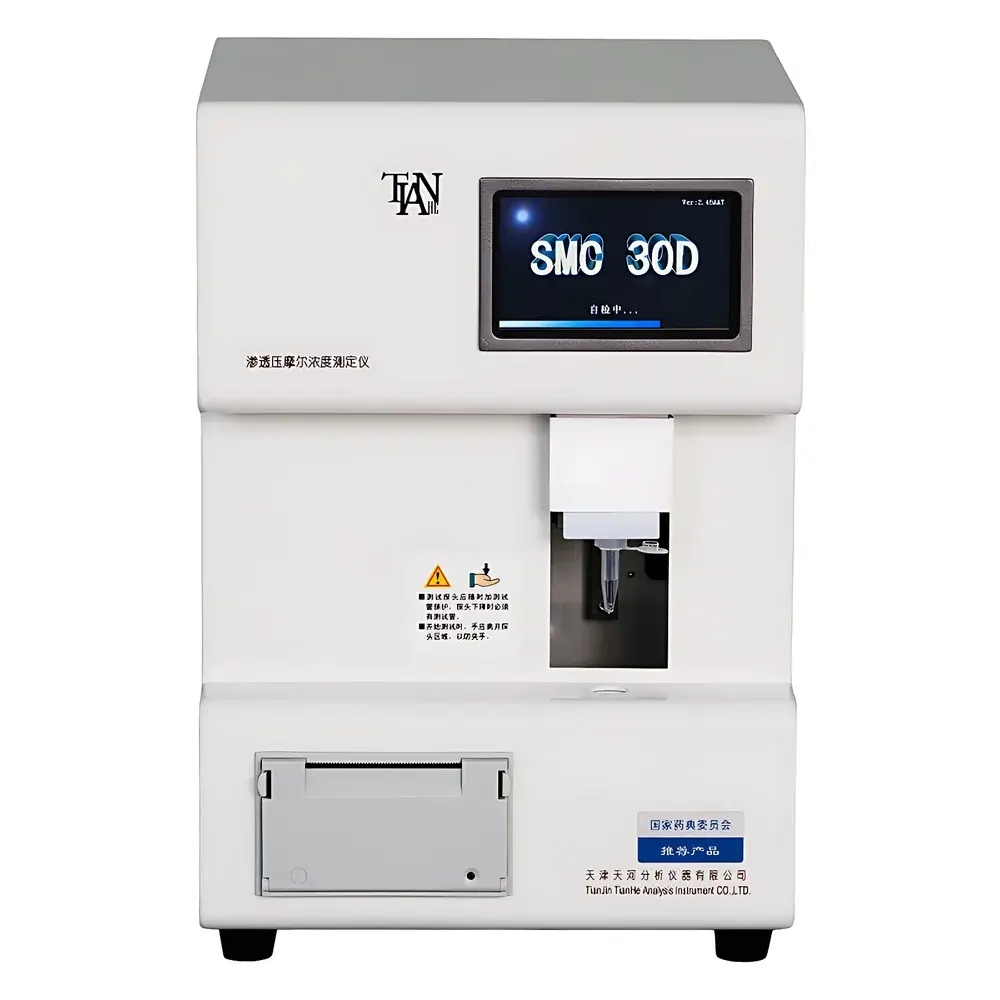
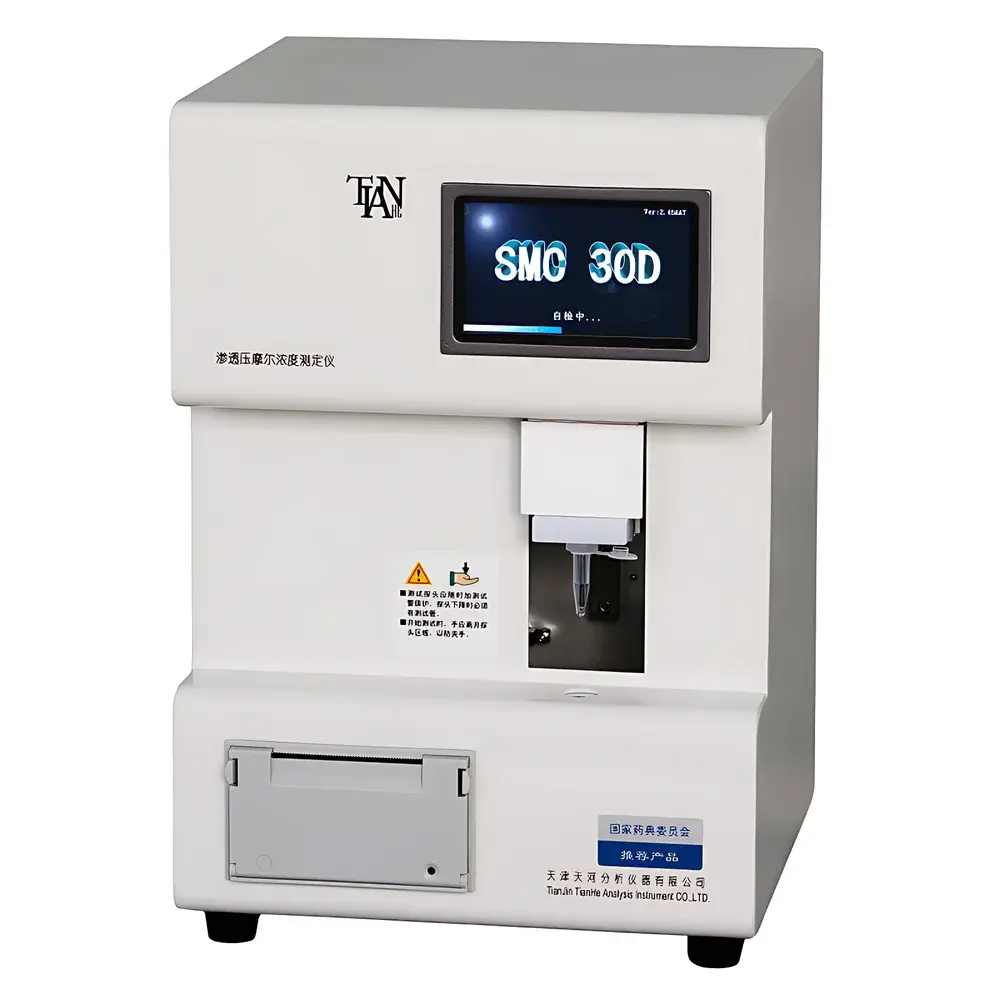

Tianhe SMC 30D Cryoscopic Osmometer
| Brand | Tianhe |
|---|---|
| Origin | Tianjin, China |
| Model | SMC 30D |
| Measurement Principle | Freezing Point Depression |
| Measurement Range | 0–3000 mOsmol/kg H₂O |
| Sample Volume | 50–100 µL |
| Analysis Time | < 90 s |
| Pre-cooling Time | ≤ 3 min |
| Repeatability | RSD ≤ ±1% at 300 mOsmol/kg |
| Accuracy | ±2 mOsmol/kg (≤400 mOsmol/kg) |
| Resolution | 1 mOsmol/kg |
| Linearity | < 1% deviation from linear fit |
| Operating Environment | 10–30 °C, 5–80% RH |
| Power Supply | AC 220 V ±10%, 50 Hz, <80 W |
| Compliance Support | Chinese Pharmacopoeia (ChP) injection database built-in |
| Data Interface | RS232 |
| Software Features | User permission management, audit-trail-capable data storage, configurable pass/fail criteria, multi-format print output |
Overview
The Tianhe SMC 30D Cryoscopic Osmometer is a precision-engineered instrument designed for the quantitative determination of osmolality in aqueous pharmaceutical solutions via freezing point depression. Based on the colligative property that solute concentration lowers the freezing point of a solvent, the SMC 30D measures the temperature difference between the sample’s freezing point and that of pure water with high thermal resolution. This principle is universally accepted in regulatory pharmacopeias—including the Chinese Pharmacopoeia (ChP), United States Pharmacopeia (USP ), and European Pharmacopoeia (Ph. Eur. 2.2.35)—as the reference method for osmolality verification of parenteral preparations, ophthalmic solutions, dialysis fluids, and biologics formulations. The instrument employs a dual-stage thermoelectric cooling system to achieve rapid thermal equilibration without refrigerants or heat-transfer fluids, eliminating maintenance overhead while ensuring stable baseline conditions across repeated measurements.
Key Features
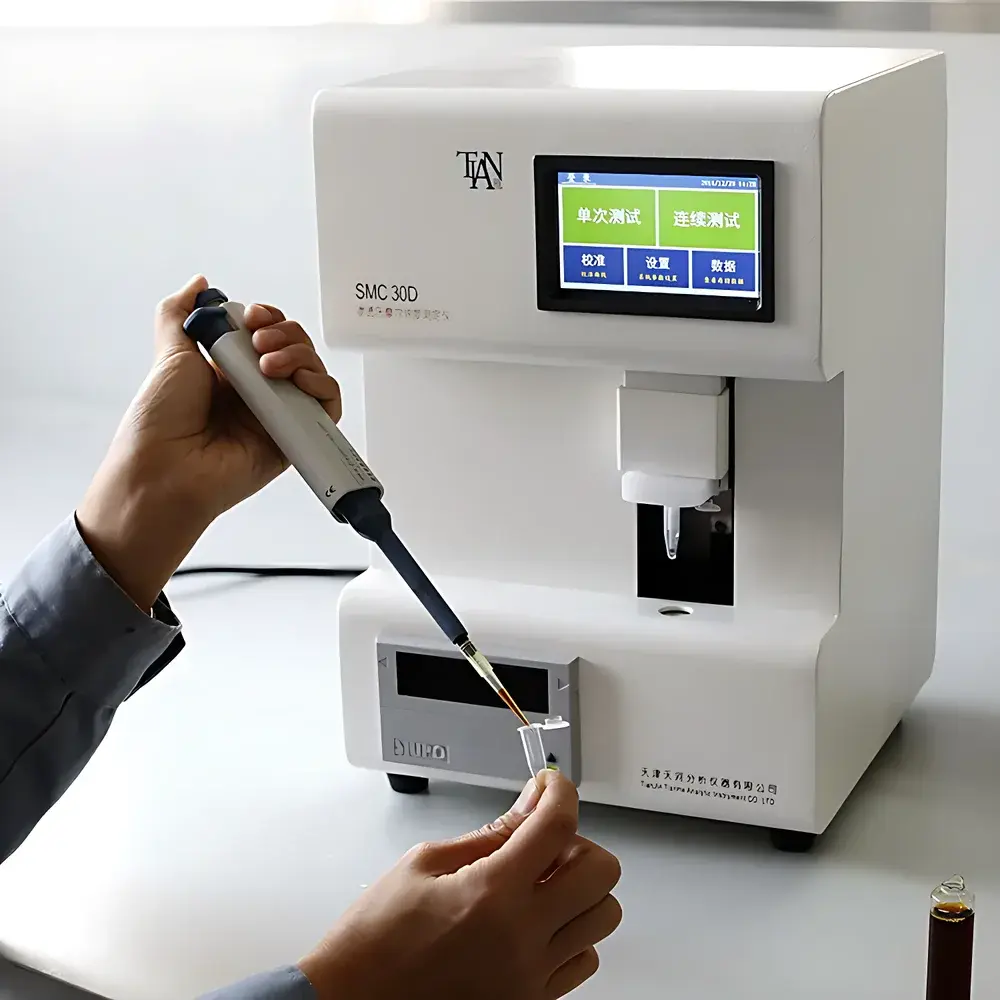
- Integrated 7-inch color TFT touchscreen interface with intuitive navigation and real-time display of osmolality (mOsmol/kg), freezing point depression (°C), and osmolality ratio relative to reference standards.
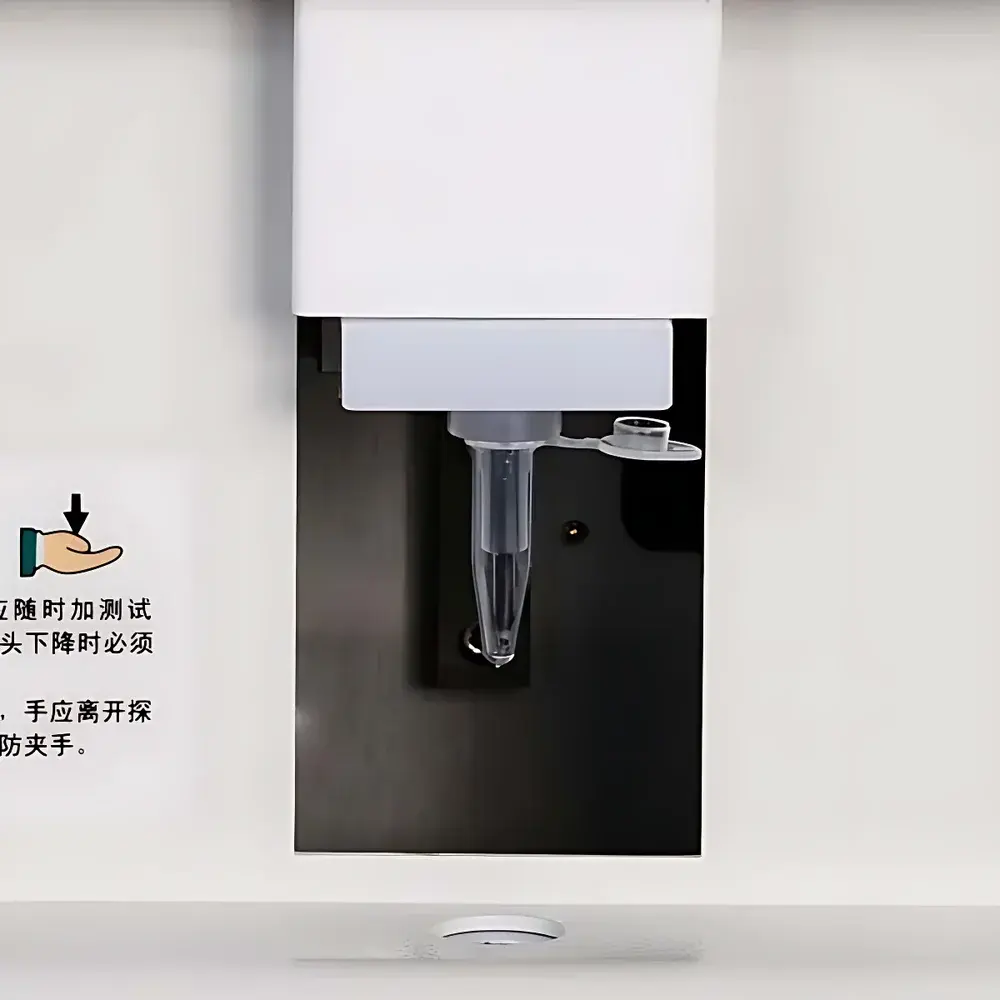
- Automated probe lift mechanism enables hands-free sample loading and minimizes operator-induced variability.
- Dual thermoelectric cooling architecture reduces pre-cooling time to ≤3 minutes and delivers full-cycle analysis in under 90 seconds—optimized for high-throughput QC laboratories.
- Low sample requirement of only 50–100 µL supports testing of precious or volume-limited formulations, including monoclonal antibody batches and small-volume injectables.
- User-configurable calibration across arbitrary concentration points ensures optimal curve fitting to empirical data, improving accuracy across the full 0–3000 mOsmol/kg range.
- Pre-loaded ChP-compliant database containing over 300 registered injectable drug names facilitates rapid test setup and traceable documentation per batch release protocols.
- Microprocessor-controlled operation with embedded non-volatile memory supports GLP-compliant data retention, including timestamps, operator IDs, calibration logs, and result history.
Sample Compatibility & Compliance
The SMC 30D is validated for use with clear, low-viscosity aqueous solutions commonly encountered in pharmaceutical manufacturing and quality control. Compatible matrices include saline-based IV admixtures, buffered protein formulations, lyophilized reconstitution solutions, and ophthalmic irrigation fluids. It is not intended for highly viscous, particulate-laden, or volatile organic solvent systems. Regulatory alignment includes direct support for ChP General Chapter 0412 (Osmolality Determination) and functional compatibility with USP and Ph. Eur. 2.2.35 methodologies. The system supports 21 CFR Part 11–ready data handling when connected to validated LIMS or ELN platforms via RS232, enabling electronic signature capture, audit trail generation, and role-based access control.
Software & Data Management
Embedded firmware provides comprehensive data governance tools: user-level permissions (administrator, analyst, reviewer), password-protected method editing, automatic data archiving with ISO 8601 timestamps, and export-ready reports in CSV, PDF, or printer-specific formats. All measurement events—including calibration runs, system diagnostics, and manual overrides—are logged with immutable metadata. The RS232 serial interface permits bidirectional communication with laboratory information management systems (LIMS) and enterprise quality management systems (QMS), supporting automated data ingestion and trend analysis. No proprietary software installation is required on host PCs; raw ASCII data streams are fully parseable by standard laboratory informatics infrastructure.
Applications
- Batch release testing of sterile injectables, vaccines, and biologics per pharmacopeial requirements.
- Stability-indicating assay during accelerated and long-term storage studies.
- In-process monitoring of buffer exchange, ultrafiltration/diafiltration, and formulation blending steps.
- Verification of tonicity in ophthalmic and nasal sprays to ensure patient comfort and corneal epithelial integrity.
- Supporting comparability studies for biosimilar development and post-approval process changes.
- Academic and contract research organization (CRO) labs conducting physicochemical characterization of novel delivery systems.
FAQ
What regulatory standards does the SMC 30D comply with?
The instrument is engineered to meet the operational and performance criteria outlined in ChP 0412, USP , and Ph. Eur. 2.2.35. Its measurement uncertainty profile satisfies typical validation requirements for GMP-grade osmolality testing.
Can the SMC 30D be integrated into a 21 CFR Part 11–compliant environment?
Yes—when interfaced with a validated third-party LIMS or ELN platform via RS232, the device supports electronic signatures, audit trails, and role-based access controls as required under Part 11.
Is routine maintenance required for the cooling system?
No. The solid-state thermoelectric cooler operates without circulating coolant or refrigerant gas, eliminating fluid replenishment, leak risks, or compressor servicing.
How is measurement traceability ensured?
Each analysis stores full metadata—including calibration date, reference standard lot number, ambient conditions, and operator ID—enabling full reconstruction of measurement context for internal audits or regulatory inspections.
Does the instrument support custom reporting templates?
Yes. Print output format (e.g., header layout, parameter inclusion, pass/fail logic) is fully configurable through the onboard interface without requiring external software.






