
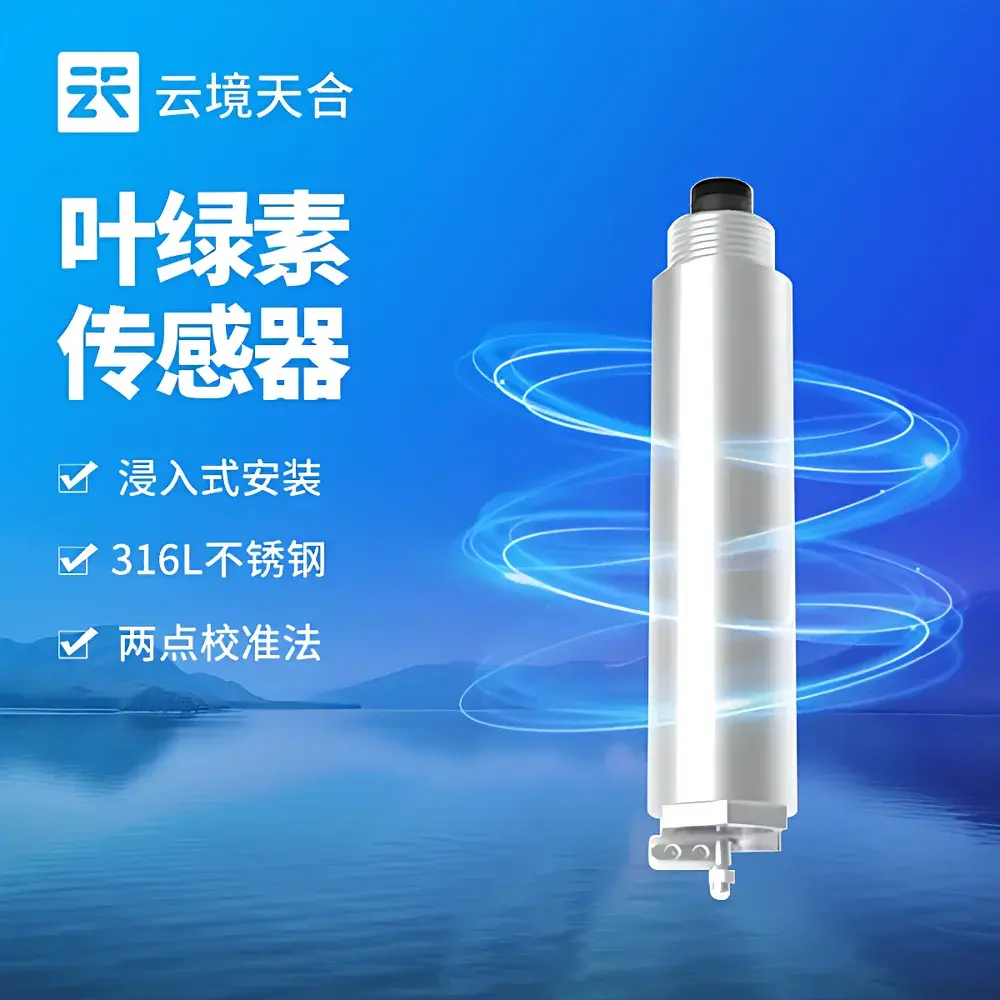
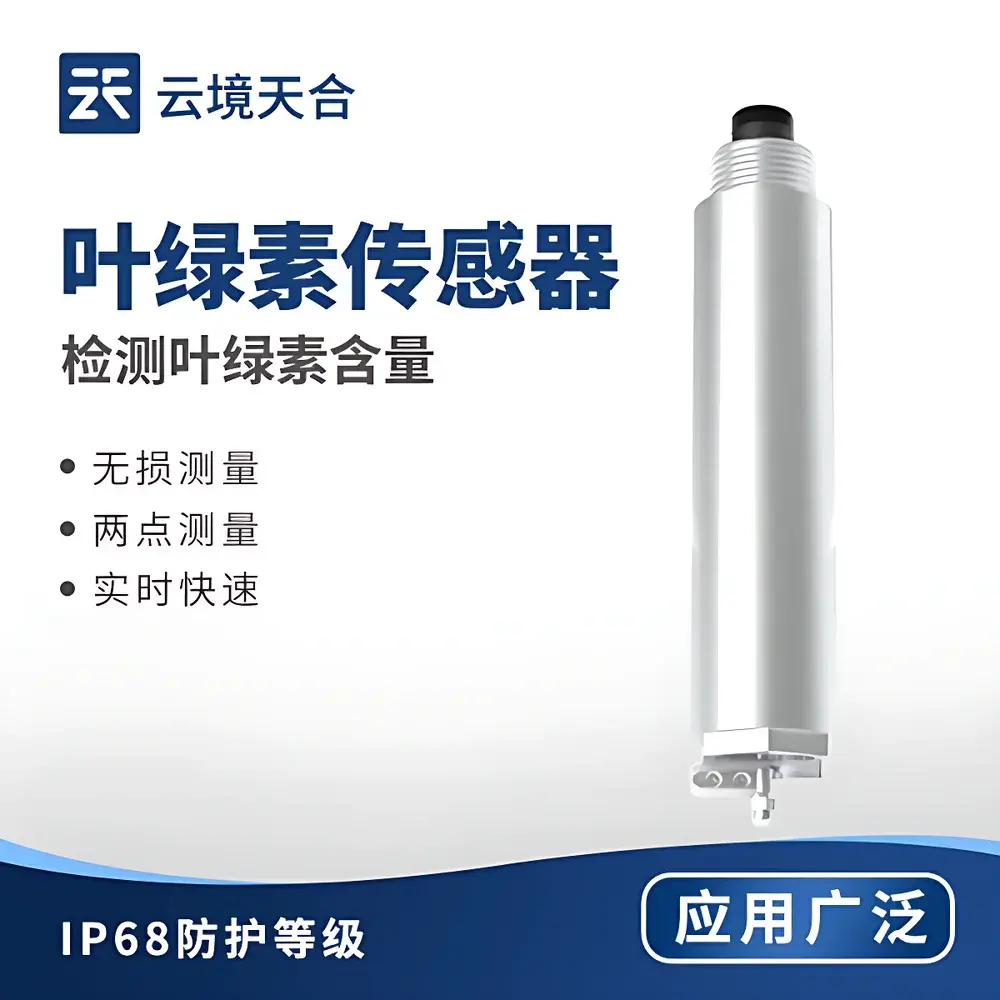
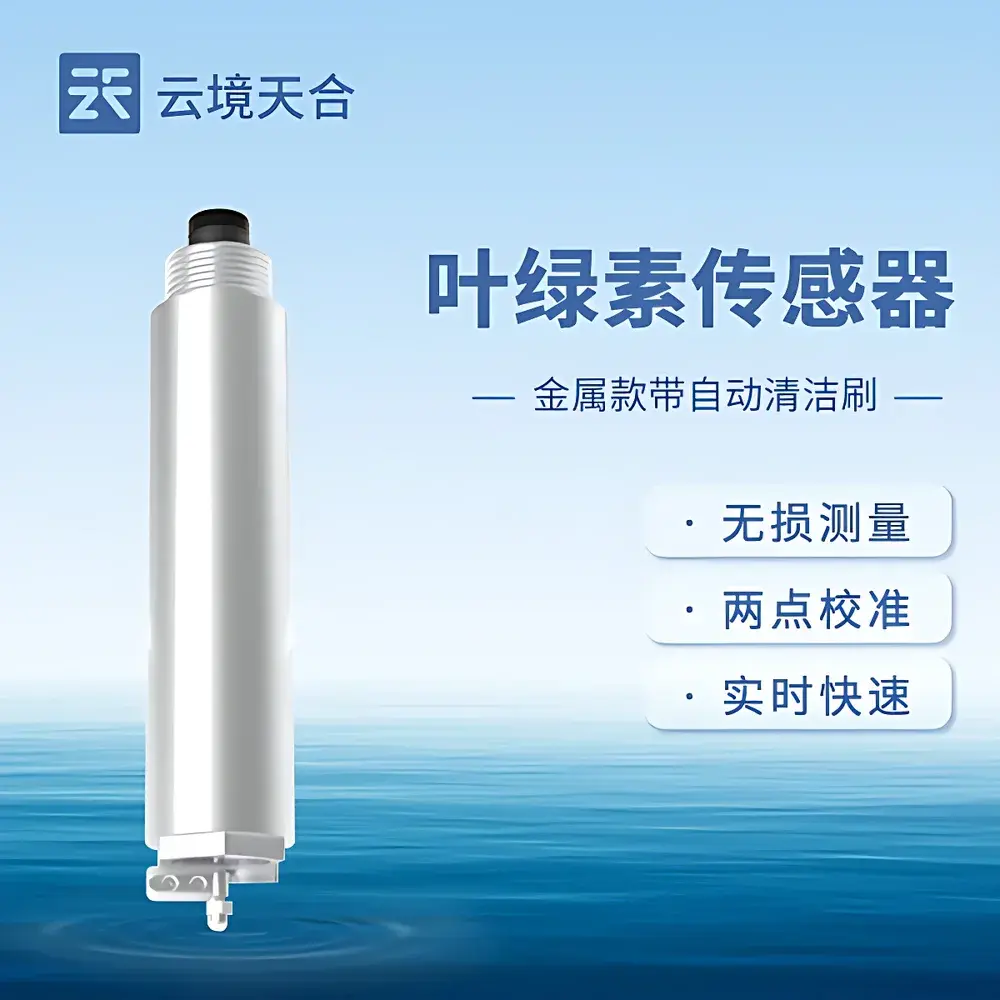
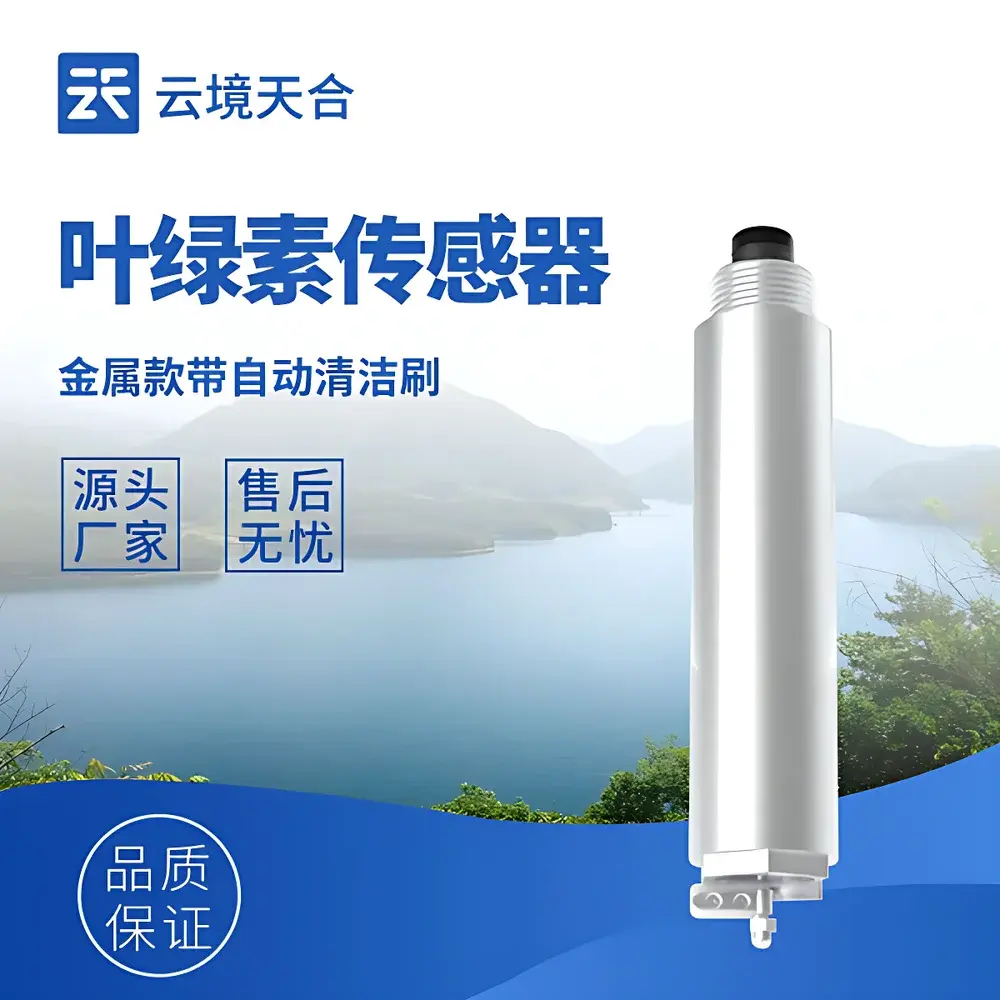
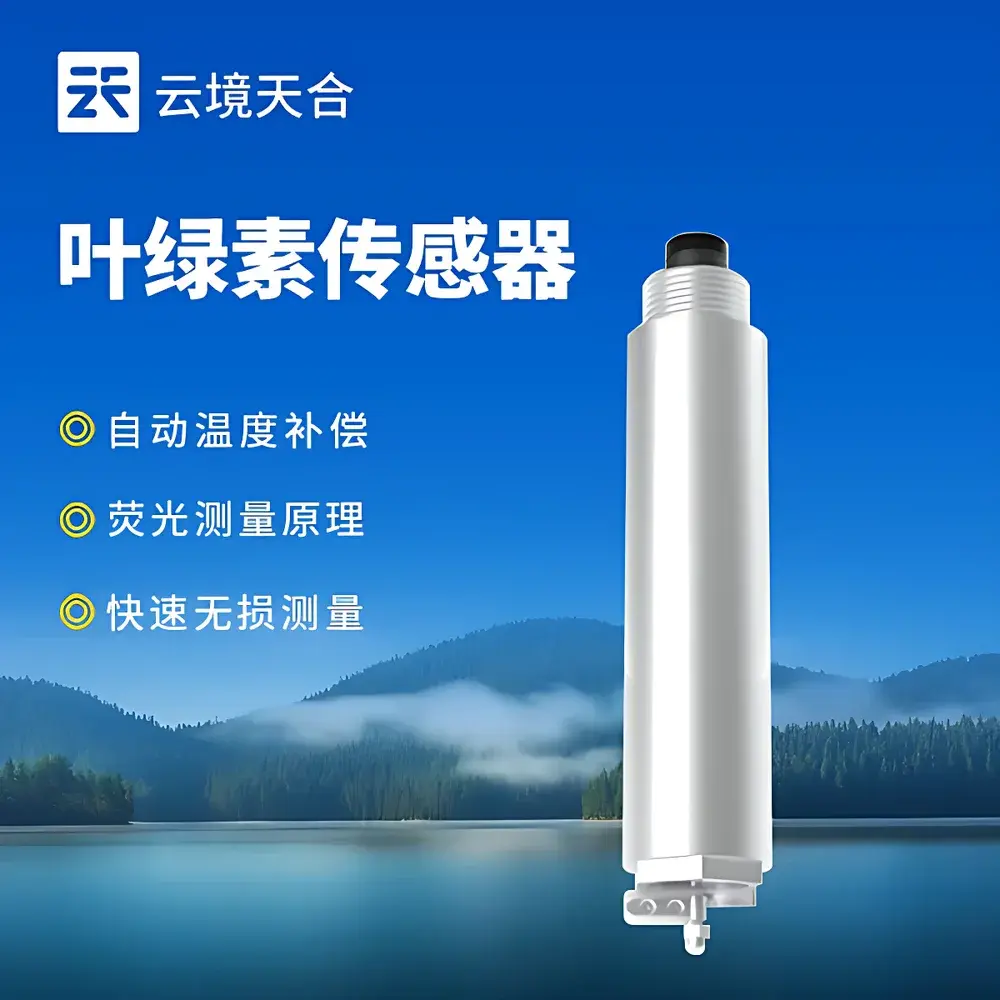
Tianhe TH-SS15S Chlorophyll-a Fluorescence Sensor
| Brand | Tianhe (Shandong Tianhe Instrument Co., Ltd.) |
|---|---|
| Origin | Shandong, China |
| Manufacturer Type | Direct Manufacturer |
| Country of Origin | China |
| Model | TH-SS15S |
| Detection Principle | Chlorophyll-a Fluorescence Method |
| Measurement Range | 0–400 µg/L |
| Resolution | 0.01 µg/L |
| Accuracy (Linearity) | R² > 0.999 |
| Temperature Compensation | Automatic |
| Self-Cleaning Function | Integrated Brush-Based Cleaner with Configurable Interval & Cycles |
| Power Consumption | 0.7 W (Operating), 0.4 W (Standby) |
| Supply Voltage | DC 12–24 V |
| Output Interface | RS-485 (Modbus RTU Protocol) |
| Storage Temperature | –5 to 65 °C |
| Operating Environment | 0 to 50 °C, < 0.2 MPa |
| Installation | Submersible, 3/4″ NPT Thread |
| Cable Length | 5 m |
| Protection Rating | IP68 |
| Housing Material | 316L Stainless Steel |
| Calibration Method | Two-Point (Zero & Span) via PC Software or Modbus Commands |
Overview
The Tianhe TH-SS15S Chlorophyll-a Fluorescence Sensor is an in-situ, submersible analytical instrument engineered for continuous, real-time quantification of chlorophyll-a concentration in natural and engineered aquatic systems. It operates on the well-established principle of *in vivo* chlorophyll fluorescence excitation and emission—specifically utilizing blue LED excitation (~470 nm) and detection of red fluorescence emission (~685 nm)—to deliver a linear, quantitative signal proportional to algal biomass. Unlike extraction-based laboratory methods (e.g., spectrophotometric analysis per EPA 445.1 or ISO 10260), this sensor enables non-destructive, high-frequency monitoring without sample withdrawal or reagent use. Its design targets long-term deployment in dynamic environments including rivers, reservoirs, aquaculture ponds, drinking water intakes, and coastal zones where early detection of phytoplankton proliferation is critical for ecological assessment and operational response.
Key Features
- Optimized optical path with dual-wavelength excitation/emission configuration to minimize interference from turbidity, colored dissolved organic matter (CDOM), and phycocyanin fluorescence.
- Integrated mechanical self-cleaning system featuring a programmable rotating brush that prevents biofouling on the optical window—critical for maintaining measurement stability over extended unattended deployments (up to 6 months between manual maintenance).
- Automatic temperature compensation algorithm embedded in firmware, correcting for thermal drift across the full operating range (0–50 °C), ensuring consistent performance in seasonal and diurnal field conditions.
- Ruggedized 316L stainless steel housing rated IP68 for permanent submersion, pressure-resistant up to 0.2 MPa (equivalent to ~20 m water column), and chemically inert in freshwater, brackish, and low-salinity marine matrices.
- Low-power architecture (<0.7 W peak) compatible with solar-powered telemetry stations and battery-operated edge data loggers—supporting remote network integration in off-grid monitoring applications.
- Modbus RTU protocol over RS-485 enables seamless interoperability with SCADA systems, PLCs, and third-party environmental data platforms without proprietary gateways.
Sample Compatibility & Compliance
The TH-SS15S is validated for direct immersion in ambient surface waters, groundwater, recirculating aquaculture systems (RAS), and pre-treatment basins. It exhibits minimal cross-sensitivity to common interferents such as suspended solids (<100 NTU), humic substances (SUVA < 4 L/mg·m), and non-algal particles when deployed with routine cleaning cycles. While not certified to ISO/IEC 17025 for accredited laboratory testing, its two-point calibration traceability aligns with QA/QC practices recommended in US EPA Guidance Document 100-R-15-001 for field-deployable optical sensors. The sensor supports GLP-aligned documentation through timestamped calibration logs and raw output registers accessible via Modbus, facilitating audit readiness in regulated water utility and research contexts.
Software & Data Management
Calibration, configuration, and diagnostics are managed via a Windows-based PC utility supporting zero-point (distilled water) and span-point (certified chlorophyll-a standard solution) procedures. All calibration parameters—including slope, offset, temperature coefficient, and cleaning schedule—are stored in non-volatile memory. Raw sensor output (µg/L), internal temperature (°C), and diagnostic flags (e.g., “cleaner active”, “signal saturation”) are exposed as discrete Modbus holding registers (4x addresses). This architecture permits integration into cloud-based platforms (e.g., AWS IoT Core, ThingsBoard) using standard Modbus-to-MQTT bridges, enabling time-series visualization, anomaly detection, and automated alerting based on user-defined thresholds.
Applications
- Early warning of cyanobacterial blooms in eutrophic lakes and reservoirs, supporting adaptive management under EU Water Framework Directive (WFD) or US Clean Water Act Section 303(d) listing protocols.
- Process control in drinking water treatment plants—monitoring raw intake algal load to optimize coagulant dosing and UV disinfection efficacy.
- Performance validation of constructed wetlands and tertiary polishing lagoons by tracking chlorophyll-a trends as a proxy for nutrient removal efficiency.
- Research-grade longitudinal studies of phytoplankton phenology in climate-sensitive watersheds, where high-temporal-resolution data improves carbon flux modeling.
- Regulatory compliance reporting for aquaculture facilities required to maintain dissolved oxygen and algal density thresholds per FAO Technical Paper No. 587.
FAQ
What is the recommended calibration frequency for long-term deployments?
For stable environments with low biofouling risk, quarterly two-point calibration is sufficient; in high-nutrient or warm-water settings, monthly calibration is advised. Field validation against grab samples analyzed per ISO 10260 may be conducted semi-annually.
Can the sensor distinguish between different algal taxa?
No—the TH-SS15S measures total chlorophyll-a fluorescence and does not provide taxonomic resolution. Complementary identification requires microscopy or pigment HPLC analysis.
Is the sensor compatible with existing telemetry infrastructure using LoRaWAN or NB-IoT?
Yes—when paired with a Modbus-to-LoRaWAN gateway (e.g., Multitech Conduit or Dragino LPS8), the sensor’s RS-485 output integrates natively into LPWAN networks without firmware modification.
Does the self-cleaning mechanism require periodic brush replacement?
The brush assembly is rated for ≥10,000 actuation cycles; under typical 2-hour cleaning intervals, service life exceeds 2 years. Replacement kits are available as consumable part #TH-SS15S-BRUSH-KIT.
How is data integrity ensured during power interruptions?
All configuration and calibration data persist in EEPROM. Upon power restoration, the sensor resumes operation with last-saved parameters and initiates a 60-second stabilization period before resuming output transmission.
Related Products







