
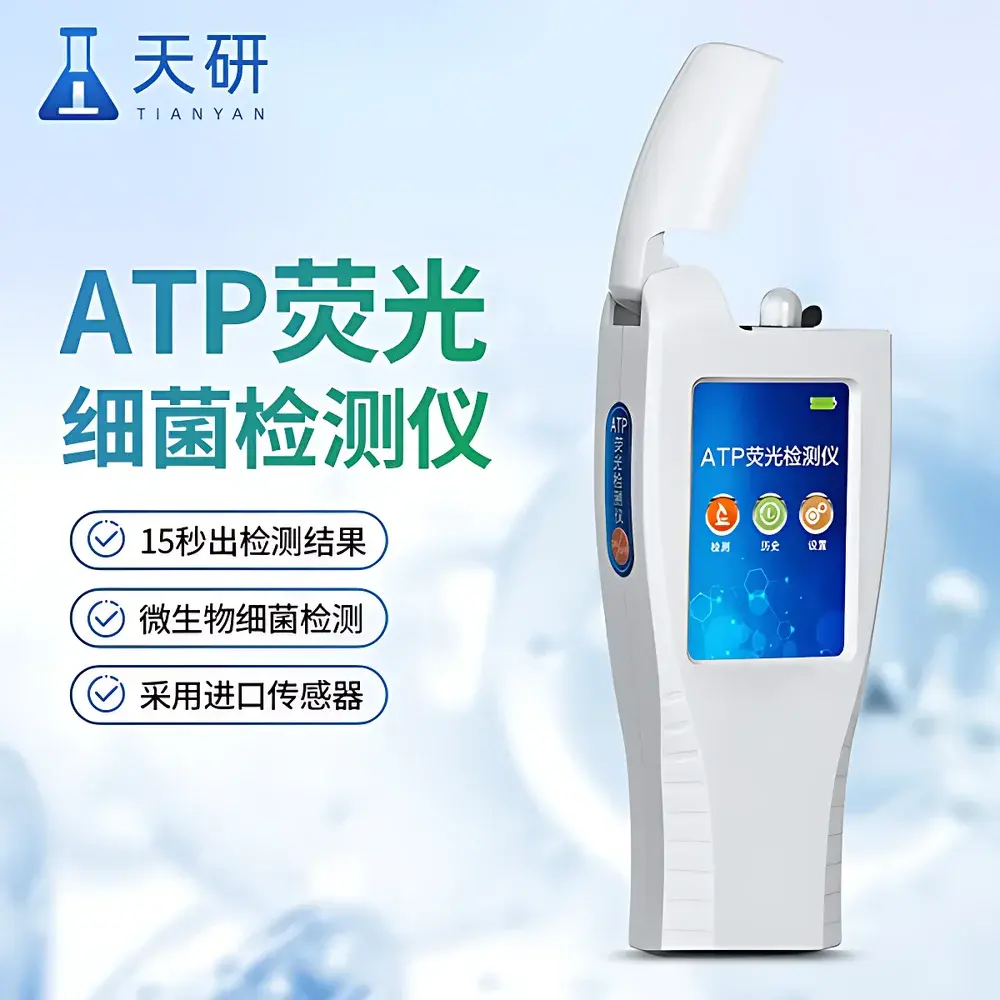
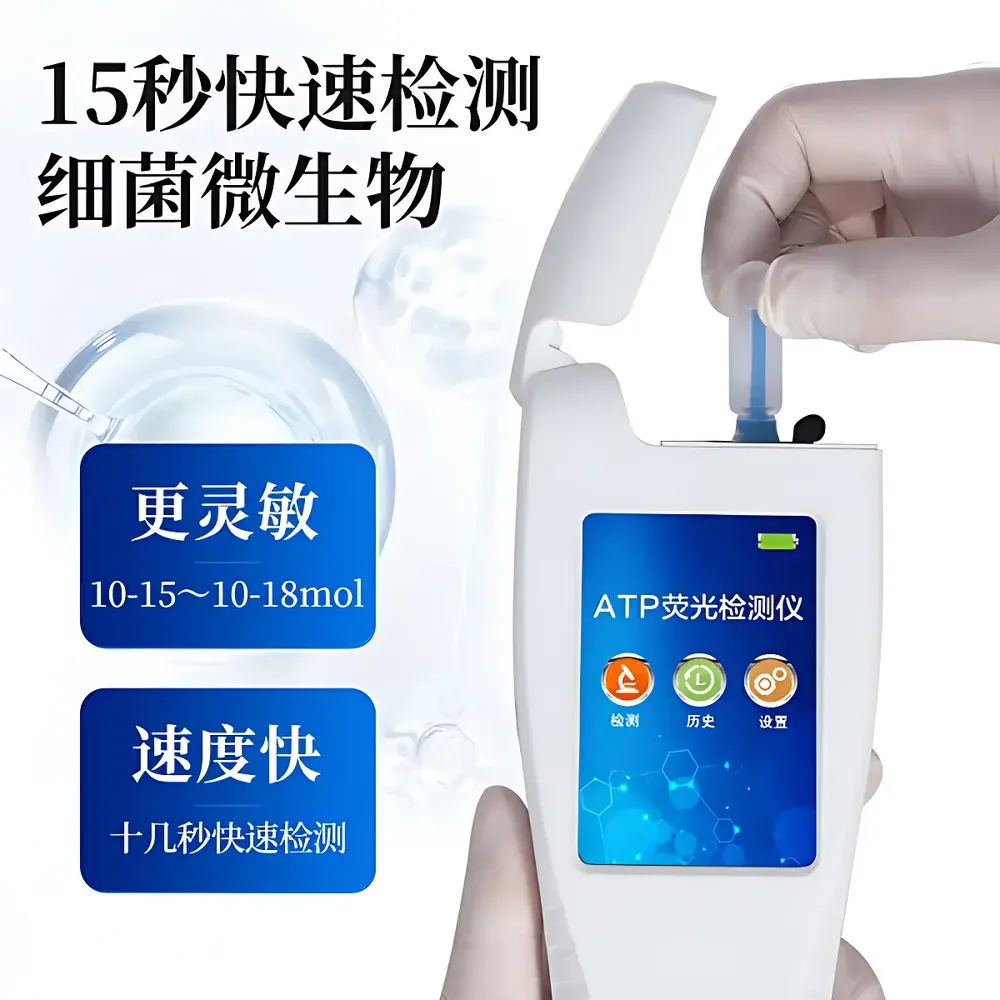
Tianyan TY-ATP Handheld ATP Bioluminescence Detector
| Brand | Tianyan |
|---|---|
| Origin | Shandong, China |
| Manufacturer Type | Original Equipment Manufacturer (OEM) |
| Model | TY-ATP |
| Detection Range | 0–99,999 RLU |
| Detection Time | 15 s |
| Sensitivity | 1×10⁻¹⁸ mol ATP |
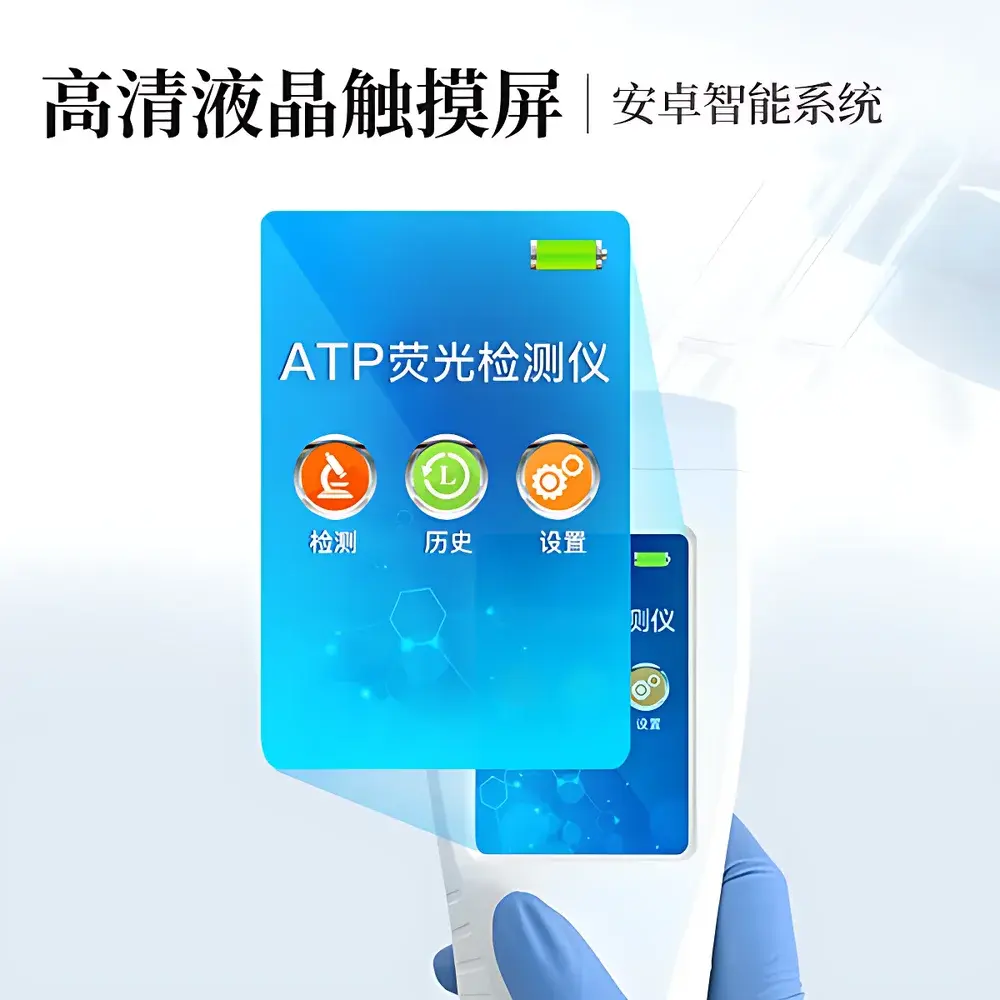
| Display | 3.5-inch capacitive touch LCD |
| Processor | 32-bit high-speed microcontroller |
| Accuracy | ±5 RLU or ±5% |
| Operating Temperature | 5–40 °C |
| Operating Humidity | 20–85% RH |
| ATP Recovery Rate | 90–110% |
| Detection Modes | RLU, Coliform Screening |
| Auto Pass/Fail Judgment | Yes |
| Data Interface | Mini-USB |
| Power | Rechargeable Li-ion battery (6-month standby at 20 °C) |
| Dimensions (W×H×D) | 188 × 77 × 37 mm |
| Weight | ~280 g |
| Compliance | Designed for ISO 22000, HACCP, and FDA Food Code-aligned hygiene verification workflows |
Overview
The Tianyan TY-ATP Handheld ATP Bioluminescence Detector is a field-deployable, quantitative hygiene verification instrument engineered for rapid assessment of biological contamination on surfaces and in liquids. It operates on the principle of bioluminescent enzymatic reaction: ATP extracted from microbial cells (including bacteria, yeasts, molds, and residual organic matter) reacts with recombinant firefly luciferase and D-luciferin under controlled pH and ionic conditions to emit photons proportional to ATP concentration. The emitted light—measured in Relative Light Units (RLU)—provides a real-time, culture-independent surrogate metric for total viable bioburden. Unlike traditional microbiological culture methods requiring ≥18 h incubation, the TY-ATP delivers statistically robust RLU readings within 15 seconds post-swab processing, enabling immediate decision-making in food production, healthcare, and environmental monitoring settings.
Key Features
- Capacitive 3.5-inch graphical touchscreen interface with intuitive icon-driven navigation—eliminates mechanical button wear and supports gloved operation.
- Integrated 32-bit microcontroller ensures stable signal acquisition, real-time background noise subtraction, and automatic gain calibration before each measurement cycle.
- Dual detection modes: quantitative RLU output (0–99,999 RLU) and coliform screening mode calibrated against reference Escherichia coli suspensions (1–10⁶ CFU/mL equivalence).
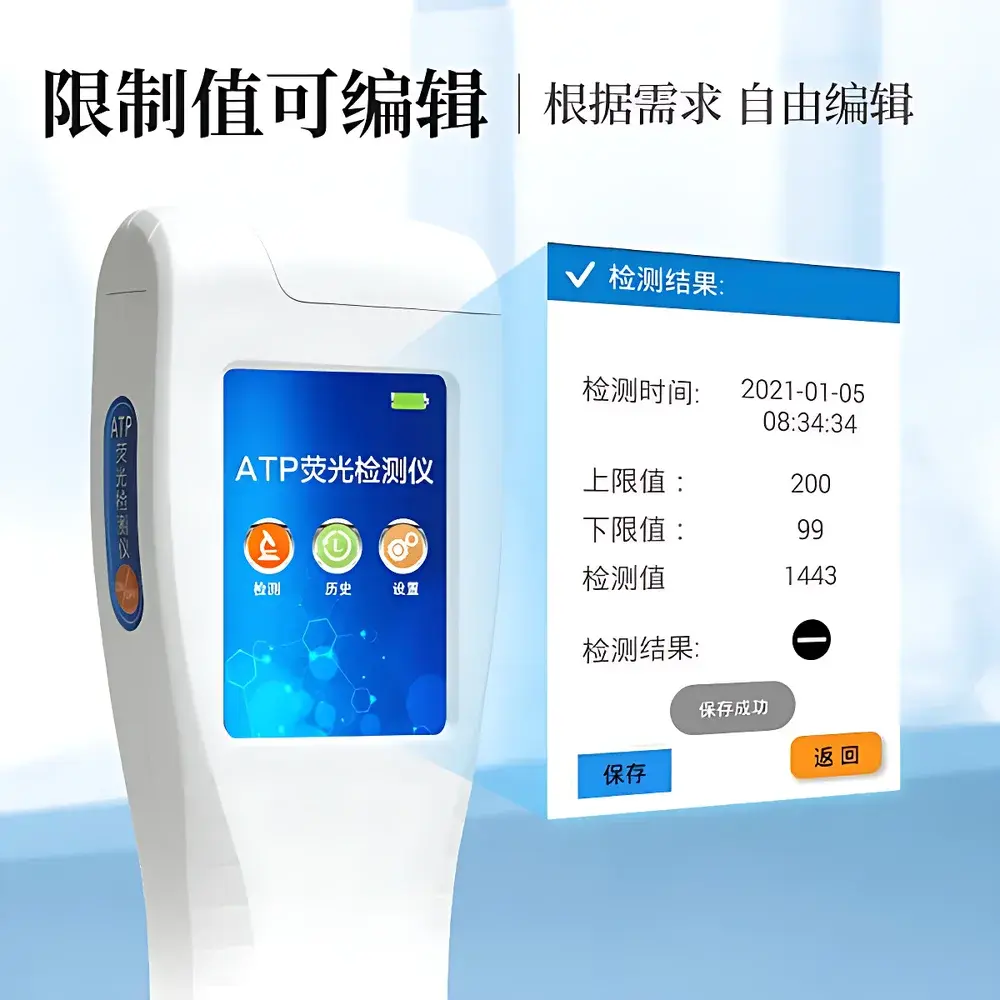
- Onboard pass/fail logic with user-definable upper/lower RLU thresholds; auto-calculates batch compliance rate and logs pass/fail status per test point.
- Self-diagnostic firmware: 30-second power-on system check including photomultiplier dark-current validation and internal LED reference source verification.
- Rechargeable lithium-ion battery with six-month shelf life at 20 °C; no disposable batteries required—reducing operational cost and environmental footprint.
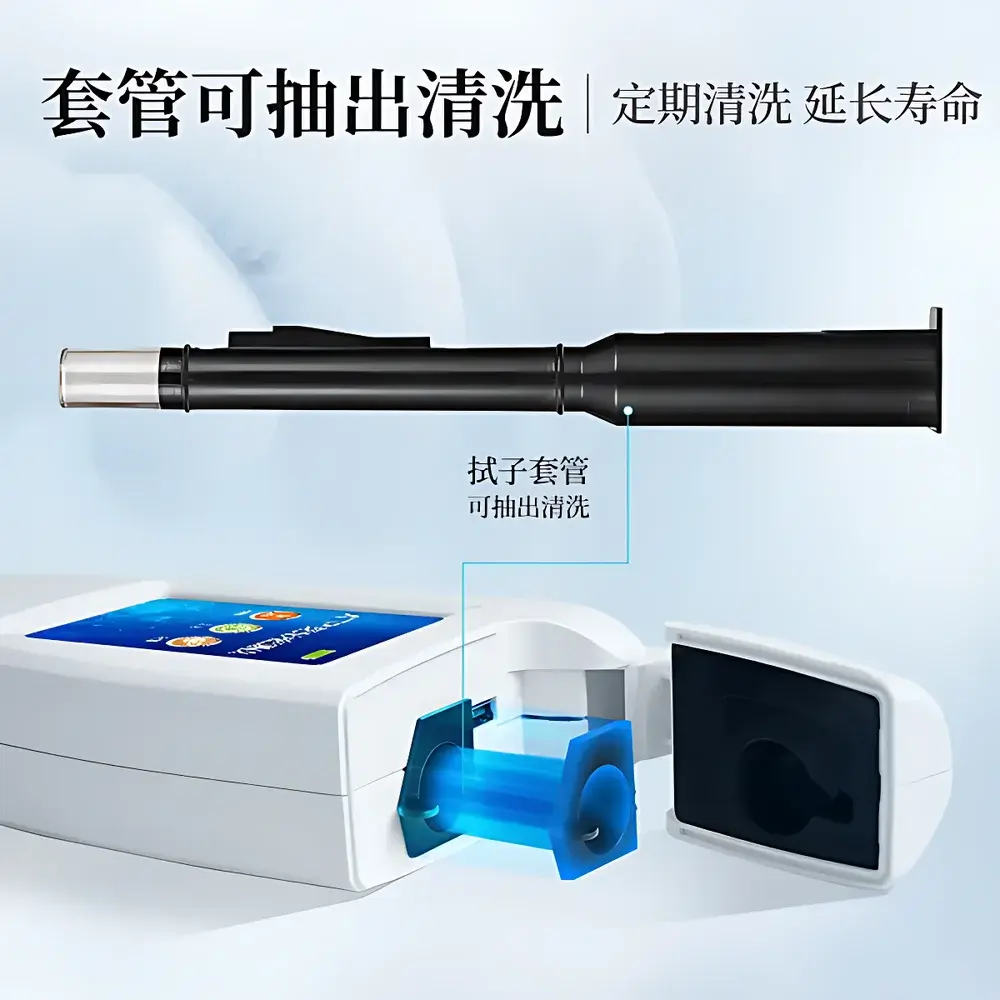
- Modular swab design: pre-moistened, all-in-one collection devices with integrated cell lysis reagent and stabilized luciferase-luciferin cocktail ensure consistent ATP extraction efficiency (90–110% recovery across matrix types).
Sample Compatibility & Compliance
The TY-ATP is validated for use with standard ATP swabs on non-porous and semi-porous surfaces (stainless steel, plastic, glass, ceramic, food-grade conveyor belts) and liquid samples (rinse water, process water, cleaning solutions). Its performance aligns with international hygiene verification frameworks: results are interpretable within the context of ISO 22000:2018 Clause 8.2 (prerequisite programs), Codex Alimentarius CAC/RCP 1-1969 Annex II (hygiene practices), and FDA Food Code 2022 §3-202.11 (equipment sanitization verification). While not a direct microbial enumeration method, its RLU values correlate empirically with aerobic plate count (APC) and Enterobacteriaceae levels in food processing environments when validated per site-specific correlation protocols. Instrument design supports GLP-compliant data integrity: all measurements include timestamp, operator ID (optional), location tag, and audit trail metadata exportable via USB.
Software & Data Management
Data transfer is enabled through a Mini-USB port to Windows-based PCs running the included Tianyan Data Analysis Suite (v3.2+). The software supports CSV/Excel export, trend charting (RLU vs. time/location), statistical process control (SPC) charts (X-bar/R), and automated report generation compliant with internal quality management systems. Raw RLU files retain embedded calibration checksums and device serial number—ensuring traceability. The suite implements role-based access control and optional electronic signature functionality to meet basic FDA 21 CFR Part 11 readiness requirements for non-GMP environments. No cloud dependency: all processing occurs locally, preserving data sovereignty and minimizing cybersecurity exposure.
Applications
- Food & beverage manufacturing: post-clean verification of equipment, conveyors, tanks, and packaging lines.
- HACCP critical control point (CCP) monitoring and sanitation effectiveness validation.
- Healthcare facility environmental services: high-touch surface screening in operating rooms, patient rooms, and laboratories.
- Pharmaceutical cleanroom gowning area and equipment surface hygiene audits.
- Water treatment facilities: biofilm risk assessment in distribution networks and filtration systems.
- Regulatory inspection support for USDA-FSIS, FDA, EFSA, and national food safety authorities during routine or unannounced audits.
- Education and training labs: hands-on demonstration of hygiene science principles and rapid microbiological concepts.
FAQ
Is the TY-ATP suitable for regulatory submission or official compliance documentation?
The instrument provides objective, traceable RLU data aligned with internationally recognized hygiene verification standards. While RLU values themselves are not direct CFU equivalents, documented correlation studies conducted per ISO 21528-2 or site-specific validation protocols enable their use as evidentiary support in HACCP plans and internal audit reports.
Can the device detect viruses or spores?
No. ATP detection reflects metabolically active cells and residual cellular debris. Viruses contain no ATP; bacterial endospores exhibit significantly reduced ATP content compared to vegetative cells—thus, the TY-ATP is not intended for viral or spore-specific detection.
How often does the instrument require recalibration?
The built-in reference light source enables daily self-checks. Full optical recalibration using NIST-traceable ATP standards is recommended every 6 months or after 500 measurements—whichever occurs first—as part of preventive maintenance per manufacturer guidelines.
Does the software support multi-user environments with audit trails?
Yes. The Data Analysis Suite logs user login events, measurement edits, report exports, and configuration changes with timestamps and operator identifiers—supporting basic audit trail requirements for quality management systems.
What is the shelf life of the ATP swabs?
Unopened swabs maintain enzyme activity and lysis efficacy for 18 months when stored at 2–8 °C. Once opened, they must be used within 2 hours at room temperature to ensure optimal ATP recovery rates.






