
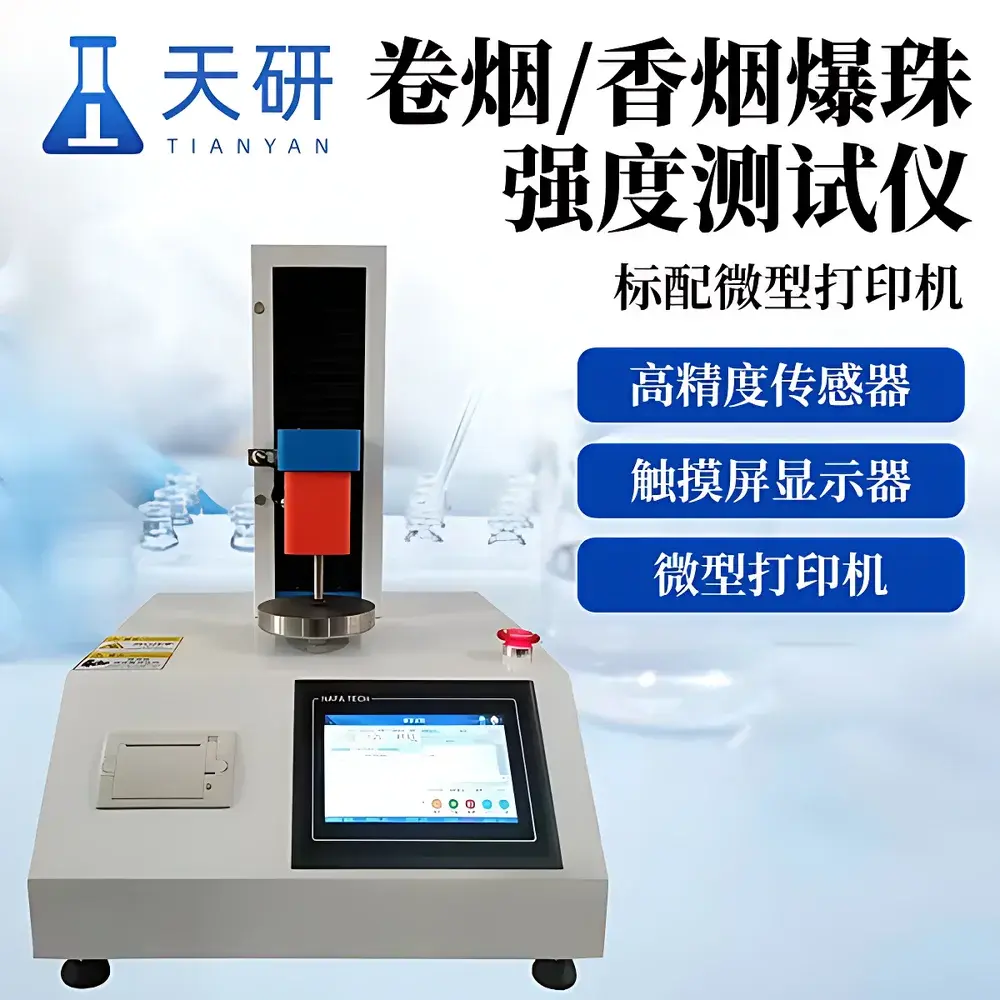
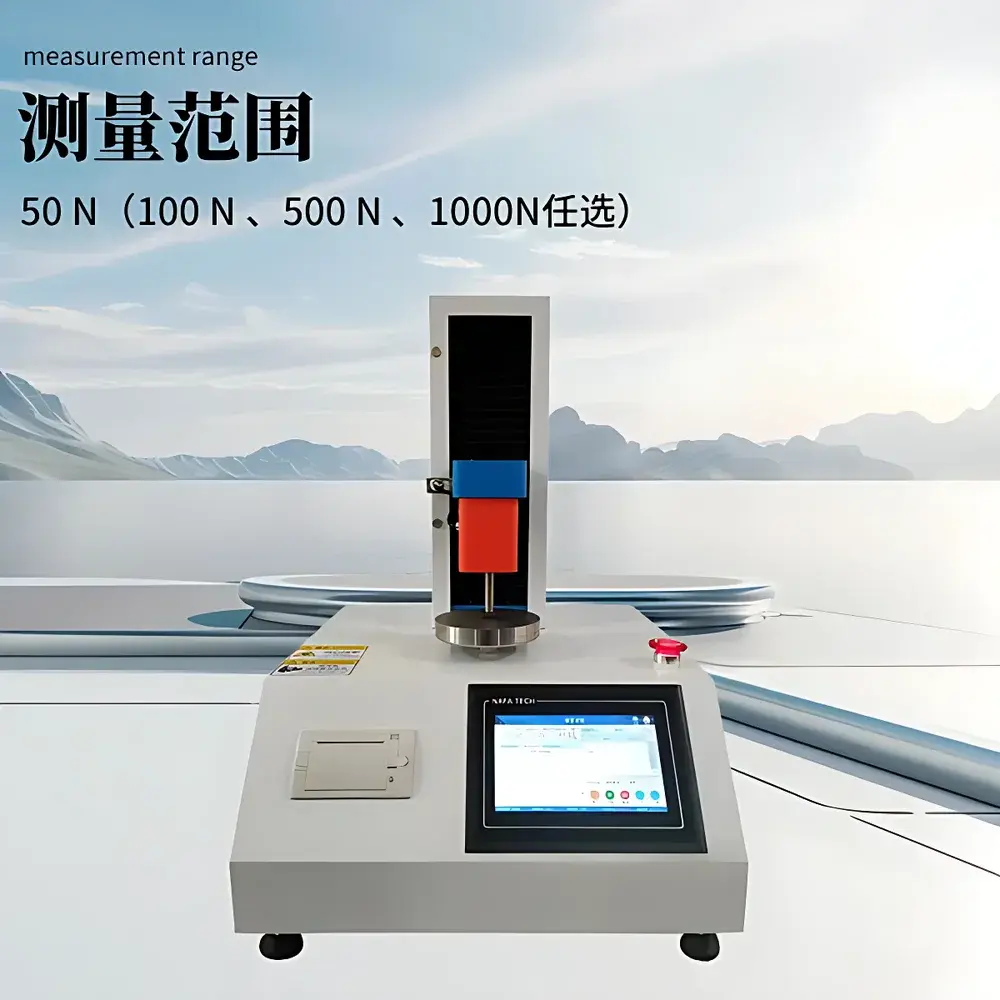
Tianyan TY-BZQ Cigarette Filter Capsule Burst Strength Tester
| Brand | Tianyan |
|---|---|
| Model | TY-BZQ |
| Origin | Shandong, China |
| Manufacturer Type | Direct Manufacturer |
| Measurement Range | 500 N (optional: 100 N / 500 N / 1000 N) |
| Resolution | 0.01 N |
| Accuracy | ±0.5% FS |
| Test Speed | 1–300 mm/min |
| Upper Platen Diameter | 10 mm |
| Lower Platen Diameter | 100 mm |
| Parallelism Between Platens | <0.025 mm |
| Dimensions (W×D×H) | 450 × 450 × 680 mm |
| Weight | 45 kg |
| Power Supply | 220 V, 50 Hz |
| Standard Configuration | Mainframe, Fixture Set, Thermal Microprinter, Touchscreen Control Software |
| Optional | PC with Dedicated Software, Inkjet Printer, Automated Feeding System |
Overview
The Tianyan TY-BZQ Cigarette Filter Capsule Burst Strength Tester is a precision mechanical testing instrument engineered for the quantitative evaluation of mechanical integrity in tobacco filter capsules—commonly known as “burst beads,” “flavor capsules,” or “fragrance microcapsules.” These spherical elastomeric hydrocolloid capsules (typically 2.6–4.6 mm in diameter) are embedded within cigarette filter rods and designed to rupture upon manual compression, releasing encapsulated flavorants into the mainstream smoke stream. The TY-BZQ implements a uniaxial quasi-static compression methodology compliant with core principles of material deformation analysis under controlled loading conditions. It measures burst force (N), corresponding displacement at rupture (mm), and calculates deformation ratio (%)—parameters directly correlated with consumer tactile feedback, capsule retention during manufacturing/handling, and consistency of flavor release kinetics. The system operates on a load-cell-based force transduction architecture coupled with high-resolution linear displacement sensing, enabling traceable, repeatable assessment aligned with internal quality control protocols and industry-standard physical testing practices.
Key Features
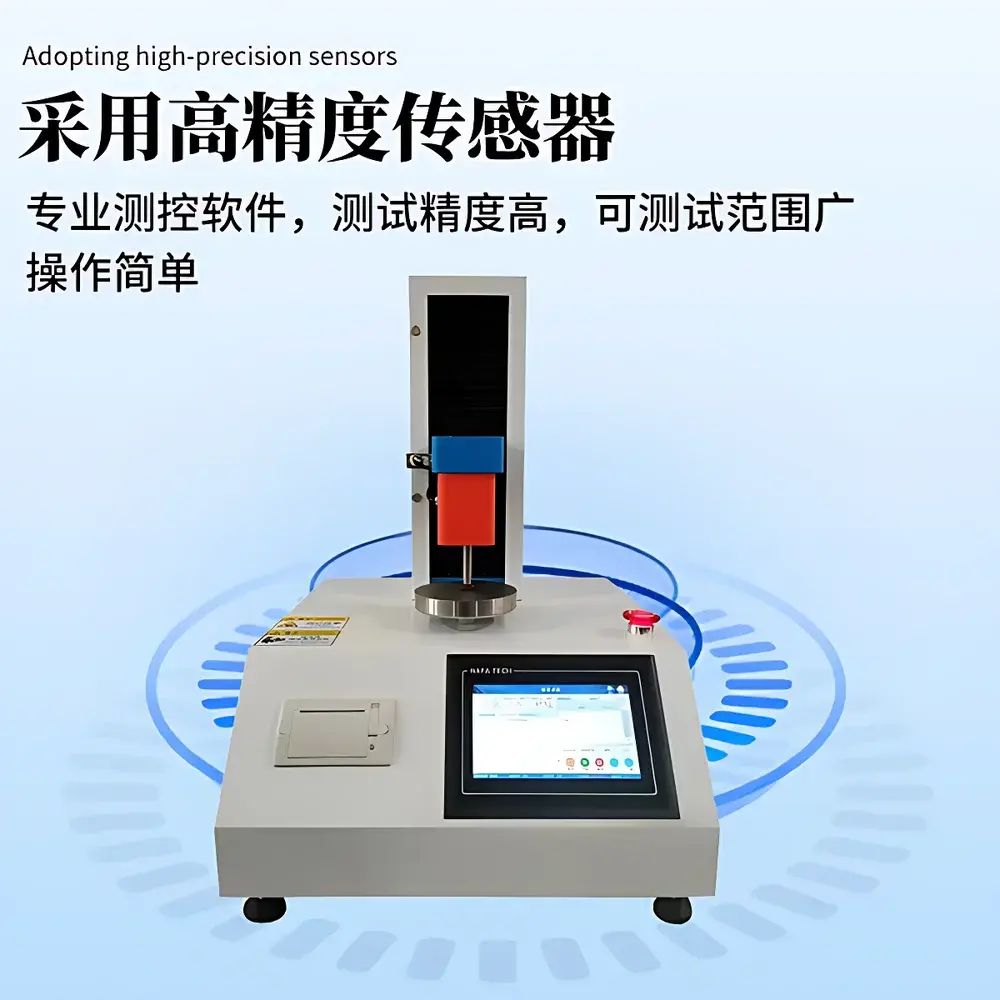
- 7-inch capacitive touchscreen interface with real-time graphical display of force–displacement curves, instantaneous test speed, and deformation metrics.
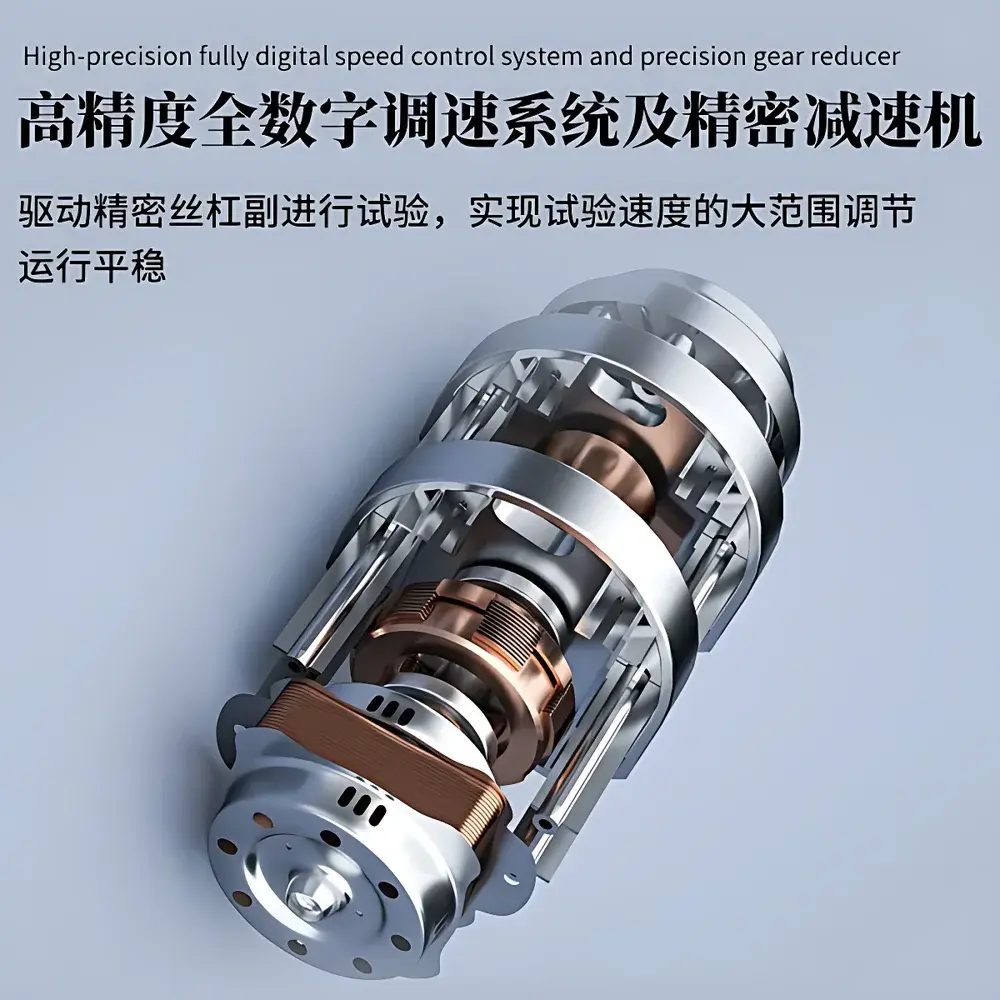
- High-accuracy load cell (±0.5% full-scale accuracy, 0.01 N resolution) paired with a digitally controlled servo-motor drive and precision planetary gear reducer for stable, low-noise actuation across 1–300 mm/min speed range.
- Dual-platen configuration: hardened 10 mm flat upper indenter and 100 mm diameter lower support plate, maintained at parallelism <0.025 mm to ensure uniform stress distribution during compression.
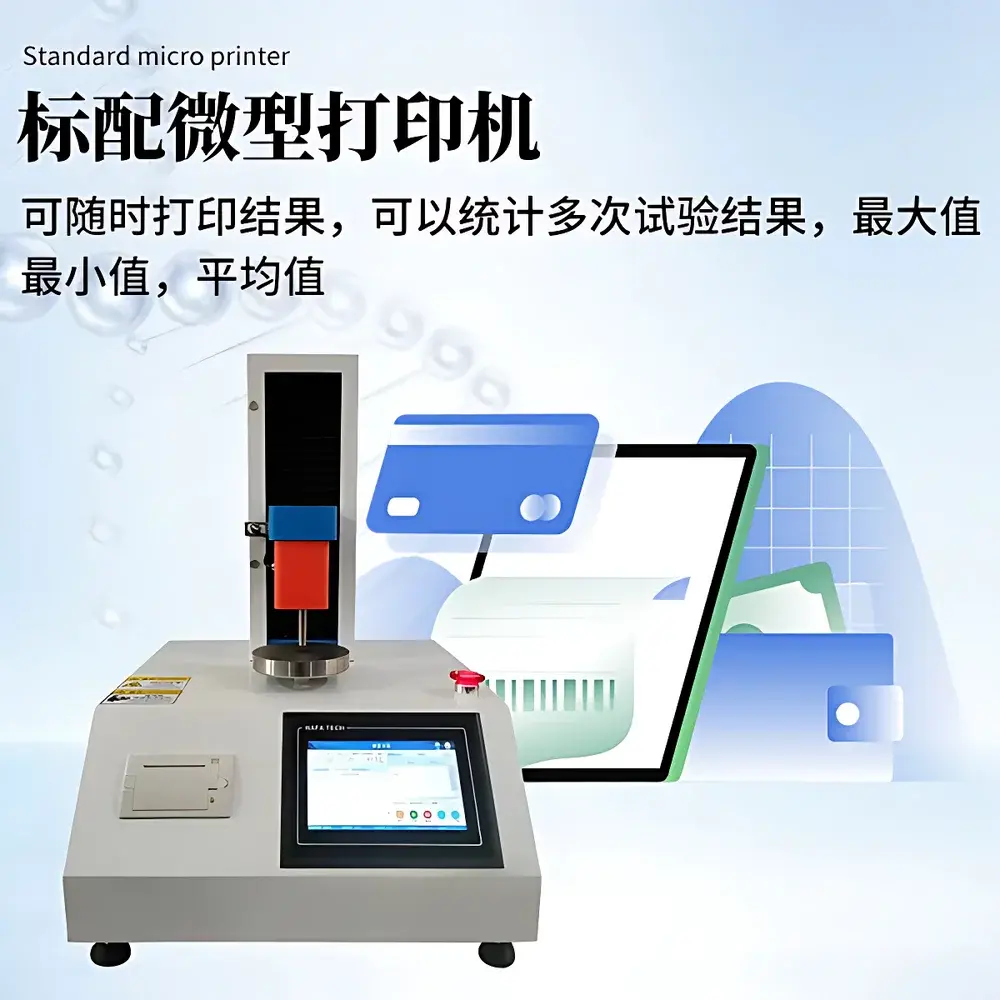
- Onboard data management: automatic capture and storage of peak burst force, rupture displacement, and calculated deformation rate; statistical summary (max/min/mean) across user-defined test batches.
- Integrated thermal microprinter for immediate hardcopy output of individual test results—including timestamp, sample ID, and raw numerical outputs.
- Optional PC connectivity via USB/RS232 enables synchronized dual-display mode: live curve + tabular data (force, time, displacement) on a single GUI; unlimited data logging, A4-report generation, and export to CSV/Excel formats.
Sample Compatibility & Compliance
The TY-BZQ accommodates standard tobacco filter capsules across the defined dimensional spectrum (2.6–4.6 mm diameter), including gelatin-, pectin-, or modified starch-based formulations. Its fixed geometry and calibrated force range ensure reproducible contact mechanics without sample repositioning artifacts. While no harmonized international standard exclusively governs cigarette capsule burst testing, the instrument’s operational parameters align with methodologies referenced in ASTM D638 (tensile properties of plastics), ISO 6892-1 (metallic materials tensile testing), and USP <1043> (characterization of hydrophilic polymers). Data acquisition and reporting support audit-ready documentation required under GLP-compliant QC environments. Optional automated feeding modules eliminate operator-induced placement variability—critical for high-throughput batch validation in GMP-aligned production facilities.
Software & Data Management
The embedded touchscreen firmware provides intuitive workflow navigation: sample setup → test initiation → auto-stop at rupture → result summary. All raw and derived values are stored locally with ISO/IEC 17025-compatible metadata (operator ID, date/time, environmental notes). When paired with the optional PC software suite, the system supports 21 CFR Part 11–compliant user authentication, electronic signatures, and immutable audit trails. Curve overlays, comparative analysis across formulation variants, and tolerance band visualization are enabled. Exported datasets retain SI-unit fidelity and are structured for direct import into LIMS platforms or statistical process control (SPC) tools such as Minitab or JMP.
Applications
- Formulation development: Correlating capsule wall thickness, polymer composition, and plasticizer content with measured burst threshold.
- Process validation: Monitoring capsule integrity after filter rod cutting, tipping, or packaging—identifying mechanical degradation due to humidity or pressure exposure.
- Supplier qualification: Objective benchmarking of third-party capsule suppliers against internal mechanical specifications.
- Regulatory dossier support: Generating physically grounded evidence for product consistency claims in pre-market submissions.
- Failure mode analysis: Differentiating brittle fracture vs. viscoelastic yielding behavior through post-rupture curve morphology.
FAQ
What capsule sizes can the TY-BZQ accommodate?
The instrument is optimized for spherical capsules between 2.6 mm and 4.6 mm in diameter. Custom platens are available upon request for non-standard geometries.
Is calibration traceable to national standards?
Yes—load cell calibration is performed using NIST-traceable deadweight standards; certificate of calibration is provided with each unit.
Can the system integrate with existing factory MES or LIMS?
Via optional OPC UA or Modbus TCP protocol modules, the TY-BZQ supports bidirectional data exchange with industrial automation infrastructures.
Does the software support multi-language UI?
English and Simplified Chinese interfaces are included; additional languages (e.g., Spanish, Portuguese) can be deployed via firmware update.
What maintenance is required for long-term accuracy?
Annual recalibration is recommended; routine verification using certified check weights and displacement gauges should be conducted per internal SOPs.




