
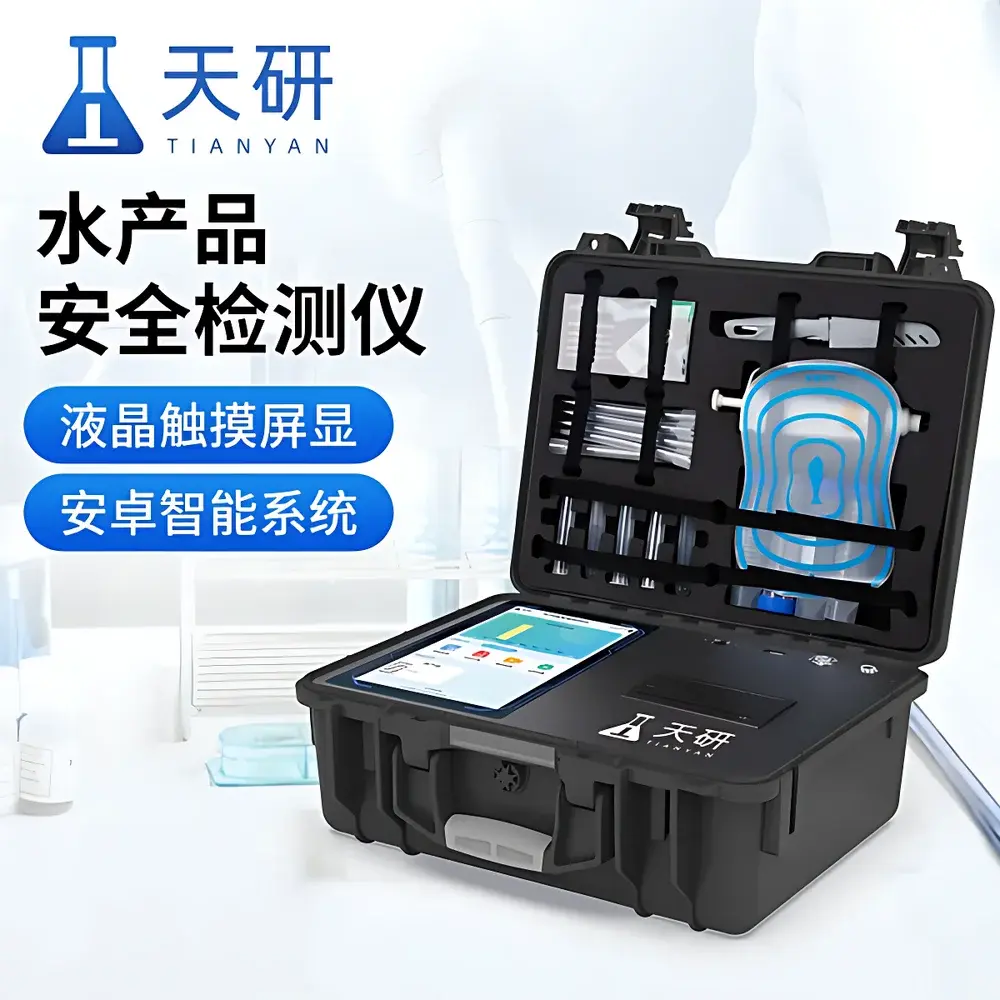
Tianyan TY-SCG Food Safety Rapid Detector for Aquatic Products
| Brand | Tianyan |
|---|---|
| Origin | Shandong, China |
| Manufacturer Type | Direct Manufacturer |
| Country of Origin | China |
| Model | TY-SCG |
| Price Range | USD 830–1,810 (FOB) |
| Functionality | Multi-analyte Screening Platform |
| Sample Compatibility | Broad-spectrum aquatic and food matrices |
| Main Control IC | ARM Cortex-A7 |
| Detection Time | ≤ 3 minutes per test |
| Detection Channels | 12 independent lanes |
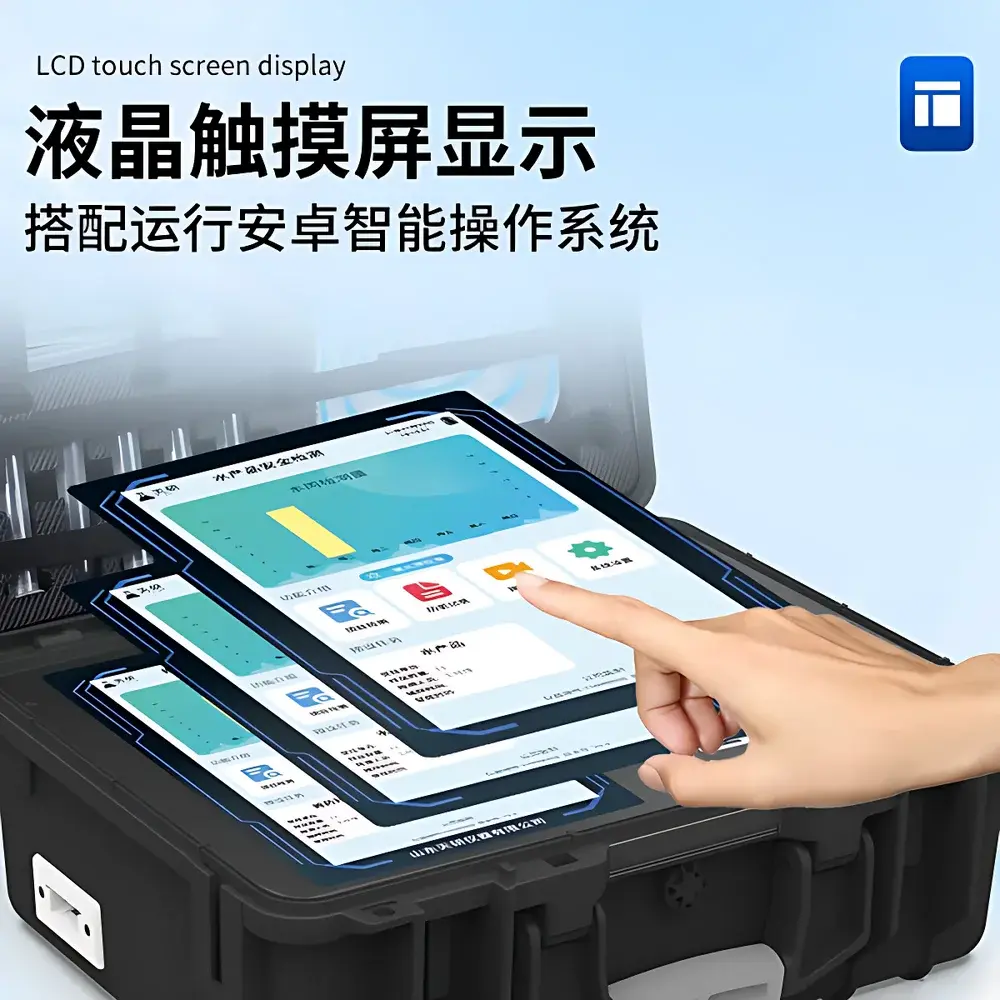
| Display | 10.1-inch capacitive touchscreen LCD |
| Detection Principle | Colloidal Gold Immunochromatographic Assay (CGIA) |
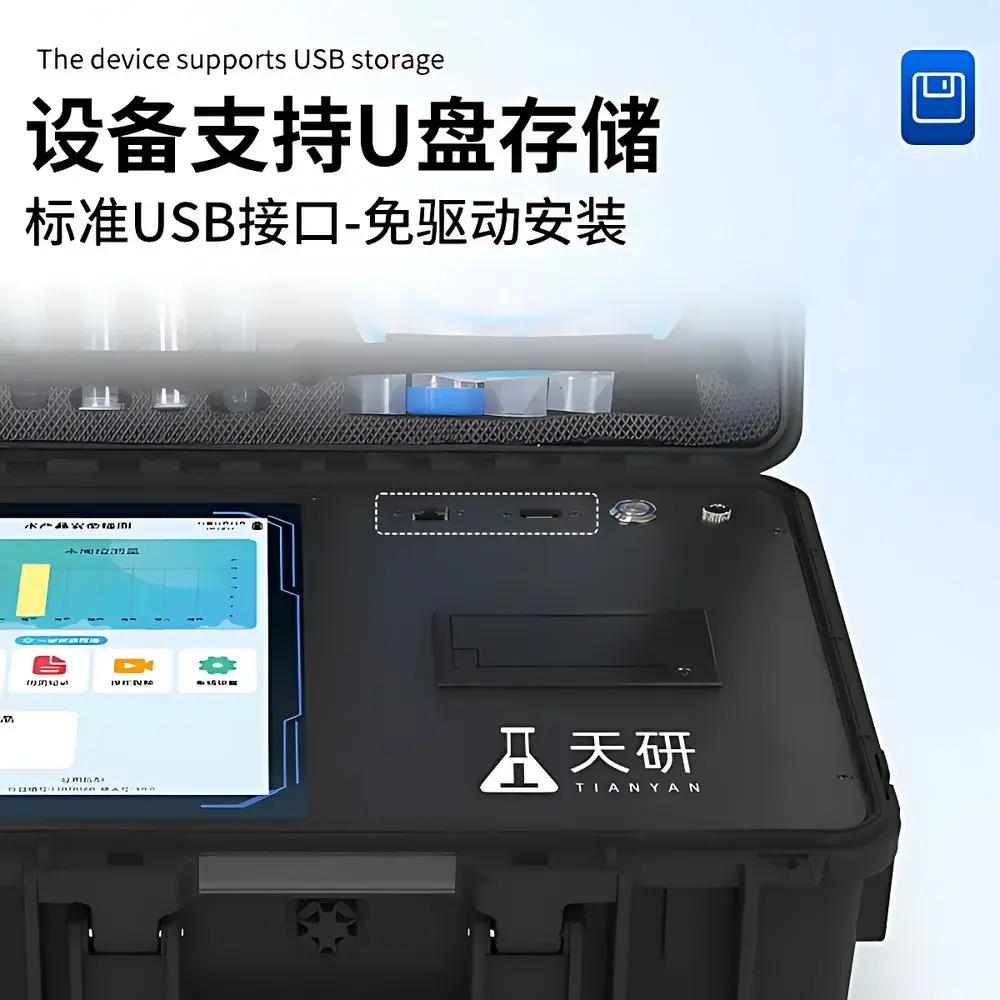
| Communication Interfaces | USB 2.0, Wi-Fi (802.11 b/g/n), RJ45 Ethernet |
| Power Supply | DC 12 V input (vehicle-compatible), integrated 6 Ah Li-ion battery |
| Data Storage | Internal flash + standard USB port for U-disk export |
| Dimensions (W×D×H) | 43 × 35 × 20 cm |
| Net Weight | 5.1 kg |
| Processor | Rockchip RK3288 (Quad-core ARM Cortex-A17, 1.8 GHz) |
Overview
The Tianyan TY-SCG Food Safety Rapid Detector for Aquatic Products is a field-deployable, multi-channel immunochromatographic analyzer engineered for regulatory-grade qualitative screening of veterinary drug residues in seafood and related food matrices. It operates on the well-established colloidal gold immunochromatographic assay (CGIA) principle—where antigen–antibody binding events on nitrocellulose membranes generate visible test (T) and control (C) lines, with optical intensity quantified via high-resolution CMOS scanning and algorithmic CT-ratio analysis. Designed to meet operational requirements of food safety oversight bodies, the instrument delivers standardized, auditable results within three minutes per sample without requiring laboratory infrastructure. Its architecture supports decentralized testing across inspection points—from aquaculture farms and wholesale markets to slaughterhouses, processing facilities, and municipal food safety supervision centers—enabling real-time data aggregation into centralized regulatory platforms.
Key Features
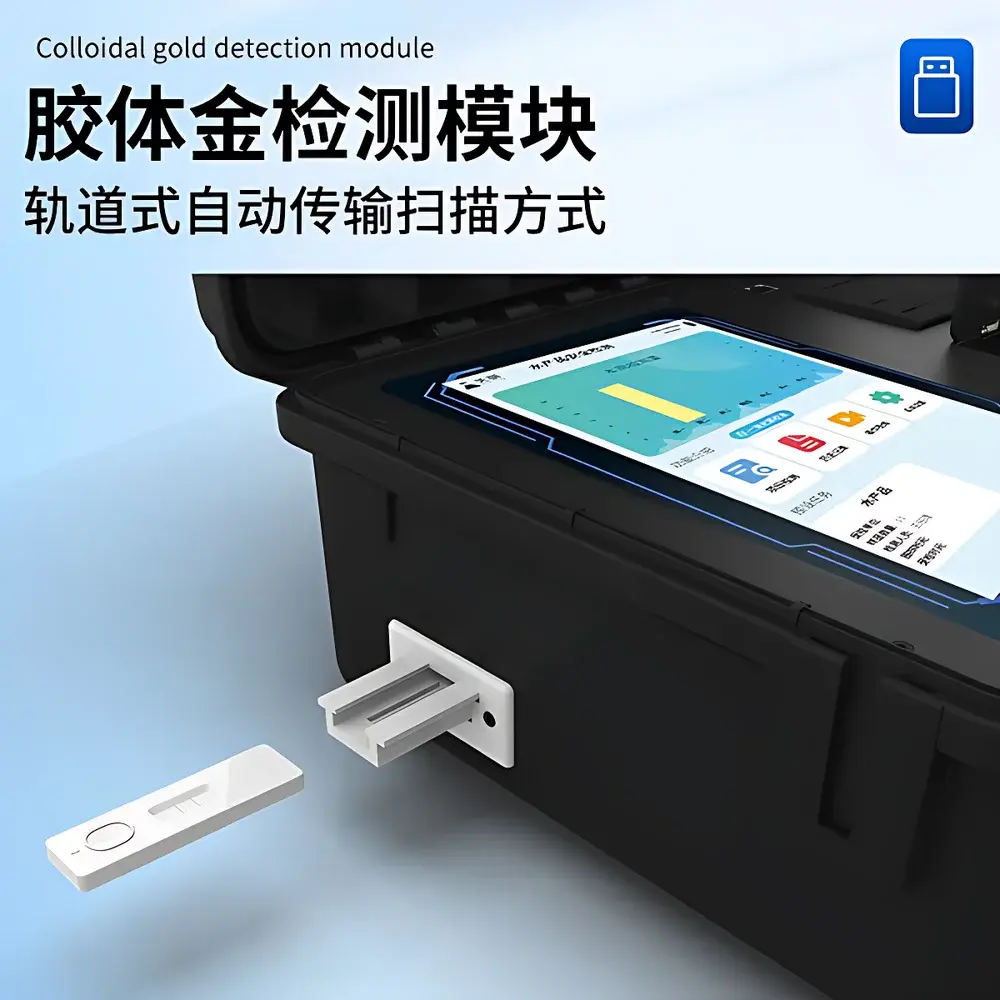
- 12-channel parallel detection system with track-driven automatic card loading and real-time image capture, eliminating manual alignment and reducing inter-operator variability.
- 10.1-inch Android-based touchscreen interface (Android 7.1 OS) powered by Rockchip RK3288 quad-core processor (1.8 GHz) and ARM Cortex-A7 microcontroller, ensuring responsive multitasking and stable long-term operation.
- Integrated dual-mode power architecture: supports continuous operation via 12 V DC input (including vehicle power systems) and up to 8 hours of standalone use on rechargeable 6 Ah lithium-ion battery.
- On-device data management suite with automated weekly/monthly statistical dashboards—including total tests, pass/fail counts, and comparative bar charts—accessible without external computing devices.
- Pre-configurable task templates for sample ID, analyte panel, submitting unit, and inspector credentials; enables rapid batch testing with one-touch recall and metadata auto-population.
- Firmware-upgradable platform with remote OTA (Over-The-Air) update capability—supporting targeted, version-controlled deployment across instrument fleets without physical return or service interruption.
- User permission hierarchy with role-based login (admin/operator/auditor), password protection, audit trail logging, and factory reset lockout—aligned with GLP-compliant operational protocols.
Sample Compatibility & Compliance
The TY-SCG system is validated for qualitative detection of 22+ regulated veterinary drug residues in aquatic products, including malachite green, chloramphenicol, nitrofuran metabolites (AOZ, AMOZ, AHD, SEM), sulfonamides, tetracyclines (chlortetracycline, oxytetracycline), florfenicol, thiamphenicol, quinolones (oxolinic acid, norfloxacin, enrofloxacin, ciprofloxacin, ofloxacin), and steroid hormones. It accepts commercially available colloidal gold lateral flow test strips from multiple manufacturers, ensuring compatibility with ISO/IEC 17025-accredited reference kits and eliminating proprietary consumable lock-in. All detection logic adheres to GB/T 22286–2008 (Chinese national standard for CGIA-based residue screening) and supports traceability requirements under China’s Food Safety Law (Article 112) and SAMR’s Supervision and Sampling Inspection Measures (Order No. 15). Data export formats (CSV, Excel) and structured JSON payloads comply with provincial-level food safety information platform ingestion specifications.
Software & Data Management
The embedded software includes a modular architecture with four core subsystems: (1) CGIA Image Analysis Engine—performs dynamic thresholding, T/C line localization, and normalized optical density ratio calculation; (2) Integrated Database—stores >200,000 test records locally with full CRUD functionality, searchable by date range, sample type, analyte, or operator ID; (3) Regulatory Interface Module—supports encrypted HTTPS/WiFi or wired Ethernet upload to provincial food safety cloud platforms (e.g., Shandong Food Safety Supervision System), with configurable API endpoints and TLS 1.2 encryption; (4) Reporting Engine—generates customizable print outputs including national-standard compliance certificates, QR-coded result slips, and optional A4-format analytical reports (with optional external printer support via IPP or ESC/POS). All data modifications are timestamped and logged with user attribution, satisfying minimum ALCOA+ (Attributable, Legible, Contemporaneous, Original, Accurate, Complete, Consistent, Enduring, Available) criteria for regulatory review.
Applications
This detector serves as a frontline surveillance tool across the aquatic food supply chain. At production sites, it verifies pre-harvest withdrawal periods and certifies raw material compliance prior to processing. In wholesale markets and supermarkets, it enables rapid spot-checking of incoming shipments against statutory residue limits. Regulatory agencies deploy it during routine inspections, emergency outbreak investigations, and post-recall verification activities. Educational institutions utilize it for hands-on training in food toxicology and analytical methodology. The device also supports third-party certification bodies conducting GMP, HACCP, and BRCGS-aligned audits where documented rapid screening evidence is required. Its portability and battery endurance make it suitable for mobile inspection units operating in remote coastal regions or inland aquaculture zones with limited grid access.
FAQ
What types of test strips does the TY-SCG support?
It accepts all standard colloidal gold lateral flow strips (25 mm × 80 mm format) for veterinary drug residues—no proprietary cartridges required.
Can detection parameters be adjusted for different strip brands?
Yes. CT line thresholds, background correction algorithms, and sensitivity calibration values are user-editable and persist through power cycles.
Is the instrument compliant with FDA 21 CFR Part 11 requirements?
While not certified for Part 11 in its base configuration, the audit trail, electronic signature support (via optional biometric module), and data integrity safeguards align with foundational elements of Part 11 for non-GxP environments; validation documentation is available upon request.
How is firmware updated remotely?
Updates are pushed via secure HTTPS connection; the device validates digital signatures before installation and reboots automatically—no manual intervention needed.
What data export options are available?
Internal storage (≥200,000 records), USB mass-storage mode (plug-and-play Excel/CSV export), and network-based API push to LIMS or government platforms.
Does the system support multi-language UI?
English and Simplified Chinese interfaces are pre-installed; additional language packs can be deployed via firmware update.






