Tianyan TY-SZT Foodborne Heavy Metal Analyzer
| Brand | Tianyan |
|---|---|
| Origin | Shandong, China |
| Manufacturer Type | Direct Manufacturer |
| Country of Origin | China |
| Model | TY-SZT |
| Pricing | Available Upon Request |
Overview
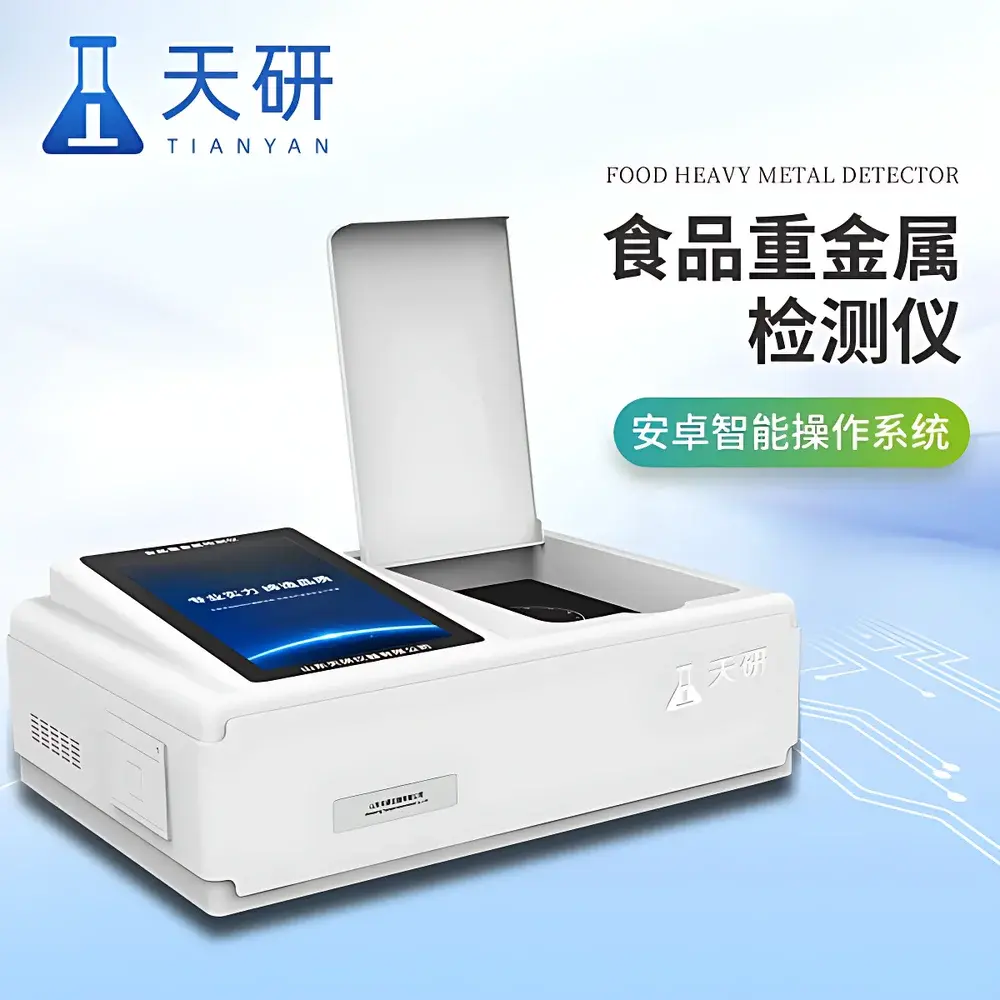
The Tianyan TY-SZT Foodborne Heavy Metal Analyzer is a benchtop-integrated spectrophotometric detection platform engineered for rapid, quantitative screening of regulated heavy metals in food matrices. It operates on the principle of visible-light absorbance spectroscopy—specifically, colorimetric reaction-based quantification following standardized derivatization protocols (e.g., dithizone for Pb/Cd, diphenylcarbazide for Cr(VI), silver diethyldithiocarbamate for As, and ammonium molybdate for Mo-based arsenic assays). Unlike atomic absorption or ICP-MS systems, the TY-SZT delivers field-deployable, regulatory-aligned results within 10–25 minutes per batch without requiring certified laboratory infrastructure. Its design targets frontline food safety verification at points of entry, processing lines, distribution hubs, and regulatory inspection sites—where speed, reproducibility, and traceable compliance are prioritized over ultra-trace detection limits.
Key Features
- Benchtop all-in-one architecture integrating optical detection, embedded computing, and wireless connectivity—no external PC or peripheral hardware required.
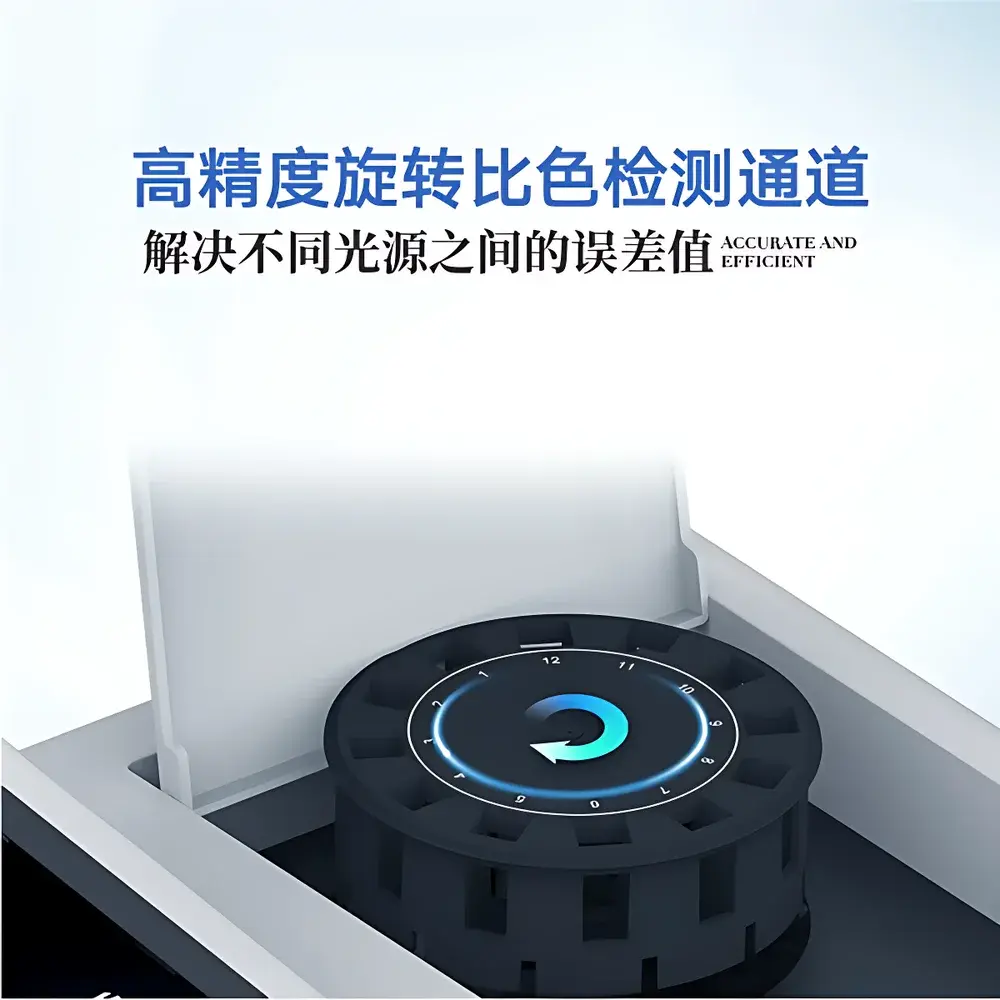
- 12-channel precision rotary cuvette carousel with <0.1% inter-channel photometric variance; each channel independently calibrated using identical LED sources and matched photodiode detectors.
- Quad-wavelength cold-light source per channel (410 nm, 520 nm, 590 nm, 630 nm) with patented optical path switching enabling up to 64 programmable wavelengths—supporting multi-analyte simultaneous detection across diverse chromogenic chemistries.
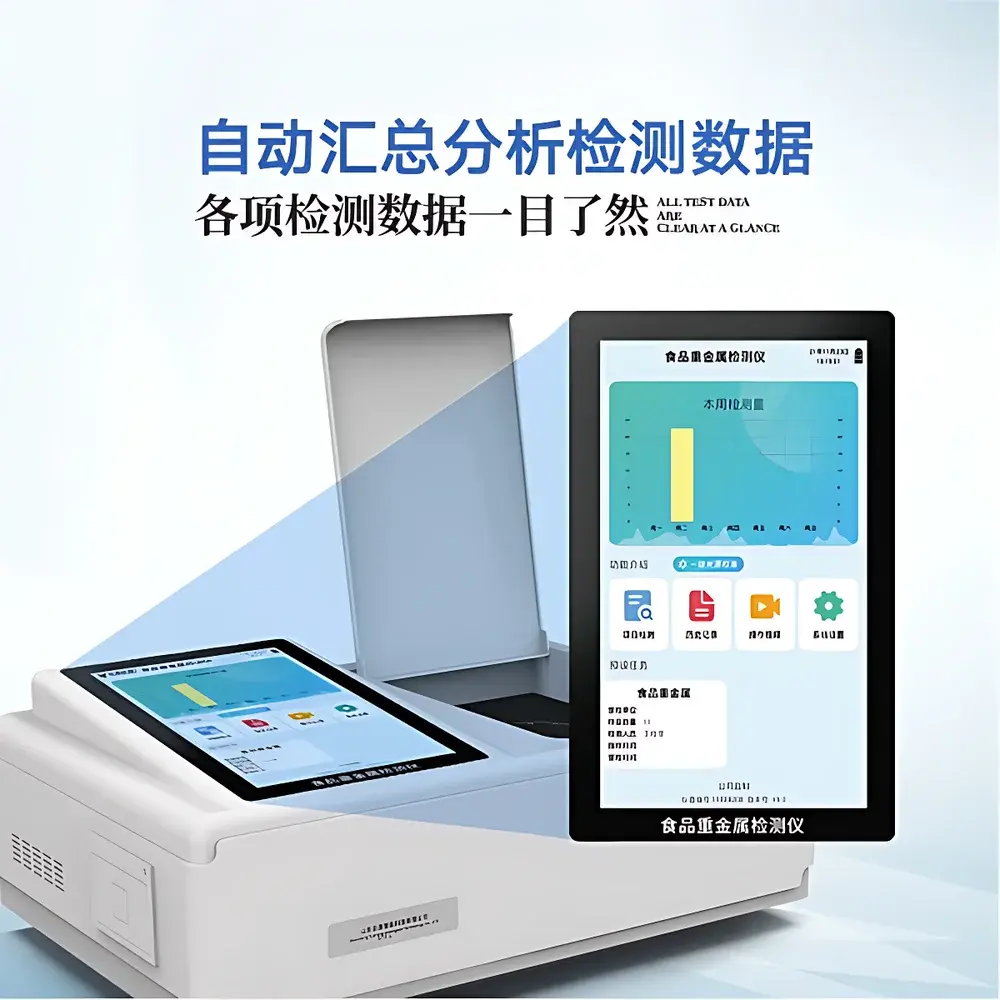
- 10.1-inch vertical capacitive touchscreen running Android OS (based on ARM Cortex-A7 RK3288 quad-core @ 1.88 GHz), optimized for glove-compatible operation and offline usability.
- Onboard dual-storage architecture: internal flash memory (>200,000 test records) + standard USB-A port for U-disk export (Excel-compatible .csv/.xlsx output); no driver installation required.
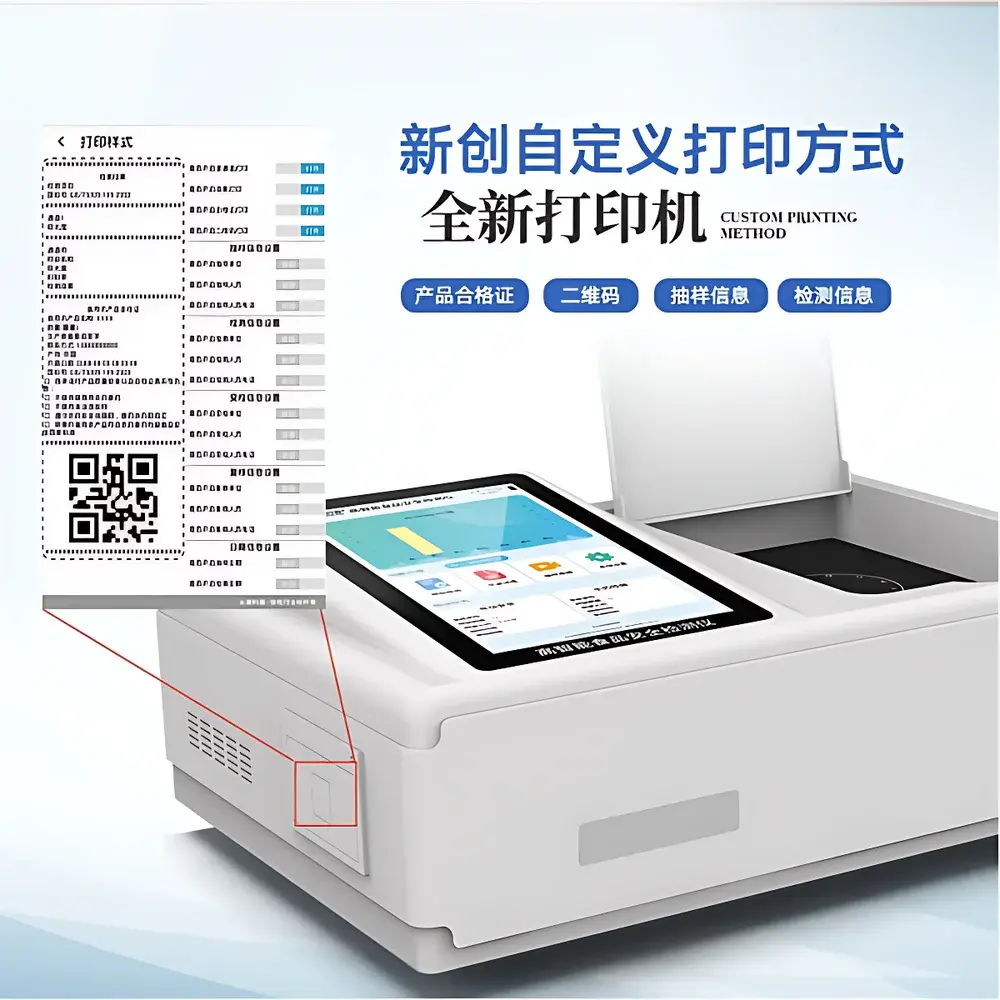
- Integrated thermal printer with customizable report templates—including QR-coded traceability fields (sample ID, operator, timestamp, location), A4-report generation (optional via Wi-Fi/Ethernet-connected external printer), and GLP-compliant audit trail metadata.
- Real-time battery status monitoring and dual-power operation: 12 V DC input (compatible with vehicle power systems) + optional 6 Ah rechargeable Li-ion battery for mobile deployment.
Sample Compatibility & Compliance
The TY-SZT supports homogenized aqueous extracts from cereals (rice, wheat), legumes, fruits, leafy vegetables, dried herbs, aquatic products (fish tissue, shellfish), and drinking water. Sample preparation follows AOAC Official Method 2013.05 (for Cd/Pb in rice) and GB 5009.12–2023 / GB 5009.15–2014 (Chinese National Standards for Pb, Cd, Cr(VI), Hg, As, Fe, Ni, Al in food). The instrument’s built-in limit-check engine cross-references measured concentrations against jurisdictional MRLs—including EU Commission Regulation (EC) No. 1881/2006, FDA Action Levels, and China’s GB 2762–2022—and auto-generates pass/fail determinations with visual flagging. All calibration data, raw absorbance values, and decision logic are stored with immutable timestamps—supporting 21 CFR Part 11–aligned electronic record integrity when paired with role-based user authentication.
Software & Data Management
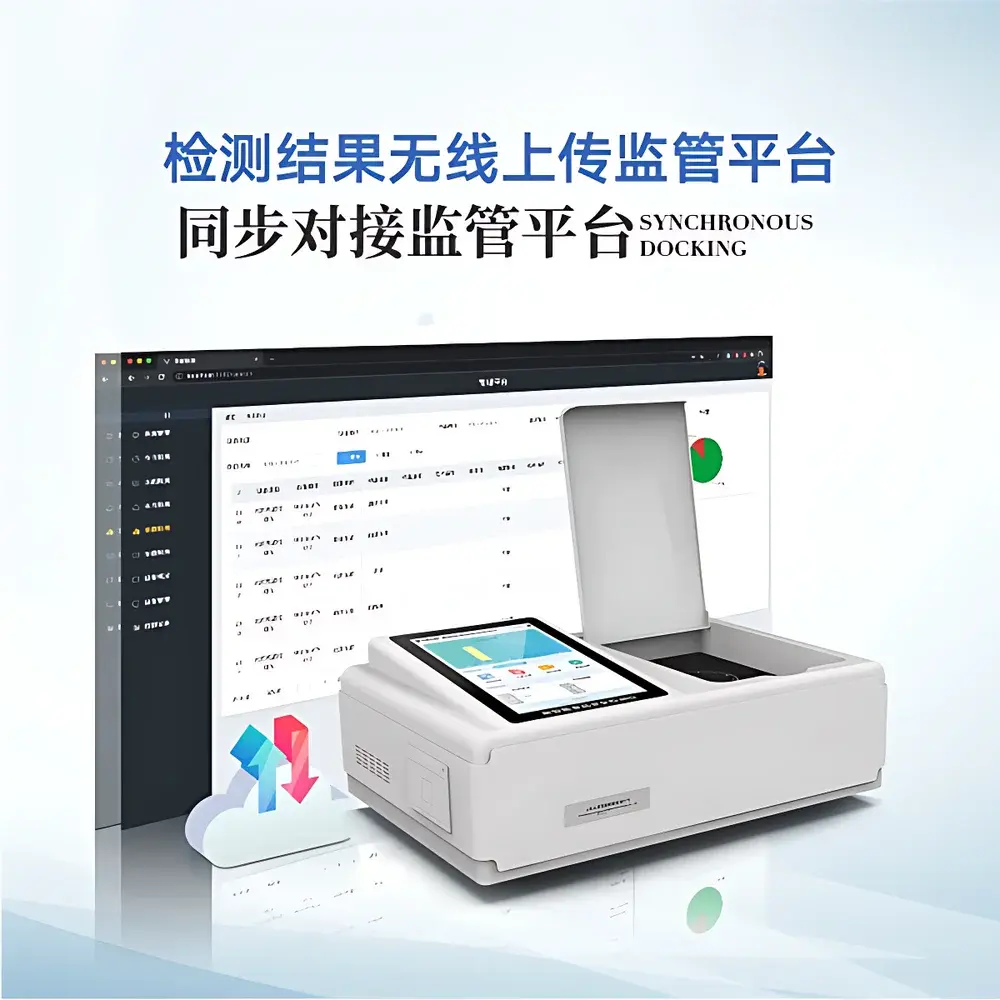
The embedded software suite implements a relational database schema with 14 interlinked modules: assay method library, calibration history, sample registry, regulatory threshold repository, kinetic curve archive, sampling event log, and supervisory review workflow. Batch-level analytics are visualized on the home dashboard—weekly/monthly compliance rates, failure hotspots by commodity type, and temporal trend charts—without exporting data. Remote firmware updates are delivered over secure HTTPS channels; version-controlled patches can be targeted to specific instrument fleets or serial-number ranges. Data transmission supports encrypted TLS 1.2 uploads to centralized food safety platforms (e.g., provincial SAMR cloud systems) via 4G APN, Wi-Fi, or Ethernet—enabling real-time aggregation for regional risk modeling and early-warning surveillance.
Applications
- Routine screening of incoming raw materials at grain mills and edible oil refineries.
- On-site verification in school canteens, hospital kitchens, and central kitchen facilities under China’s “Food Safety Supervision and Sampling Inspection Measures.”
- Third-party contract testing labs performing GB-compliant verification prior to market release.
- Port-of-entry inspections by CIQ (Customs Inspection and Quarantine) units validating import documentation.
- Field audits conducted by municipal market supervision bureaus during routine food safety patrols.
- Internal QA/QC for HACCP plan validation and CCP monitoring in GMP-certified food manufacturing environments.
FAQ
Does the TY-SZT comply with ISO/IEC 17025 requirements for testing laboratories?
The instrument itself is not accredited—but its measurement traceability, calibration logging, and data integrity controls align with Clause 7.7 (Ensuring Validity of Results) and Clause 8.4 (Reporting of Results) when operated within an ISO/IEC 17025–accredited lab’s documented procedures.
Can detection methods be validated in-house for non-standard matrices (e.g., infant formula or dietary supplements)?
Yes—users may import custom calibration curves and define matrix-specific recovery corrections via the “Method Editor” module; validation documentation (LOD/LOQ, linearity, spike recovery) must be retained per GLP guidelines.
Is remote diagnostics supported for troubleshooting?
Yes—the device supports secure SSH-based remote terminal access (disabled by default) and automatic error-code reporting to Tianyan’s technical support portal upon user consent.
What is the typical service life of the optical components?
The imported LEDs and interference filters are rated for ≥50,000 hours of operation; annual photometric verification using NIST-traceable neutral density filters is recommended.
How frequently must the system be recalibrated?
Daily zero-point calibration is advised before first use; full multi-point calibration is required after reagent lot changes, every 30 days, or following transport-induced mechanical shock—as logged automatically in the “Calibration History” database.