
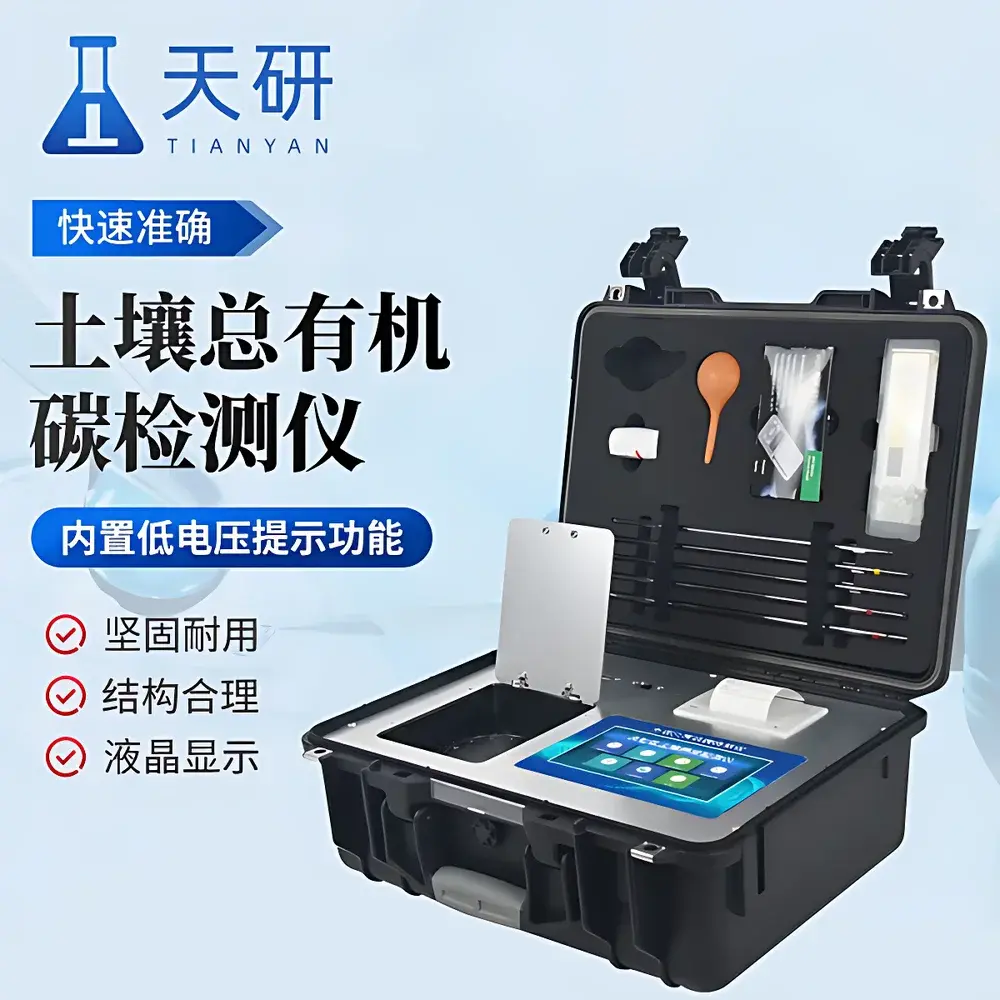
Tianyan TY-TN1_ Portable Rotational Channel Soil Total Organic Carbon (TOC) & Carbon-to-Nitrogen Ratio Analyzer
| Brand | Tianyan |
|---|---|
| Origin | Shandong, China |
| Manufacturer Type | Authorized Distributor |
| Country of Origin | China |
| Model | TY-TN1_ |
| Instrument Type | Portable |
| Detection Channels | 8 |
| Measured Parameters | Soil Total Organic Carbon (TOC) and Carbon-to-Nitrogen Ratio (C/N) |
| Measurement Range | 0.001–9999 (unitless absorbance-derived index |
| Repeatability | ≤0.02% (based on potassium dichromate solution, CV) |
Overview
The Tianyan TY-TN1_ is a field-deployable, rotational-channel spectrophotometric analyzer engineered for rapid, on-site quantification of soil total organic carbon (TOC) and carbon-to-nitrogen (C/N) ratio. It operates on the principle of dichromate oxidation followed by colorimetric detection—aligned with standardized wet-chemical digestion protocols (e.g., ASTM D5374, ISO 10694, and Chinese standard NY/T 1121.6–2022). Unlike combustion-based TOC analyzers requiring high-temperature furnaces and carrier gas, the TY-TN1_ implements a robust, low-power optical architecture optimized for resource-constrained agricultural and environmental monitoring settings. Its core measurement pathway relies on controlled oxidation of organic carbon in acidic potassium dichromate solution, followed by photometric determination of Cr³⁺ reduction product at 680 nm (red channel), enabling quantitative correlation to TOC concentration. The C/N ratio is derived from parallel nitrogen assays (e.g., alkaline hydrolysis or indophenol blue method) measured at 420 nm (blue channel), with integrated stoichiometric conversion algorithms embedded in firmware.
Key Features
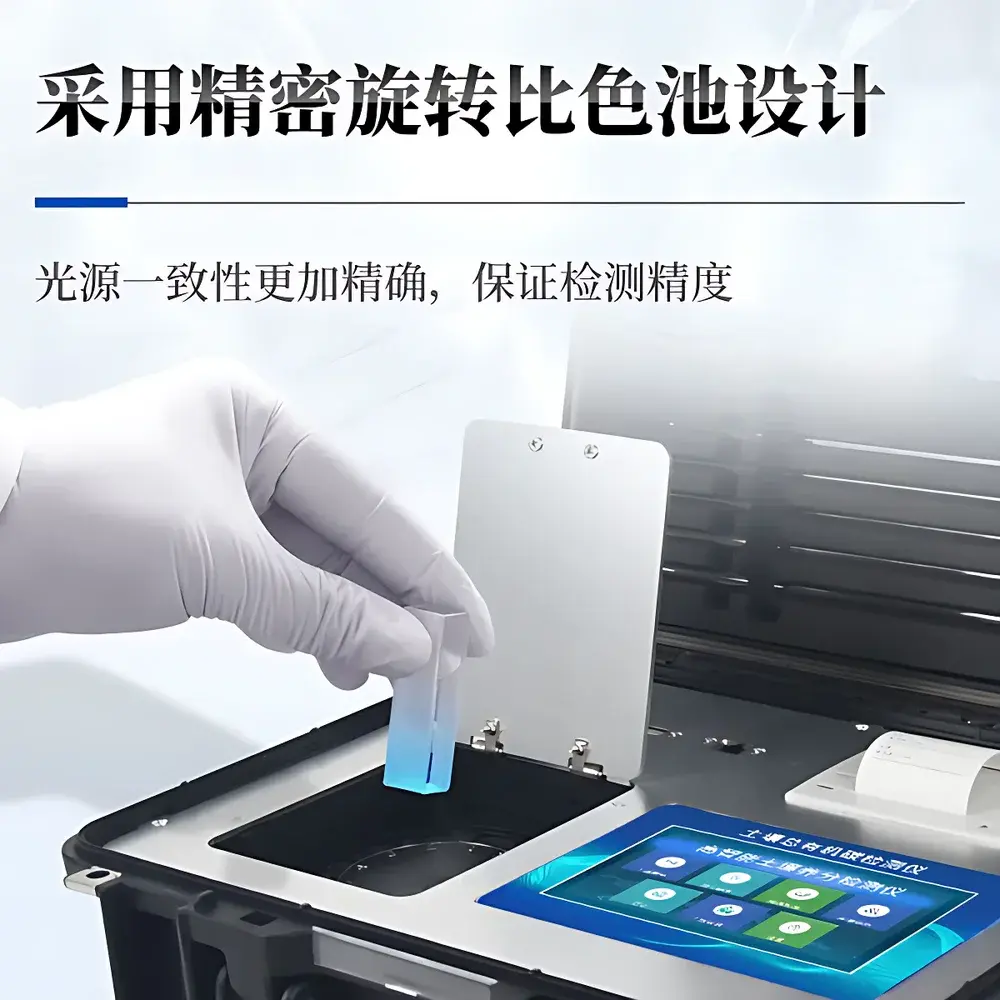
- 8-position rotating detection carousel with precision-machined 10-mm optical path cuvette holders—eliminates mechanical drift and ensures inter-channel photometric consistency (Patent ZL 2018 2 1777724.7).
- Quad-wavelength cold LED light source (680±2 nm red, 420±2 nm blue, 510±2 nm green, 590±4 nm orange) with thermal stabilization; >100,000-hour lifetime and <0.001 absorbance drift over 2 hours.
- ARM Cortex-A7 quad-core processor (RK3288, 1.88 GHz) running Android OS, supporting real-time data processing, multi-user account management, GPS geotagging, and offline operation.
- Integrated calibration suite: auto-zeroing, intelligent constant-current LED drive, real-time photometric gain compensation, and built-in K₂Cr₂O₇ reference validation routine.
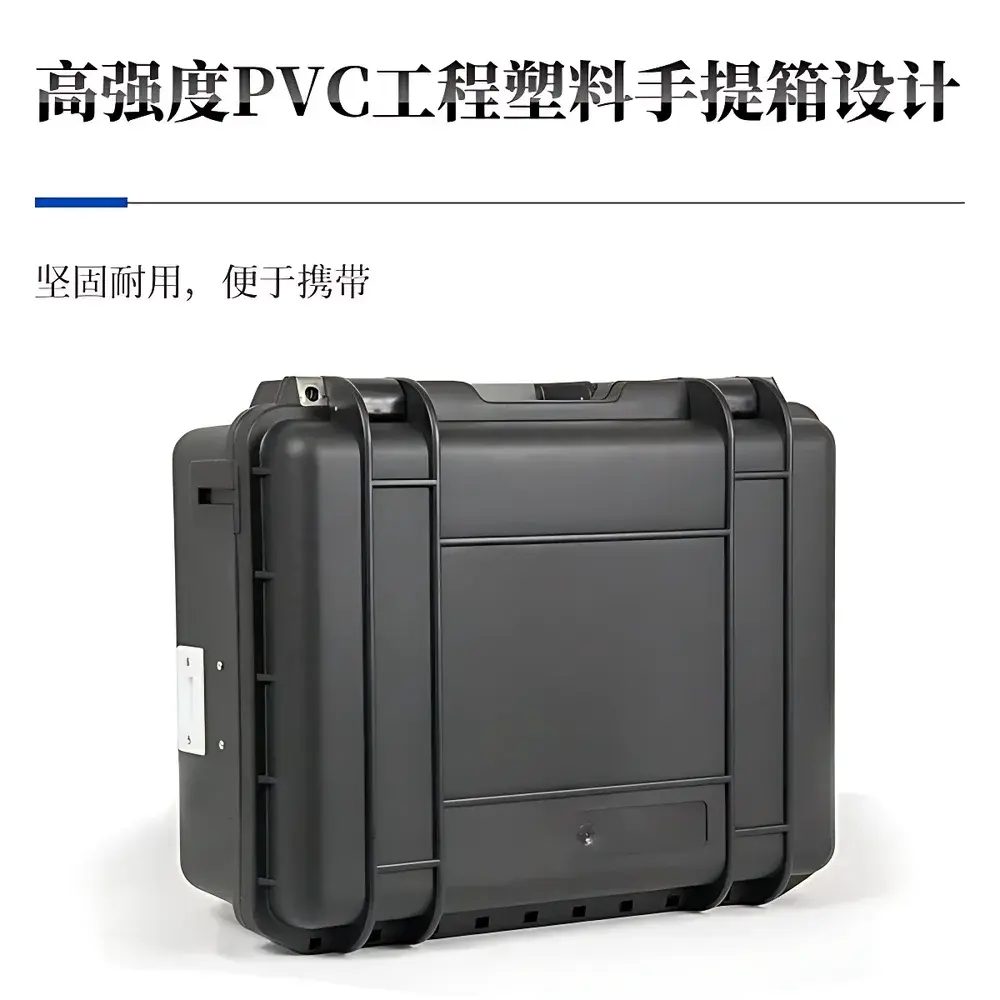
- Dual-mode power system: rechargeable Li-ion battery (≥10 h continuous operation) + 12 V DC / 220 V AC input; IP65-rated enclosure for dust/water resistance during field deployment.
- Wireless connectivity stack: Wi-Fi 802.11 b/g/n, 4G LTE Cat-1, and GPRS fallback—enabling encrypted data transmission to cloud platforms compliant with ISO/IEC 27001 security frameworks.
- On-device thermal printer (no ink/ribbon), 7-inch capacitive touchscreen (1024×600), and embedded instructional video library for standardized sample preparation per NY/T 1121 series methods.
Sample Compatibility & Compliance
The TY-TN1_ accepts air-dried, sieved (<2 mm) soil samples processed according to ISO 11464 and USDA NRCS Soil Survey Laboratory Methods Manual. It supports aqueous extracts from both Mehlich-3 and ammonium acetate extractions for concurrent macronutrient and TOC/C/N analysis. All optical measurements comply with the photometric accuracy requirements of ISO 7027 for turbidity-related absorbance and meet repeatability thresholds specified in GB/T 32736–2016 (Chinese national standard for portable soil nutrient analyzers). While not a primary compliance instrument for regulatory reporting under EPA Method 415.3 or ISO 14235, its performance is validated against reference laboratories using certified reference materials (CRMs) such as NIST SRM 2710a and IAEA-375. Data integrity features—including audit-trail-enabled user login, timestamped measurement logs, and immutable result export—support GLP-aligned field documentation workflows.
Software & Data Management
Instrument firmware includes embedded AgriCloud Connect™—a secure, role-based web platform supporting multi-tier access control, long-term trend visualization, spatial mapping (via integrated GPS coordinates), and automated report generation in PDF/CSV formats. Raw absorbance values, calibration coefficients, and diagnostic flags are stored locally in encrypted SQLite databases with SHA-256 hashing. Data exports include full metadata: operator ID, location stamp, sample ID, reagent lot numbers, and instrument serial traceability. The system supports 21 CFR Part 11–compatible electronic signatures when deployed with optional PKI certificate integration. USB 2.0 host port and 10/100 Mbps Ethernet interface enable direct archival to network-attached storage or LIMS systems without cloud dependency.
Applications
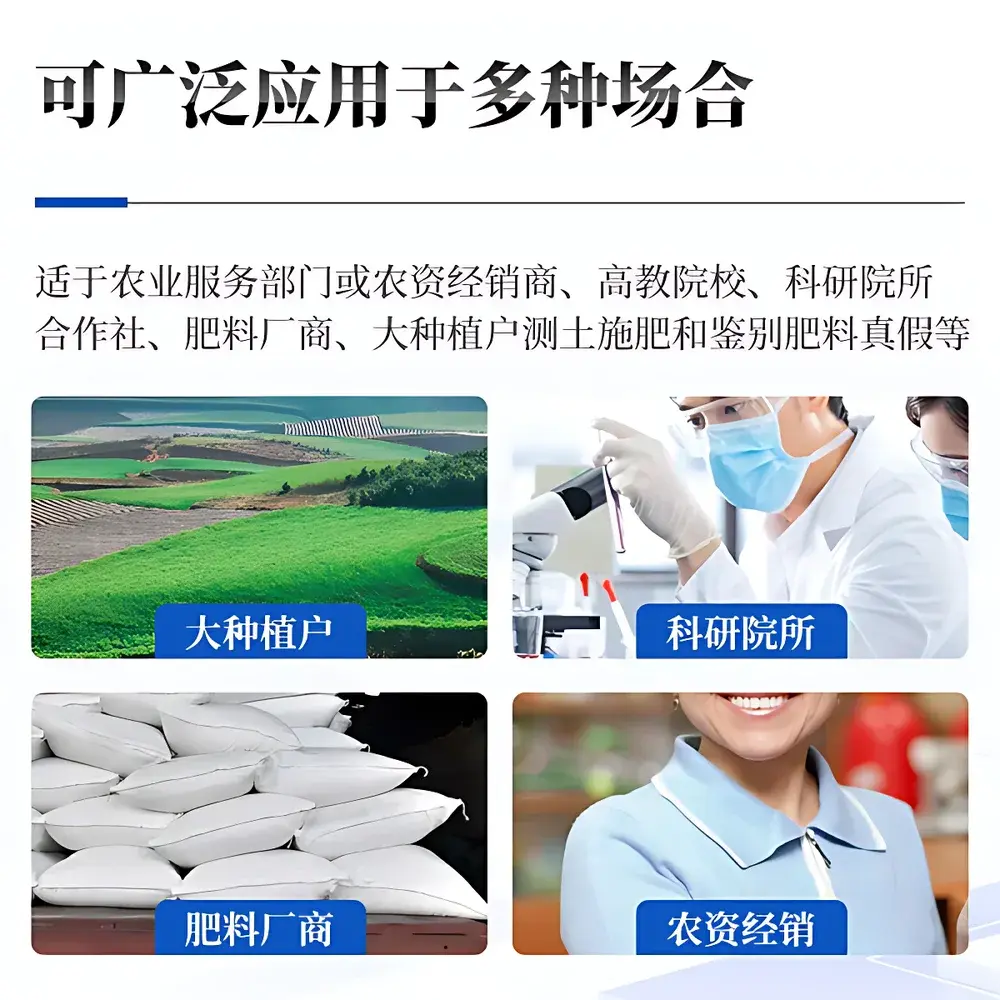
- Field-scale assessment of soil carbon sequestration potential in regenerative agriculture programs.
- Rapid screening of C/N dynamics during compost maturity evaluation and manure amendment planning.
- Longitudinal monitoring of organic matter turnover across crop rotation cycles and tillage regimes.
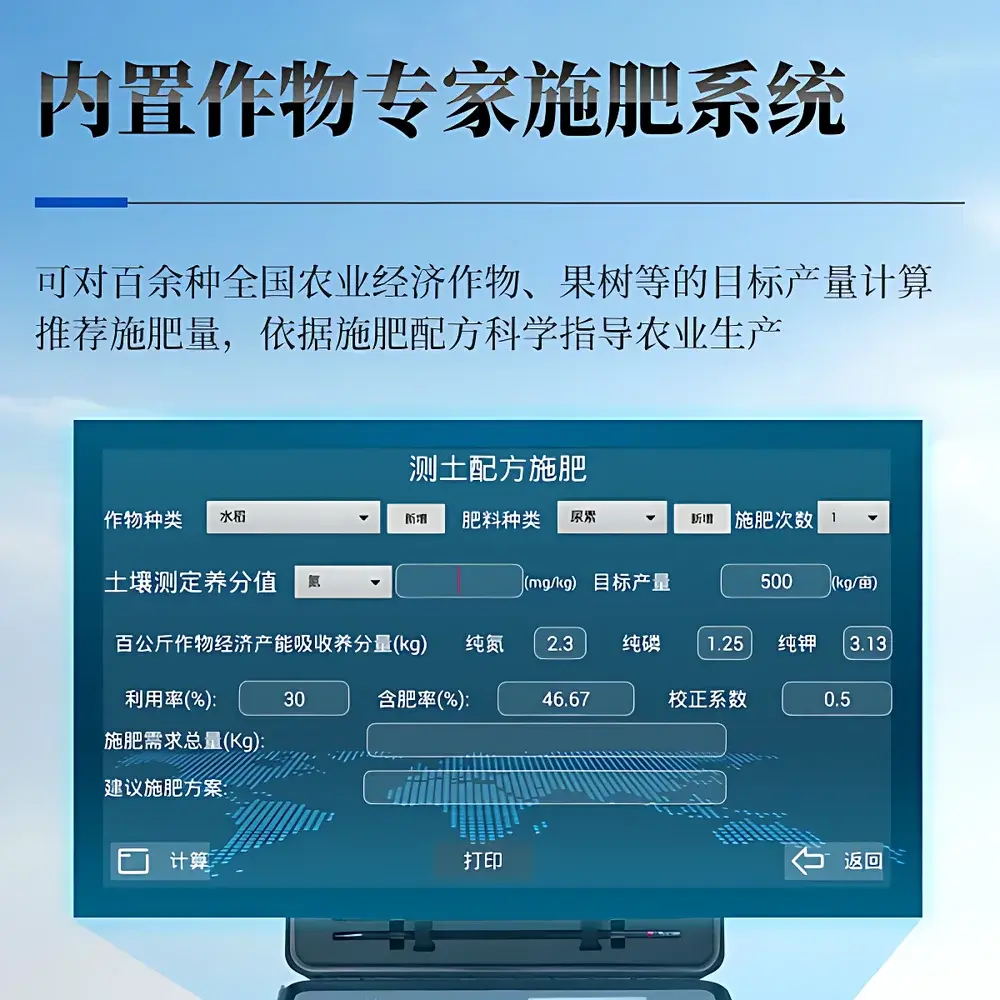
- Extension service support for site-specific nutrient management—integrating TOC/C/N outputs with built-in fertilizer recommendation engine covering >120 crop types (FAO agro-ecological zone referenced).
- Educational use in university soil science labs for method comparison between wet oxidation and dry combustion TOC techniques.
- Baseline surveys for land-use change impact studies (e.g., forest-to-agriculture conversion) under IPCC Tier 1/2 reporting guidelines.
FAQ
What oxidation method does the TY-TN1_ use for TOC determination?
It employs acidified potassium dichromate (K₂Cr₂O₇) oxidation at reflux temperature, consistent with classical Walkley-Black methodology and harmonized with ISO 10694 Annex A.
Can the instrument measure TOC in water or sediment samples?
No—its fluidic and calibration matrix are specifically validated for mineral and organic soils (pH 4–9, clay content <60%, OM <25%). Water or slurry analysis requires dedicated aquatic TOC analyzers.
Is external lab verification required before regulatory submission?
Yes. While the TY-TN1_ provides rapid field screening data, formal compliance reporting (e.g., for carbon credit verification) mandates confirmation via accredited laboratory analysis per ISO/IEC 17025.
How often must the optical system be recalibrated?
Factory calibration is valid for 12 months under normal use; field recalibration using supplied K₂Cr₂O₇ standard solution is recommended before each daily session or after transport-induced shock.
Does the device support third-party LIMS integration?
Yes—via RESTful API endpoints and HL7-compliant message packaging; documented integration guides are provided under NDA for enterprise deployments.
Related Products







